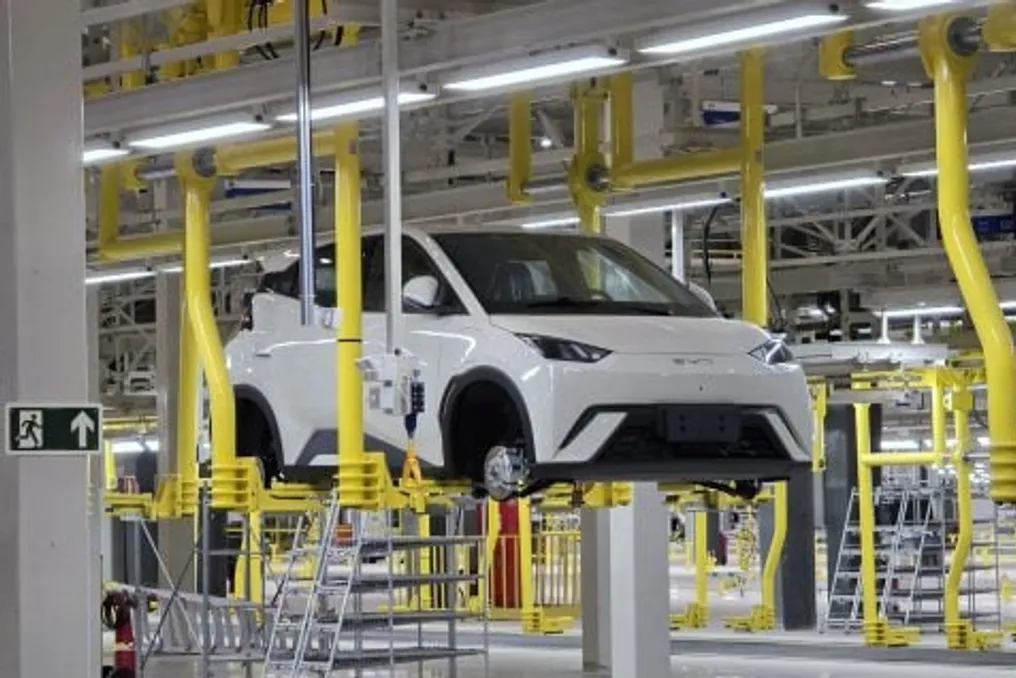
Automobile manufacturers are pressuring the US Congress with the aim of imposing an outright ban on the sale of Chinese vehicles in their territory. This request comes from the manufacturers operating in the American market and seeks to block the entry of competitors that have gained global prominence, configuring a dispute with clear commercial motives and protectionist trends.
However, besides the ideological issue, there is a crucial aspect to consider: contemporary automobiles do not only serve for transport; they function as devices for collecting and producing personal data. Systems such as internal and external cameras, sensors, microphones, GPS, and connectivity allow tracking of a vehicle's location, routes, and frequented places, potentially capturing images of public roads.
Much of this data is sent to the manufacturers' servers, and remote software updates enable changes to the operation of various car components. Thus, the connected vehicle transcends the status of a mere industrial product, becoming an information collection tool. The risk is not limited to individual monitoring or recording images of strategic and military infrastructures; the aggregated analysis of data from millions of vehicles allows mapping of travel patterns, times, population concentrations, and economic habits of an entire region.
Manufacturers' pressure to ban Chinese cars
It is under this argument that the Alliance for Automotive Innovation, an organization representing giants such as General Motors, Ford, Toyota, Volkswagen, Honda, and Stellantis (noting that only GM and Ford are American), is pressuring the US Congress. John Bozzella, the entity's president, points out that Chinese vehicles bring surveillance risks and access to sensitive data, in addition to threatening the local industry, which competes with companies supported by state subsidies.
Although there is no proof that Chinese cars are spying on owners, the electronic architecture and connectivity of these vehicles can generate vulnerabilities exploitable by foreign governments or corporations. The US has already implemented previous restrictions: a regulation by President Joe Biden prevents the marketing of certain connected vehicles of Chinese or Russian origin starting from 2027 models, as well as the use of autonomous driving software linked to these countries. Hardware restrictions will come into effect in 2030.
The manufacturers are now seeking to transform these administrative limitations into permanent legislation. The bill, named the Connected Vehicle Security Act of 2026, was introduced by Senators Bernie Moreno, Republican, and Elissa Slotkin, Democrat, and received unanimous approval in the Senate Commerce Committee in July. The proposal aims to limit the import, manufacturing, and marketing of connected vehicles and their components originating from nations considered adversaries of the US, and its approval is desired before the end of the current legislative session in December.
The commercial motivation is also evident. The association cited that the European Union imported more than 1.1 million Chinese cars in the first eight months of 2026, surpassing the total of the previous year. Although Chinese electric vehicles already face 100% import tariffs in the United States, the American industry wants to prevent these companies from entering the market even if they establish factories in the country.
Therefore, it is possible to reconcile the manufacturers' protectionist interest with national security. The risk of data collection is not exclusive to Chinese cars, as American, European, Japanese, and Korean vehicles also have similar systems. The distinction made by the American government lies in the possibility that companies subject to the legislation and the influence of an adversarial country may be compelled to share information or allow access to the systems. The discussion, thus, transcends the mere permission to sell cars in the US, encompassing who can access the data and the behavioral patterns generated by millions of vehicles circulating in the territory.
Death of Alan Jones, Williams champion
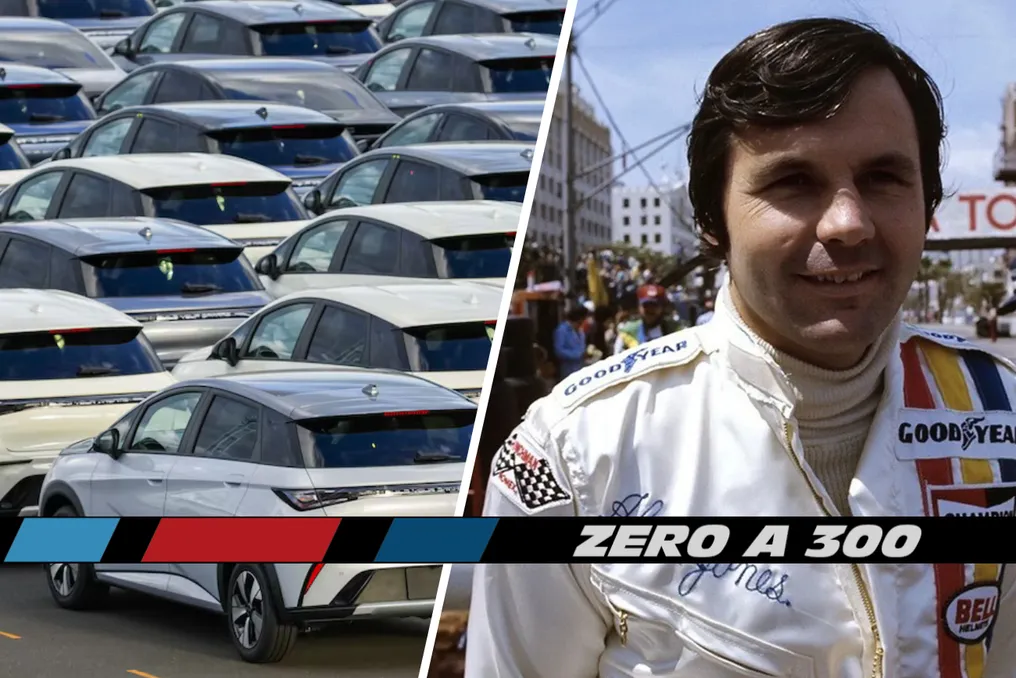
Alan Jones, the Australian driver who was fundamental in transforming Williams into a winning team, passed away this Thursday (5th) at the age of 80, just three days after his birthday. His death was confirmed by the family through Motorsport Australia, after a brief period of illness. Before ascending to Formula 1 glory, Williams needed a driver capable of elevating the team's status from promising to champion.
Born in Melbourne in 1946, Jones was the son of driver Stan Jones and moved to Europe in 1970 seeking a career in motorsport. He debuted in Formula 1 in 1975 with Hesketh and went through teams such as Hill, Surtees, and Shadow. It was with Shadow that he achieved his first victory, during the Austrian Grand Prix in 1977, in a race held under variable track conditions. This performance attracted the attention of Ferrari, which considered hiring him for 1978 but opted for Gilles Villeneuve. Jones then secured a spot at Williams, which was still in the consolidation phase of the championship.
The collaboration with Frank Williams and designer Patrick Head soon yielded good results. In 1979, Jones won four races with the Williams FW07, one of the cars that best exploited ground effect in that generation of Formula 1, finishing the championship in third place. In the following year, using the FW07B, he won five of the 14 rounds—Argentina, France, Great Britain, Canada, and the United States—and became champion with a rescheduled race, surpassing Nelson Piquet of Brabham. This achievement also helped Williams secure its first Constructors' Championship.
Jones remained with the team until the end of 1981, when he decided to retire for the first time. He would return to Formula 1 later, competing with Arrows and Beatrice Haas, definitively ending his career in the category in 1986. His history includes 116 starts, 12 victories, and 24 podium finishes. After F1, he continued competing in Australia, winning the national Sports Sedan and GT championship in 1982 with a Porsche 935 and conquering the 12 Hours of Bathurst in 1993 with a Mazda RX-7.
Alan Jones is the second Australian to win the Formula 1 World Championship, succeeding Jack Brabham, and remains the last driver from the country to achieve such a feat.