The results of the midterm elections in America have fundamentally changed the situation. These elections weakened Trump's party's position in the US, and his influence in parliament is also expected to decrease. Following this result, global markets and investors are hopeful that Trump's aggressive and arbitrary policies, especially concerning tariffs and import duties, will be limited.
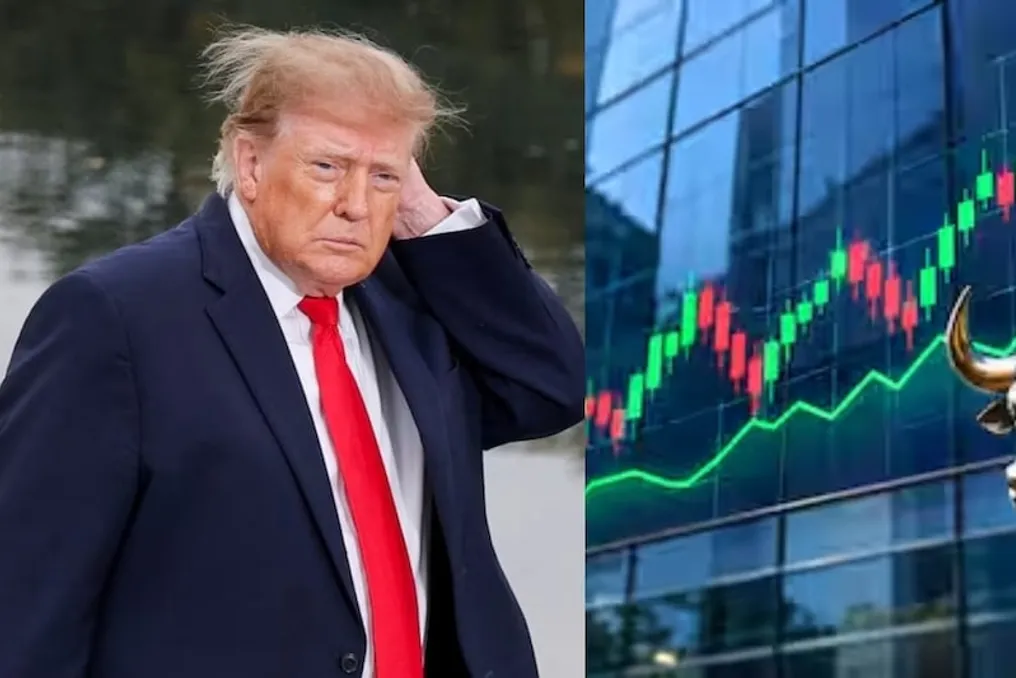
Since Donald Trump's Republican Party lost the midterm elections and Democrats gained control of Congress, this political change is reflected in stock exchanges around the world. Against the backdrop of Trump's party defeat and the likelihood of softening American policy, there has been significant growth in the exchanges of many large countries. Particular optimism prevails in countries that have been most affected by Trump's policies, including China, India, Australia, Hong Kong, Brazil, and Spain.
Strong growth was observed in global markets. On Thursday, the S&P 500 index in India rose by 2.60%, following a strong day on Wednesday. The Chinese market showed growth of about 2% on Wednesday. Furthermore, the Hong Kong market recorded a rise of 3.66%, Australia by 2.63%, Spain by 1.37%, while growth in the German and French markets was about 1% and 1.17% respectively. Following this, the Spanish market and other European exchanges also demonstrated a sharp rise as hope emerged for a reduction in transatlantic trade tensions.
For most of these countries, which face a trade war and strict tariff regulations from America, this has been a relief, as a decrease in American pressure is anticipated. The core of Donald Trump's policy was the 'America First' principle, under which he imposed high duties on goods from various countries. This put pressure on companies in major exporting nations such as China, India, and European states.
A trade war between America and China has existed for a long time. American tariffs have negatively impacted China's exports, striking at its manufacturing economy. The American market is also a major export center for India. Strict import duties and trade rules create serious competition and obstacles for Indian products in the American market, increasing pressure on Indian exporters.
Interestingly, the largest growth is observed in the American stock market after Trump's defeat. The Dow Jones index recorded its largest increase in the last 18 months following the Republican Party's loss. The Dow Jones rose by 3% on Wednesday. Wall Street investors positively received the decrease in US government bond yields and the reduction in concerns related to debt burden.
However, due to Trump's policies and global instability in America, inflation is constantly rising. To bring inflation under control, the Federal Reserve was forced to raise interest rates, making mortgages, car loans, and consumer loans more expensive for ordinary citizens. The rise in diesel and gasoline prices in America has also worsened household budgets, and the increased cost of transport has led to higher prices for everyday goods, causing dissatisfaction in the American consumer market.
Global economies suffering from Trump's policies are expected to gain more flexibility in trade agreements. Moreover, the largest drop in crude oil prices occurred after the election results were announced. Crude oil fell to $93 per barrel. Previously, crude oil prices had soared due to tensions between Iran and America, leading to increases in diesel and gasoline prices worldwide, including in India. Nevertheless, after the political changes, there is hope that decisive steps will be taken to resolve geopolitical tensions, which could bring some relief to ordinary citizens from inflation.