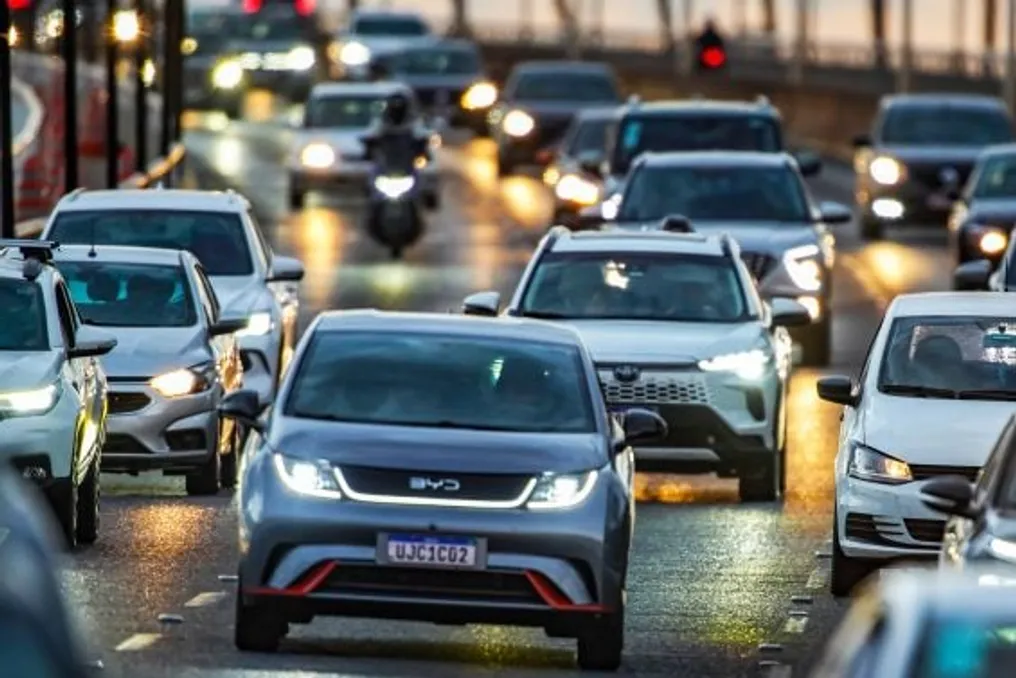
The federal government released Provisional Measure 1,399 this Wednesday (4th), which establishes the value of the Selective Tax, known as the 'sin tax,' to be applied to automobiles starting February 2, 2027.
This new tax will replace the IPI for vehicles and has higher rates. Despite this, it is expected that the cost of cars will remain close to the current level.
The adopted rates follow the structure of the Green IPI, in effect since November of the previous year: 6.3% for passenger cars and 3.9% for pickup trucks and light commercial vehicles, with possible adjustments based on factors such as fuel type, power, efficiency, safety, and recycling capacity.
The reason for maintaining the price lies in the calculation base. While the IPI was calculated on the total value of the vehicle, including ICMS, PIS, and Cofins, the Selective Tax is charged on a lower value, excluding these taxes.
To balance this difference, the MP applies a multiplier of 1.21 to the current rates, a value that represents, on average nationally, how much the calculation base with taxes exceeds the base without them. In simplified examples, the amount paid remains similar.
In practice, the financial balance varies by model, and there may be small differences in the final value.
Electric models will not be exempt, maintaining the two percentage point discount that already existed under the IPI. Pickup trucks will also not suffer drastic increases, as they use a specific table where diesel adds 2.5 points, in contrast to the 12 points applied to passenger cars. This means a model like the Toro costs significantly less than the Commander, even using the same engine.
The applicable discounts depend on three criteria evaluated individually for each model. Energy efficiency can generate a deduction of up to 2 points if energy consumption is lower than a limit determined by the vehicle's own weight. Safety grants 1 point and requires standard equipment such as stability control, automatic emergency braking, lane departure warning, and pedestrian protection.
Finally, recyclability allows a discount of up to 2 points, conditioned on the manufacturer's policy of sending an old vehicle to dismantling for every five or ten units produced of the respective model. Summing these criteria, about 6 points are subtracted from the Selective Tax, ensuring that the rate never falls below zero. In the case of the Compass, for example, the rate would go from 9.44% to 3.39%, but since these discounts were already valid, the price comparison does not change.
The Mobi remains eligible for the Sustainable Car program, and the MP ensures the maintenance of the zero rate for these models. The same benefits extend to buyers with disabilities, people with autism, and taxi drivers.
In January, the CBS, a federal tax introduced by the tax reform, will take the place of PIS and Cofins, which currently influence the price of automobiles. The Federal Court of Accounts (TCU) estimated the reference rate for the CBS at 11.3%, and the Senate has until December 15th to define this percentage. The projected revenue from the Selective Tax will be considered to reduce the CBS, although the direct impact on the price of each car is not yet clear.
The rates defined in the MP are not final. The government has until May 31, 2027, to present a bill to Congress containing the percentages for 2028. Before that, the Chamber and the Senate must approve the MP, which may be subject to amendments. According to the Constitution, an MP that creates or increases taxes will only be valid in the subsequent year if converted into law by the end of the year it was promulgated.
Additionally, the government proposed a constitutional amendment aimed at keeping the IPI active in January 2027, given that the new tax will only come into force in February.