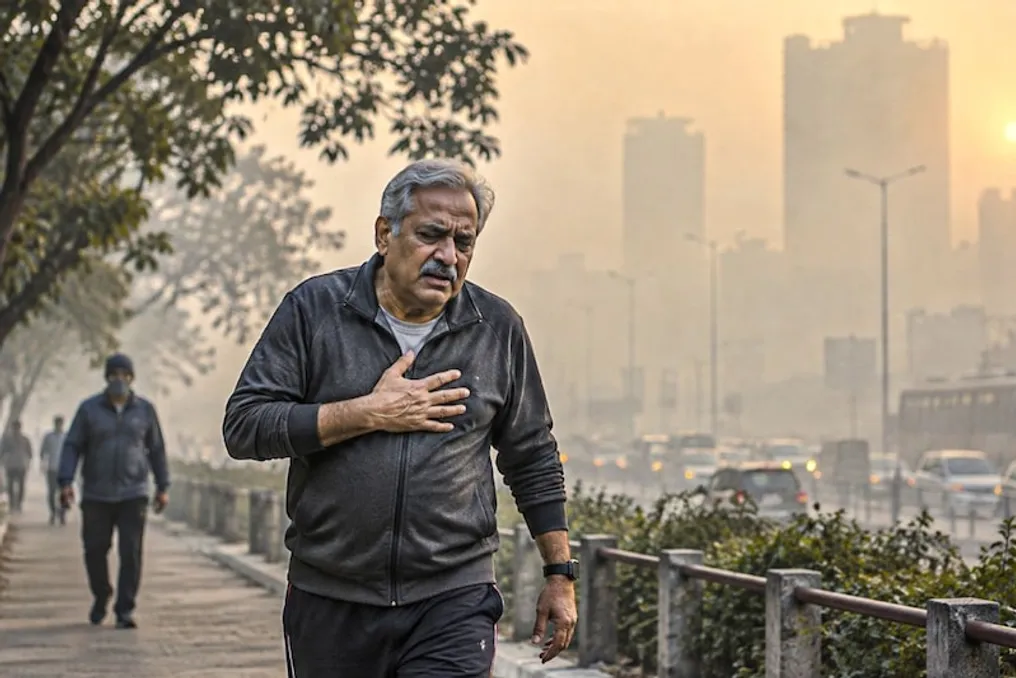
Air pollution levels leading to worsening public health, say AIIMS doctors
Read more
Aaj Tak
www.aajtak.in

Air pollution levels leading to worsening public health, say AIIMS doctors

The Delhi-NCR region is experiencing a rise in pollution levels, which is negatively affecting people's health. Problems for those suffering from respiratory diseases are worsening. Furthermore, people who previously did not have breathing difficulties are seeking medical attention after the increased pollution began causing symptoms such as coughing, throat irritation, and shortness of breath. Such patients are being admitted for treatment at AIIMS Delhi.

In some cases, doctors have to increase medication dosages for patients. Dr. Saurabh Mittal, Assistant Professor in the Department of Pulmonology, Critical Care, and Sleep Medicine at AIIMS Delhi, reported that the symptoms in patients with respiratory problems are becoming more severe due to rising pollution. An increase in drug dosage is required, up to increasing the dose of inhalers, and some patients are prescribed new medications because standard drugs cease to be effective amid elevated pollution.

According to Dr. Saurabh Mittal, the condition of patients who were already battling respiratory diseases is deteriorating due to pollution. Treatment adjustment is necessary to alleviate cough and breathing issues. In addition to increasing the dose of inhalers, some patients are prescribed oral steroids. This is because the problems of these patients are so serious that they cannot be controlled with standard medications.

It is concerning that people who previously had no breathing problems are now seeking medical help. Among these patients, symptoms include coughing, burning in the throat, nasal irritation, and shortness of breath. These patients also require medications that provide relief and treatment according to their symptoms.

In Dr. Mittal's opinion, there are many reasons for the rise in pollution in Delhi, and it is not a problem arising from a single day or one cause. During the winter period, changes in weather and increased air humidity can contribute to the accumulation of pollutants near the ground. Additionally, emissions from vehicles, dust from construction work, and smoke from stubble burning also contribute to the increase in pollution levels.

Similar stories

Expert explains how air pollution harms lungs even without symptoms
Read more
www.aajtak.in

Expert explains how air pollution harms lungs even without symptoms

In the capital Delhi and many other regions of the country, there is an increase in air pollution levels. Although some people exhibit symptoms such as coughing and throat irritation, others may have no signs of discomfort. However, this does not mean that the absence of symptoms protects against the harm caused by pollution.

Dr. Vikas Mittal, director of the pulmonology department at S.K. Bidla Hospital, commented on this situation. He emphasized that a worsening Air Quality Index (AQI) does not rule out the impact of pollution on the lungs, even if there is no cough, shortness of breath, or throat irritation.

Fine particles present in the air, especially PM2.5, are capable of penetrating deep into the lungs through the respiratory tract and causing inflammation there. Sometimes the consequences of such exposure do not appear immediately, and a person may not feel any problems. Therefore, atmospheric pollution is considered a serious threat to health.

Long-term inhalation of polluted air can negatively affect lung function. It also increases the risk of developing respiratory diseases such as asthma and COPD. For people who already suffer from respiratory diseases, problems can worsen due to pollution. The degree of influence depends on the duration of human contact with the pollution, the intensity of this contact, and the general state of their health. Consequently, even if a person feels well, the poor AQI should not be ignored.

To prevent exposure to pollution, it is recommended to avoid intense physical activity outdoors, especially during peak concentrations of pollutants. It is also advisable to minimize time spent in rooms with smoke and limit the use of pollution sources, such as cigarette smoke or incense. If necessary, air purifiers with HEPA filters suitable for the room size can be used. If persistent coughing, wheezing, or shortness of breath occurs, a doctor should be consulted. It is important to remember that protection against pollution is necessary regardless of the presence of visible symptoms.

Study reveals link between air pollution and liver problems, increasing risk for certain populations
Read more
www.aajtak.in

Study reveals link between air pollution and liver problems, increasing risk for certain populations

Although increased levels of air pollution typically lead to an increase in respiratory, lung, and heart diseases, a new study has shown that poor air quality also affects the liver. This information was published in the journal Nanotoxicology.

As part of a meta-analysis covering the results of 46 scientific studies, it was found that long-term exposure to polluted air is associated with changes in liver enzyme levels and an increased risk of non-alcoholic fatty liver disease related to metabolic disorders.

The study explains that the tiny particles contained in pollution enter the body through the respiratory tract. Contact with these particles influences bodily processes such as oxidative stress and inflammation. However, the authors emphasize that exposure to pollution does not automatically mean the development of liver disease in every person, but it can increase this risk.

The research found an increase in markers such as ALT and SGPT after PM2.5 enters the body. Furthermore, the study identified a link between air pollution and the risk of developing liver cancer. Although this study is in its early stages, it confirms that pollution affects the liver, which requires preventive measures.

In this regard, people need to exercise special caution. It is especially important to avoid pollution in areas with low air quality.

People who already suffer from type 2 diabetes, obesity, or metabolic problems should pay special attention to their liver health. It is also important for people living in environments with long-term pollution to take measures to protect themselves from air pollution.

Currently, there is no complete evidence to determine how often a person should undergo liver examinations solely due to contact with pollution.

Rising Air Pollution in Delhi-NCR: Should Cardiologists Advise Against Morning Walks?
Read more
www.aajtak.in

Rising Air Pollution in Delhi-NCR: Should Cardiologists Advise Against Morning Walks?

The Delhi-NCR region is experiencing a rise in air pollution levels even before the Diwali festival, with the Air Quality Index (AQI) exceeding 200 in many areas. Increased pollution poses a risk of exacerbating various diseases. This raises the question of whether people with heart conditions should engage in outdoor physical exercise during this period, as many start their day with morning walks or light exercises; however, at high levels of air pollution, the risk of negative impact on individuals with heart problems increases.

Doctors generally consider the morning the best time for workouts, but with poor air quality, outdoor activities can bring more harm than good. Dr. Nishant Tyagi from the Cardiology Department of Medanta Hospital in Noida shared his opinion on this issue. He emphasized the need to pay attention to how pollution affects the heart, as well as choosing the appropriate time and place for exercise.

Dr. Tyagi explains that atmospheric pollution contains fine particles, specifically PM2.5. These particles enter the lungs upon inhalation and can cause inflammation in the lungs, as well as other problems. In patients with heart diseases, this can contribute to increased blood pressure and the formation of blood clots, making them more vulnerable.

The answer to this question largely depends on the air quality, the individual's heart condition, and the recommendations of their treating physician. Morning exercise itself is not inherently dangerous, but one cannot assume that the morning atmosphere is always clean. If the AQI is significantly elevated and falls into the 'poor' category, it is recommended to refrain from walking or strenuous physical activity outdoors.

It is important not to ignore the following symptoms: chest discomfort, shortness of breath, dizziness, and rapid heartbeat. Patients must continue taking prescribed medication and should not independently stop taking cardiac drugs or change dosages due to pollution. Those who already suffer from heart disease must discuss their exercise regimen and any new symptoms with a cardiologist.

Popular