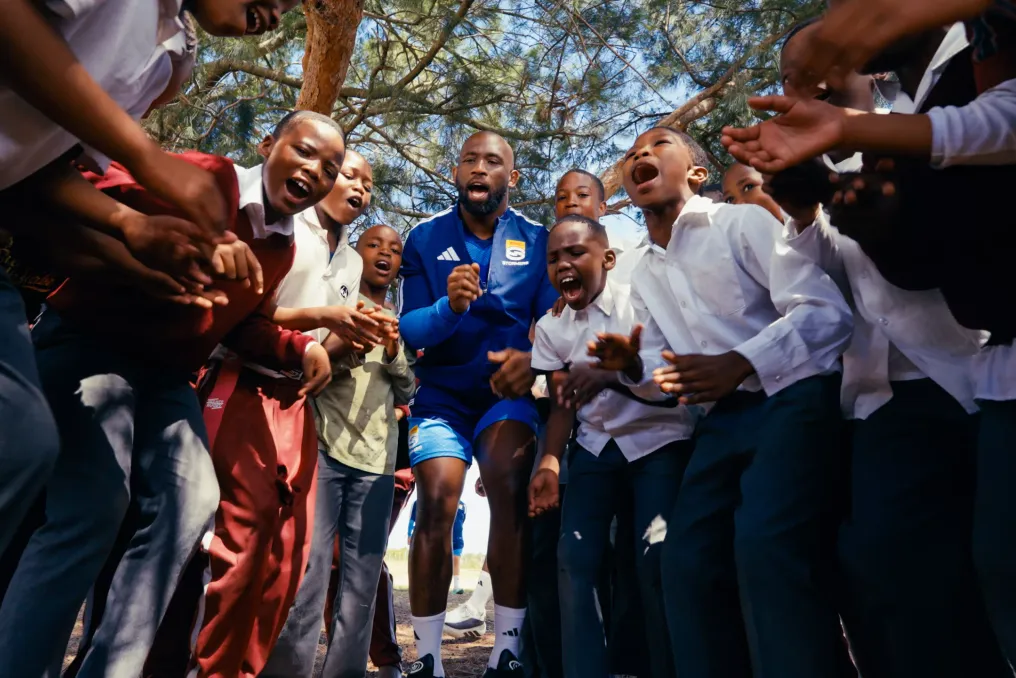
Siya Kolisi participated in the Cape Town students support initiative
Read more
Getaway
getaway.co.za

Siya Kolisi participated in the Cape Town students support initiative

More than 800 primary school students in Cape Town recently took part in an event that combined nutrition, education, and community support, thanks to a new initiative involving renowned South African sports figures.

The Emirates Nourishment Programme, a partnership between Emirates, the European Professional Club Rugby (EPCR), and the Kolisi Foundation, visited Eluxolweni School on November 3rd. During the visit, players from the DHL Stormers team, including Siya Kolisi, spent a day of activities with the students.

The goal of this initiative is to remove obstacles preventing children from maximizing their educational opportunities, particularly limited access to nutritious food and learning materials. The program, launched in June 2026, operates through schools and early development centers in Cape Town, Johannesburg, and Durban. Its mission is to support 2000 children annually by providing regular nutritious breakfasts, educational resources, and opportunities to interact with role models from the world of sports.

The day at Eluxolweni School began with breakfast, as representatives from the three partners helped prepare and distribute porridge to the students. The focus then shifted to the school grounds, where DHL Stormers players conducted a rugby training session.

Siya Kolisi was accompanied by Lukahlo Vokozela, B J Dixon, Marcus Muller, Ruan Ackermann, Leolin Zas, Vernon Matongo, and J J Kotze. Through practical exercises and small group games, the players introduced the students to the basics of rugby, emphasizing the importance of teamwork, communication, and perseverance.

For many children, this was a chance to spend time with professional athletes and hear from people who have reached the pinnacle of their sport. Kolisi, founder of the Kolisi Foundation, noted that the program aims to create opportunities for children who might otherwise face significant difficulties.

He stated: 'Every child is born with potential, but not every child has equal opportunities to realize it,' stressing the importance of access to nutritious food, educational materials, and positive role models.

Sport was only part of the day. Emirates also donated 820 backpacks from its Aircrafted KIDS collection; each contained stationery, a water bottle, and age-appropriate books written by local authors.

Students participated in a creative workshop where they made personalized keychains for their new backpacks. The decorations were made from recycled leather sourced from Emirates A380 and Boeing 777 aircraft, introducing the children to the idea of giving new meaning to secondary materials.

The school also received a colorful new mural from Cape Town artist Skhumbuzo Salman, founder of Skubalisto. The artwork depicts Dobiespitz, proteas, and lush foliage, celebrating the natural beauty of South Africa and highlighting the importance of water conservation. Students participated in creating the mural using monstera and palm leaf stencils, turning the work into a collaborative project rather than just a new wall decoration.

Since its launch in June 2026, the Emirates Nourishment Programme has distributed over 35,000 breakfasts to children in Cape Town, Johannesburg, and Durban. The initiative is expected to continue for at least until 2030.

Furthermore, the program is part of EPCR's broader community strategy, which aims to leave a positive legacy in locations associated with its rugby competitions, including South Africa.

For the students of Eluxolweni School, the visit provided an opportunity to meet rugby players, express creativity, and receive resources to support their education. However, the broader goal is to make such support a part of daily school life, enabling more children to come to class fed, prepared, and ready to learn.
Similar stories

Kokstad family challenges construction of initiation school near their home
Read more
iol.co.za

Kokstad family challenges construction of initiation school near their home

A family in Runner Wildt, Shayamoya village, Kokstad, claims that their home has turned into a place of fear, intimidation, and suffering after discovering that an initiation school was built on their property without their knowledge or consent.

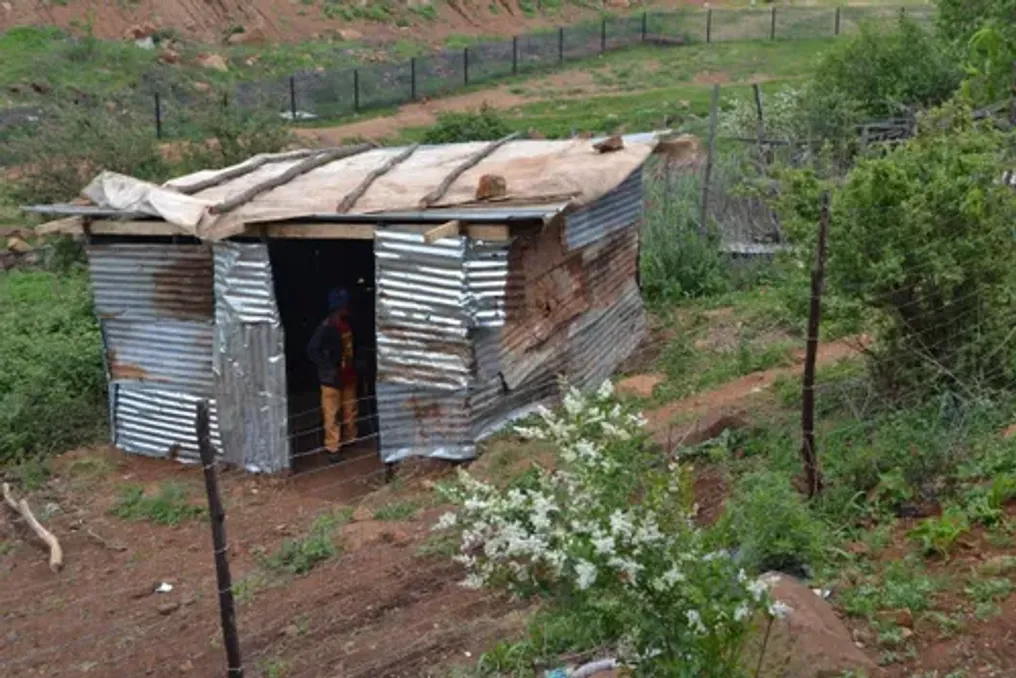
The Mbobo family states that they have to endure unbearable living conditions, feeling like strangers and prisoners in their own home, because the disputed structure, presumably used for traditional initiation rites, is located in their garden. In the family's view, what should be a private family home has become a source of anxiety, with women in the house allegedly being subjected to insults, intimidation, and restrictions on freedom of movement.

The family asserts that this structure is used to house those undergoing traditional circumcision rites, citing songs and shouts coming from the area at night. Fikiswa Mbobo recounted that this bitter dispute began back in 2004 when initiates first appeared in the area, leading to a confrontation with the municipality, which reportedly insisted that the initiation school could not legally operate in a densely populated residential area.

Mbobo noted: 'We grow crops in our garden, but the initiation school was built when our fence was damaged, leaving the plot open after goats knocked it down. People also started walking through our residential area, using our yard as a passage.'

She suspects the situation worsened because she, her daughter, and sister are the only women living in the house. Mbobo accused her neighbor, whom she described as a prominent figure in traditional initiation practices, of constant intimidation and making their lives increasingly unbearable. She reported that the family was repeatedly insulted and threatened, especially because women are traditionally forbidden from approaching the initiation school. The consequences, she said, have been devastating, as they now have to restrict their movements around their own property due to the presence of the disputed structure.

In an attempt to restore some privacy and establish a boundary between their living area and the structure, the family eventually erected a fence around it. However, even this intervention, it is claimed, failed to restore their peace, as those occupying the building allegedly continue to throw insults at them. The family also stated that their neighbor tried to involve a local ward councilor in the dispute, claiming the councilor had given permission for the construction, despite the municipality previously stating that it was illegal and should be demolished.

Municipal representative Zolani Sikwayi confirmed that the municipality officially demanded the owner demolish the structure. Sikwayi stated: 'We wrote to the owner of the structure, ordering him to tear it down. If he does not comply with the requirements, we will be forced to take more decisive action.'

Nevertheless, Benny Khobo, chairman of the Traditional Initiation Oversight Committee in Kokstad, rejected the family's accusations, calling the matter a neighbourly dispute between people who were already in conflict. Khobo stated: 'This area is on the corner of the garden, and it is not an initiation school, as they claim. We have a designated hill where we conduct our traditional initiation rituals.'

He insisted that the man simply built a temporary shelter to house his sons while preparing for their subsequent departure to the hill, thereby challenging the family's claims about the building's purpose.

Ward councilor Zodidi Tshazi admitted to giving Elliot Keneve Dandlow permission to use the land for preparation for initiation ceremonies. However, she denied that the location was in the Mbobo family's garden or home. Tshazi explained: 'It is municipal land, and we do this regularly when the initiation season approaches. He is not the only person for whom we made such an agreement.' She added that she did not know about the nature of the relationship between the Mbobo family and their neighbor and could not explain what was happening inside the temporary structure. Tshazi emphasized that the municipality provided the land on a temporary basis to facilitate cooperation with community members in observing the traditional rite of initiation.

Elliot Keneve Dandlow could not be reached for comment.

Aside from the unrest unfolding in Kokstad, men observing the traditional initiation rite in Matathile also stopped the town by blocking roads in protest against what they described as government interference in the sacred cultural practice of circumcision. Protesters expressed deep dissatisfaction with how the government handles the initiation process, claiming that some ministers overseeing the regulation of this custom themselves did not undergo initiation in the same traditional manner as they did. They subsequently met with the Eastern Cape Premier Oscar Mabuyane, who promised to give their complaints urgent attention and thoroughly investigate their concerns.

Film 'Rise: The Siya Kolisi story' raises the standards of South African cinema
Read more
iol.co.za

Film 'Rise: The Siya Kolisi story' raises the standards of South African cinema

The film 'Rise: The Siya Kolisi story,' directed by Tebogo Malope, presents the powerful story of South Africa's first black rugby captain.

A cinematic work worthy of its place

Upon first viewing the documentary 'Rise,' the author admitted that he initially had doubts about the quality of local documentary production. He feared the film might resemble a music video by the group Die Antwoord, but the story does not offer a gentle introduction; instead, it honestly reflects the lives of many young people and men in South Africa.

The documentary begins with archival rugby footage shown on television, immediately placing Siya Kolisi's story within the context of South Africa's long and complex rugby history. Discussing with Bheki Dalla, a board member of African Film DAO, the analysis explored how the film's technical mastery enhances its emotional impact.

The film does not merely list Kolisi's hardships; it makes the viewer feel them. The audience experiences the weight of childhood poverty, the deep sorrow of losing his grandmother, who was the pillar of his world, as well as the heavy, silent burden of a teenager balancing between a privileged high school and a difficult life in a township.

For a long time, low budgets and limited resources set a low standard, forcing the local audience to accept works that represented only a fraction of what was possible. The film 'Rise' shatters this standard, proving that South African filmmakers are capable of conveying destructive, raw intimacy while offering a confident, first-class cinematic experience that garners international respect.

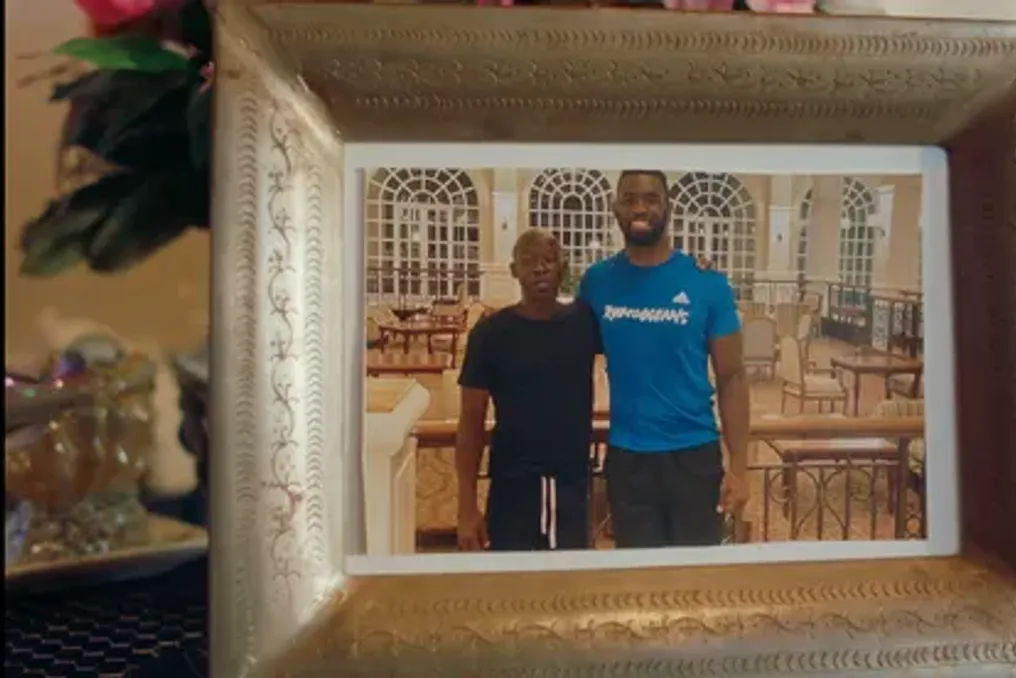
During an interview, the author noted one visual moment that surprised him and became an emotional anchor for the film: a shot with the inscription 'the only known footage of Kolisi at home,' accompanied by a recognizable royal symbol. There is very limited visual material from his early life. Viewers know what kind of man Kolisi became, but this candid statement on screen prompts viewers to reflect on the boy he once was. This single fragment is a symbolic representation of the distance between the boy in the image and the man holding the World Cup.

The film addresses the theme of Kolisi's father's absence, his imprisonment, and alcoholism. Dalla emphasized that these are authentic African stories, and the documentary perfectly balances these difficulties with the development of a deep sense of duty in Kolisi. Dalla also mentioned that the film sets a benchmark for broader local film and production companies, demonstrating this standard through Siya's survival in South Africa.

Dalla explained: 'We must ensure that the end audience does not receive a low-quality product.' Warning against a lack of strict quality control, Dalla stated that 'the South African film industry remains uncompetitive globally, serving merely as a service provider for international productions rather than telling our own stories with the ambition they deserve.'

In the township of Zweide, Gqeberha, sixteen-year-old Fakama gave birth to Siyamtandu 'Bear' Kolisi on June 16, 1991. On Youth Day in 1991, the Zweide community welcomed the Son of the Nation with hope.

Popular