NASA presents the X-70 Fractal, a new experimental aircraft for advanced testing
Read more
Olhar Digital
olhardigital.com.br

NASA presents the X-70 Fractal, a new experimental aircraft for advanced testing

NASA unveiled the X-70 Fractal, its latest experimental aircraft, during the UP.Summit event held at the Kennedy Space Center in Florida.

This manned aircraft was designed as a versatile platform intended to accelerate both the development and testing of cutting-edge aerospace technologies. The X-70 features a flight control system that can be rapidly reconfigured, allowing NASA to investigate aircraft maneuverability in scenarios not yet proven in manned flights.

The aircraft structure supports up to 907 kg (equivalent to 2,000 pounds) of experimental equipment, which can be installed both internally and externally. With a takeoff weight of 4,535 kg (10,000 pounds), the model is designed to operate at a cruising speed of Mach 0.75, which corresponds to 75% of the speed of sound.

Furthermore, the X-70 has the capacity to reach altitudes of up to 45,000 feet (approximately 13,700 meters) and possesses an operational range exceeding 2,777 km (1,500 nautical miles).

Jared Isaacman, NASA administrator, emphasized the relevance of this platform for the agency's experiments. He noted that the modular design will allow for the agile replacement of internal and external payloads, simplifying the execution of various types of tests.

Isaacman stated: 'The X-70 Fractal gives NASA a high-performance manned platform to test advanced flight control, maneuverability, and other cutting-edge technologies in real flight.' The first flight of the aircraft under NASA's banner is expected within the next two years.

The X-70 fits into the long history of NASA's experimental aircraft, known as X-planes, which are used to advance aviation technology. This trajectory encompasses models that have defined distinct phases of aeronautical research.

Laurie Grindle, director of the Aeronautics Division at NASA's Research and Technology Mission Directorate, expressed enthusiasm for the arrival of this new model, viewing it as an opportunity to intensify the agency's work. She commented: 'It is exciting to bring another X-plane to accelerate and drive aeronautical research.'
Similar stories

Aerospace company AZSpace completes mechanical tests of DEAR-21 cargo spacecraft; first flight scheduled for 2027
Read more
pandaily.com

Aerospace company AZSpace completes mechanical tests of DEAR-21 cargo spacecraft; first flight scheduled for 2027

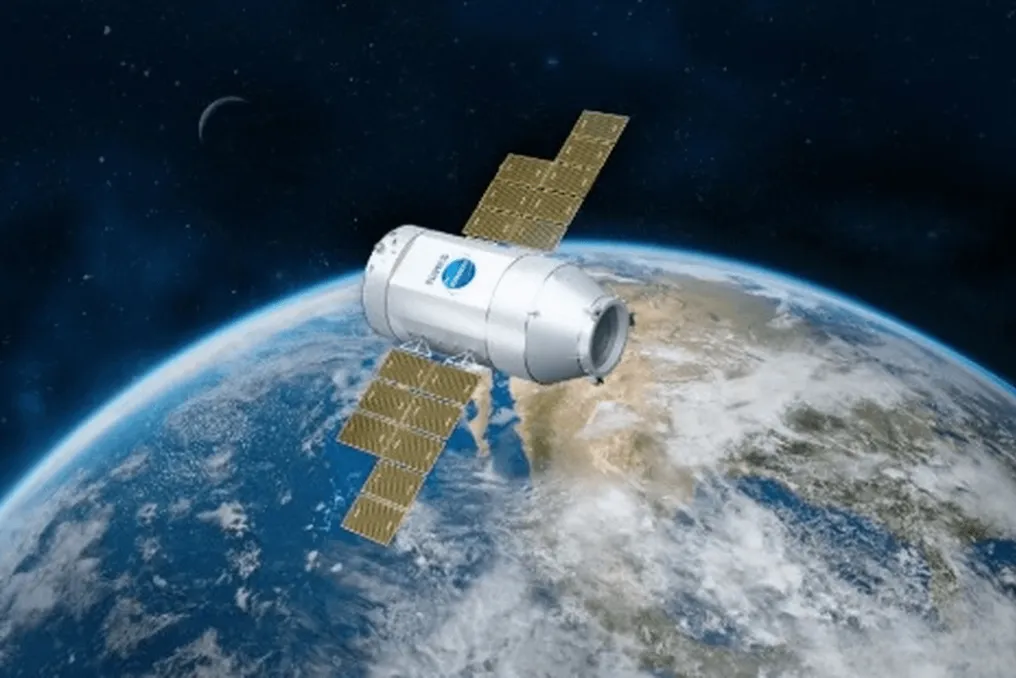
The commercial company AZSpace, based in Beijing, announced the completion of mechanical tests on the structural model of its DEAR-21 spacecraft. DEAR-21 is the first flight prototype of the C2000 series of medium cargo spacecraft, and its launch is slated for the first half of 2027.

Mechanical tests are conducted to verify the spacecraft's structure's ability to withstand loads, vibration, and impact forces during launch. This stage followed the completion of the assembly of the structural test model, which AZSpace reported on October 20. The project schedule has been adjusted: previously, when AZSpace displayed a full-scale model of the C2000 demonstration version at a trade fair in Chengdu in May, the first flight was anticipated in late 2026.

The C2000 series represents a major step for the company. Each C2000 spacecraft is designed to carry cargo weighing up to 2000 kilograms, and several such spacecraft can be combined into what AZSpace calls a version 2.0 commercial space station. The company indicates that the C2000 is intended for low-cost delivery of supplies to orbit, reuse for orbital transfer, and modular assembly of commercial space station sections. It is designed for long-term orbital presence and support of docking and rendezvous operations.

Founded in 2019, AZSpace focuses on commercial spacecraft and stations, with stated business directions in space station development, in-space manufacturing, and space tourism. Among the developed vehicles are the B300 series of small cargo spacecraft, capable of carrying up to 300 kilograms each and combined into a crewed commercial space station version 1.0; the C2000 series of medium cargo spacecraft; and the D6 crewed suborbital spacecraft, designed for six to nine people.

The company's first product, the A10 series, completed its first flight in 2023. According to AZSpace, the B300 series completed a full commercial cycle in 2024, and in 2025, the company achieved what it describes as China's first orbital flight of a small commercial cargo spacecraft.

The transition from 300-kilogram cargo spacecraft to 2000-kilogram spacecraft marks the next significant stage in AZSpace's path toward building a commercial space station. The 2027 flight will be the first real test of the C2000's capabilities.

Modernized bathyscaphe Jialun completes tests at 7000 meters depth, reaching 7056.9 meters
Read more
pandaily.com

Modernized bathyscaphe Jialun completes tests at 7000 meters depth, reaching 7056.9 meters

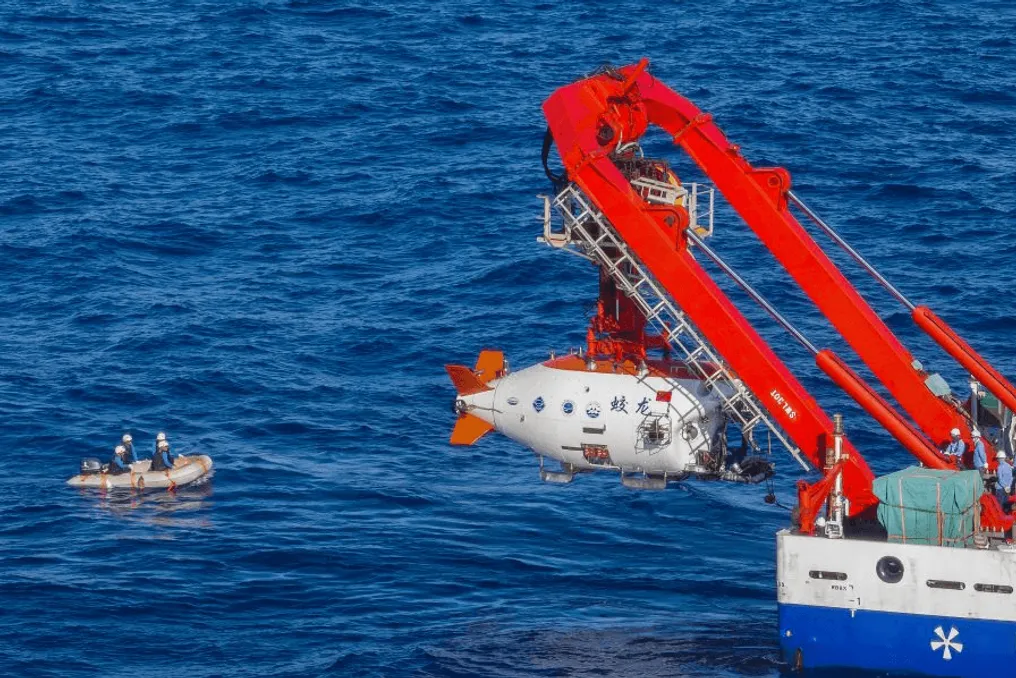
The Chinese bathyscaphe Jialun has successfully completed sea trials of the 7000-meter class following a second round of modernization, according to Xinhua agency on October 27 from the research vessel Shenhai Yihao. These tests served as acceptance testing for the national research and development program aimed at enhancing Jialun's key operational capabilities and scientific potential.

The tests were conducted as part of the second phase of China's hundred-thousand-mile oceanic scientific expedition. In the Philippine Basin, Jialun made three test dives. Two of them exceeded the 7000-meter mark, and the deepest dive was achieved on October 2, during the bathyscaphe's 465th dive, at a depth of 7056.9 meters. Previously, a dive to a depth of 7035.3 meters was recorded on September 30. All control indicators met the requirements for 7000-meter class trials.

Assessment of reliability after modernization

Sun Yunfu, a researcher from the National Deep-Sea Research Center of China, noted that the tests fully confirmed Jialun's reliability and safety after the modernization and replacement of key units with domestically produced components. Before the expedition, Jialun was equipped with a high-energy density lithium-ion battery pack submerged in oil and rated for 7000 meters. Domestic direct-drive brushless DC motors were also installed, the hydraulic emergency system interfaces were expanded, a deep-water buoyancy control system using seawater was implemented, and wide-angle ultra-high-resolution zoom cameras were mounted.

These changes cover power plants, motors, hydraulics, electrical systems, as well as observation and communication systems, which, according to Sun, represents a significant increase in operational efficiency. After completing the modernization and component replacement, Jialun began a series of studies on marine resources and ecology in various sea areas, which, in Sun's opinion, will contribute to deepening international oceanic cooperation.

The two dives exceeding 7000 meters were conducted by different pairs of bathyscaphe pilots, with each setting a personal depth record. The results show that the refurbished apparatus is capable of regularly operating in the 7000-meter class with a greater proportion of domestically manufactured components.

India begins sea trials of Rafale fighter developed to counter Pakistan
Read more
www.aajtak.in

India begins sea trials of Rafale fighter developed to counter Pakistan

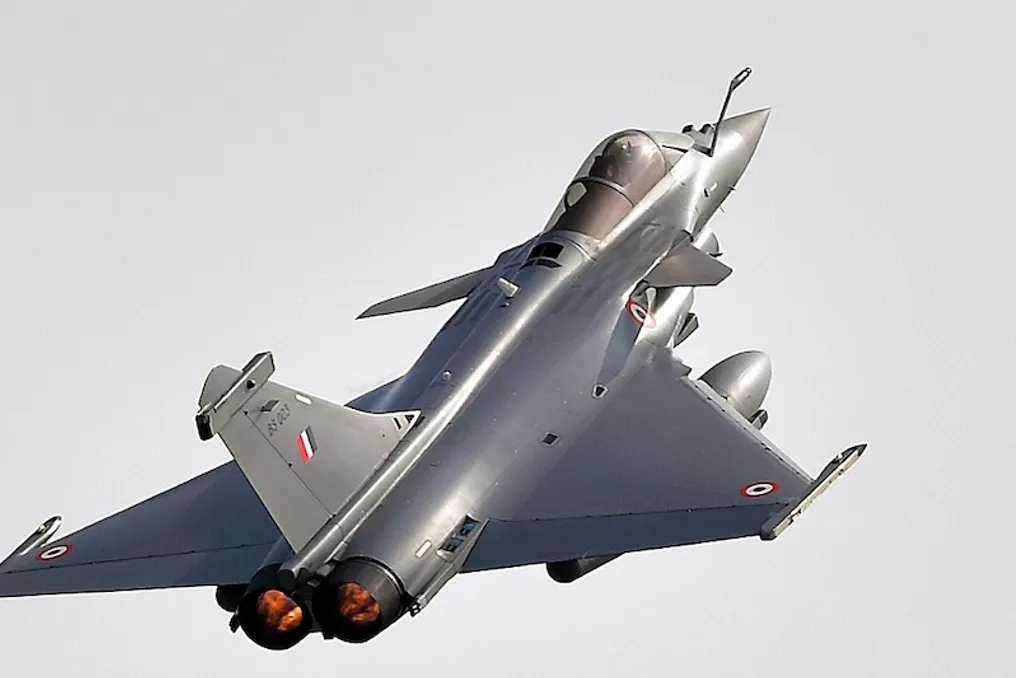
Sea trials have commenced for the naval variant of the Rafale fighter, which was previously used to mislead Pakistan during Operation Sindoor. The Indian Navy recently began flight tests of the naval Rafale fighter in Goa.

The main objective of these trials is to test the modifications made to the aircraft necessary for its subsequent use on aircraft carriers such as INS Vikrant. These tests are being conducted to ensure the reliability and suitability of the aircraft before its integration into the Indian Navy fleet.

This step is viewed as a significant contribution to strengthening India's maritime security. India concluded a deal with France to purchase 26 naval Rafale aircraft in 2025. This package includes 22 single-seat fighters and 4 two-seat trainers. The total value of this deal is estimated at approximately 63,000 – 64,000 crore rupees.

The contract covers not only the aircraft but also training, simulators, weaponry, associated equipment, and logistical support. According to defense officials, the aircraft deliveries are expected by the end of 2028 or early 2029, aligning with the modernization program of the Indian Navy.

During Operation Sindoor, the Pakistani army was misled by a decoy system installed on the Rafale fighter. Although the Pakistani side claimed to have shot down a Rafale, a decoy system supplied by France was actually used.

The naval variant of the Rafale, developed by the French company Dassault Aviation, differs from the land-based version in that it is adapted for takeoff and landing from an aircraft carrier. These changes include more robust landing gear for landings, folding wings, and anti-corrosion coating.

Testing in Goa allows these modifications to be tested under conditions typical for India. The aircraft is being adapted to meet the needs of the Indian Navy for operation on INS Vikrant. If the tests are successfully completed, the aircraft can be commissioned shortly, which will enhance India's air and maritime power in the Indian Ocean.

This deal represents not just a purchase but part of a strategic partnership. Defense cooperation with France has long been strong. Since the Rafale Marine is similar to the Rafale fighters already used by the Indian Air Force, this will simplify maintenance and training processes. The aircraft is equipped with advanced sensors, missiles, and electronic warfare capabilities, meeting the demands of modern warfare. Experts believe these aircraft will significantly increase the range and strike potential of the navy.

Before deliveries begin, the Indian Navy needs to prepare infrastructure and conduct training. The trials in Goa are part of this preparation. Issues of timely delivery and technology transfer will remain critically important. Overall, the introduction of the Rafale Marine will prepare the Indian Navy for the challenges of the 21st century and strengthen India's role in maintaining regional security balance.

Popular