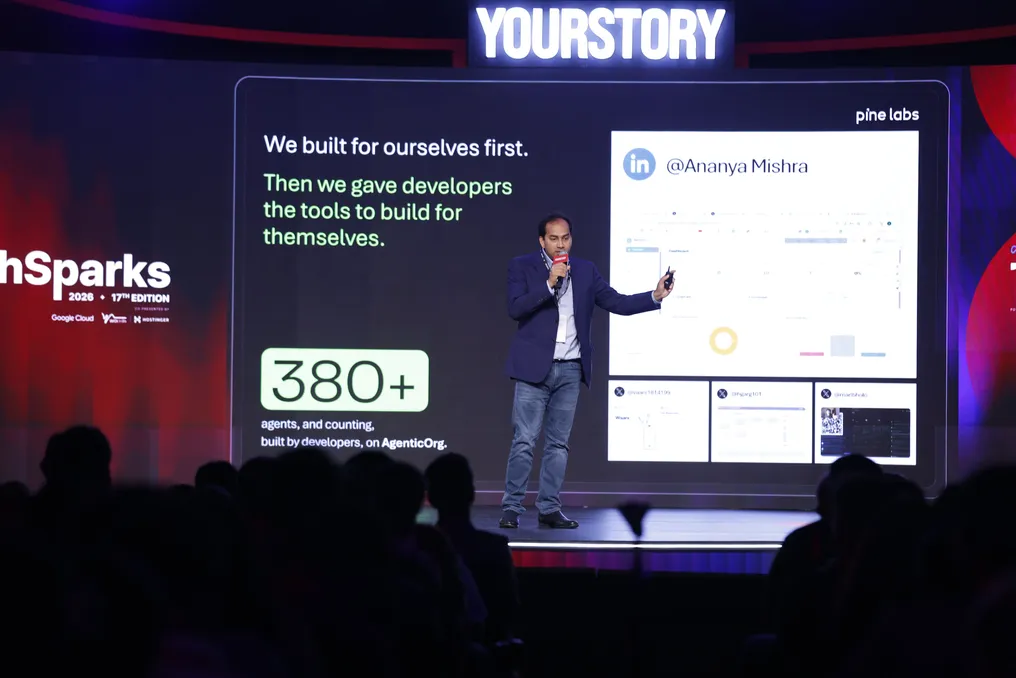
CTO of Pine Labs, Sanjeev Kumar, discusses building an ecosystem for the agent economy, emphasizing trust and control
Read more
YourStory [india, en]
yourstory.com

CTO of Pine Labs, Sanjeev Kumar, discusses building an ecosystem for the agent economy, emphasizing trust and control

Artificial agents are beginning to perform real business functions, ranging from lead generation to complaint handling. For banks, fintech companies, and large enterprises, this raises a fundamental question: how much can one trust an autonomous agent?

Pine Labs is addressing this issue by creating an ecosystem that allows AI agents to perform commercial tasks while ensuring accountability for their actions. During a product presentation at TechSparks 2026, Sanjeev Kumar, CTO of Pine Labs, stated that the company aims to make AI a full participant in its ecosystem.

Over the past year and a half, Pine Labs has been developing an operating system for commerce around AI agents. This system integrates tools for managing permissions and tracking agent activities with applications for sellers and enterprise teams. Through its Agent Store, the ecosystem will be open to third-party developers creating solutions for banks and sellers.

For agents to function in banking and corporate environments, organizations must clearly understand the limits of their authority and have the ability to audit their actions. Pine Labs developed Grantex, which Kumar described as 'Open Authorization 2.0 for AI Agents.' This tool assigns each agent a specific set of permissions, an expiration date, and records the identity of the person who granted the permission.

If an agent authorized to read and compose emails attempts to send such an email, the action can be blocked, and its permissions revoked, including those of any subordinate agents. All actions are recorded in an immutable audit trail based on a hash chain.

Kumar detailed the work related to system and tool connectivity, setting up Retrieval-Augmented Generation (RAG), conducting continuous evaluations, and identifying moments requiring human intervention. These components must work in concert before an agent can reliably handle tasks in a corporate environment.

Pine Labs initially implemented this technology within its internal compliance, finance, HR, and marketing teams, running all operations in its own environment. The company is also implementing this technology in collaboration with banks in India and abroad.

The Cora agent, responsible for compliance and issue resolution at Pine Labs, handles cyber fraud complaints from receipt to full closure. It matches complaints with transactions, classifies them, routes them to relevant teams, and prepares responses for review. Kumar noted that this allowed Pine Labs to close some complaints the same day, whereas the standard timeframe is three to five days.

The agent logs a 15-step trail of its work, which includes data verification, transaction searching, reconciliation, team notifications, as well as supporting evidence and confidence levels. If the system connector is unavailable, Cora can utilize Robotic Process Automation (RPA). During a demonstration, it accessed the state cyber police portal and filled out an action report, specifying transaction details and the disputed amount. Meanwhile, a human operator maintains control over the password and one-time code and reviews the form before submission.

After deploying agents in internal compliance, finance, HR, and marketing departments, Pine Labs opened its platform to developers and seller partners. The company is also collaborating with banks in India and internationally.

To demonstrate the potential application of the technology beyond its own operations, Kumar mentioned a hackathon organized by Pine Labs in collaboration with The Ken. Over 380 participants—students, recent graduates, and engineers from India—took part. The winning project helped people decide what to cook for dinner.

Developers can create skill files, connect tools, and define tasks using plain language, while AgenticOrg provides transparency regarding agents, confidence scores, and audit trails via Grantex. AgenticOrg is designed to assist third-party developers in building seller and bank applications using Pine Labs' infrastructure.

For small businesses, Pine Labs has also developed an advertising agent accessible through the seller interface. Sellers connect their Google Ads account, provide information about their business, budget, and campaign goal. The agent researches local demand and nearby competitors, then generates ad copy for search, display, and YouTube.

Sellers can request changes and approve the campaign before launch. The demonstration showed that setup takes about two minutes, and campaign performance and lead routing are available through the same interface.

From internal enterprise workflows and cyber fraud resolution to small business advertising—Pine Labs applies its agent infrastructure to various aspects of commerce. Grantex establishes the framework for agent actions; AgenticOrg helps teams, individuals, and AI enthusiasts build, manage, and execute tasks with agents. Pine Labs is betting that the future of commerce will be determined not only by what AI agents can do, but by how reliably they do it. By combining agent management infrastructure with applications that solve real business problems, the company aims to make autonomous AI a working part of commerce for enterprises, banks, and sellers.

Similar stories

WSO2 CEO asserts that enterprises must understand the behavior of AI agents in networks
Read more
business-standard.com

WSO2 CEO asserts that enterprises must understand the behavior of AI agents in networks

WSO2 CEO Harry Ault stated that corporations need to gain a deeper understanding of how artificial intelligence (AI)-based systems behave and interact with all network components, rather than focusing solely on access to these networks for specific agents.

WSO2, an American company specializing in open-source software and founded in 2005, deals with software system integration, user identity security, and enterprise access.

According to Ault, although AI-based agents have been used for some time, most of them were applied in deterministic systems where security and management were built directly into the network, leaving agents with few opportunities to perform tasks outside established boundaries.

He noted that the shift to generative AI leads to more probabilistic scenarios where outcomes cannot be predicted, which poses a serious problem for production-level applications, and this transition is occurring across all enterprises.

To control such agents, companies must develop their own AI governance plans and create emulation gateways and authentication services, instead of using off-the-shelf solutions, thereby preserving intellectual property indefinitely.

Ault took over as CEO of WSO2 from founder and long-time leader Sandeep Iyeravaran, who retired in August of this year. Ault believes that all problems arising from AI, such as uncontrolled agent behavior or large language models generating responses irrelevant to their task, will be solved through 'open source and open standards,' allowing a larger number of people to collaborate on the same issue.

He added that the majority of revenue opportunities for almost all global technology and product companies come from AI-related demand, and this trend is likely to continue in the foreseeable future.

Speaking about growth, Ault emphasized the necessity of solving all existing AI issues before the company discusses budgets with other firms and offers them corresponding solutions.

He reported that in countries and regions such as the USA and India, the 'AI-first' approach has become standard for all companies. He specifically highlighted India, noting that the scale and value the technology can provide in that country may not be found in any other region.

The company, which serves about 950 clients in 92 countries worldwide, also collaborates with major government institutions, regulators, and financial organizations in India. Furthermore, he mentioned the strong development of founder-led product companies in India due to improvements in generative AI technologies, providing companies like WSO2 with many options for acquisition or merger with a parent company.

Vignesh Subrahmaniam from Intuit discusses the shift from prompt engineering to building functional artificial intelligence systems
Read more
yourstory.com

Vignesh Subrahmaniam from Intuit discusses the shift from prompt engineering to building functional artificial intelligence systems

In recent years, improving AI performance has depended on the ability to write higher-quality prompts. However, this paradigm is rapidly changing as AI systems begin to reason, make decisions, and perform actions within entire workflows autonomously.

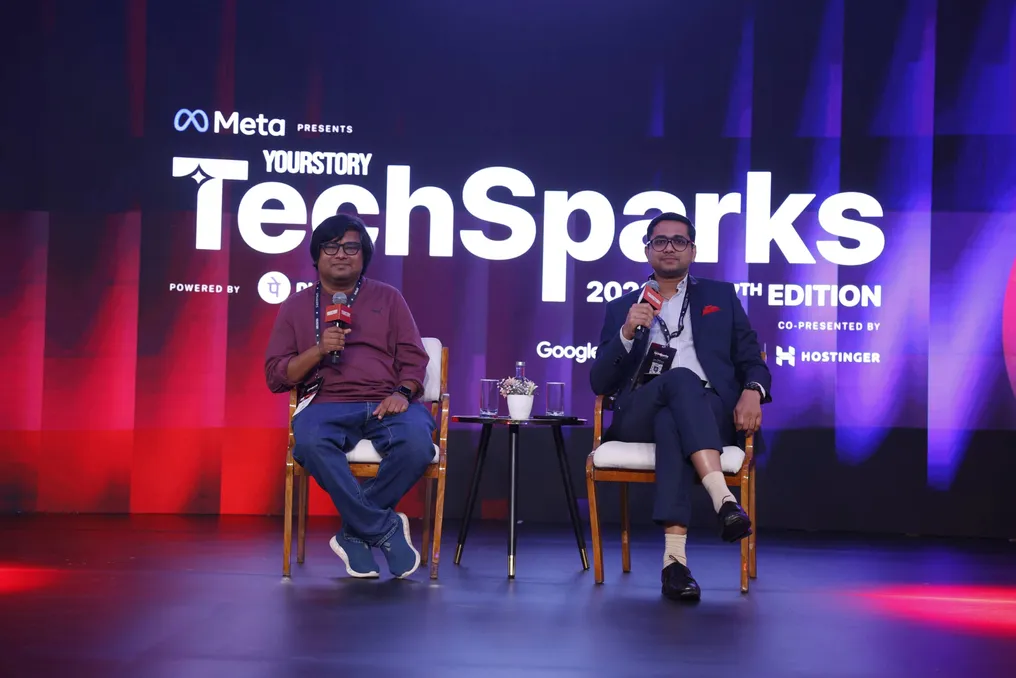
At the TechSparks 2026 event, YourStory's flagship event, Dr. Vignesh Subrahmaniam, an AI lead scientist at Intuit, held a discussion with Aditya Charlie, Editor-in-Chief of YourStory and The CapTable. The discussion, titled 'Beyond the Prompt: Building AI That Thinks, Acts, and Learns,' focused on what developers need to rethink as intelligence becomes increasingly autonomous.

The session began with questions about Subrahmaniam's typical workday and a request to simplify fintech and AI concepts for the audience. He used a chess analogy, asking: if an algorithm is not taught the rules of chess but shown a million completed games with winners, can it deduce both the rules and the most probable winning strategies?

Intuit's team applies a similar approach to support small businesses, as the company serves both consumers and accountants. Subrahmaniam noted: 'We study the game of business by analyzing data, real actions, and the results that enterprises undertake.' The goal is to understand the factors that contribute to business success in customer acquisition, rapid growth, and improved cash flow.

The conversation then shifted to the paradigm shift for developers: moving from years of studying how to write smarter prompts to designing agents given a goal, which they determine the steps to achieve themselves. Subrahmaniam compared prompt engineering to the long history of programming languages, starting from binary code and assembly up to Fortran, C, and Python. Large language models have allowed anyone to program in simple English, but this method has its limitations.

Researchers quickly realized that intelligence should not reside only within the model. The model must act as an orchestrator, breaking down a complex task into a sequence of actions and tool calls. Real intelligence moves into the called tools; and these tools must also be designed differently: 'not so that a human, or a software developer, or anyone else can use them, but in such a way that the LLM orchestrator can actually use them.'

This requires creating highly precise tools with extremely deterministic outcomes. For developers, mastery shifts from clever phrasing to reliable components that the model can call repeatedly without surprises.

Regarding sources of new data, Subrahmaniam openly stated that training on text data is largely solved. The more complex task is training on multimodal sources and real-world actions. He cited the example of how a young child primarily learns through what they see, hear, and observe, rather than reading, asserting that incorporating such real-world signals into AI systems will help models move beyond text generation and start suggesting actions. He called this the next frontier.

When considering regulated industries, he took the audience back 18 years, to one of the first machine learning labs in Bangalore where he worked on logistic regression and multilayer perceptrons. Back then, the biggest problem was not the algorithm itself. He recalled: 'Actually, it was the quality of the data.'

This problem has not changed. Whether a team is training simple regression or fine-tuning a transformer, the principle of 'garbage in, garbage out' remains valid. According to him, companies capable of collecting, aggregating, and storing the highest quality data will gain an advantage.

During a short Q&A session, one participant asked how restrictions on storing financial data affect Intuit's operations. Subrahmaniam named consent as the foundation of any training system and referenced the Framingham study, where residents of Massachusetts were allowed to track their health over time, which shaped the modern understanding of cardiovascular disease. He added that companies are also obligated to explain the benefits of data usage to the general public.

As the conversation concluded, the overarching idea was that as AI transitions from reacting to acting, foundations become more important than interfaces. Prompts will remain a starting point, but the real work now lies in creating robust tools that agents can call, supplying systems with high-quality data, and obtaining the consent that allows them to learn. It is here, beyond the prompt, that the next wave of AI will be won for developers.

Forge Code Expert Explains Why an AI-Based 'Software Factory' is Necessary for Effective Software Development
Read more
yourstory.com

Forge Code Expert Explains Why an AI-Based 'Software Factory' is Necessary for Effective Software Development

Although artificial intelligence is capable of generating code at unprecedented speeds, the process of testing, verifying, and deploying it into a working environment remains a separate complex task. Engineering teams are increasingly using AI agents to write code, fix bugs, and create new features, but faster coding does not guarantee faster software delivery.

As code generation gains momentum, the volume of checks increases, testing slows down, and teams find it difficult to coordinate the growing amount of changes.

At the TechSparks 2026 conference, Tushar Matur, CEO of Forge Code, highlighted this issue in his session 'Anatomy of a Software Factory.' He explained how AI-focused engineering organizations can move beyond automating individual coding tasks and start creating systems that manage the entire Software Development Life Cycle (SDLC).

Matur noted that just because code generation has become easier and faster does not mean the overall SDLC will accelerate. He reminded that the traditional development approach focused on writing code efficiently, requiring teams to define requirements, prepare specifications, and design architecture to reduce the load on the implementation phase.

However, since AI takes on much of the coding work, bottlenecks shift to other areas. Matur described a situation where organizations face a huge number of pull requests awaiting review, longer testing cycles, and more errors than existing regression suites can detect.

He emphasized that solving the problem does not necessarily involve hiring more engineers or launching more AI agents. Additional staff can increase coordination costs, and adding agents without effective feedback mechanisms can lead to code that overwhelms the verification and testing systems.

'The reason for this is the lack of signal,' Matur explained, clarifying why simply connecting automated steps does not create an effective software factory.

Matur presented Forge Code as a software factory that coordinates AI agents throughout the development cycle. The process begins with sorting requests, creating specifications, and implementing features. Then, agents check the changes before they are deployed, with human engineers intervening when decisions or feedback are required.

The system also monitors in the working environment, using the gathered data to inform future tasks. This forms a feedback loop, allowing the factory to identify issues, improve its workflows, and generate new work based on the experience gained. During the presentation, Matur reported that Forge Code used about 100 agents in the background to work on features, compatibility, and bug detection.

He outlined six principles for building an effective software factory: autonomy, scalability, cost-effectiveness, measurability, self-improvement, and alignment with business goals. The last principle is particularly important.

The factory should not operate as a task of writing code for every request, but rather be aimed at achieving specific outcomes, such as increasing customer retention or meeting regulatory compliance. Teams can then prioritize features based on the value they bring. In this model, engineers spend less time managing each task and more time observing results, analyzing signals, and improving the system itself. Business leaders can also provide requests and priorities directly, allowing the factory to translate organizational goals into a development backlog.

Code writing speed is good, but creating better software is the real victory. For engineering teams, the key is transforming AI-driven speed into reliable products, measurable progress, and real business results.

Popular