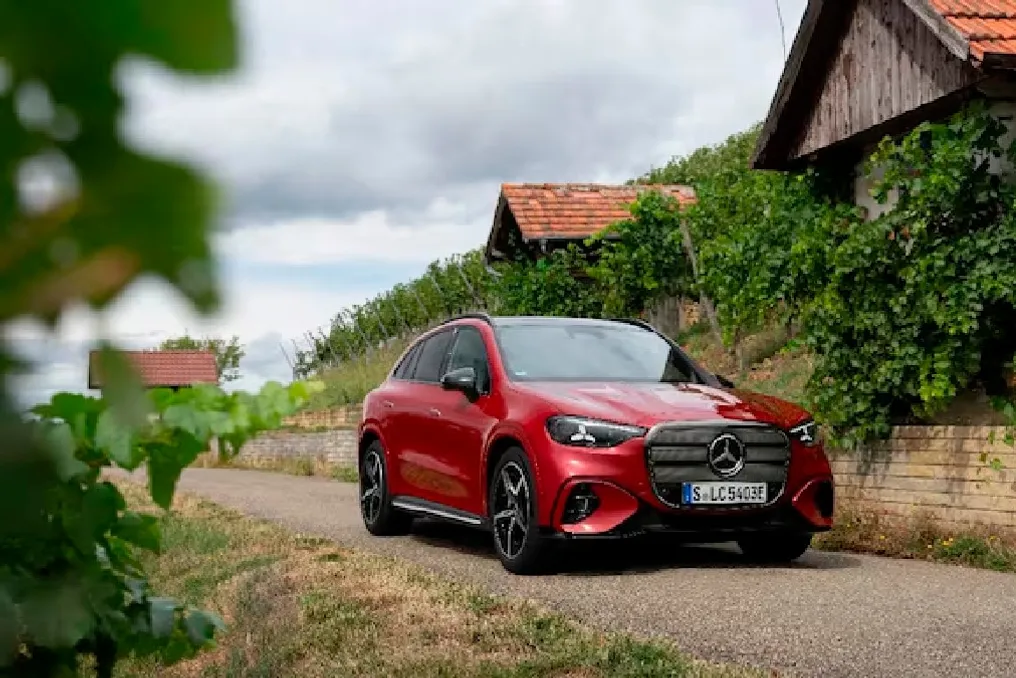
Mercedes-Benz GLC Electric sold out immediately after launch in the Indian market
Read more
Aaj Tak
www.aajtak.in

Mercedes-Benz GLC Electric sold out immediately after launch in the Indian market

When Mercedes-Benz is mentioned, people's minds usually conjure up an image of a premium product. However, an incident occurred in India where people showed massive interest in one of the Mercedes-Benz models. This concerns the Mercedes-Benz GLC Electric model, which received an exceptional response.

This car was introduced to the Indian market on November 4th, and buyers acquired it almost immediately. All available units were sold out even before deliveries began. Those who wish to purchase the new Mercedes-Benz GSG Electric model will have to wait until April of next year.

All GLC Electric units scheduled until March 2027 were sold immediately after the launch, and 1000 pre-orders were received. Currently, deliveries of this vehicle have not yet started. Mercedes is preparing this model at the Chakan facility in Pune.

The company presented the Mercedes-Benz GLC Electric in the GLC 400 4Matic version, with a starting price of 78.5 lakh rupees including tax. The car is equipped with an illuminated front grille, a three-pointed star logo, micro LED headlights, star-shaped LED daytime running lights, and dual-section rear lights.

The car features 21-inch wheels, a front trunk capacity of 128 liters, and a luggage compartment volume of 570 liters. As for the interior, the vehicle is equipped with a 39.1-inch MBUX hyper-screen and a panoramic glass roof.

Safety is ensured by nine airbags, an electronic stability control system, and Level 2+ ADAS functionality. The GLC 400 4Matic model is equipped with a 94 kWh battery, which has a claimed range of 715 kilometers. The vehicle incorporates an 800-volt electric architecture block.

The SUV supports fast DC charging with a power of 300 kilowatts. Charging from 10 to 80 percent takes only 22 minutes, and with a 10-minute charge, one can travel up to 305 kilometers. A standard air conditioner with a power of 11 kilowatts is also provided.

Similar stories

Demand for CNG-powered cars is growing in the Indian market; Maruti and Tata lead
Read more
www.aajtak.in

Demand for CNG-powered cars is growing in the Indian market; Maruti and Tata lead

There is a growing demand for CNG-powered vehicles in the Indian market. In September, these vehicles accounted for 23.11 percent of total sales, making them the second most popular fuel after petrol in the passenger car segment. According to reports, 105,410 units were put into operation in September.

This figure demonstrates significant growth compared to last year: in September of last year, 83,357 CNG-powered cars were sold, which corresponds to a year-on-year increase of 26.5 percent.

Maruti Suzuki dominates this segment, selling the highest number of CNG vehicles. Hyundai is also actively increasing its market presence. Tata Motors ranks second in terms of CNG vehicle sales volume.

The Maruti Suzuki Ertiga CNG has become a bestseller in the CNG category due to its seven-seater variant. Besides it, the list of best-selling models includes the Dzire, Punch, Hyundai Aura, and Maruti Suzuki Vitto.

According to Auto पंडित्ज, the Maruti Suzuki Ertiga CNG topped sales, realizing 12,481 units in the CNG version. Maruti Suzuki Dzire took second place, selling 12,026 units, although its sales in September decreased by 4 percent compared to September of last year.

Third place in the list was held by the Maruti Suzuki WagonR, which sold 8,596 units in the CNG version. Tata Punch entered the top five, selling 8,473 units. Hyundai Aura is in fifth place, having sold 7,278 units in CNG.

Vitto showed the highest growth rate among CNG vehicles. Maruti Suzuki sold 7,216 units of this model in CNG, whereas only 1,449 units were sold in September of last year. Maruti Suzuki Brezza is also listed, having sold 7,214 units in CNG.

Tata Nexon became the eighth best-selling CNG car, selling 7,149 units in September. Maruti Suzuki Fronx sold 6,034 units in the CNG version, and Maruti Eco, despite being a van, made it into the top ten sellers, realizing 5,823 units in September.

Overall, Maruti Suzuki sold 69,780 CNG cars in September. Tata Motors ranked second with 20,171 CNG cars, Hyundai sold 11,908 units, and Toyota sold 3,551 CNG cars. It should be noted that this analysis only concerns factory CNG versions of cars, although other companies also offer such models.

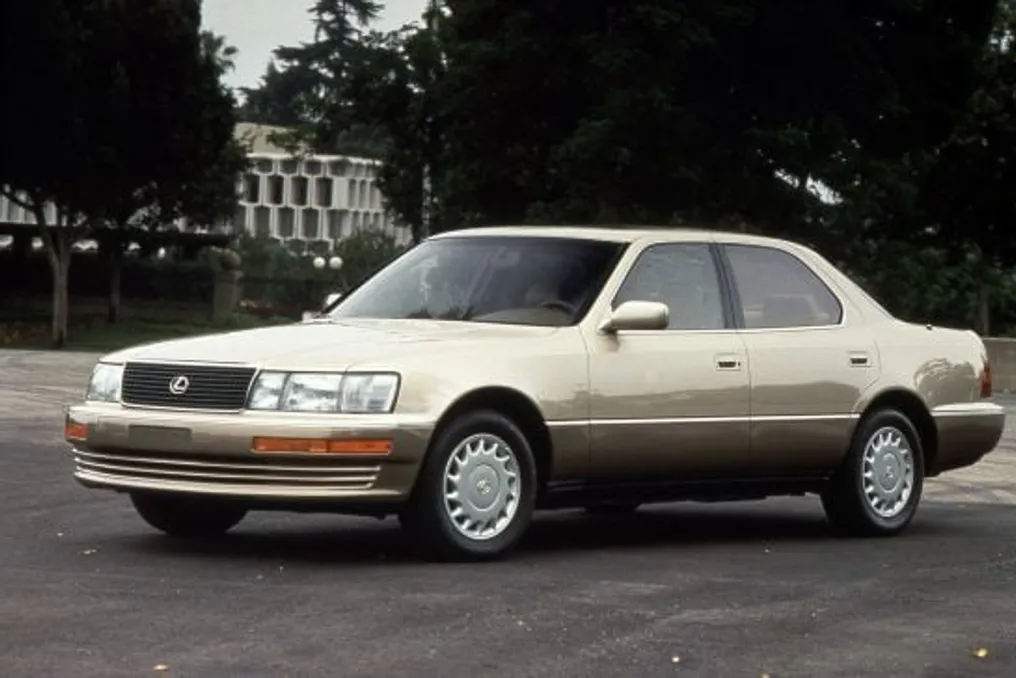
Lexus LS400 challenged Mercedes-Benz and forced changes in the development of the S-Class
Read more
autopapo.com.br

Lexus LS400 challenged Mercedes-Benz and forced changes in the development of the S-Class

Luxury vehicles function as technological showcases for manufacturers, demonstrating their capabilities. Although Toyota was already recognized as a good general manufacturer, it created Lexus with the aim of proving that it could go beyond that level. This strategy has been imitated by Chinese brands, which introduce expensive models to lend credibility to higher-volume cars.

The first Lexus vehicle was the LS400 sedan, launched in 1989, which caused a great impact on competitors such as Mercedes-Benz, BMW, Jaguar, and Cadillac. For many Brazilians, this car is known for being the one that must be destroyed in a bonus phase of Street Fighter II.

Toyota already had an exclusive luxury model for Japan, the Century, launched in 1967. This car followed a typically Japanese philosophy, focused on discretion, smoothness, and silence. The Lexus division maintained these characteristics but combined them with high technology and performance.

The main benchmark in this segment has always been the Mercedes-Benz S-Class, which was frequently chosen by heads of state, diplomats, and celebrities. In 1983, Eiji Toyoda, then president of Toyota, initiated the project to create a 'Japanese Mercedes.' The defined goals did not include deadlines or budget, but rather surpassing European manufacturers in aerodynamics, interior quietness, top speed, and fuel efficiency.

This ambitious project mobilized 60 designers, 1,400 engineers distributed across 24 teams, 2,300 technicians, and over 200 support staff. 450 prototypes of the car and 900 of the engine were produced, totaling 2.7 million kilometers driven. The car reached its final forms in 1987, undergoing durability tests and validation until its launch in early 1989. Toyota's initial goal was to sell 50,000 units annually, with 40,000 destined for the United States.

All this effort resulted in the Lexus LS400, the pioneer of the division's luxury line. Its design was conservative, without excessive grilles or hood ornaments, but featured precise panel fits and attention to aerodynamics. The LS400's engine was an unprecedented 4.0 V8, the 1UZ-FE, which used a cylinder bore larger than the piston stroke to ensure greater smoothness.

One of the launch announcements illustrated this smoothness with the car accelerating on a dynamometer with stacked cups on the hood, which remained stable due to the V8. This engine generated 260 hp and 36 kgfm, reaching 100 km/h in 8.5 seconds and a top speed of 250 km/h. The four-speed automatic transmission incorporated electronic control, which was innovative for the time. Furthermore, the Lexus LS400 offered electric adjustments for the steering wheel and seatbelts, an electroluminescent dashboard with a holographic effect, air suspension, a Nakamichi sound system, and an integrated mobile phone; in Japan, where it was sold as the Toyota Celsior, it could include GPS.

While Toyota was developing the LS400, Mercedes-Benz was designing a new S-Class, also scheduled for release in 1989. However, the arrival of the Japanese sedan forced the Germans to revisit their designs. The new S-Class was already facing delays due to the development of a V12 engine, necessary to compete with the BMW 750i. After acquiring a Lexus LS400, Mercedes-Benz engineers were impressed by the assembly precision and acoustic insulation of the vehicle.

Consequently, the new S-Class project was postponed by 18 months to improve these aspects and complete the V12 engine. This delay incurred extra costs amounting to US$ 1 billion. Although every unit sold of the first Lexus LS400 resulted in a loss for Toyota, this loss was offset by sales of models like the Corolla, Camry, and Hilux. Mercedes-Benz also recorded losses with the S-Class, but this impacted its financial balance more significantly. During the 1990s, the German brand tried to cut costs, and certain decisions ended up increasing losses, with recovery from the impact caused by Lexus only beginning in the following decade.
Popular