CareerPartner announces five-day holiday leave and three days of work from home for Diwali
Read more
Aaj Tak
www.aajtak.in

CareerPartner announces five-day holiday leave and three days of work from home for Diwali

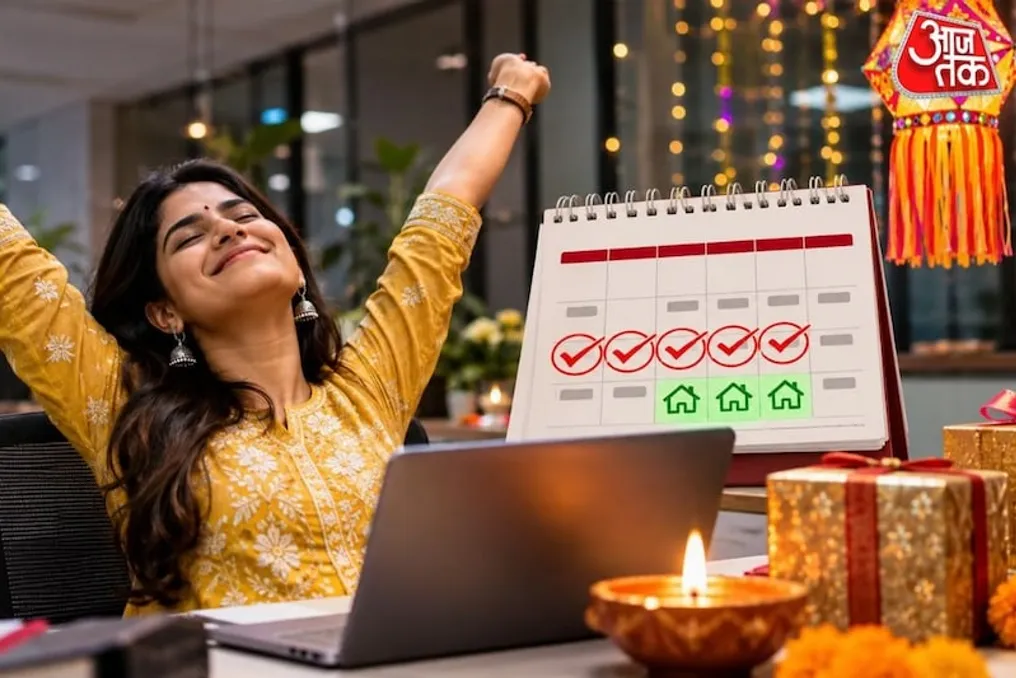
As the festival of Diwali approaches, working people often have questions about holidays. In this regard, one company published a schedule that caused a big stir on social media. The company provided employees with a continuous five-day break during Diwali, followed by the option to work from home for three days.

According to the company's email, employees will have November 6 off for Dhanteras. Following this, November 7 is Small Diwali, and November 8 is a holiday for Diwali, which coincides with regular weekend days (Saturday and Sunday). Additionally, November 9 is announced as a holiday for Govardhan Puja and November 10 for Bhai Dooj. Thus, employees will receive a continuous five-day break from November 6 to November 10, which includes three public holidays and two regular weekend days.

In addition to the holiday leave, the company also supported its employees after the festive break. According to the letter, on November 11, 12, and 13, employees can work remotely instead of coming to the office. The company also noted that the workload will be reduced during these three days. This will be followed by the regular weekend days—November 14 and 15. This gives employees the opportunity to both work from home and rest after the holidays.

An employee shared her joy about this announcement on LinkedIn. Shivani Singh posted a screenshot of the email, expressing that the happiness from such a number of holidays is hard to describe in words. She thanked CareerPartner, noting that she is proud to be part of a company that values its employees' happiness.

Shivani's post received many comments. Some users called the schedule wonderful, while others mentioned the holidays at their offices. One user noted that they have no holidays in November except for Sunday. Another user jokingly asked the company for employment. Some users called the employees happy, while others questioned the availability of open vacancies at the company.
Similar stories

Stock Market Holiday Schedule for November: 11 Closure Days, Muhurat Trading on Diwali
Read more
www.aajtak.in

Stock Market Holiday Schedule for November: 11 Closure Days, Muhurat Trading on Diwali

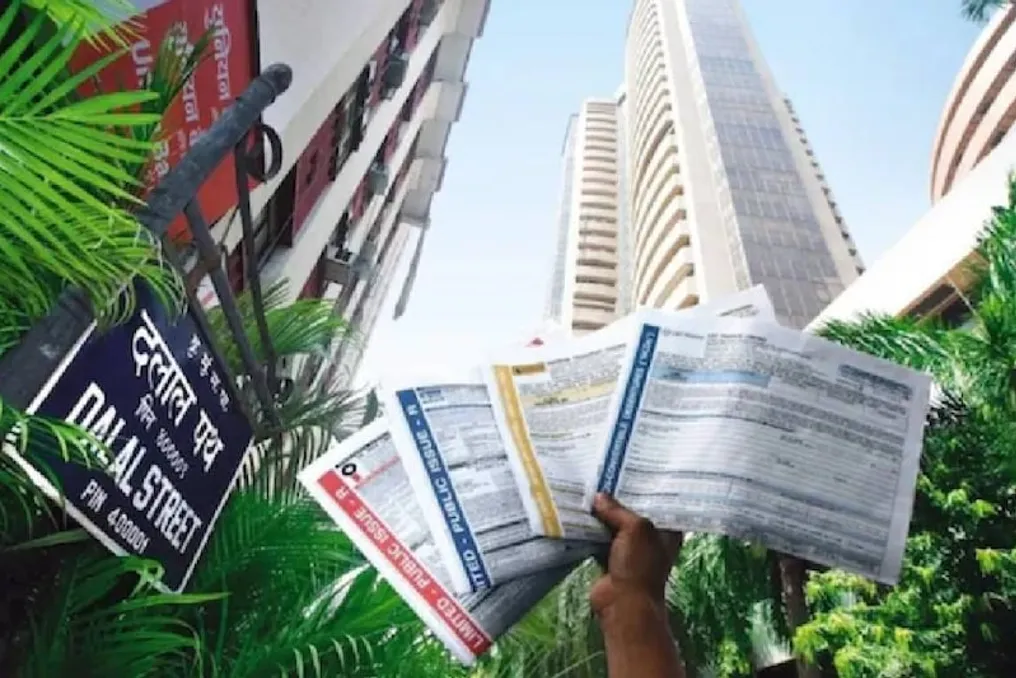
Investors and traders operating in the stock or commodity markets should review the holiday schedule for November. In November 2026, regular trading sessions on the Bombay Stock Exchange (BSE) and National Stock Exchange (NSE) will be suspended for 11 days. These nine days include standard weekend closures on Saturdays and Sundays. Additionally, the market will be closed on November 10th due to Diwali-Balipratipada and on November 24th for Guru Nanak's birthday.

It is important to note that on Diwali day, November 8th, a special Muhurat trading session will take place. Two additional weekday holidays related to festivals are also scheduled during November.

On November 10th and 24th, trading on the BSE will be closed in the equity, equity derivatives, and currency derivatives segments. NDS-RST and Tri-party Repo will also not trade. However, trading will not cease entirely in the commodity derivatives and Electronic Gold Receipt (EGR) segments. Morning sessions will be closed on these days, but evening trading will remain open.

The session schedule is as follows: the morning session will be closed from 9:00 AM to 5:00 PM, and the evening session will be open from 5:00 PM to 11:30 PM/11:55 PM.

On the NSE, there will also be no trading on November 10th and 24th in the equity, equity derivatives, currency derivatives, and interest rate derivatives segments. Platforms for trading reports, mutual funds, credit and borrowing schemes, corporate bonds, and the new debt segment will also be closed. In the commodity derivatives and EGR segments, morning hours will be closed, but the evening session will remain available. Thus, traders can trade in these segments from 5:00 PM to 11:30 PM/11:55 PM. Similarly, on the Multi Commodity Exchange (MCX), trading will be suspended in the morning on November 10th and 24th, but the evening session will continue from 5:00 PM to 11:30 PM/11:55 PM.

In observance of Diwali, investors will have the opportunity to conduct Muhurat trading. On November 8th, due to Lakshmi Puja celebrations, general stock market trading will not occur; however, a special one-hour trading session will take place on the BSE and NSE. This type of trading is considered auspicious in the stock market, and investors traditionally use it to buy and sell stocks according to the established event schedule.

After November, the next major public holiday this year is on December 25th for Christmas, when there will be no regular trading on the BSE and NSE. Investors engaged in trading or investing are advised to remember the dates of November 8th, 10th, and 24th. Special attention should be paid by commodity market participants, who need to remember that on November 10th and 24th, despite the closure of the morning session, evening trading will continue.

According to the Bank's calendar, banks will be closed in November 2026 due to holidays and weekends
Read more
www.aajtak.in

According to the Bank's calendar, banks will be closed in November 2026 due to holidays and weekends

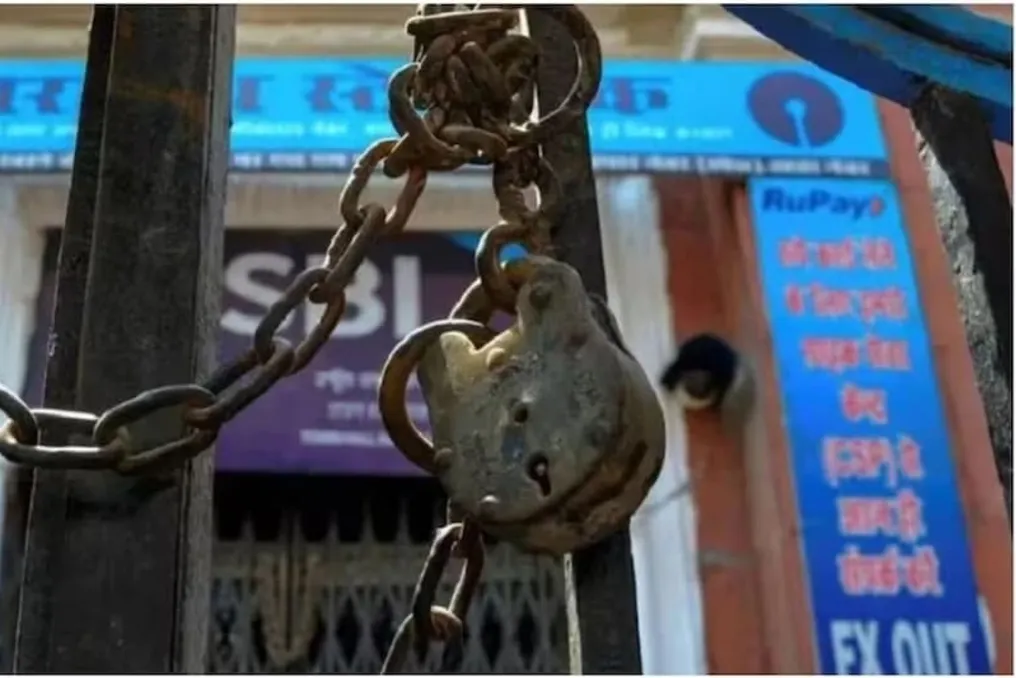
If you need to resolve any urgent banking matters, you should closely monitor the dates in November. Various festivals are scheduled for next month, including Diwali, Gowardhan Puja, Chhath Puja, and Guru Nanak Jayanti, which will result in bank closures in different states.

According to the Reserve Bank of India (RBI) calendar, banking operations will be suspended on certain dates in November 2026 due to holidays. Additionally, there will be holidays on the second and fourth Saturdays, as well as Sundays. It is important to note that not all bank holidays apply nationwide simultaneously; some holidays are specific to individual cities and states, so it is recommended to check the local schedule before visiting a bank.

On November 2, banks in Meghalaya will be closed due to the Nongkrem dance. On November 9, banks in Tripura, Madhya Pradesh, Chandigarh, Sikkim, Manipur, Rajasthan, and Uttar Pradesh will be closed for Diwali, Lakshmi Puja, Gowardhan Puja, and Vishwakarma Day.

On November 10, banking operations will not be conducted in Gujarat, Maharashtra, Karnataka, Uttarakhand, and Sikkim due to Diwali (Bali Pratipada), Gowardhan Puja, Lakshmi Puja, and Vikram Samvat New Year.

On November 11, banks in Sikkim, Manipur, Uttar Pradesh, West Bengal, and Himachal Pradesh will be closed on account of Lakshmi Puja, Ningol Chakkaub, Bhai Dooj, and Chitragupta Jayanti.

On November 13, banks in Meghalaya will be closed for the Wangala festival. On November 16, banking services will be unavailable in Bihar and Jharkhand on the occasion of Chhath Puja and the first offering of Surya Shashthi.

On November 20, banks in Uttarakhand will be closed due to Igas-Bagwal. On November 23, banking operations in Meghalaya will be suspended due to the Sangkut Snem festival.

On November 24, banks in Mizoram, Maharashtra, Madhya Pradesh, Odisha, Chandigarh, Uttarakhand, Telangana, Arunachal Pradesh, Rajasthan, Jammu, Nagaland, West Bengal, Uttar Pradesh, Delhi, Chhattisgarh, Jharkhand, Himachal Pradesh, and Srinagar will be closed on account of Guru Nanak Jayanti, Kartik Purnima, and Rahas Purnima.

On November 27, banks in Karnataka will be closed on the occasion of Kanakadasa Jayanti.

In addition to holidays, there will be regular weekly off days in November. According to RBI rules, banks across the country close on the second and fourth Saturdays of every month. In November 2026, the second Saturday falls on November 14, and the fourth on November 28; all banks will be closed on these days. Furthermore, banks are closed every Sunday.

If you need to conduct financial transactions on a bank holiday, there is no need to worry. Customers can carry out digital transactions through mobile banking, internet banking, and UPI. Cash withdrawal is also available through ATMs. However, for operations such as cheque deposits, draft processing, or other branch-related matters, you may have to wait until the bank reopens. Therefore, if you need to visit a bank in November, it is recommended to plan your actions in advance by checking the holiday calendar.

Railway employee suspended after returning from vacation despite WhatsApp approval
Read more
www.aajtak.in

Railway employee suspended after returning from vacation despite WhatsApp approval

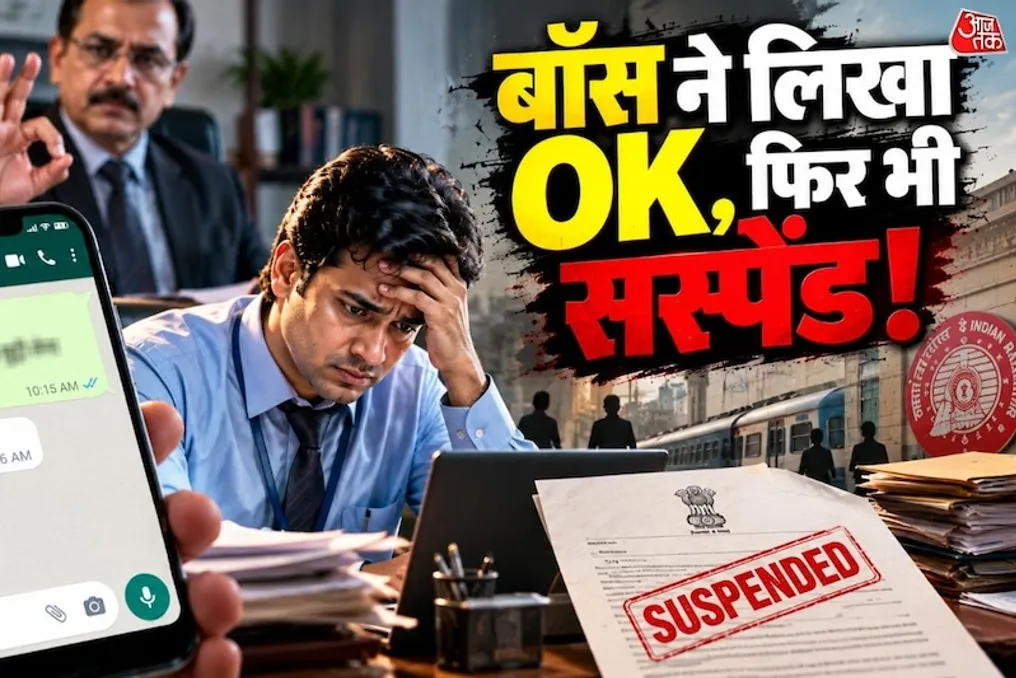
Many employees contact their supervisors via WhatsApp to request leave. Upon receiving an 'OK' reply from the manager, they assume the leave has been approved. However, the question arises: can a simple 'OK' on WhatsApp be considered official leave permission? This issue was raised in connection with the case of a railway employee.

The employee claimed that his senior supervisor had given consent for an additional two-day leave through WhatsApp. Nevertheless, when he returned from vacation, he was suspended from work. He was later also transferred to another position. The employee challenged this decision, but the tribunal rejected his petition.

The tribunal ruled that an 'OK' received on WhatsApp is not, by itself, irrefutable proof that the leave was officially approved.

This incident involves Priya Ranjan Kumar, an employee of the North Central Railway who worked in Prayagraj. According to the employee, he took three days of leave from July 14 to July 16, 2025, to visit his native village. He then messaged his senior supervisor on WhatsApp to extend the leave for July 17 and 18. The employee claimed that the supervisor replied 'OK', which he interpreted as permission for the extra two days off. He also informed another supervisor about this over the phone. However, the railway administration stated that the responsibility for approving the leave during that period lay with another employee. According to the railway, following established procedures was necessary for official leave approval.

The employee stated that when he returned to work on July 21, 2025, he was suspended. Four days later, on July 25, he was transferred from Prayagraj to Fatehpur. Then, on July 31, he was served with a charge sheet related to disciplinary action. The employee appealed his transfer, arguing that the actions against him and the transfer were due to the leave dispute. On the other hand, the railway explained the transfer by stating that a new reception and booking office was being developed at the Fatehpur railway station, and staff were required to work there. The railway cited this administrative necessity as the reason for the transfer.

The Central Administrative Tribunal (CAT) in Allahabad stated during the hearing that an 'OK' received on WhatsApp is not sufficient evidence that the competent authority approved the leave. A competent authority is an employee authorized to approve leave according to the rules. The railway side argued that the relevant employee was undergoing training at the time, and another employee with approval authority was handling the department's affairs. The railway also noted that the established official procedure for obtaining leave was not followed.

After considering the railway's arguments, the tribunal concluded that the employee could not prove solely based on the WhatsApp 'OK' that his extended leave had been officially approved.

The employee also claimed that his transfer was not due to routine administrative necessity but was intended as retaliation. However, the railway informed the tribunal that staff were needed for the new booking office in Fatehpur, and the transfer was made for this specific reason. The tribunal accepted this argument from the railway because no convincing evidence was presented that the purpose of the transfer was to punish the employee. Subsequently, the tribunal dismissed the employee's petition on October 7, 2026, upholding the transfer decision.

This case is important for employees who rely solely on WhatsApp messages when extending or obtaining leave approval. Even if a manager replies 'OK', it does not always signify official leave approval, especially if the responding employee lacks the authority to grant leave. Therefore, before extending leave, it is crucial to ensure that the permission is granted by the correct person and that established office procedures are followed. It is also advisable to check approval records in official systems such as the HMRS portal.

Popular