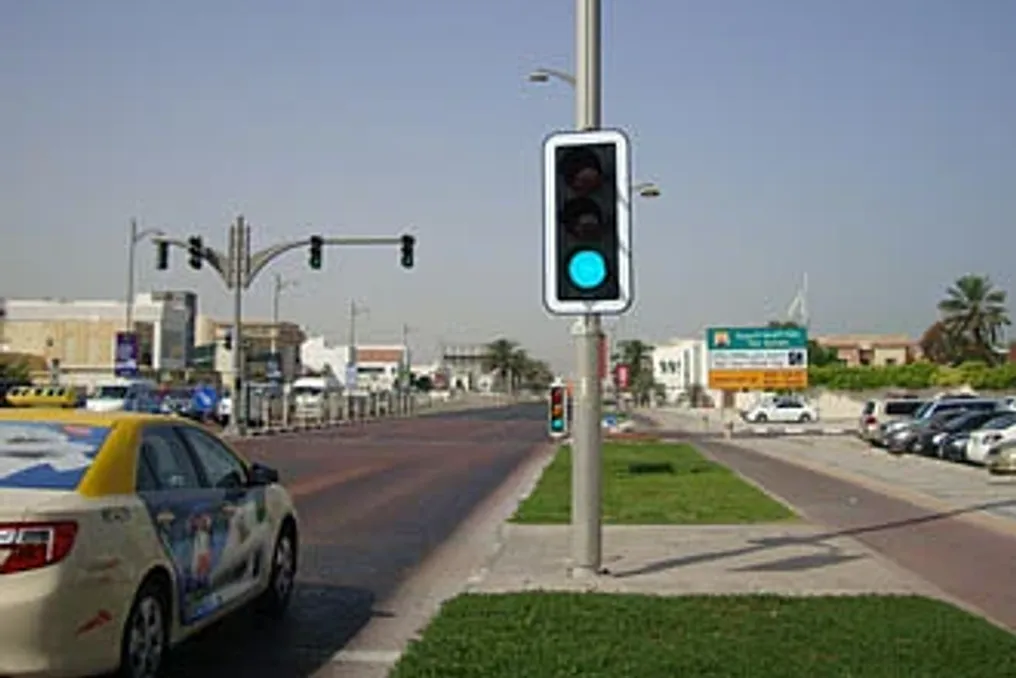
It is anticipated that the modernization of traffic lights in Dubai using artificial intelligence will help reduce traffic congestion by at least ten percent, stated a senior official from the Roads and Transport Authority (RTA). The emirate is implementing predictive technologies to optimize road movement.
Ahmed Bahrozian, CEO of RTA's Corporate Technology Support Sector, reported on Direct Line on Dubai Radio that work is underway to connect all Dubai traffic lights to the authority's traffic control center located in Al Barsha. This project is expected to be completed early next year.
Artificial intelligence will analyze data coming from cameras and existing systems to predict traffic build-ups in advance and identify potential bottlenecks. Based on this, signals will be dynamically adjusted in response to the current traffic situation.
Bahrozian noted that this technology will make traffic light management more prompt compared to the current state. He predicts that the systems will contribute to reducing congestion by no less than 10 percent, adding that other projects also help ease the road situation.
RTA already manages traffic lights through its center in Al Barsha and maintains constant coordination with the Dubai Police. These updates are part of RTA's updated strategy, which goes beyond just traffic management and covers public transport planning, customer service, and infrastructure management.
Bahrozian also mentioned that drivers will increasingly be able to receive services by interacting with an AI-based assistant instead of going through separate digital procedures. He cited examples such as paying fines, renewing vehicle registration, and updating driver's licenses, which can be done through this assistant.
The goal is to simplify service usage while simultaneously increasing the efficiency of the supporting departments. It is expected that within the next two years, over fifty percent of service operational activities will transition into the AI-based assistant ecosystem. This strategy is projected to bring over 300 million AED in annual added value through increased efficiency and improved public services.
The updated strategy affects 41 areas across RTA's agencies, sectors, and departments, with AI integration into these areas taking place over two and a half years. Implementation is divided into six phases; the authority is currently working on the first and second phases, with the remaining four planned for the next two years.
When setting priorities, a balance was considered between improving public services and enhancing internal efficiency. In addition to transport operations, the strategy includes support functions such as procurement, contracts, finance, and human resources. AI will also support the planning of the entire public transport network, including buses, metro, and maritime transport.
Bahrozian emphasized that the pace of technological change requires reviewing the strategy every six months or annually to ensure the authority keeps up with technological development. Another key area is managing RTA's growing infrastructure portfolio. According to Bahrozian, the authority's assets are valued at over 150 billion AED, including major transport and road projects.
As the number, scale, and cost of these assets increase, relying on traditional monitoring methods involving personnel and inspectors becomes more difficult. AI will allow the authority to expand asset monitoring coverage by approximately five times compared to the current level, which will aid in better infrastructure maintenance and protection.
Traffic management and public transport operations will remain central elements of the strategy, alongside the aim of making daily services more accessible to residents.