Sentra raises $150 million to protect data from AI agents amid growing corporate AI adoption
Read more
Ventureburn
ventureburn.com

Sentra raises $150 million to protect data from AI agents amid growing corporate AI adoption

With the increasing use of AI agents in large companies, these automated tools have gained unrestricted access to the organization's client files and records. However, most companies still cannot accurately determine which specific data these agents are viewing. In light of this, Sentra has raised $150 million in a new funding round led by Capital One Ventures to ensure data protection before it reaches the agents.

The company, based in New York and Tel Aviv, reports that its total raised capital now exceeds $250 million. Furthermore, Capital One Ventures has secured a seat on the board of directors. Additionally, existing investors, including Bessemer Venture Partners, Zeev Ventures, Standard Investments, Munich Re Ventures, and Key1 Capital, have decided to increase their investments.

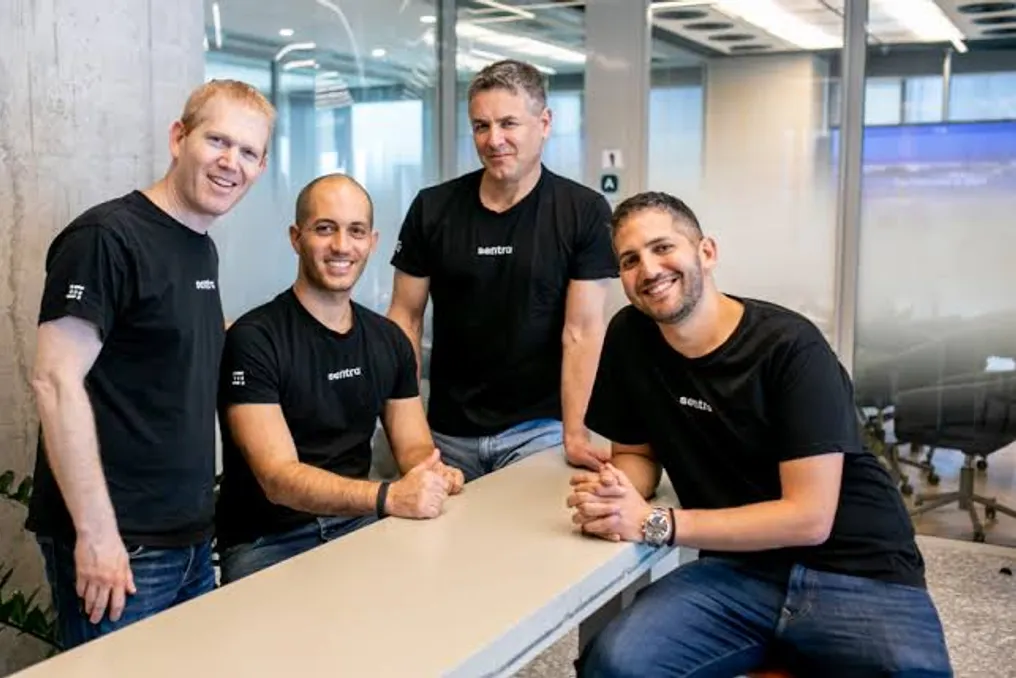
The Sentra team has deep roots in cybersecurity. The four founders launched Sentra in 2021, including CEO Yoav Regev and President Asaf Kochan, both of whom previously served as commanders in Unit 8200. They developed Sentra using four security tools: DSPM, DDR, data access management, and DLP.

Simply put, Sentra can detect sensitive data, determine who or what can access it, and revoke access for those who do not require it. Sentra's advantage is that it operates within the client's own environment; sensitive data is never sent to Sentra. The system works in three stages: before an incident, it classifies data and enforces the principle of least privilege; during an incident, it flags suspicious access and revokes permissions; after an incident, it provides an exact list of data the agent could have accessed.

CEO Yoav Regev emphasized that AI agents have become the most active consumers of corporate data. Nevertheless, many of these agents inherit access rights that most businesses and individuals do not properly verify. He noted that the problem of one employee with excessive access rights is serious, but an agent with the same level of access performing thousands of queries per hour poses a much greater threat.

Lyft is already collaborating with Sentra. Its Chief Information Security Officer, Haim Sanders, stated that his teams aim to rapidly implement AI, but they need to know what data the agents can access before activating them. This risk is precisely what Sentra's offering addresses.

Regev also reported that since the last round, the company has tripled in size, and local valuations place its worth near one billion dollars, demonstrating over 300% year-over-year growth. The company serves about 100 large corporate clients in the US and Europe, generating tens of millions of dollars in revenue. The company employs 130 people, half of whom are located in Tel Aviv.

The raised funds will be directed towards deepening visibility into agents and copilots, maintaining continuous least privilege control, and accelerating the localization of issues in case of agent misconduct. Additionally, Sentra plans to double its staff, open an office in London, and begin pursuing federal contracts in the US starting in late 2027.

This funding round comes amidst competitor activity: Cyera reached a $12 billion valuation after raising $600 million in June, Zenity received $125 million in August for agent activity monitoring, and Veeam agreed to acquire Securiti for $1.725 billion last year. Investors believe that AI data security is the next necessary expense. The involvement of a bank's venture arm in fundraising also signals the importance of this area, as banks hold some of the most sensitive data on the planet.

For founders and security executives, the conclusion is clear: when implementing agents, the data map is as important as the model itself. Sentra is betting $150 million on the fact that most companies have yet to create this map.
Similar stories

Fragment raised $56 million to develop AI in corporate procurement
Read more
ventureburn.com

Fragment raised $56 million to develop AI in corporate procurement

Fragment announced it has raised a total of $56 million to achieve its goal of automating complex procurement processes using artificial intelligence. The San Francisco-based company made its public debut on October 28, 2026.

The investment round includes a Series A led by 8VC, as well as a previous seed round overseen by General Catalyst. Additionally, several prominent private investors invested in Fragment, including Roelof Botha, Nikesh Arora, Jeff Wilke, Eric Wu, and Dennis Cinelli.

Fragment was founded in 2025 by co-founders Pranav Mulgund and Naveen Kashyap. The company has not yet disclosed its valuation or the amount raised in each round.

Fragment focuses primarily on corporate buyers within large manufacturing companies and other organizations. These structures often have complex workflows and procurement systems. When issues arise with order processing, invoicing, or deliveries, additional manual verification may be required.

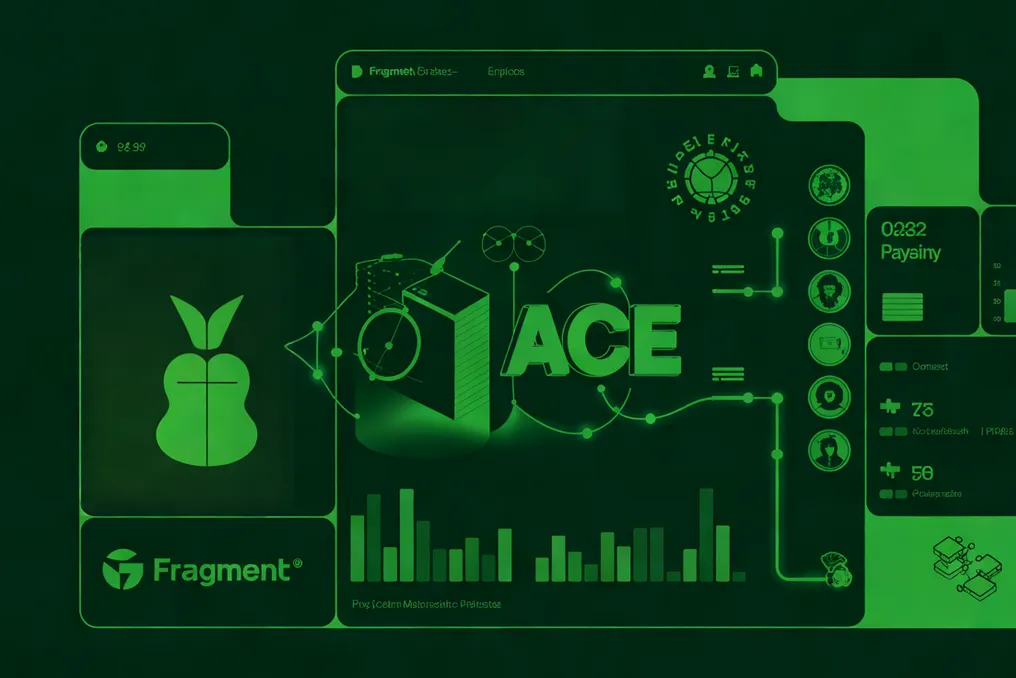
Fragment's technology is built on an Autonomous Context Engine, or ACE. This engine connects data within a company's current business applications and gathers organization-specific policies, relationships, and institutional knowledge.

This scenario allows AI agents to understand how a group of organizations handles exceptions in the purchasing and payment process. For example, if an invoice does not match a purchase order, the agent can clarify this exception, find an approved resolution, and take the necessary actions.

Fragment claims that its technology operates on top of existing infrastructure without requiring data migration. This approach can reduce disruptions for enterprises using complex enterprise software environments, allowing organizations to maintain their established systems.

The company named Graybar and CNX as its clients. It is reported that Graybar processes about three million invoices annually, and approximately 80% of them require some level of approval. Fragment aims to automate part of this exception-related workload.

The new capital is planned to be used for further enhancing ACE. Furthermore, the company intends to expand its scope from supplier sourcing to payment (source-to-pay), covering broader workflows from supplier search to payment.

This method may interest businesses looking to increase efficiency without increasing administrative staff. However, client adoption will depend on the reliability, security, and trust in automated solutions. Actions related to payments require special caution, as errors can lead to financial and contractual consequences.

Investors believe that Fragment's strategy, focused on large enterprises, lays the foundation for future growth. Jack Moskovich, a partner at 8VC, emphasized the complexity of serving large organizations. The funds raised will support additional deployments with major corporate clients.

The company also faces competition from established procurement technology vendors and new AI platforms. Its focus on direct procurement differentiates it from broader spend management solutions. Demonstrating controlled processes and achieving effective results will be critically important.

The funding comes as companies increasingly turn to AI agents to conduct operations. Automotive companies are facing growing pressure to improve efficiency amid fragmented supply chains. Automating routine procurement tasks will allow procurement departments to focus on strategic decisions and supplier relationships.

The company's strength lies in its ability to execute pre-approved actions, setting it apart from systems that only notify about problems. However, clients will have to entrust it with critical procurement processes. Ultimately, Fragment could potentially move beyond direct procurement.

Pranav Mulgund noted that other corporate processes are of interest but declined to specify which ones. In the short term, priorities remain the evolution of ACE, expanding source-to-pay functionality, and deployments in large enterprises.

Hyphenate raises $45 million in Series A round to create financial management AI agents
Read more
ventureburn.com

Hyphenate raises $45 million in Series A round to create financial management AI agents

Hyphenate, formerly known as Maximor, has raised $45 million in a Series A round led by Nexus Venture Partners. The New York-based company was renamed at the beginning of October. This capital injection brings the total amount raised to $54 million.

The company's core idea is to use artificial intelligence to perform financial operations beyond simple communication. Hyphenate was founded by two Microsoft veterans: CEO Ramnandan Krishnamurthy and co-founder Ajay Krishna Amudan, who spent significant time in finance and corporate transformation at Microsoft, including restructuring the company's internal financial platform.

The company began operations in 2024. In September 2025, it secured a seed round of $9 million, supported by Foundation Capital alongside Gaia Ventures and Boldcap. Angel investors included Arvind Srinivasan, CEO of Perplexity, and Tien Tsuo, founder of Zuora.

The renaming to Hyphenate occurred in early October 2026, referencing financial processes such as Order-to-Cash and Procure-to-Pay, where each process is linked by a hyphen. Krishnamurthy explained that 'the multi-hyphenated approach is not limited to one track.'

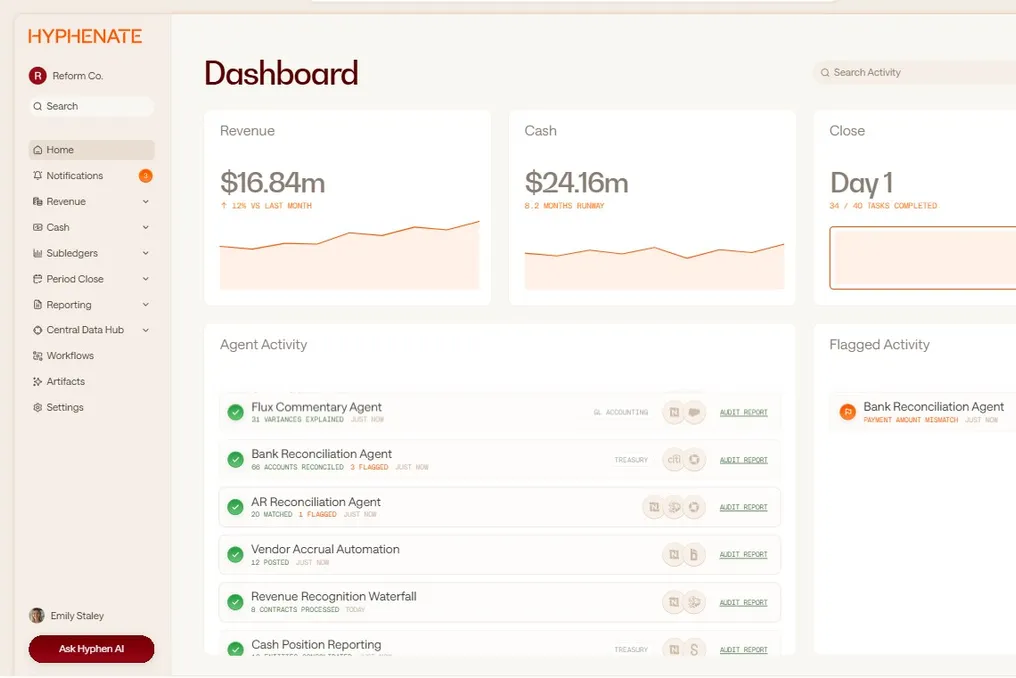
Hyphenate does not require a complete replacement of existing ERP systems. Its agents operate on top of already used systems, such as banking and settlement systems. They are capable of making entries in accounting books, reconciling bank statements, and processing invoices.

The system also handles invoice sending and approval collection. This is comparable to a junior accountant who never misses deadlines. If a situation requires human judgment, the agent flags it in Slack. All actions are recorded, providing auditors with a clear trail.

The platform covers five key areas: order-to-cash, treasury, general ledger and period close, procure-to-pay, and reporting. The company claims that about 98 percent of transactions are processed entirely without human intervention. Furthermore, payment is based on actual work performed, not on the number of licenses.

Investors decided to allocate $45 million based on performance metrics. Hyphenate reports an 86-fold revenue growth since its seed round. Clients show high loyalty: on average, they use six modules, and 40 percent expand their cooperation within the first year.

Examples of successful implementations include one cybersecurity firm that launched in less than four weeks and reduced its cash staff from twenty to five people. Additionally, a private investment holding with over thirty subsidiaries managed to reduce audit findings from seven to zero in six months.

It should be noted that these figures are provided by the company itself and have not yet undergone independent verification. Previously, according to software leasing firm Rently, the platform allowed month-end closing to be reduced from eight to four days. Nevertheless, this explains Nexus's quick decision.

Many small and medium-sized enterprises still use Excel for closing financial reports, which is a slow, error-prone process that leads to end-of-month losses. Hyphenate bets that clients are looking for more than just another dashboard.

Hyphenate's offering presents low risk for CFOs because it allows testing AI agents without the need to invest in migrating the entire system. These investments signal capital movement into functional AI solutions. For founders, this proves that an audit trail can gain trust in a skeptical industry. Hyphenate is interested in further advancing pricing, margin, and capital decisions, allowing financial teams to save time on reconciliation and dedicate more time to business management.

Company offers high salary for writing texts, raising questions about the influence of artificial intelligence
Read more
www.aajtak.in

Company offers high salary for writing texts, raising questions about the influence of artificial intelligence

Amid the growing use of automation, many large companies are investing in artificial intelligence and conducting staff reductions. Nevertheless, the company Anthropic is ready to offer 32.5 million rupees for text-writing related work. This is surprising because what a person does in an hour, AI can do in mere seconds.

Artificial intelligence can write an email in a few seconds or create a blog draft in minutes, helping companies produce content on a scale that previously required an entire team. Because of this, many authors are questioning the value of their work if machines start writing.

Despite the emergence of AI, Anthropic has opened a special vacancy. For this position, the company offers an annual salary ranging from $295,000 to $345,000 USD, which is equivalent to approximately 2.5 to 3.25 crore rupees. However, this position is not intended for ordinary writers. The candidate must have at least eight years of experience in executive communication, working with senior management.

A natural question arises: why would Anthropic pay such money if AI can perform the job? The answer lies in the fact that the employee in this position will work directly with the company's top management. They will be responsible for preparing messages to convey the company's position to the public at important moments and explaining complex issues in simple terms. This requires not only good writing skills but also the ability to think strategically and provide balanced answers when necessary.

This job goes beyond simply writing articles for websites or product descriptions. It requires a specialist capable of deeply analyzing problems, predicting the impact of a message on the audience, and helping leaders decide what and how to communicate.

Anthropic is not the only AI company offering high salaries to writing and communications specialists. In September 2025, OpenAI also announced a vacancy related to content strategy, with an annual package of around $400,000. The employee in this role was tasked with improving the brand awareness of ChatGPT, creating content, and collaborating with engineers and designers.

However, this does not mean that salaries in the writing field are rising everywhere. It only indicates that some AI companies value experienced specialists who possess strategic planning skills, an understanding of people's needs, and the ability to simplify complex topics, in addition to good writing.

There is another side to the coin. In June 2023, one content writer reported that after the appearance of ChatGPT, some of his clients stopped commissioning him work. He specialized in writing content for websites and product descriptions, which can now be quickly created using AI tools, intensifying pressure on such tasks.

Thus, on one hand, experienced communications specialists are offered high-paying positions, while on the other hand, some freelancers involved in general content find it harder to find work. However, this does not mean that all entry-level writing positions are disappearing or that any senior author's job is guaranteed protection. The influence of AI depends on the type of work performed and the client's willingness to pay for it.

The author's task is not only to create content but also to verify the accuracy of information, identify missing details, and assess the material's suitability for readers. A report for September 2025 mentioned work related to correcting errors and improving AI-generated content.

This shows that humans may still be needed to check and refine AI-generated drafts. However, it cannot be assumed that the professions of editor and fact-checker are completely safe, as AI tools can assist in these tasks as well. Consequently, it becomes critically important for authors not only to write drafts but also to find errors, confirm information, and add necessary context.

The Anthropic vacancy is not suitable for all authors, as it is a high-level position requiring many years of experience. Therefore, it cannot be concluded that everyone can earn such a salary in the writing field. For those aiming to build a career in journalism, copywriting, or corporate communications, not only good writing skills but also research abilities, fact-checking, subject matter understanding, and critical thinking are important. Mastering the proper use of AI tools may also prove useful.

Authors who can use AI to speed up their work while simultaneously verifying information, performing quality editing, and applying their own original thinking will be able to adapt to the changing work environment.

Popular