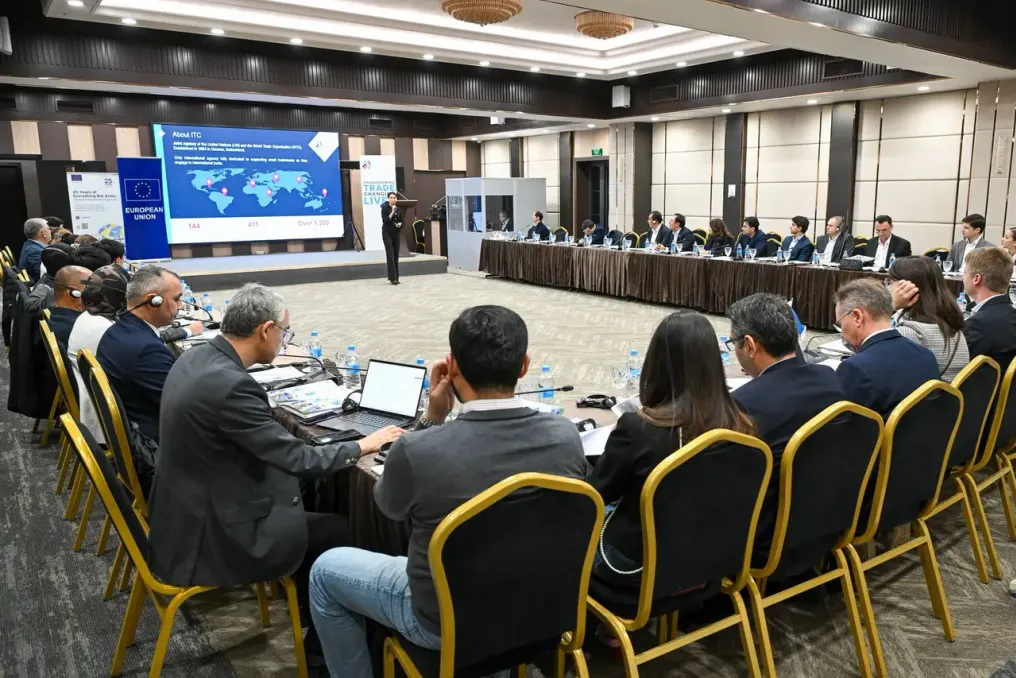
Representatives of the European Union and Uzbekistan held a meeting in Tashkent on November 4 to discuss ways to increase bilateral trade and more effectively utilize preferential access for Uzbek products in the European market under the GSP+ scheme.
The event was organized by the EU Delegation in Uzbekistan and the International Trade Centre (ITC) and gathered representatives from government, business associations, international organizations, and diplomatic missions.
One of the key topics was the presentation of the EU's new Generalized System of Preferences (GSP), which will come into force on January 1, 2027. Participants also reviewed Uzbekistan's current use of existing trade preferences and prospects for further export growth.
According to the EU Delegation, since obtaining GSP+ beneficiary status in 2021, Uzbekistan has significantly increased its utilization of these preferences, reaching 90% in 2025 compared to the global average of 74%.
Renata Wrobel, the EU Delegation's counsellor in Uzbekistan, reported that exports from Uzbekistan benefiting from GSP+ have nearly quintupled since 2021, reaching 448 million euros in 2024.
The discussions in Tashkent were based on the results of an EU-funded project titled 'Uzbekistan: Strengthening Trade Integration and Partnership through GSP+ and the Country Platform.' The International Trade Centre is implementing this project starting in January 2026.
As part of the project, a paper titled 'Enhancing Uzbekistan's Capacity to Benefit from the European Union's GSP+ Scheme' was prepared. The study analyzes the current application of trade preferences, identifies export barriers, and offers recommendations for local businesses.
The paper examines five sectors with export potential: fertilizers, mineral products, electrical and mechanical equipment, textiles, and fruits and vegetables. Initial findings were presented at the meeting to discuss possible measures to enhance the competitiveness of Uzbek goods in the EU market.
Entrepreneurs were also presented with a practical guide to exporting from Uzbekistan to the European Union under GSP+, which describes the conditions for obtaining trade preferences and product requirements applicable in both Uzbekistan and the EU.
Uzbekistan has benefited from GSP+ since 2021. This scheme provides duty-free access to the EU market for approximately two-thirds of product headings, covering a wide range of goods.
In June 2026, the European Union adopted a new GSP regulation effective from January 1, 2027, until the end of 2036. Existing beneficiary countries, including Uzbekistan, will receive a two-year transition period covering 2027–2028.
To continue receiving GSP+ preferences from January 1, 2029, interested countries must submit relevant applications before December 31, 2028. In response to these changes, the EU and its partners intend to maintain dialogue with Uzbek state bodies and enterprises, providing practical assistance to companies.
The main focus will be on improving the utilization of trade preferences, diversifying exports, and strengthening economic ties between Uzbekistan and the European Union.