Who received the contract for building railway lines in India under British rule?
Read more
Aaj Tak
www.aajtak.in

Who received the contract for building railway lines in India under British rule?

Today, India has an extensive railway network through which millions of people travel daily, connecting the corners of the country. However, few know how the development of railways in India began. When the British decided to lay railway tracks, the question arises as to who was awarded the corresponding contract. It is also important to know where the funds for construction came from and who operated them in the early stages.

In reality, the start of railway construction in India was driven not only by the need to move people. Commercial and political interests of the British were behind it. They needed to ensure access to all regions of the country so that raw materials and goods could be easily transported to ports. Furthermore, railways helped strengthen administrative control over remote territories and facilitate troop movement.

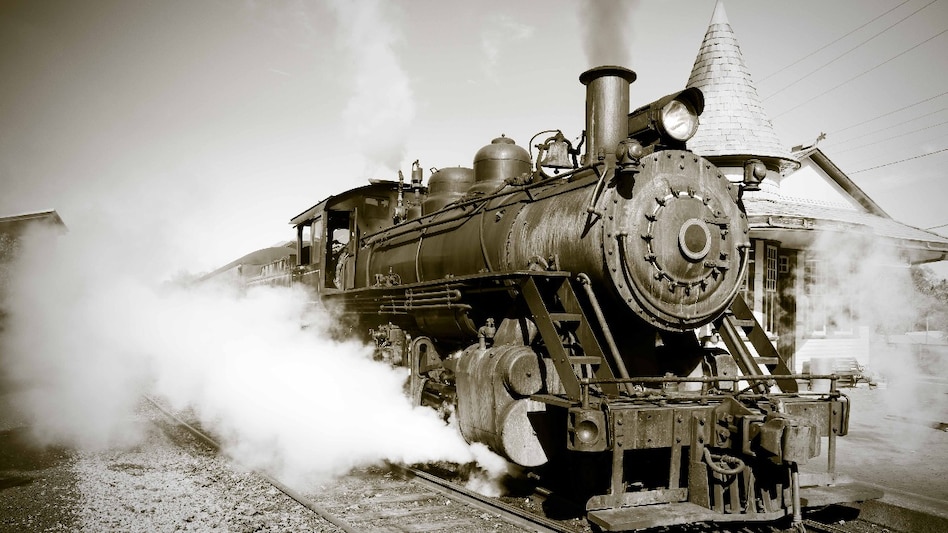
The first passenger railway service in India took place on April 16, 1853. On this day, the first train departed from Boribander station in Mumbai to Thane station. This route, about 34 kilometers long, was pulled by three steam locomotives and carried 14 carriages, as well as about 400 passengers. Nevertheless, discussions about building railway lines in India began back in the 1830s.

The responsibility for launching the first passenger train and establishing the initial railway network in India was entrusted to the Great Indian Peninsula Railway (GIPR) company. This company was founded in 1849. Construction work on laying railway lines was carried out by this company jointly with the East India Company, which at the time managed a significant part of India.

In the early stages, the construction of railways in India was carried out by private British companies. These companies gained the opportunity to invest thanks to a special guarantee system created by the British Parliament. Under this system, the government guaranteed the companies a fixed interest rate on their invested funds. This reduced the risk of losses for the companies involved in the project while simultaneously giving them hope of making a profit.

Thanks to this scheme, many British firms were involved in the construction of railways in India. Between 1855 and 1860, eight such railway companies were established, among which stand out the Eastern India Railway, Great Indian Peninsula Company, Madras Railway, and Bombay Baroda & Central India Railway.

Following the success of the first passenger train between Mumbai and Thane, the construction of railway lines in other parts of the country accelerated. In 1854, railway service began in Eastern India, and in 1856, trains started running in Southern India. Then followed attempts to connect the country's major cities to this network. In 1864, the railway line between Calcutta and Delhi opened, and in 1867, railway service began between Allahabad and Jabalpur. Gradually, these lines were integrated into the Great Indian Peninsula Railway network, allowing for the formation of a railway network spanning about 4000 miles across the country.

This network played a huge role in unifying different regions of India. Although the initial goal was to simplify trade and administration for the British, over time, railways also contributed to increased contact among ordinary residents.

After the Revolt of 1857, the British transitioned to direct rule over India from the East India Company. Changes subsequently occurred in the responsibility for the construction and expansion of railways. From 1869 to 1881, the British government began to increase its control over railway construction. If previously the laying of lines was done by external contractors and private firms, the government now started to intervene directly in the process.

During this period, droughts and famine were observed in many parts of the country. Railways were expanded to deliver grain and necessary goods to such affected areas. Railway lines began to connect major port cities, such as Mumbai, Madras, and Calcutta, with inland territories. By 1880, the total length of the railway network in India reached approximately 9000 miles, which significantly eased the transportation of goods to ports and stimulated trade.

In the 1890s, attention also began to be paid to passenger comfort on Indian railways. Amenities such as toilets, gas lamps, and later electric lighting were introduced on trains. The number of passengers using the railway services steadily increased. Due to the rise in passenger traffic, a fourth class of service had to be introduced.

During this period, India also began taking steps towards self-sufficiency in the railway sector. By 1895, the production of its own steam engines began in India. Moreover, in 1896, India sent its specialists and equipment to assist in the construction of the railway in Uganda.

Over several decades, enormous funds were invested in the construction and development of railways. Finally, in 1901, Indian railways began to generate profits. Simultaneously, the British government's control over the operational activities of the railways intensified. In 1900, the Great Indian Peninsula Railway became the first major railway company whose ownership was transferred to the government. By 1907...

Similar stories

Kavach technology launched on 67 km of railway line in Rajasthan to prevent collisions
Read more
www.aajtak.in

Kavach technology launched on 67 km of railway line in Rajasthan to prevent collisions

The Kavach technology has been implemented on the Kanauta-Bandikui railway section in Rajasthan, which is intended to eliminate railway accidents. On this 67-kilometer stretch, which belongs to the West North Western Railway, trains are operating using the modern Kavach system across seven block sections. This is the first implementation of the Kavach technology on the West North Western Railway, and it was launched after numerous tests. Initially, the Kavach technology was installed on 250 kilometers of railway tracks.

The standard Kavach system has been successfully launched on the 67-kilometer Kanauta-Bandikui section in the Jaipur West North Western Railway division. The seven block sections include: Kanauta-Bassi, Bassi-Jhar, Jhar-Jatwara, Jatwara-Dausa, Dausa-Bhankri, Bhankri-Arnia, and Arnia-Bandikui. After the installation of the Kavach system, field tests were conducted, during which the train was checked from all sides, including the braking system, speed, and signal passage.

Furthermore, speed testing was carried out on the Jhar-Jatwara section at speeds up to 50 kilometers per hour, as well as testing at the established full sectional speed on the Kanauta-Bassi section, along with checking all relevant parameters.

According to Amit Sudarshan, an official of the West North Western Railway, the Kavach system will be implemented across the entire jurisdiction of the West North Western Railway. However, in the initial phase, the Kavach technology will be installed on 1586 kilometers of railway tracks, with about 70 percent of the work already completed. In the current fiscal year, the launch of the Kavach system is planned for over 250 kilometers of railway tracks, which will bring direct benefits to train traffic management.

The standard Kavach system is a modern passenger safety system aimed at enhancing safety during railway operations. This system functions automatically to prevent the risk of collisions that may occur during head-on or rear movements under specified conditions. Additionally, according to the established operating mode of Kavach, the automatic braking system is activated if the set speed is exceeded.

The system also supports necessary safety measures by automatically assisting in situations where a train stops unexpectedly or without authorization in a block section, through the SOS function. The system has special provisions to ensure safety during train actions such as roll-back and roll-forward. There is also the possibility for the driver to manually send an SOS signal in an emergency.

The successful commissioning of the standard Kavach system on the Kanauta-Bandikui section is an important step for the West North Western Railway towards strengthening railway safety using modern technologies. This will reinforce efforts to improve train safety and ensure reliable railway operation.

Automatic Braking
With Kavach technology, if the driver misses a signal, the system will automatically reduce the train's speed and activate the brakes.

Collision Prevention
If two trains meet on the same railway line, the Kavach technology will stop both trains, and both the railway management and the train drivers will be notified.

Help in Bad Weather
During adverse weather conditions, the driver will receive information about signals. Furthermore, train movement will not be affected during fog, and trains will not be delayed. The Kavach technology will also provide the driver with complete information about stations and platforms.

Low Cost
This technology is indigenous and developed at a low cost. The railway lines of the West North Western Railway are being fully equipped with Kavach technology.

Prevention of Running a Red Signal
If the driver mistakenly crosses a railway line signal, the Kavach technology will immediately activate the train's emergency brakes.

Indian Railways launches door-to-door parcel delivery service
Read more
www.aajtak.in

Indian Railways launches door-to-door parcel delivery service

Users can now send parcels via train without visiting post offices at stations. Indian Railways plans to launch a door-to-door parcel delivery service in eight major cities.

This new service is called 'Ghar Se Ghar Tak'. It allows customers to place orders for receiving and sending parcels directly from their homes. The pilot launch of this service was successful, and the railway now intends to implement it as a regular service in eight cities across the country.

This initiative is expected to benefit ordinary citizens, as well as small entrepreneurs and online sellers.

Initially, the service will be available in cities such as Delhi, Mumbai, Kolkata, Chennai, Ahmedabad, Hyderabad, Bangalore, and Pune. Customers can book the sending and receiving of parcels from home through the Rail Parcel App or the railway's website. South Central Railway shared information about this service on social media on May 6, 2026. According to the railway, this measure aims not only at parcel delivery but also at supporting business and strengthening connections between people.

The railway collaborates with logistics companies within this service. The railway is responsible for transporting parcels from one city to another, while logistics partners handle picking up the parcel from the customer's home and delivering it to the specified address. Customers can order a parcel up to 15 days before the train departure, and they also have the option to book one day before the scheduled train departure. Logistics partners must hand over the parcels to railway staff no later than one hour before the train departs.

Through the Rail Parcel App, customers can not only book a parcel but also make online payments and track its location. Each booking will be accompanied by a 10-digit Progressive Reference Number (PRR). This number will allow customers to find out the status of their parcel. Additionally, the app will provide digital GST invoices and real-time tracking updates. Payment options include UPI, credit cards, debit cards, and internet banking. Verification using a One-Time Password (OTP) will be required to ensure parcel delivery.

The railway has established cancellation and refund rules for this service. If a customer cancels a freight booking before the parcel is picked up, they will receive a full refund for the freight charge minus an administrative fee of ₹10. However, refunds for home pickup and delivery services will be processed according to the policy of the respective logistics partner, not the railway's rules.

This new railway initiative could significantly benefit those who regularly send parcels between cities. Small entrepreneurs, online sellers, and private customers will be able to send parcels without leaving home. They will no longer have to visit railway stations to drop off or pick up parcels. The railway's goal is to make its parcel sending services more convenient and accessible. Nevertheless, for now, the service will only be available in eight cities, and the exact start date has not yet been announced.

Popular