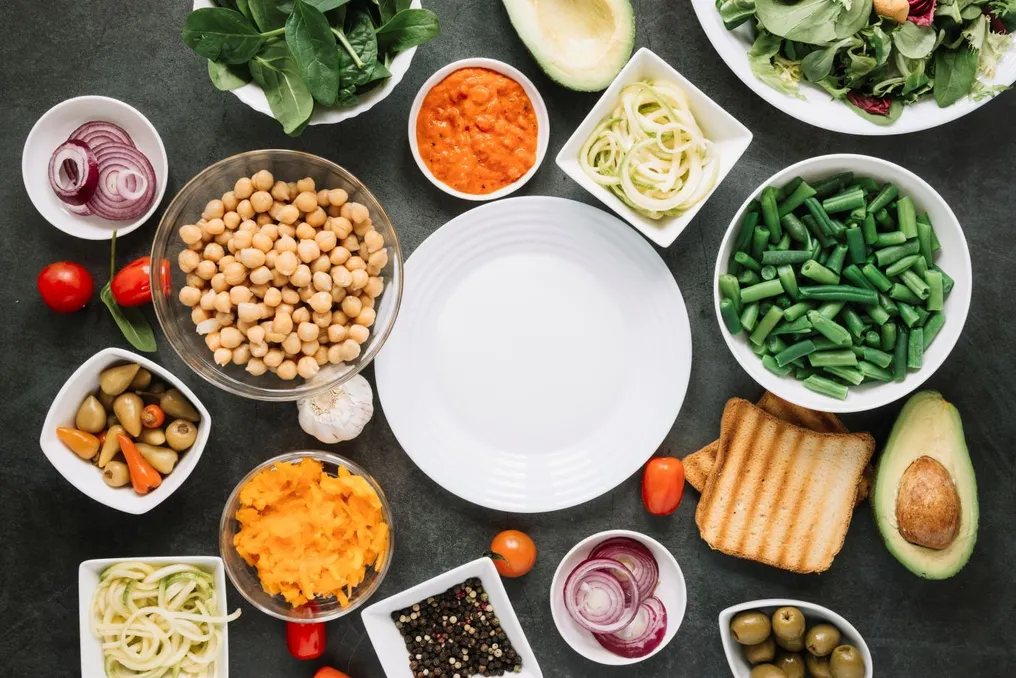
How to turn consumer trends into product concepts in the food industry
Read more
Khaleej Times
www.khaleejtimes.com

How to turn consumer trends into product concepts in the food industry

Consumer trends can indicate new opportunities, but they do not automatically transform into finished products. Interest in a new ingredient, demand for specific nutritional properties, or attention to a new taste can serve as a basis for creating a concept. However, manufacturers need to solve more practical problems: how it will work in the recipe, how it will behave during processing, and what requirements are placed on production and packaging.

Answers to these questions require deep knowledge in application, as well as a clear understanding of the relationship between composition, technological processing, and packaging. This is why product development becomes a complex process, not just a moment of inspiration. Market analysis and consumer insights help determine the direction, while the selection of ingredients and composition turn this direction into a recipe, and testing allows one to understand whether the concept can be brought to the production stage.

Tetra Pak offers product development opportunities. At the Tetra Recart Food Development Centre, nutrition experts and chefs collaborate with manufacturers to create new or update existing products for Tetra Recart packaging. This support includes inspiration, recipe testing, sample creation, and tasting sessions, combining food expertise with knowledge of processing and packaging processes.

For long shelf-life products, manufacturers can develop concepts in various categories such as soups, sauces, ready meals, beans, fruits, and vegetables, and infant and animal feed. The Centre's pilot facility in Lund, Sweden, is equipped with equipment for pre-treatment, filling, sealing, and thermal treatment in autoclaves. Additionally, a mobile test unit allows testing directly at the manufacturers' sites, enabling teams to evaluate recipes parallel to the necessary processing and packaging stages.

Ingredients add another layer of complexity. A promising ingredient is not an opportunity in itself; its application, functionality, supply sources, and compliance with the intended composition are important. Tetra Pak's Ingredient Service focuses on these issues, helping manufacturers select ingredients and assess their applicability in specific products. Support can also extend to sourcing ingredients through Tetra Pak's network of specialized suppliers, helping customers address availability and stability issues alongside formulation development.

An example is the frozen fava bean dessert concept developed and tested by Tetra Pak. Its relatively neutral taste serves as a base for various flavor additions, demonstrating how ingredient characteristics can influence the product concept. The next step is to make this concept relevant to the manufacturer's portfolio and consumer needs.

These issues are also related to the New Food concept, where biomass and precision fermentation open up additional perspectives for ingredients and product development. The Ingredient Service can assist with application and composition, while New Food capabilities address the technological and production processes required for their large-scale release.

Tetra Pak's New Food opportunities combine biotechnological expertise with experience in industrial food production. The New Food Technology Development Centre supports the creation of fermentation-based products, and work in precision fermentation addresses technological solutions for producing precision fermentation-derived ingredients on an industrial scale. The Centre allows customers to test scaling methods, verify production processes, and receive post-research analysis and recommendations on desired characteristics, volumes, and costs. Fermentation test volumes of 20, 200, and 1000 liters are used for this work.

For manufacturers, the value of comprehensive product development lies in making more informed decisions: which concepts to develop, which compositions to refine, and which production issues to resolve. Early integration of consumer understanding, expert ingredient knowledge, processing, and packaging expertise helps outline a clearer path to commercialization.

All these opportunities converge at the Culinary Experience Centre at Gulfood Manufacturing 2026, where Tetra Recart, Ingredients, and New Food move from discussions to tangible product demonstrations. Visitors can find the Tetra Pak booth A2-42 in Hall 2 at the Dubai World Trade Centre from November 3 to 5, 2026.

Similar stories

Sustainability of consumer brands is built on daily habits, not one-off marketing campaigns
Read more
yourstory.com

Sustainability of consumer brands is built on daily habits, not one-off marketing campaigns

Attracting a customer may require a marketing campaign, but retaining them requires creating a product that becomes indispensable. At the Techsparks 2026 event by YourStory, founders of BRÜK, Sangit Krishna, and Qubo, Nikhil Rajpal, explained why design, reliability, and a deep understanding of consumer behavior are key elements for building long-term brands.

Examples of such products include surveillance cameras that allow parents to monitor their children or air purifiers that seamlessly integrate into the daily home routine. Despite differences in needs, these goods share a common trait: their success depends on whether they become part of the consumers' daily lives.

For consumer brands, merely trying to get a customer to try the product is just the initial stage. The more complex task is persuading them to return, especially in a market where choice is vast, competing products are easily accessible, and new brands constantly emerge.

Nikhil Rajpal, co-founder of the smart device manufacturer Qubo, noted that the transition from regular product use to habit formation cannot be measured solely by usage metrics. He stated: 'True product-market fit happens when you achieve these basic usage indicators. If you talk to consumers, are they using it in superlative degrees? Are they saying things like, 'I can't live without this now'? That's when you know you've probably achieved product-market fit.'

In his view, the absence of a product often serves as the best indicator of whether something has become a habit. Rajpal emphasized: 'A habit is not defined by usage metrics. A habit is defined by the anxiety it causes in your absence,' drawing a parallel with fast food and delivery platforms.

Krishna from BRÜK noticed an opportunity in the drinkware market while observing an emerging trend among consumers. He pointed out that people are starting to match their mugs with their clothing and bags, similar to how they do with other lifestyle accessories.

He also saw a gap in the Indian market for premium drinkware that offered superior finishing and build quality. The idea was to create a product combining functionality and aesthetics, offering an alternative in a category dominated by established players. BRÜK's product development focused on everyday convenience, especially for office workers. Krishna noted: 'We were very precise about these details. It has to be comfortable to hold, carry, and use.'

The general principle is that the product must solve a real consumer problem before the brand can expect it to become an everyday item.

Qubo's experience in the home security category provides another example. Rajpal reported that consumers are generally reluctant to experiment with security products because the consequences of failure can be serious. He advised: 'You just need to do your job well. Provide reliable service that consumers can trust.'

For Qubo, consistent performance and reliability are the foundation for gaining trust, especially in categories where consumers are unlikely to easily switch to other brands once that trust is established.

Since customer acquisition is becoming increasingly expensive, brands often use features, incentives, and performance marketing to encourage repeat usage. However, Rajpal believes that retention should primarily be a result of the product's utility itself. He argued: 'Marketing can help you with acquisition, get users to try it for the first time. The product is responsible for users coming back and using it every day.'

He cautioned against over-reliance on rewards such as points, bonuses, and cashback for bringing customers back to a platform. Instead, brands should work based on consumer needs and create products that naturally encourage repeat usage.

For brands selling durable goods like mugs, repeat purchases present a different challenge. Unlike perishable goods, customers are unlikely to replace their drinkware every few weeks or months. In addition to expanding the product line, BRÜK is exploring adjacent categories, such as lunch boxes and protein shakers, based on its understanding of consumer daily routines.

Krishna added that founders must constantly observe how consumers use products, including how they adapt them beyond their original purpose. He cited accessories people add to their mugs and various bottles they carry to the office and gym as opportunities arising from daily observations. He concluded: 'If you watch a person from morning till night, you will get ideas. There is nothing magical about it. Just walk around and observe.'

Another challenge for new consumer brands is convincing customers to pay more when cheaper alternatives and established brands already exist. Rajpal described two possible approaches: competing with existing brands through differentiated offerings or disrupting the market by providing comparable functionality at a lower price through operational efficiency.

As consumer trust is gained, a brand can gradually move away from a penetration pricing strategy and improve its margin. Krishna stated: 'People are willing to pay if you have a quality product. The most important thing is the build quality, the quality, materials, and finish.'

For him, the strategy of lowering prices to increase volume is not always correct. A smaller, but clearly defined customer base willing to pay for the product can be more valuable.

Ultimately, building a sustainable consumer brand requires more than just visibility or an aggressive acquisition strategy. In a saturated consumer market, this can be the strongest competitive advantage a brand can create.

How to incorporate dozens of vegetables and fruits into the weekly diet, according to new health guidelines
Read more
g1.globo.com

How to incorporate dozens of vegetables and fruits into the weekly diet, according to new health guidelines

A new health guideline has gained prominence in the last two years, succeeding the recommendation to walk 10,000 steps daily and consume five portions of fruits and vegetables daily. Currently, the guidance suggests including 30 types of plant-based foods in the weekly diet.

This trend is based on a 2018 study which demonstrated that individuals who reported consuming at least 30 categories of vegetables per week had a more diverse gut microbiota compared to those who consumed fewer than ten types. Subsequent research reinforced that adopting a diet rich in vegetable variety can optimize the composition of the gut microbiota, bringing known benefits such as the reduction of inflammatory processes and increased longevity and quality of life.

Initially, the idea of consuming 30 types of vegetables per week seemed daunting and almost unattainable, raising concerns about the need to prepare complex salads at every meal and managing the large amount of fiber. However, after one week of practice, the author reported that it was surprisingly simple, exceeding the goal and consuming 51 types of plant-based foods.

More vegetables, greater microorganism diversity

There is no strict obligation to reach exactly 30 types of vegetables. Rob Knight, director of the Microbiome Innovation Center at the University of California in San Diego, USA, led the research that popularized this suggestion. According to Knight, the number 30 does not have a specific justification, given that few participants in the study exceeded this mark. The researcher emphasizes that people who consume 20 or 25 varieties can also reap similar health benefits, with the greatest gains noted in those with a less varied diet; if the variety is already reasonable, additional increase will not bring such expressive benefits.

The recommendation of 30 types of vegetables has become a kind of challenge, where each distinct food item scores one point. Items are categorized into six groups: fruits, vegetables and legumes, whole grains, pulses (such as beans, lentils, and chickpeas), nuts and seeds, and herbs and spices. Tea, coffee, and chocolate are also counted, as they all contain beneficial substances, such as antioxidants.

Federica Amati, a nutrition researcher at Imperial College London, UK, was surprised to note that spices are part of this list. She points out that studies indicate that adding a combination of seasonings to meals can generate measurable changes in the gut microbiota in just 48 hours. Some sources suggest assigning a quarter point to each tea, coffee, or herb consumed. Amati explains that small dietary modifications can quickly alter what she calls the intestinal 'microorganism ecosystem,' but for the effects to be lasting, maintaining variety over time is crucial. Furthermore, Amati highlights that this advice encourages the consumption of foods beyond the usual ones, such as apples, cucumbers, and bell peppers. Scientific studies indicate that low consumption of whole grains, nuts, and seeds is among the main risk factors for premature mortality.

Although consuming so many different foods can represent a high cost, especially for those who purchase many fresh products, the author managed to combine fresh ingredients with pantry items and frozen products during their experience.

My week with over 30 vegetables

During the experimental period, breakfast maintained the routine of overnight soaked oats, supplemented with chia seeds and yogurt, but there was variation in the added fruits. Due to lack of time for lunch, sandwiches or leftovers from the previous night's dinner were chosen, which helped prevent waste. Dinner, on the other hand, required more planning, focusing on not repeating ingredients and prioritizing recipes that incorporated a good diversity of vegetables, while maintaining a familiar culinary style.

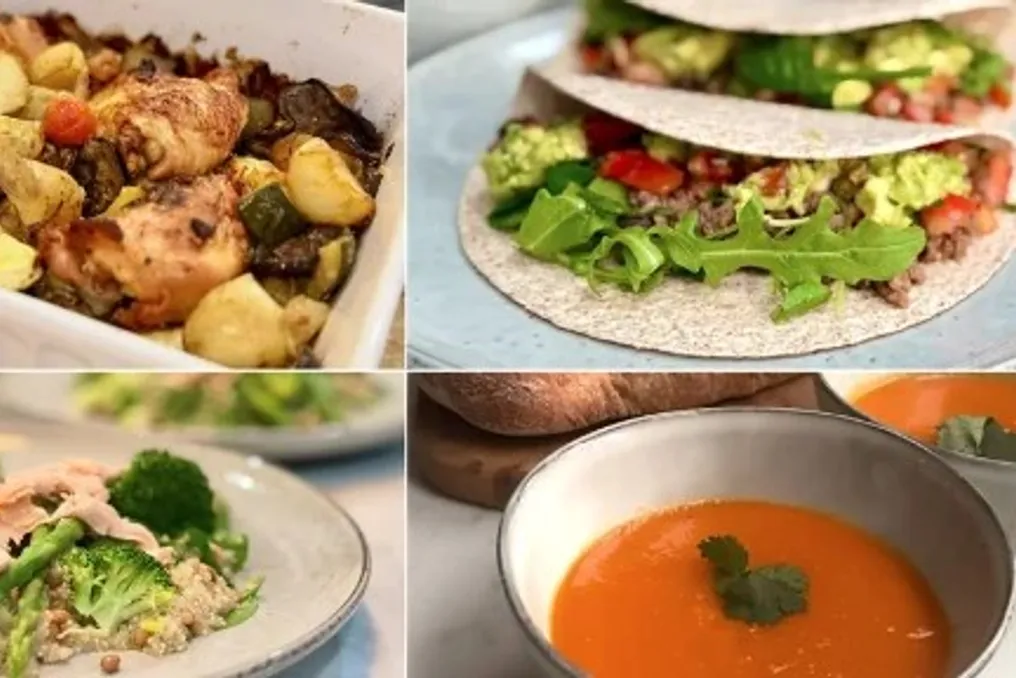
On Monday, dinner consisted of a chickpea tagine, a quick and flavorful recipe from BBC Good Food, enriched with peas to increase fiber. The vegetables consumed that day included oats, blueberries, chia seeds, cabbage, peas, chickpeas, couscous, tomato, onion, and raisins, in addition to various spices counted as a single item.

On Tuesday, Selena Wu, a nutritionist at King's College London, UK, advises including fiber through nuts or seeds in breakfast cereals, or by serving a sandwich accompanied by a salad, as was done for lunch. Dinner was a quinoa salad with green lentils, asparagus, and grilled salmon. The vegetables consumed that day were raspberry, tangerine, apple, quinoa, broccoli, spinach, asparagus, lemon, garlic, and chives.

Wednesday brought a curry, a frequent recipe, but a new version was tried, adding sweet potato and red bell pepper, served with green beans. The family enjoyed it, and the dish used a considerable variety of spices. The items consumed included coffee, banana, cashew, coconut milk, sweet potato, green beans, and brown rice, in addition to red bell pepper.

On Thursday, being close to the 30 vegetable goal, the focus remained on maximizing ingredient variation within the established plan. A simple and quick soup was prepared with onion, garlic, carrot, lentils, and sweet potato, accompanied by sourdough bread and salad. A healthy smoothie made of frozen banana, cocoa powder, and cashews was also made. The registered vegetables were tea, cocoa powder, cashews, pumpkin seeds, red lentils, and arugula.

On Friday, it became more challenging to find new foods, since each item could only be counted once. Despite this, fruits, vegetables, and legumes continued to be included, even with repetition. Tracking herbs and spices was also complicated. The day was dedicated to tacos, whose filling was made with black beans and ground meat, using ripe avocados for a good guacamole and tomato sauce. The vegetables consumed were whole wheat tortillas, cucumber, black beans, avocado, and fresh cilantro.

Saturday, due to the rush, stir-fried pasta with tempeh was chosen, a cooked and fermented soy product, although another protein could have been used. The children did not approve of the dish, and preparing the tempeh generated a slight bitterness, leading to a second, simpler pasta dish. The items consumed were dried mango, peanuts, tempeh, olive, Chinese mustard greens, baby corn, and sesame seeds.

Sunday, with decreasing willingness to try new recipes, the oven was decided upon for most of the preparation, making roasted chicken with vegetables on the same tray, accompanied by a salad. He managed to finish the week without needing to go to the supermarket, utilizing what was left in the fridge, such as eggplant, zucchini, and potatoes, in addition to thawed chicken thighs. The vegetables of the day were carrot, eggplant, zucchini, and potato.

Changes that are here to stay

At the end of the week, the total reached was approximately 51 types of vegetables. The most difficult aspect was organizing the menu and preparing distinct dishes after an exhausting day, but it is expected that this will become easier with the repetition of recipes. There was also a surplus of food, which ensured healthy lunches the next day, and snack consumption was reduced, avoiding restaurants and generating savings. Even the children, usually demanding, tried more new foods.

The most surprising thing was discovering that such intense preparation was not necessary; with usual meals, it would already be possible to get close to 30 points. It is notable how, when considering coffee, tea, chocolate, spices, and whole grains, the number of vegetable types quickly reaches 30, provided the dietary base is already healthy. However, the author intends to maintain the variation of weekly purchased ingredients and seek ways to integrate more vegetables into meals, keeping his stock of nuts and seeds for continuous use.

Health trend drives consumption changes and expands the functional food market
Read more
g1.globo.com

Health trend drives consumption changes and expands the functional food market

The consumption of soft drinks, for example, has undergone significant changes, abandoning calories, sugar, and caffeine in favor of healthier formulations. This shift reflects the industry's response, even in highly profitable sectors, to the growing demand for nutritious, tasty, practical, and high-quality foods.

Market data demonstrates the scale of this transformation. A study by the American agency Allied Market Research projected that the global functional food market, valued at US$ 177.77 billion in 2019, is expected to reach US$ 267.92 billion by 2027, showing an annual growth rate of 6.7%. Additionally, Global Industry Analysts estimates that the worldwide organic food and beverage market could reach US$ 495.9 billion in 2027, highlighting that the expansion of the health trend is structural in the sector.

This evolution is not limited to beverages. Proteins, fibers, whole grains, organic items, natural ingredients, options with lower sodium or sugar content, and plant-based alternatives are gaining ground in the choices of those seeking a more balanced lifestyle.

Health as Italo Group's Response

The future outlook does not point to a single way of eating, but rather to a consumer who is more conscious about nutrients, product origin, practicality, and the impact of their dietary decisions on their daily routine.

This transformation also reaches supermarkets. The availability of diverse options in one place simplifies life for those who wish to make more conscious choices, eliminating the need to visit multiple establishments to find each category.

At Ítalo Barigui, the Health section features both national and imported products, meeting various needs, including whey, creatine, protein foods, granola, seeds, zero-sugar items, and options rich in fiber and other functional components. Alongside this, there are basic categories such as fresh produce and butchery, along with organic products, plant-based alternatives, beverages, and ingredients that aid in adapting recipes and habits.

Therefore, health is not confined to a specific item or a restrictive diet; it resides in the sum of choices. For the consumer, having sufficient variety to make these decisions in one place can be as relevant as finding the ideal product.

Protein, Fiber, and Functional Foods Gain Prominence

The demand for protein is a clear example of this change in consumer behavior. This nutrient is no longer relevant only to those who exercise, but is becoming important for those focused on satiety, muscle mass maintenance, and overall dietary quality.

Sources of protein can come from meat, eggs, dairy, but also from legumes, seeds, and other vegetable foods. The current focus is less on a specific diet and more on the ability to obtain multiple sources of nutrients to build balanced meals.

In this context, categories such as protein snacks, fiber-fortified pasta, whole grains, granola, seeds, and ready meals—which combine convenience and nutritional value—are becoming part of more people's daily lives.

Practicality is also a decisive factor. For individuals with busy routines, finding a nutritious option that is easy to store and prepare can be as crucial as the composition of the food itself.

Less Sugar, Less Sodium, and Recognizable Ingredients

The search for a healthier diet is also manifested in the reformulation of traditional categories, as seen in the case of Coca-Cola Zero Sugar. Drinks with reduced sugar, natural juices, fruit-based carbonated versions, and functional products are taking up space previously dominated by more conventional options.

The same occurs with seasonings, where industrialized products are being replaced by herbs and spices in preparations. At Ítalo Barigui, this trend is visible in Cipria products, a line of herbs and spices from Curitiba, which allows for the creation of seasonings using natural ingredients.

This transition does not imply turning every meal into a list of prohibitions. On the contrary, the consumer seeks alternatives that allow them to maintain pleasure and flavor while making more conscious choices. This balance explains the broad scope of the health trend: the consumer does not have to give up a familiar drink, a sweet, or a quick meal; they want options to choose what best suits their moment.

Organic foods are defined as high-quality products, free from pesticides, and consumers also seek them for sustainability reasons.

Organics and Certifications Connect Health and Sustainability

Attention to the contents of the plate is also linked to how the food is produced. Organic products, certification seals related to production, and animal welfare initiatives have become criteria observed by consumers who want to know more about the origin of what they purchase. In this scenario, sustainability transcends mere environmental discussion and begins to influence purchasing decisions.

At Ítalo Supermarkets, this concern is reflected in several sections. Among the available offers are eggs from brands with cage-free production certifications, as well as organic products covering vegetables, grains, coffee, and other categories.

The strategy is to offer alternatives for various consumer profiles, including those who wish to gradually introduce these types of products into their routine.

Health Starts with Fresh Produce and Extends to Proteins

A balanced diet does not depend exclusively on items with functional characteristics on the packaging; its foundation remains constituted by fresh and familiar foods. In this sense, the fresh produce section of Ítalo Supermarkets plays a central role, as fruits, vegetables, legumes, and other fresh ingredients enable the assembly of varied meals, essential for a dietary routine based on different nutrients.

The same principle applies to animal protein sources. In the butcher shop, the diversity of meats expands possibilities for those seeking different types of protein and wishing to combine these foods with vegetables, grains, and other side dishes.

It is this combination that takes health out of the theoretical field and places it in everyday life. A shopping cart can gather fruits for breakfast, vegetables for main meals, grains and seeds, a source of protein, whole grains, and functional options for specific times of the day.

Popular