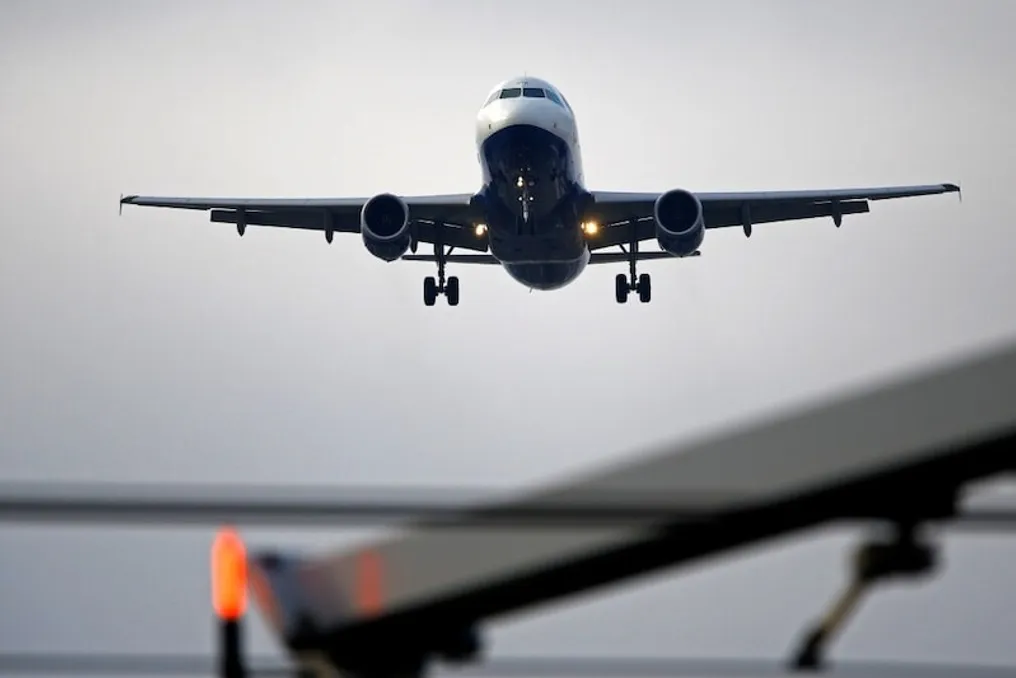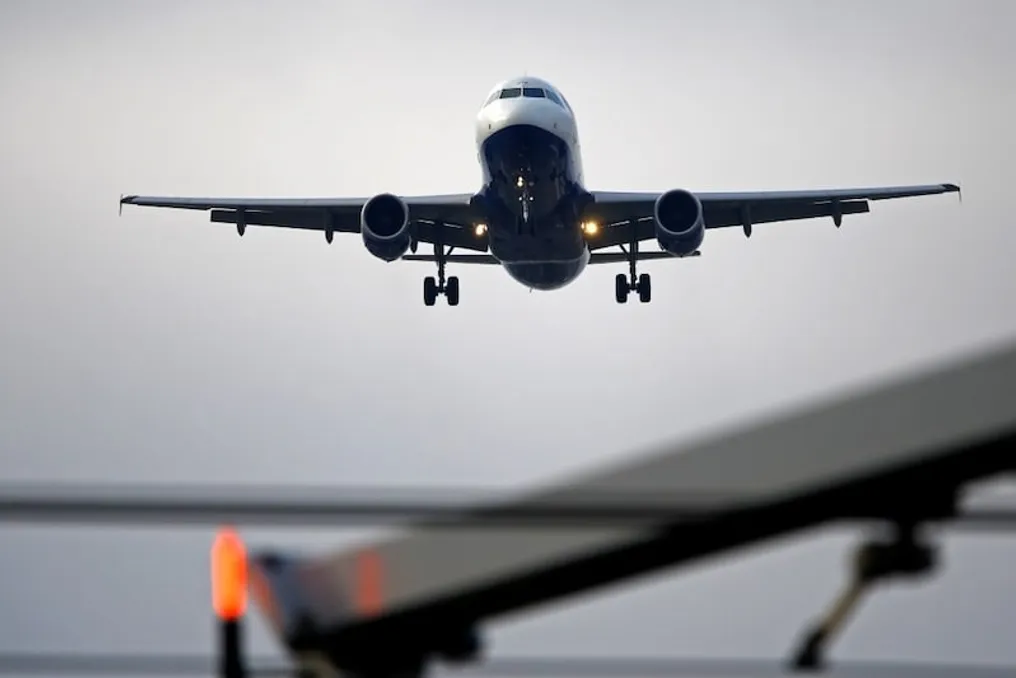
Airlines demand resumption of old state program to stabilize aviation fuel prices due to rising fuel costs
Read more
Aaj Tak
www.aajtak.in

Airlines demand resumption of old state program to stabilize aviation fuel prices due to rising fuel costs

With the growing demand for air travel and the expansion of the aircraft fleet, airlines are facing serious difficulties due to high aviation fuel prices. Despite the increase in the number of aircraft and capacity, some airlines are forced to reduce the number of flights.

A major regional airline, Star Air, which operated 68 daily flights in the summer, reduced this number to 52 in the winter schedule. The reason for this was the increased cost of kerosene, or aviation turbine fuel (ATF), which made conducting additional flights economically unviable.

In this regard, airlines have appealed to the Ministry of Civil Aviation to resume the price stabilization program for ATF. Companies believe that the return of this program with some changes could bring them relief.

The main problem for airlines is the sharp jump in aviation fuel prices. In March 2026, the price of ATF in India was about ₹105 per liter, but by April it rose to approximately ₹207 per liter. When the government approved the price stabilization plan in June, the cost of ATF was about ₹115 per liter, and in October it reached approximately ₹137 per liter. Even considering the decrease in prices compared to April, fuel remains a significant expense for airlines. According to industry experts, more flights now mean not so much more profit as an increase in costs.

This forces not only regional but also large airlines to revise their operational activities. The rise in fuel prices is exacerbated by the international situation. Geopolitical tensions in the Middle East have led to restrictions on air routes and operational difficulties.

Air India and Indigo are already feeling the consequences of restrictions on using Pakistani airspace. At the Aviation India event in Delhi, Air India's CEO, Tevold Gebremariam, raised this issue. He noted that international competitors are not facing similar problems related to airspace, which creates additional operational pressure on Indian airlines.

To alleviate the situation for airlines facing sharp fluctuations in ATF prices, the government centrally approved a program in June 2026. Under this plan, the Cabinet decided to provide Oil Marketing Companies (OMCs) with a one-time budgetary assistance of up to ₹10,000 crore. The goal of this initiative was to protect Indian airlines from sudden increases in ATF prices for both domestic and international flights. This program was presented as the ATF Price Stabilization Fund (PSF). However, because airlines showed no interest, it was closed about a month after its approval.

Airline representatives point out that the initial proposal contained conditions that caused companies to be reluctant to participate in the program. One senior airline employee told the publication Aaj Tak that the companies disagreed with the condition of purchasing fuel only from one specific oil marketing company. Furthermore, the program required the immediate signing of a Memorandum of Understanding (MoU) and the termination of previously concluded agreements. According to this employee, at the time, companies did not anticipate such a sharp rise in ATF prices. Now that the situation has changed, airlines are ready to consider participation if the government revives the old program with amendments.

Regional airlines insist that when the program is resumed, the government should take into account their operations and network. A representative of a regional airline noted that four regional operators use about 3% of the country's total ATF consumption, but they operate flights on 30–35% of routes where other airlines show no interest. These companies play an important role in ensuring air connectivity in small towns and areas where it is not profitable for large operators to fly. Therefore, they ask the government to consider favorable conditions for regional airlines in the Price Stabilization Fund.

Nevertheless, not all regional companies demand special benefits. Another senior employee stated that they do not need any particular privilege, but if the government resumes this program in light of the high cost of kerosene, it will be a relief for the entire industry. Currently, airlines are trying to balance costs and flights. If fuel remains expensive, companies may reduce flights on certain routes or postpone plans to launch new destinations, which could negatively affect passengers from small towns, where regional airlines are the primary means of communication.

Similar stories

Air India plans additional widebody aircraft orders, citing high costs as the main problem
Read more
business-standard.com

Air India plans additional widebody aircraft orders, citing high costs as the main problem

The Chief Executive Officer and Managing Director of Air India, Towelde Gebremariam, stated on Tuesday that the airline aims to acquire more widebody aircraft to expand its international operations while working to reduce high operating costs and return to profitability.

Gebremariam spoke at the India and South Asia Aviation Summit. He reported that despite financial losses incurred, Air India will return to profitability 'very soon.' In fiscal year 26, Air India and its subsidiary Air India Express recorded a consolidated net loss of 22,238 crore rupees, more than double the loss of 10,859 crore rupees registered in fiscal year 25.

He noted that the shareholders of Air India Group—Tata Group and Singapore Airlines—have given him 'full support' and maintain a 'long-term' view, but he himself is 'more impatient for profitability than the shareholders' and intends to 'make Air India great again.'

Since privatization in January 2022, Air India Group has placed firm orders for 600 aircraft with Airbus and Boeing. These orders include 80 widebody jets, of which 50 are Airbus A350s, 20 are Boeing 787 Dreamliners, and 10 are Boeing 777Xs. The remaining 520 units are narrowbody aircraft primarily used for domestic and short-haul international flights.

Gebremariam emphasized that 'we want more widebody aircraft... the opportunity is huge.' The airline has negotiated with both Airbus and Boeing. Widebody aircraft are larger, two-aisle aircraft typically used for long-haul international flights.

Regarding immediate financial priorities, Gebremariam stated that reducing operating costs is crucial. He pointed out that 'the cost per available seat kilometer (CASK) is a serious issue for us. It is too high and must be reduced.' The CASK metric reflects the amount the airline spends to operate each seat per kilometer flown; a lower CASK allows the company to fly cheaper.

He added that 'we must look at all aspects of the business from the perspective of unit costs compared to the industry. And we are working to reduce these unit costs, at least to industry levels, and possibly higher.'

Furthermore, the airline is rebalancing its network to mitigate the impact of airspace restrictions. Flights between Europe and the US have been more affected by the closure of Pakistani airspace, with Delhi feeling a greater impact than Mumbai. Air India will continue to operate flights from Delhi but will shift most operations to Europe and the US to Mumbai. The possibility of using Bangalore as an additional hub is also being explored.

Nevertheless, Delhi will retain its importance for the airline's Eastern and Southeast network, which has not been as severely impacted by airspace restrictions. Gebremariam reported that the airline will continue to develop these markets from Delhi while adjusting its European and American operations.

Air India is also strengthening its international sales departments and increasing sales in foreign markets. According to Gebremariam, this will help the airline balance international sales with bookings made in India and manage currency fluctuations. Selling more tickets in external markets can help the airline earn revenue in different currencies, providing some protection against adverse exchange rate movements.

As part of cost reduction, the airline has already formed a cross-functional group to study costs across various business functions. It is also working to improve coordination between Air India and Air India Express, which operate under separate Air Operator Certificates (AOCs). Both airlines aim to increase efficiency through shared corporate functions and other synergies.

Gebremariam noted that the cost-cutting process spans all areas of the business. He stressed that improving efficiency is the central goal, not betting on any single cost-reduction initiative.

He characterized geopolitical turmoil, airspace closures, and high fuel prices as short-term challenges for the aviation industry. However, Pakistan's airspace restrictions present an additional difficulty for Indian carriers like Air India. The CEO stated that the airline needs to focus on immediate financial problems while continuing to build long-term growth. He concluded: 'One eye is completely focused on today. We must do something today to handle the challenges we face. And the second eye is completely focused on the future.'

Aerotest tells which items passengers can request from flight attendants during a flight
Read more
www.aajtak.in

Aerotest tells which items passengers can request from flight attendants during a flight

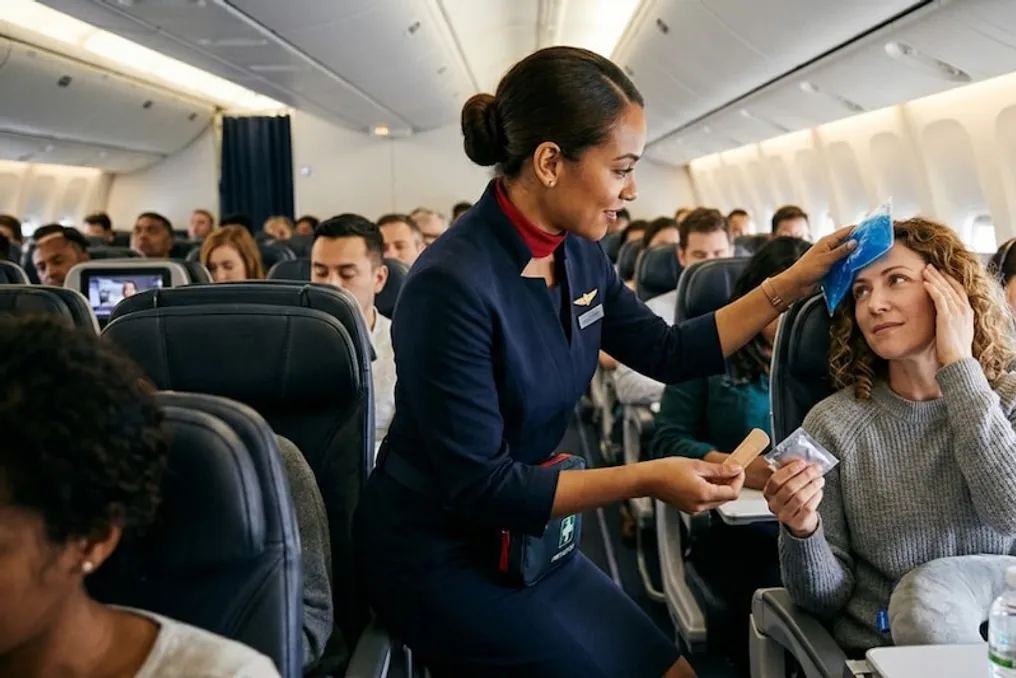
During an air trip, passengers often assume that they only have access to the amenities originally placed in their seats. However, this is not the case. If a passenger experiences a headache, leg swelling, or sudden injury during the flight, they can ask the flight attendants for some necessary items.

Passengers can also ask for items such as sanitary pads, tampons, and painkillers. An experienced flight attendant shared information about six important things that many travelers do not know.

According to a report by the New York Post, Sil Ridel, a stewardess known on social media as 'Travel with Sil Ridel,' has been in the aviation industry for six years. She regularly shares tips related to air travel on TikTok and Instagram.

Every Tuesday, she provides passengers with new information. Recently, she talked about what items passengers can request on the plane if needed.

During a long flight, leg swelling or headaches often occur. In such cases, one can ask the flight attendants for an ice pack for a cold compress. This can help relieve pain or reduce swelling.

Sometimes blisters appear on the feet due to running between gates at the airport or prolonged walking. If you don't have a bandage, don't worry; you can ask the stewardess for a bandage or plaster. They may have the necessary supplies to solve such minor passenger problems.

For sudden headaches or stomach aches during a flight, passengers can also seek help from the crew members. Ridel noted that some passengers may be provided with a painkiller. However, the availability of medication can vary by airline and by flight, so there is no guarantee of receiving medicine.

This information may be useful for women. If menstruation unexpectedly starts during a flight and you do not have a sanitary pad or tampon, you can ask the flight attendant about it.

According to Ridel, some airlines place necessary items for women on their planes. However, this amenity is not guaranteed on all airlines.

She also advised not to try to search for these items yourself in the toilet drawers, as this could damage the contents. It is better to ask the cabin crew directly, as they can provide assistance.

Hot water can also be requested on the plane. If you bring a packet of tea or instant noodles, you can ask the crew members for hot water.

Furthermore, if you have nausea or vomiting problems during the flight, it is better to request a special sickness bag in advance rather than waiting for the discomfort to begin.

Ridel added that if the noise in the plane causes discomfort, earplugs can be requested. Passengers can also ask the crew members for extra water, to refill a bottle, or sanitary wipes.

She emphasized that passengers should not be shy about asking for help. Even if your need seems strange or embarrassing, the cabin crew has encountered similar situations before. Therefore, you should speak openly about your problem. She also mentioned that although not everything may be available on the plane, the crew members often have some solution.

Airline ticket booking rules changed: airlines must specify full cost and fee conditions in advance
Read more
www.aajtak.in

Airline ticket booking rules changed: airlines must specify full cost and fee conditions in advance

The government has introduced new provisions aimed at eliminating problems encountered by passengers when purchasing airline tickets. Often, the initial ticket price appears low, but after adding taxes, fees, and other payments, the total cost increases. Furthermore, passengers are often unclear about what percentage of funds will be retained and what amount will be refunded in case of flight cancellation. The new rules oblige airlines to provide a full report of all expenses at the booking stage.

These changes will come into force on January 1, 2027. The government officially notified the new rules on October 31, approving the Indian Aviation Rules 2026 (Bharatiya Vayuyan Niyam, 2026).

According to the new regulations, airlines are required to display not only the total ticket price but also a detailed breakdown of each fee on their websites or booking platforms. This means that during the ticket purchase, passengers will be able to see not only the final cost but also the exact amount charged for each specific expense item. Information about all these fees must also be included in the ticket issued after completing the booking.

The new rules make it mandatory for airlines to clearly present the following information: cancellation terms and refund policies. This allows passengers to understand the full cost of the ticket and all conditions related to trip cancellation before making a purchase.

An important provision has been introduced regarding airfares. It allows the central government to intervene in matters of airfares in the event of exceptional circumstances. The government may issue a written order with necessary instructions in the public interest. However, the rules do not specify which situations will be considered exceptional, meaning it is not defined under what circumstances the government will intervene in airline pricing.

Oversight of fares set by airlines will be carried out by the Directorate General of Civil Aviation (DGCA). The main focus of the new rules is ensuring complete transparency of information about fares and associated fees to passengers.

The Government of India prepared an Aviation Bill in 2024. This bill replaced the Aviation Act of 1934, which had been in use for about 90 years. After approval by parliament and sanction from the president, this bill gained the status of law, known as the Indian Aviation Rules 2026. The new rules will take effect on January 1, 2027, replacing the Aviation Rules of 1937.

Popular