Four British universities conduct joint graduate recruitment in India
Read more
Aaj Tak
www.aajtak.in

Four British universities conduct joint graduate recruitment in India

For students dreaming of studying at foreign universities, a new opportunity has emerged to build a career directly in India. Four British universities are organizing a joint placement drive for their postgraduate students studying in India for the first time. Thanks to this initiative, over 250 students may secure employment even before completing their studies.

Students from sectors such as finance, technology, artificial intelligence (AI), management, and creative industries will participate in this recruitment drive.

The joint recruitment drive will involve campuses of four British universities in India. These include: The University of Bristol Campus in Mumbai, the University of York in Mumbai, the University of Liverpool in Bangalore, and the University of Aberdeen in Mumbai.

This initiative is being implemented by the global education company Emeritus. The event is named UK Universities Placement Week. This is the first instance where all four universities are jointly organizing recruitment for their postgraduate first-year students.

More than 250 postgraduate students from these four universities will take part in the recruitment drive. These students plan to complete their degrees in 2027. Participants include both recent graduates and professionals with 2.4 to 3 years of work experience. Students' fields of study and experience cover finance, banking, IT, consulting, auditing, accounting, sales, marketing, business analytics, media, and design.

The recruitment drive will take place at the end of November. Companies will be able to conduct interviews and offer jobs to the students. It is important to note that companies can issue job offers before the completion of studies. Interested companies must report their hiring needs by mid-November. Following this, the Central Placement Committee will review the companies' applications and their hiring requirements.

The universities will review student profiles against available vacancies and select suitable candidates. Subsequently, selected companies can conduct online or offline interviews with students from all four campuses in Mumbai and Bangalore.

Students in this recruitment drive study courses related to finance, technology, AI, management, and creative industries. Education at these university campuses is based on curricula developed by their parent universities in the UK. Academic assessment standards also align with those of the parent campus.

These institutions focus on preparing students according to industry demands. To achieve this, they provide opportunities for practical assignments, live projects, and interaction with corporate activities.

Typically, the campus recruitment season in India ends around August or September. Therefore, this November drive can provide companies with an additional hiring opportunity. This allows companies to assess students' talent and skills even before graduation. At the same time, students get a chance to find employment before receiving their diploma. However, participation in the drive does not guarantee employment; selection will depend on company needs, the selection process, and interviews.

Similar stories

Europe seeks technological partnership with India, focusing on opportunities rather than just scale
Read more
yourstory.com

Europe seeks technological partnership with India, focusing on opportunities rather than just scale

In a world where countries are actively investing in their own semiconductor production, artificial intelligence model development, and critical infrastructure, creating everything necessary independently is not always practical or mandatory. The main task is to find a balance between maintaining strategic sovereignty and the need for international cooperation.

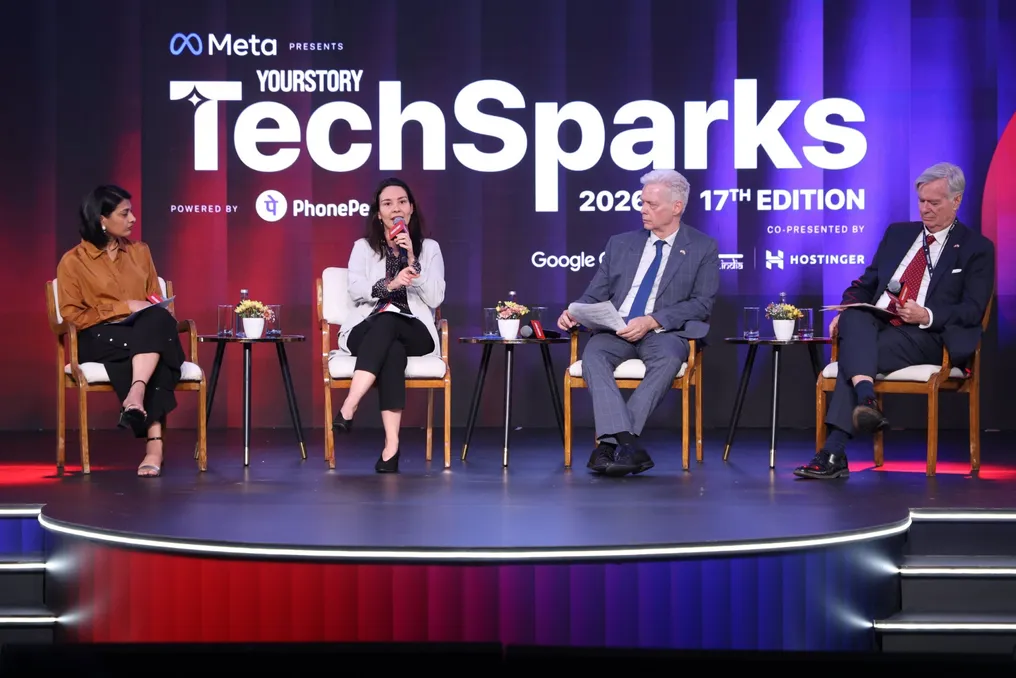
These issues were discussed at a panel titled 'New Technological Alliances: Why Startups Around the World Need India, and Why India Needs the World' during the TechSparks 2026 event, held on October 15 in Bangalore. The discussion focused on how Indian startups can integrate into international technological ecosystems, as well as how global partners can strengthen ties with India.

The panel discussion featured Dr. Angela Honegger, CEO and Consul General of Swissnex India (Switzerland); Jakobus Johannes 'Jaap' Vermeulen, Consul General of the Kingdom of the Netherlands in Bangalore; and Peter Winter-Schmidt from the Consulate General of Denmark in Bangalore. These three representatives spoke about programs that help startups gain access to research, funding, markets, and partnerships both in India and Europe.

Winter-Schmidt emphasized that strategic sovereignty should not be equated with technological independence. He noted that while defense and security require a certain degree of sovereignty, areas such as talent, research, and technical compatibility benefit from international interaction. He cited the European Union's digital wallet as an example, which, he said, is being developed based on the Indian technology stack with support from India.

Vermeulen agreed that states must define critical elements for their own ecosystems while remaining open to partnership, stating: 'I do not believe in isolation' and stressing the importance of finding suitable partners.

Honegger also insisted on the necessity of collaboration, asserting: 'If we want a chance to win, we must cooperate.' She described Swissnex as a science consulate with six global branches, including Bangalore. Swissnex programs cover student and researcher exchange, joint research funding for Swiss-Indian teams, bilateral startup exchanges, and market validation camps. Under the program, companies from each country visit each other to explore opportunities.

As an example of cross-border cooperation, Honegger mentioned the company Suind, which operates in the fields of AI, drones, and agriculture. Founded by a Swiss and Indian entrepreneur, Suind initially opened a subsidiary in Bangalore before relocating its headquarters and subsidiary. Honegger clarified: 'Technically, it is an Indian startup with a Swiss division.'

She called on deep-tech founders in India to consider transferring part of their R&D operations to Switzerland while keeping headquarters and manufacturing in India. She added that Swiss Innovation Parks provide access to research facilities, specialized technology platforms, and government funding for joint R&D with Swiss institutions. The robotics startup CynLr from Bangalore has already opened a subsidiary in one of these parks.

Honegger also highlighted Apertus, an open-source model from Switzerland, as an example of efforts to develop publicly available AI infrastructure and prevent the concentration of control over this technology 'in the hands of a few corporations.'

Vermeulen spoke about the Netherlands' partnership with India in semiconductors, signed several months ago. This agreement covers semiconductor design, photonics, and advanced packaging, alongside manufacturing. He also reported that the Dutch semiconductor equipment manufacturer ASML is expanding its presence in India. Recently, the Dutch consulate brought 17 startups to Semicon India as part of efforts to strengthen technological ties between the two countries.

Vermeulen also mentioned the Brain Bridge program, which connects Dutch and Indian universities with Dutch companies already operating in India. Five Indian medical technology startups were selected for grants to explore opportunities in the Netherlands, and a cybersecurity mission is also planned.

Vermeulen stated: 'We see Bangalore as the Silicon Valley of Asia.' Winter-Schmidt, describing Denmark's approach to working with Indian startups, used the phrase: 'The key word for us is co-development.' He highlighted Denmark's 'Water Challenge,' which invites 10 selected Indian startups to Danish universities to work on AI-based water purification solutions. Afterward, the startups present their ideas to investors, having access to seed funding.

The Green Strategic Partnership Agreement between Denmark and India is also being extended and expanded to include space technologies, deep tech, and defense technologies. Winter-Schmidt mentioned a recent Memorandum of Understanding between DTU and IIT Madras, as well as efforts to unite venture and private investors from both countries through a 'financial bridge.' He also mentioned the Danish Impact Fund, which primarily provides loans for solutions that have a positive impact on the environment.

The three representatives gave practical advice to Indian founders aiming to enter European markets. Winter-Schmidt strongly advised startups to identify a specific market instead of viewing Europe as a monolith. He recommended that founders validate their value proposition before entering the market, dedicate time to building relationships, and be prepared to share their solutions with local partners rather than excessively protecting them.

Honegger called for greater willingness among Indian companies to take risks when working with international startups. She wanted to see a 'greater propensity for risk... to become a co-creator, not just a recipient of innovation.' She explained that Swiss startups often find that discussions with potential Indian partners end after a free pilot project. She argued that companies must be more willing to share the financial and operational risks of developing new technologies. In her view, the solution is to 'share the risk associated with innovation across several shoulders.'

During the Q&A session, an eleven-year-old founder asked how small companies navigate European regulations such as the General Data Protection Regulation (GDPR). The panel advised startups to prepare in advance, carefully select target markets, and seek advice from local partners, consultants, and consulates.

Winter-Schmidt noted that Danish companies traditionally viewed India primarily as a market offering scale. However, in his opinion, this is only part of the possibilities. He concluded: 'You come to India not for scale, you come to India for opportunities.' He also stressed that international partnership should involve learning on both sides, adding: 'We don't have that much to teach India... We can learn as much from them.'

UFNT launches selection process to fill 315 remaining spots in undergraduate courses
Read more
g1.globo.com

UFNT launches selection process to fill 315 remaining spots in undergraduate courses

The Federal University of Tocantins (UFNT) has initiated three selection processes aimed at filling 315 remaining vacancies in in-person undergraduate courses. These opportunities are for admission in the first semester of 2027 and cover current students of the university itself, students from other colleges, and individuals who already hold a higher education degree.

All registrations must be completed exclusively online through the official UFNT selection process portal. The vacancies have been segmented into three distinct categories: internal transfer and readmission, external transfer, and degree holder, in addition to a specific external transfer modality for the Medicine course.

The registration period began on October 23 and runs until November 23 for most courses. However, the deadline for the external transfer modality for Medicine is November 18. Candidates registered in the Federal Government's Single Registry for Social Programs (CadÚnico) have until 11:59 PM this Tuesday (27) to request an exemption from the registration fee.

Internal Transfer and Readmission

Internal Transfer is intended for students who are regularly enrolled or on a full leave of absence at UFNT during the second semester of 2026 and wish to change courses. Internal Transfer Readmission is directed at former students who have not maintained a link with the institution for more than seven years.

For this modality, the selection criterion is the General Performance Coefficient (CRG) recorded in the academic transcript, and the registration fee is free.

External Transfer and Degree Holder

This selection process serves the external community and offers 157 remaining spots. Of these, 78 are reserved for external transfer, meaning students coming from other colleges or universities. Additionally, there are 79 spots for holders of a higher education degree recognized by the Ministry of Education (MEC).

The selection criteria for these spots are the scores obtained in the Tocantins Higher Education Access Exam (EXATO) in the 2025 or 2026 editions. The registration fee is R$ 50, which must be paid by November 18.

External Transfer for Medicine

This option is exclusive to Medicine students from other higher education institutions in the country. The announcement offers 6 remaining spots for the Bachelor's degree in Medicine at the Araguaína campus, distributed across periods 3 through 8 of the undergraduate program. The selection will occur in two phases.

The first phase, which is both qualifying and eliminating, consists of evaluating the candidate's scores in the EXATO exam (2025 or 2026 editions). The second phase, purely eliminating, involves documentary analysis to verify the correspondence between the workload and the curriculum of the subjects taken at the originating institution.

The requirement to participate is to be studying between the 3rd and 8th period of Medicine. Similar to the other external modality, the registration fee is R$ 50, due for payment on November 18.

Unit's Entrance Exam for 2027 to be held in October; registrations open
Read more
g1.globo.com

Unit's Entrance Exam for 2027 to be held in October; registrations open

For those intending to start higher education in 2027, the time to take the first step is approaching. In Sergipe, the entrance exam for the Tiradentes University (Unit) for admission in the first semester is scheduled for October 18, 2026. This selection represents the beginning of a new academic journey for students aiming for professional training, new opportunities, and preparation for an increasingly dynamic job market.

In addition to choosing a field of study, the student must find a formative experience that aligns with their goals and their real situation. With this in mind, Unit has reformed its portfolio and adjusted its teaching methodologies and formats to accommodate diverse student profiles, always maintaining a focus on excellence and academic quality.

The university structures undergraduate programs according to the specifics of each course and in compliance with the current guidelines of the Ministry of Education (MEC). The proposal integrates multiple forms of learning, supported by three crucial pillars for professional development: technology, practice, and flexibility.

A highlight among the innovations is the blended learning format, ideal for those who need to balance higher education studies with other obligations, especially work. This modality offers a more adaptable alternative for managing the academic routine of those who are already employed and do not wish to leave their jobs to study.

Unit's new teaching model also intensifies the use of approaches that connect the student to professional reality. Among these methodologies is Project-Based Learning (PBL), which encourages the application of knowledge in solving practical scenarios and developing projects.

The objective is to ensure that the student not only absorbs content but also knows how to apply it. This link between theory and practice helps develop essential skills for professional life, such as problem-solving, teamwork, decision-making, and innovation.

The undergraduate program offered in the blended format maintains the same quality standard as the in-person format, featuring the same laboratories and professors. The model stipulates that the student studies three days in person and two days online.

Registrations are now open. Evaluation criteria include the score obtained in Enem or a simplified process involving essay analysis.

In Sergipe, the new blended format is available in several courses and campuses of Unit. At the Farolândia Campus, Gastronomy, Pedagogy, and Occupational Therapy are available. At the Estância Campus, the courses offered are Physical Education, Pedagogy, Social Work, and Occupational Therapy.

Additionally, the Itabaiana Campus offers Physical Education, Pedagogy, Social Work, and Occupational Therapy, while the Propriá Campus offers Physical Education, Pedagogy, and Occupational Therapy. This variety of courses and locations expands options for those seeking to start higher education with a format compatible with their routine.

Popular