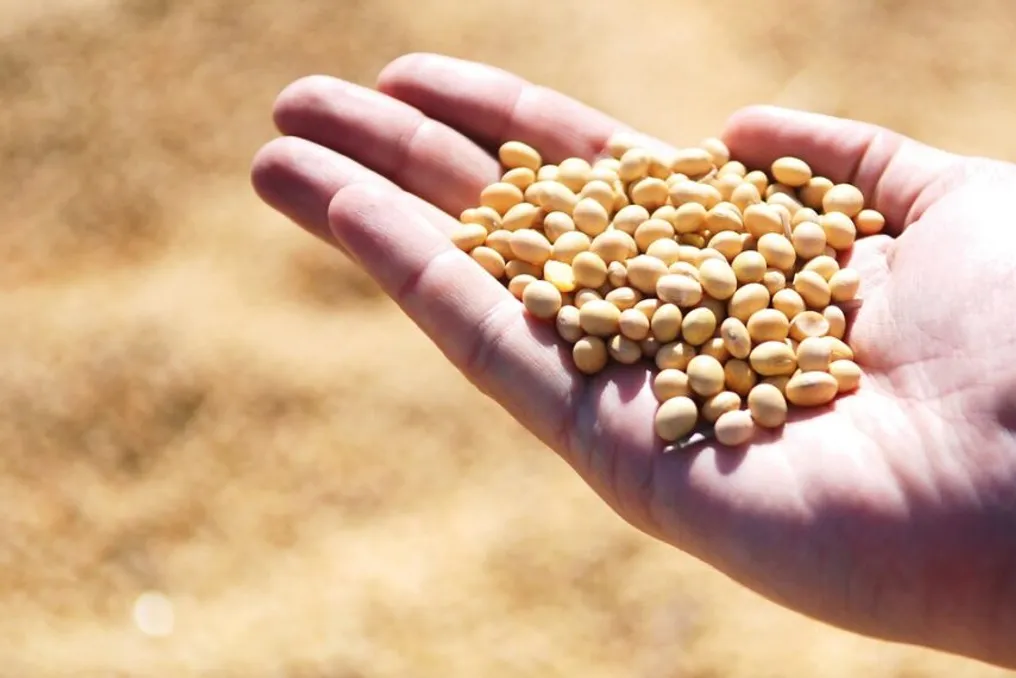
AgriSA supports Grain SA in dispute over fair soybean pricing
Read more
Food For Mzansi
foodformzansi.co.za

AgriSA supports Grain SA in dispute over fair soybean pricing

AgriSA expressed strong support for the concerns raised by its affiliated member, Grain SA, regarding the determination of soybean location differentials and their impact on South African agricultural producers.

In its statement, AgriSA emphasized that agricultural commodity pricing mechanisms must be transparent, fair, and reflect real market conditions. Such systems directly affect farmers' profitability, their ability to manage production risks, and the long-term sustainability of the agricultural sector.

The organization noted that South African farmers are facing significant financial pressure due to rising input and financing costs, falling commodity prices, and narrowing profit margins. These difficulties are exacerbated by climate uncertainty, including the risk of hotter and drier conditions associated with El Niño.

AgriSA President Willem de Schavonne Brugt stated that Grain SA represents a critical part of South Africa's agriculture.

He added: 'We support its efforts to ensure fair treatment for farmers and that decisions affecting producer prices adequately reflect the practical and economic realities of agricultural production.'

Furthermore, AgriSA called on the Johannesburg Stock Exchange (JSE) to maximally and constructively utilize the powers and discretion provided under existing legislation, trading rules, and relevant international market standards to seek opportunities that could improve the position of South African farmers.

De Schavonne Brugt also noted: 'Where there are legal and commercially sound opportunities to strengthen the financial stability and competitiveness of farmers, we believe they should be actively explored. A strong and sustainable agricultural sector is ultimately of interest to the JSE, market participants, consumers, and the broader South African economy.'

In conclusion, AgriSA demanded urgent and constructive engagement between the JSE, Grain SA, and relevant stakeholders to ensure that agricultural pricing agreements remain fair, reliable, and responsive to the challenges facing South African producers.

Similar stories

How to increase corn yield through precision agriculture and nutrition
Read more
foodformzansi.co.za

How to increase corn yield through precision agriculture and nutrition

Although leading producers in South Africa achieve record yields exceeding local averages by approximately 10 tons per hectare, many farmers do not utilize the full potential of their seeds. Agronomist Nico Barnard from Pannar Seed explains how this significant yield gap can be overcome by protecting crop potential through timely and targeted operations.

The yield gap is defined as the difference between the full genetic potential of the crop and what is actually harvested. Every season, farmers start with maximum potential, but unaddressed limitations constantly reduce this prospect.

Achieving higher productivity depends on optimizing existing management practices, including soil condition and field operations, rather than simply trying to solve agronomic problems by increasing costs.

Higher resource expenditure does not automatically guarantee a greater harvest. Adding more fertilizer or increasing planting density often does not address underlying limitations such as soil compaction or low root volume.

Barnard notes: 'Farmers must optimize what they already have before adding extra resources. For example, if poor establishment is caused by soil compaction, applying more fertilizer to the field may not solve the core problem, as plant roots may still struggle to access water and nutrients.'

Instead of relying on more intensive application, he advises that the true value lies in precise placement of resources, timely weed control, and eliminating physical barriers in the soil so that root systems can effectively absorb applied nutrients.

Barnard asserts that corn yield develops in stages based on four key factors: plant density, ear count, kernel count per ear, and final grain mass. The main characteristics of the ear are established early—the number of rows is determined around the V5 growth stage, and the number of kernels per row at the V12 stage, long before the ears become visible in the field.

When environmental stresses or nutrient deficiencies occur during grain development, the plant limits its energy load through kernel abortion. Since approximately one-third of the total dry matter of the crop accumulates in the last 30 days before physiological maturity, late-season management remains equally important.

Maintaining healthy leaf surface against diseases and ensuring active photosynthesis during grain filling protects the final grain mass, guaranteeing a strong completion of the crop cycle.

Achieving an even, uniform planting from the start is mandatory, as losses incurred in the early stages can never be compensated for later in the life cycle. Barnard warns: 'Every missing, weak, or late germinating plant can reduce the crop's ability to reach its potential.' He adds that good establishment starts with quality seed but also depends on creating favorable and uniform conditions for germination and emergence.

Narrowing the yield gap begins with identifying the specific factors limiting production on individual fields. Producers can consistently protect yield potential and ensure higher profits by making targeted, phased operational adjustments instead of trying to change everything at once.

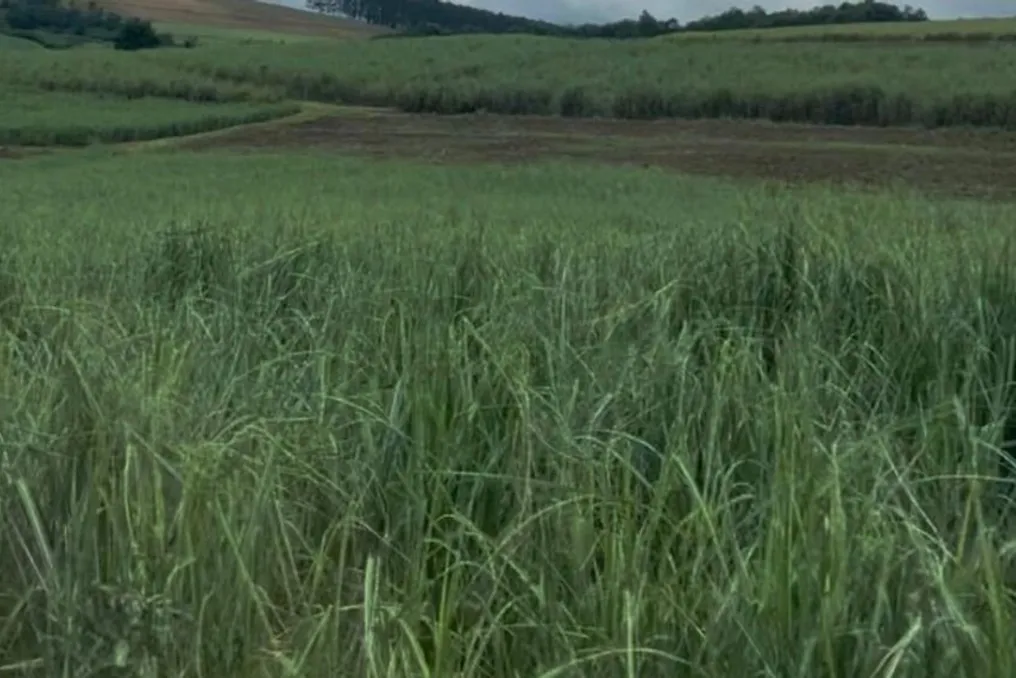
Deputy Minister Godlimpi called for the introduction of innovative financing methods for sugarcane producers
Read more
foodformzansi.co.za

Deputy Minister Godlimpi called for the introduction of innovative financing methods for sugarcane producers

Deputy Minister of Trade, Industry and Competition, Zuko Godlimpi, called for a more coordinated and innovative approach to financing farmers who grow sugarcane, including small landowners. These efforts are being undertaken by the state and the industry with the aim of strengthening the sustainability and growth of the sugar value chain.

The speech took place at a recent seminar on financing sugar industry farmers and interaction with the government. The main focus of the event was identifying structural obstacles preventing sugarcane producers from obtaining financing, as well as finding practical ways to make them more attractive to banks.

Godlimpi emphasized the need to discuss structural problems that hinder financial institutions from providing funds to cane producers. He proposed that the government, financial organizations, and industry study mechanisms that allow small producers to consolidate their plots and jointly obtain financing, including the use of proper insurance and credit agreements.

Furthermore, Godlimpi highlighted the importance of better harmonizing existing funding sources between development institutions and other sources, rather than simply looking for new cash flows. He stated: 'My instinct is not to look for new money. My instinct is to try to optimize existing money.'

The approach should also include personnel training and readiness to receive financing, especially for those producers who cannot get funds due to non-compliance with requirements. Godlimpi also noted the need to address gaps in farmer insurance and develop financing models capable of supporting investments in areas such as renewable energy, infrastructure, mechanization, and diversification.

He added that the transition to new sugarcane-based opportunities, including bioethanol, will require the industry to demonstrate sufficient production capacity while simultaneously protecting sugar supplies to ensure food security. Godlimpi concluded: 'We need to create this structural capacity to meet demand on both sides of the equation, maintain the tonnage you provide for food, and have enough raw material for this thing we are talking about.'

The seminar was organized to inform further work on practical solutions in the field of sugar industry financing, and the deputy minister announced that the discussions and recommendations would be passed on for further consideration.

Agda calls for the creation of commercialization pathways for emerging South African farmers
Read more
foodformzansi.co.za

Agda calls for the creation of commercialization pathways for emerging South African farmers

South Africa's agricultural sector requires strengthening partnerships between farmers, financial institutions, insurance companies, agribusiness, and the government to ensure sustainable growth and attract more black farmers to commercial production. This was the view of participants at the annual Stakeholder Engagement Conference held by the Agricultural Development Agency (Agda) in Boxburg, Gauteng.

The Chairman of Agda's Board of Directors, Dr. Matheus Fosa, noted that the sector achieved a record agricultural export volume of approximately US$15.1 billion in 2025; however, many emerging farmers still face difficulties in obtaining financing, insurance, and market access.

He emphasized that the best way to develop the sector is through collaboration, as no one can manage it alone. Fosa identified capital, risks, and market access as three interconnected obstacles to inclusive growth. He pointed out that standard lending requirements, such as title deeds, verified credit history, and audited financial statements, can exclude farmers operating on communal lands or under government lease agreements, as well as those in the early stages of their business development.

Dr. Fosa stated: 'Sometimes we hear that emerging farmers are not creditworthy. In our experience, many simply have not yet had the opportunity to access banking services.'

He called for partnerships that help farmers develop viable business plans, improve creditworthiness, and link production with buyers. Furthermore, Fosa highlighted the need for agricultural risk management, including diseases like foot-and-mouth disease, floods, and heat, through improved biosecurity and accessible insurance.

Agda CEO, Leona Archari, stated that the organization aims to connect established and emerging farmers with the necessary resources and networks for commercial growth. She described her role as a 'connector and partner, a trusted broker between established and new farmers.'

Archari reported that Agda's network covers over 1.2 million hectares and includes more than 45,000 farmers, over 50 agribusinesses, more than 26 financial institutions, seven commodity organizations, and six partnerships with traditional authorities. She also reported that Agda has attracted R32 million in corporate social investment and development, R6.4 million in consulting and strategic fees, and R33.6 million to assist in activating the financial mechanism involving the Land Bank, Small Enterprise Development Finance Agency (Sedfa), and Jobs Fund. The organization has also facilitated transactions worth R586 million.

Archari stressed that financing alone is insufficient to solve the problems of emerging farmers; partnerships must also address risks and market access, including mentorship, supply agreements, and joint opportunities between existing and new producers. She warned: 'By solving one problem while ignoring another, we are just shifting the problem down the chain.'

Vandile Sichlobo, Chief Economist at Agbiz and Presidential Envoy on Agriculture and Land Reform, predicted that South Africa's agricultural economy would grow by approximately 8–9% in 2026, although results vary by subsector, and challenges persist. Agricultural exports increased by 11% in the first half of 2026, which is a result of the sector's progress in expanding international markets.

Sichlobo noted that the sector has more than doubled, allowing South Africa to become the 32nd largest agricultural exporter globally and the only African country in the top 40. Nevertheless, rising fuel and fertilizer costs, infrastructure limitations, animal diseases, and geopolitical uncertainty continue to put pressure on producers. He indicated that fuel and fertilizers account for a significant portion of production costs, with prices having risen by approximately 20–30% compared to the previous year.

Sichlobo called for closer cooperation between the government and the private sector to improve infrastructure and expand trade opportunities, especially in Asian markets. He stated that South Africa must advance in concluding trade agreements to strengthen its competitiveness and long-term export prospects.

Climate conditions are also a concern. Dr. Fosa warned that El Niño-related heat is already affecting production in some areas, causing damage to macadamia flowers and potential crop losses. Sichlobo also highlighted the risk of drought and heat, which increases the strain on water resources and irrigation.

The conference focused on transforming agricultural growth into broader participation by strengthening links between finance, risk management, and markets. Participants noted that sustainable collaboration will be crucial to help more farmers establish viable commercial businesses while supporting the competitiveness of the entire sector.
Popular