Due to the rising level of air pollution, the municipal corporation (MCD) has intensified measures to prevent violations. On Wednesday, MCD issued 303 fines in the Rohini zone alone. These fines were imposed not on vehicles, but on individuals violating regulations concerning pollution dispersal.
The reasons for these measures include incidents such as open burning of garbage, lack of dust prevention measures at construction sites, and dust accumulation on streets. According to an MCD report, such violations continue to be recorded in various parts of the city.
According to the MCD report from November 4, the highest number of fines was issued in the northwest zone (Rohini). On November 2, 160 fines were issued there, and on November 3, this figure increased to 199. However, on November 4, a record 303 fines were issued in a single day. Ninety-one out of 94 staff assigned to daytime patrols were present in this zone.
Actions were also carried out in other areas. 221 fines were issued in the central-north zone, 210 in the west zone, and 147 in the southeast zone. 155 fines were registered in the south zone, and 105 in the southwest zone.
Various activities contributing to pollution continue in Delhi. Necessary measures are not being taken during construction and demolition work to control dust. Construction waste is stored openly in several places, and cases of garbage burning are also recorded. Dust accumulated on roads also worsens air quality. MCD issues fines to those who violate these established norms.
MCD Commissioner Sanjeev Hirwar reported that the Corporation has identified 48 pollution hotspots in Delhi. Each such area covers about 3–3.5 kilometers. Work is underway in these territories on issues such as road dust, illegal constructions, and traffic jams. He also noted that 66 machines for mechanical road cleaning are currently operating in the city. The shift duration for these machines has been increased from 8 to 12 hours. It is expected that about 12 new machines will arrive by mid-November, and the remaining 55 machines will be delivered from the beginning to the end of December.
125 teams have been created to prevent garbage burning, working in two shifts. Residents are also being informed about the inadmissibility of burning garbage. Furthermore, water spraying, anti-smog cannons, and jet cleaning machines are being used. Garbage collectors have also been placed to pick up waste lying on the roads. MCD is installing Automatic Number Plate Recognition (ANPR) cameras at checkpoints. This will help ensure compliance with emission limits for vehicles below the BS-VI standard. Testing of these cameras is expected to begin next week, after which vehicle data will be transferred to the Delhi Police.
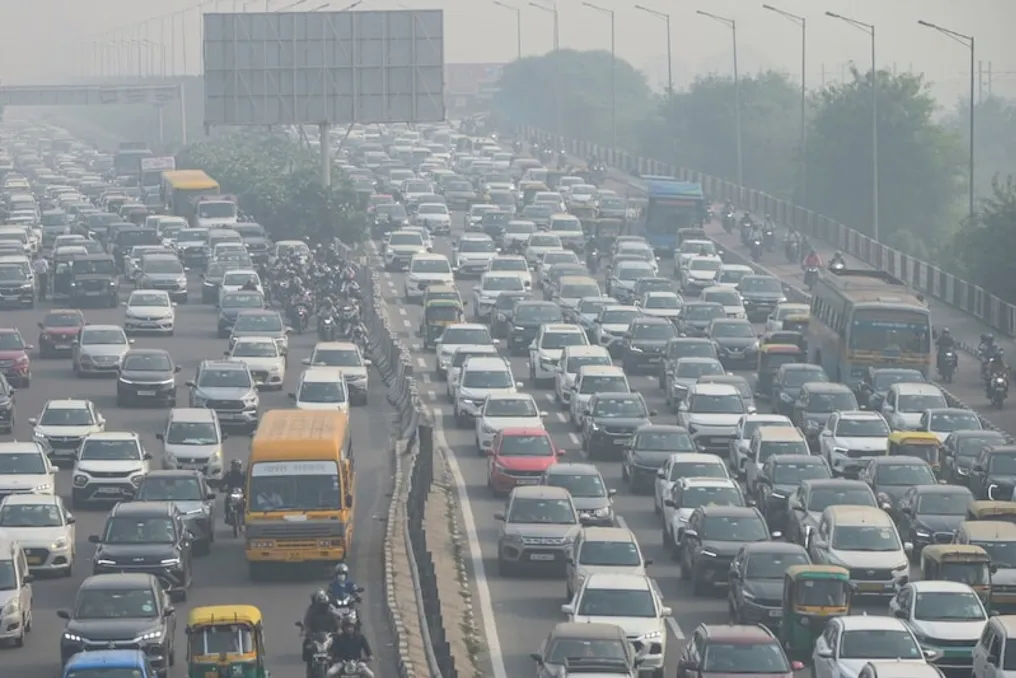
On Wednesday, the average AQI in Delhi was 377, corresponding to the 'very poor' category. On 22 monitoring stations across the city, air quality reached a 'hazardous' level. Despite MCD's actions, polluting activities continue in some areas.