openJiuwen's Hyper-Agent Swarm embeds persistent AI agents into work chats as digital employees
Read more
Pandaily
pandaily.com

openJiuwen's Hyper-Agent Swarm embeds persistent AI agents into work chats as digital employees

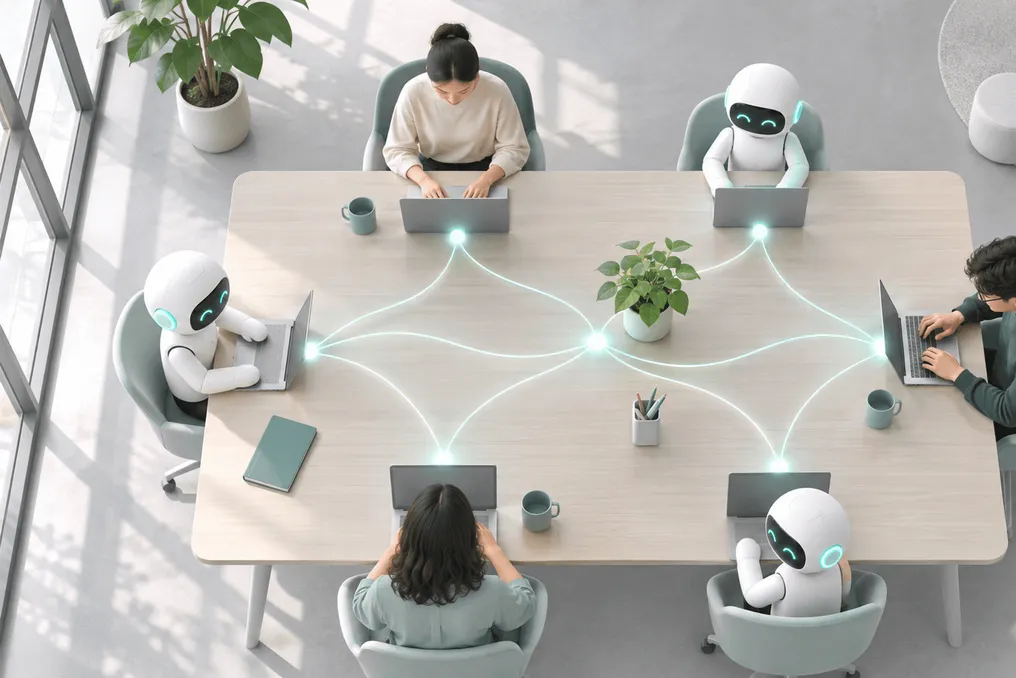
openJiuwen, an open agent community supported by Huawei, has released Hyper-Agent—a swarm architecture that moves agents from isolated chat sessions into real group work chats, transforming them into permanent digital employees. This was reported by IT Home as part of the community's publication.

The functionality is available in openJiuwen WorkSwarm, whose code is open-sourced on GitHub under the name JiuwenSwarm. The main change lies in altering the principle of agent connection to sessions. Instead of an agent being tied to a single conversation, the Persistent Agent retains its identity and state, continuously performing tasks while sessions become a base resource that the system distributes, schedules in parallel, and resumes while preserving context.

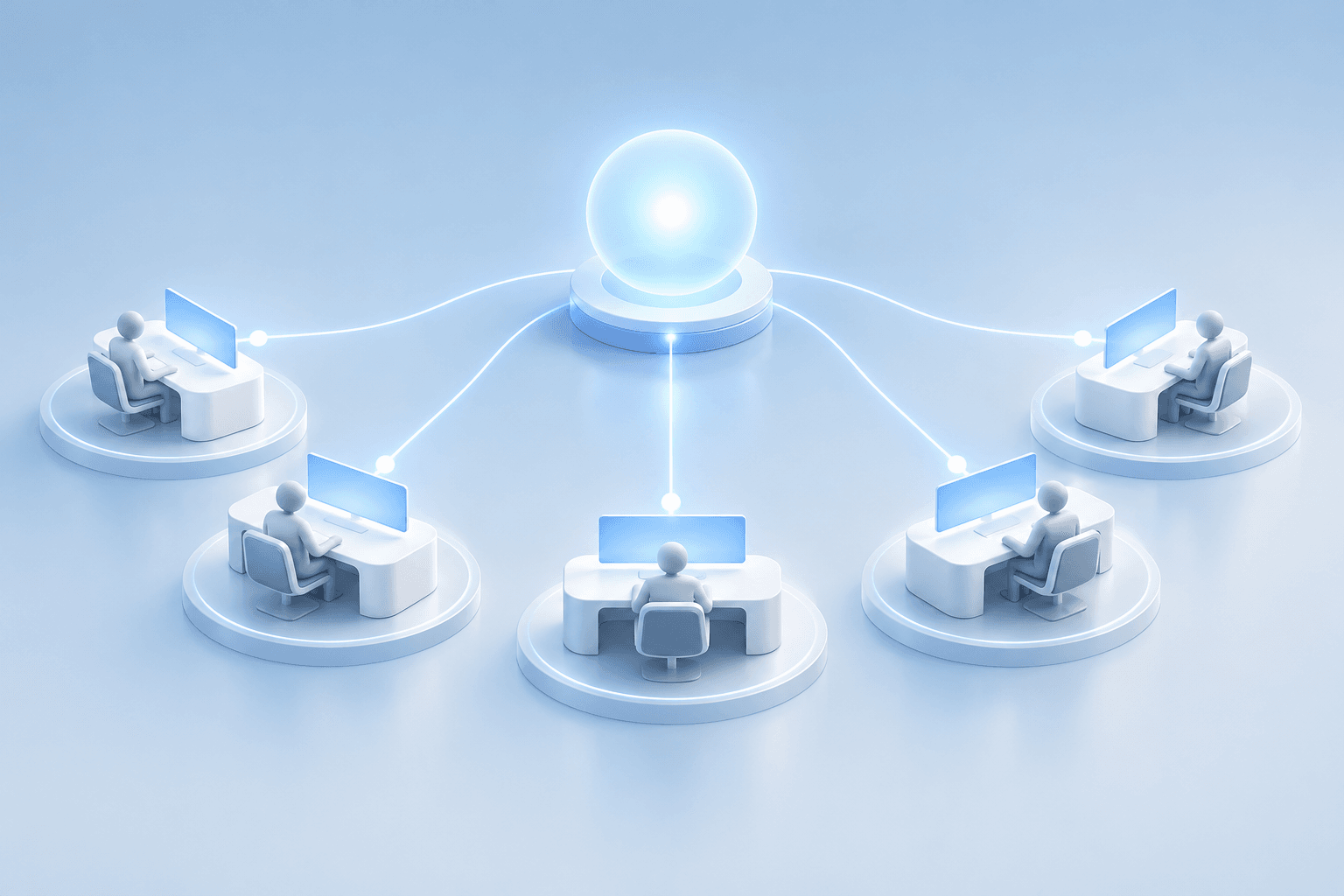
The system includes a gateway connecting instant messaging applications and a web interface, along with an AgentServer responsible for planning agents and work sessions. According to the community, this development builds upon previous work on Persistent Sessions and allows one agent to perform multiple tasks across various third-party group chats.

In WorkSwarm, users create these agents through an employee center, using either ready-made expert templates or creating them from scratch. When configuring, responsibilities, working style, delivery requirements, skills, connectors, knowledge sources, and even a dedicated email address are specified. When the context window approaches its limit, the agent switches to a new one, passing a summary of goals, progress, and next steps, and retrieves archived history if necessary.

There are two operating modes: passive mode only responds when mentioned, and adaptive mode decides whether to ignore a message, reply, or intervene based on its role and the flow of the conversation. An activity panel displays each agent's activity, token usage, and recent response time.

The same agent can operate in office applications such as Feishu and DingTalk, accepting a request in one channel and providing the result in another. Approval is required for information exchange between groups: users verify the source group, the recipient, and the content, after which they grant permission once or permanently, which can be revoked later.

Team members can also run WorkSwarm on their own devices, allowing agents on cloud servers and personal PCs to collaborate in the same group using locally authorized files and tools.

For larger projects, WorkSwarm utilizes the SwarmEngine group chat, which unites users, persistent agents, individual experts, and expert teams in one space. The expert team has a leader who takes tasks, reports progress, and organizes deliverables, while team members work in the background. Experts can be drawn from third-party agents like Codex and Claude Code and mixed with internal digital employees.

The community notes that future plans include the possibility of coordinating personal and cluster computing resources, active learning, and failure recovery to ensure longer-term collaboration.

Similar stories

DeepSeek Harness Team Unveils Prototype of Super Agent Capable of Self-Finding and Fixing Errors
Read more
pandaily.com

DeepSeek Harness Team Unveils Prototype of Super Agent Capable of Self-Finding and Fixing Errors

The DeepSeek Harness team has published a description of their project, which they named the Super Agent. This agent is designed as a continuously operating system that simultaneously advances multiple tasks, independently seeks work, and recovers from failures. The corresponding research prototype was released on GitHub under the MIT license, according to Chinese tech media.

The dsh-superagent-prototype repository is a package of a proactive coding agent intended to work with a single GitHub repository within the DeepSeek Harness ecosystem. The agent monitors activity on GitHub, and optionally on Feishu. When an authorized user requests a task execution, the agent creates a work item, processes it in its session and catalog, and then responds in the original dialogue, for example, by creating a pull request.

The accompanying documentation emphasizes that this code is for research purposes and is not an official DeepSeek product, and some concepts described in the document have not yet been implemented.

System Architecture

The core concept is built upon a two-layer architecture. The Router session receives all human activity from different channels but does not perform the work and may not even have a Bash tool. Tasks are delegated to isolated Worker agent sessions, which execute work in parallel using a full set of tools, and send reports back to the Router, bypassing communication with users.

Each Worker agent subscribes to branches of interest, such as chat discussions or pull requests, allowing subsequent events to go directly to it without passing through the Router. The system functions based on events: triggers include messages in chats, emails, review comments, and Continuous Integration (CI) results, which are first filtered by deterministic code and then by the model.

The team also separated the agent's state and the execution environment so that the agent can remain active in the cloud while interacting with the user's local machines. An external Watchdog session is also used to monitor whether the Worker agents are making real progress. Within the internal user group, the team established a rule: the instance must silently reproduce reported errors and only report them after finding a simple solution, sometimes opening a pull request before anyone flags the issue.

During preliminary tests on synthetic loads, including about 300 messages and approximately 20 work requests, the Super Agent completed half of the tasks in 12.4 minutes and 95% in 15.7 minutes. These figures surpassed the results achieved by a single session with a sub-agent tool, although they required more cached tokens. Without direct routing of subsequent events to the Worker agents, the Router's solutions increased by approximately 30%, and batch processing under high load reduced the time to output one Router solution from 6.4 seconds to 1.6 seconds. The team called these results a preliminary benchmark.

Among the unresolved issues listed by the team are scaling the Router, long-term memory, inter-agent communication, and the risk of prompt injection if the cloud agent gains access to credentials on local devices.

Kuaishou implements AI-based digital employees for store diagnostics and video content management
Read more
pandaily.com

Kuaishou implements AI-based digital employees for store diagnostics and video content management

Kuaishou has integrated artificial intelligence-powered digital assistants into the workspace of sellers on its e-commerce platform, Kuaishou Shop. These tools are designed for small sellers who manage their stores independently or part-time. The assistants are available 24/7 and can be accessed via the PC workspace, a dedicated AI mode in the app, or an AI operations widget on the computer, according to information published by IT Home.

Sellers can ask questions in plain language, such as about reasons for declining traffic over the past week or the current status of returns. The central AI operations hub interprets the seller's request, gathers store data, platform tools, and rules, and then passes the task to the appropriate agent.

Functionality of Digital Employees

The system includes eight different roles. A virtual store manager conducts a full diagnosis of the entire store and suggests strategies to increase new customer conversion, encourage repeat purchases, campaign registration, and adjust product names. A data specialist answers questions regarding sales, traffic, and returns, and identifies the root causes of any deviations.

A video specialist handles the diagnosis of short videos, product selection, one-step generation of finished clips, automatic publishing, and content promotion. A live streaming specialist assists with planning, product selection, scriptwriting, and post-broadcast reviews and critiques.

On the customer service side, a returns specialist examines inquiries, clarifies platform rules regarding disputes, and proposes solutions to reduce high return rates. A customer service specialist analyzes feedback and satisfaction metrics, as well as complaint chats. Additionally, there is an order fulfillment specialist who monitors logistics issues, and a compliance specialist who explains violation risks and reasons for drops in store experience ratings.

Kuaishou describes this system as a closed loop: first, a problem is diagnosed; then, a strategy is proposed and executed on behalf of the seller; finally, the resulting data is analyzed. Another article from IT Home lists a broader set of tools supporting this system. These include a bulk catalog addition feature, automatic video publishing, a script and video generation platform, one-click AI live stream setup, a live chat assistant, automated affiliate program management, natural language ad campaign setup, AI customer service, return recovery, and automatic order printing and shipping.

In coverage of this topic, one part-time clothing seller mentioned that they check exposure, click, and return metrics compared to the previous day every evening, and it allows the agent to automatically publish videos while they are at their main job. A tea company representative noted that these tools have significantly reduced their need to hire video editors.

MiHoYo Team Releases GameScaling Models for Controlling Games with Keyboard and Mouse
Read more
technode.com

MiHoYo Team Releases GameScaling Models for Controlling Games with Keyboard and Mouse

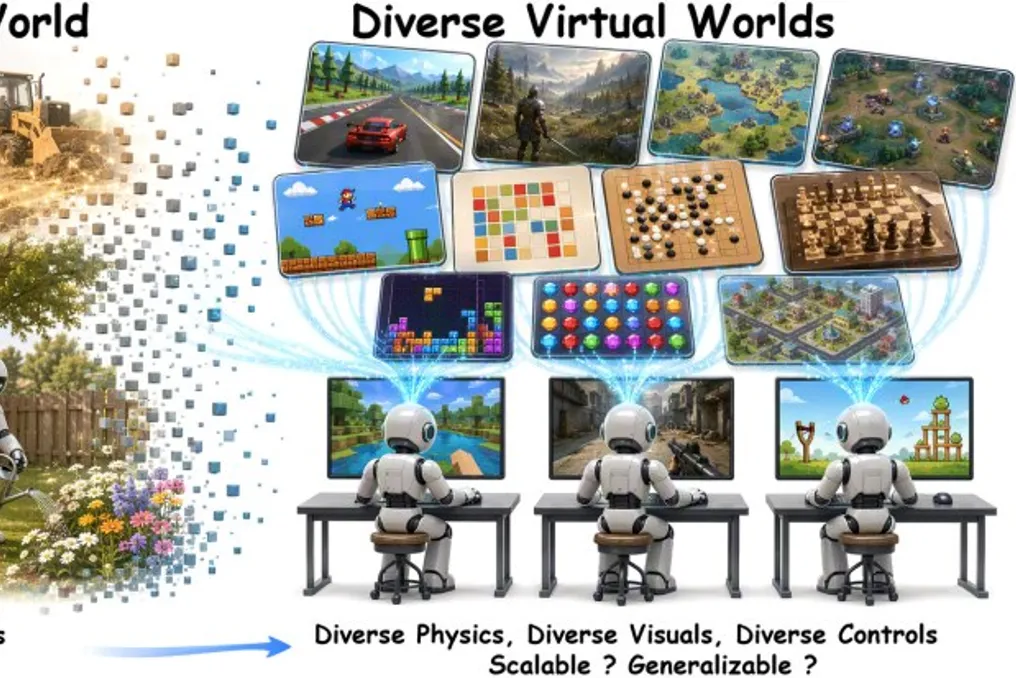
A research group, comprising artificial intelligence specialists from MiHoYo and partners from universities, has made the GameScaling models publicly available. These models are capable of playing video games by generating keyboard and mouse commands based on visual analysis of the ongoing action.

The released set includes eight checkpoints, with parameters ranging from 800 million to 27 billion. The models were created by continuing the pre-training of Qwen3.5 models, which are vision and language models.

To generate short sequences of control commands, the models utilize both current and recent game frames, as well as information about previous actions. Demonstrated capabilities include resource gathering and crafting in Minecraft, combat and movement in Doom, and solving puzzles in escape room quest scenarios.

The project provides model weights, inference code, and software examples under the Apache 2.0 license. This allows developers to study how training in various virtual worlds affects the performance of interactive artificial intelligence.

Popular