Aajtak E-paper Anniversary: The Emergence of New Journalism
Read more
Aaj Tak
www.aajtak.in

Aajtak E-paper Anniversary: The Emergence of New Journalism

Typically, the first year is considered infancy for any institution, product, or system as it attempts to form its identity, develop its working style, and gain acceptance among people. The e-newspaper of the Aajtak media holding also celebrated its anniversary on Thursday. Although this is a short period in terms of age, during this time it has conducted a series of experiments in digital journalism that distinguish it from the electronic versions of traditional newspapers. This first anniversary serves not only as an opportunity to study achievements and conducted experiments but also to contemplate the direction of future development along this path.

The expansion of digital media in the world of newspapers is not news. Almost all major news agencies have made their print editions available on digital platforms. However, the real challenge is not simply displaying newspaper pages on a mobile or computer screen. The main task is to use the capabilities of digital media to provide readers with an experience that surpasses that of a traditional newspaper. This is precisely the direction in which Aajtak E-paper has undertaken an important experiment.

One of the key features is the detailed presentation of news. Usually, if a news item occupies one column in a print newspaper, the reader is forced to settle for the information presented in that limited space. A similar system is observed in many electronic versions of other newspapers. But in Aajtak E-paper, the reader can access more detailed information about the news by clicking on it. Thus, the limitation of space on the newspaper page does not become a limit to the volume of information. The reader is given the opportunity to learn the entire story, context, and related aspects even of a small piece of news. This feature prevents the E-paper from remaining just a digital copy of the print edition, transforming it into an effective bridge between print and digital journalism. Accessing the extended version of the news with one click is a great convenience in today's busy schedule.

Another feature of Aajtak E-paper is its hybrid nature. An attempt was made to develop it as a fusion of television, digital, and print journalism. Given that the strongest aspect of television is visual content, the newspaper strives daily to provide video accompanying major news stories. The reader can read the news while simultaneously watching its video. On the other hand, for news that goes viral and becomes trendy in the world of digital journalism, a separate page is provided. This ensures that topics discussed on social media and the internet receive proper coverage in the newspaper. At the same time, the crucial strength of print journalism—analysis, background, and serious reporting—is also an integral part of this version. Thus, the reader is offered the news, its visual representation, digital trends, and its analysis on one platform.

In modern India, religion and religious activities have become a significant part of public discourse. Religious events, traditions, holy places, festivals, and related socio-cultural issues are constantly present in the news. Considering reader interest and the changing social environment, Aajtak E-paper dedicates an entire page daily to religious topics. The fact that this page enjoys constant readership indicates that the newspaper has tried to understand their interests and needs. Nevertheless, maintaining a balance between information, context, and factual accuracy in such content is also extremely important. The task of journalism is to present religious topics not only from the perspective of faith but also considering their social and cultural significance.

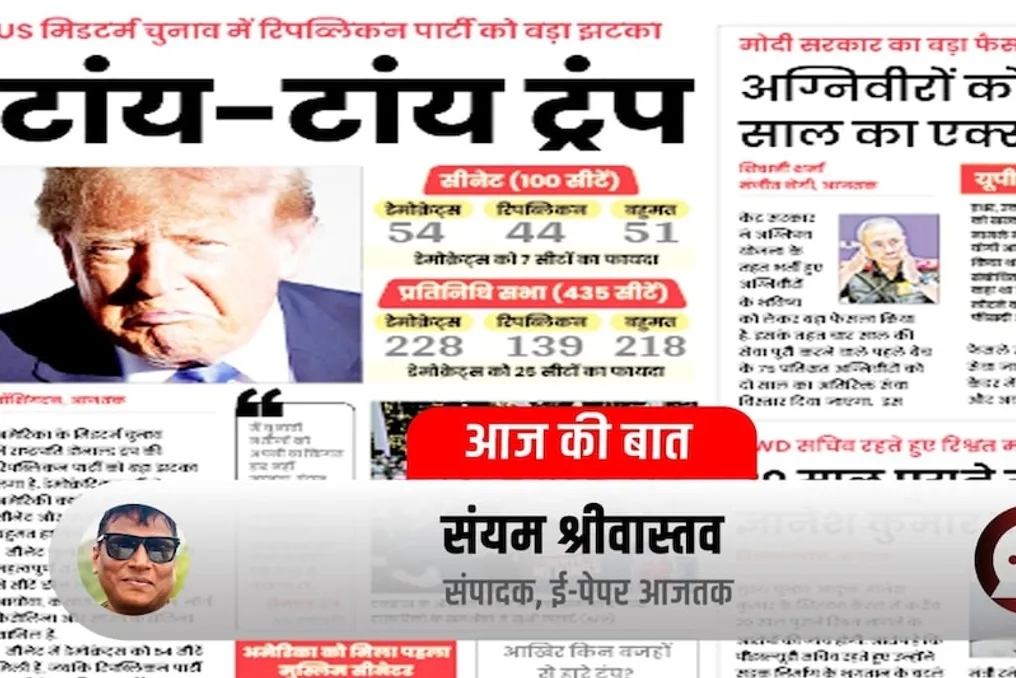
The editorial page of the E-paper has also become an important foundation of its distinctiveness. Usually, traditional media requires some time to prepare a detailed analysis and opinion on a major event. The process of understanding the various aspects of an event and presenting an opinion on it takes time after the immediate impact of the news. However, using the speed of digital media, Aajtak E-paper attempts to deliver an analysis of an important event to readers on the same day. Regular opinion columns and analytical materials on current events, politics, society, economy, and pressing issues of the country and the world are part of this concept. The goal is not only to report what happened but also to explain why it happened and what its broad consequences might be.

Another outstanding feature of this e-newspaper is its publication throughout 365 days. In India, there have long been practical difficulties in publishing newspapers during holidays and national weekends. In many cities, newspapers do not come out on these days. Even in a large city like Lucknow, the publication suspends its release for more than six days a year. In the digital age, many newspaper e-versions close down along with the print edition during holidays. Aajtak E-paper chose a different path, abandoning this tradition. Its aim is for news to reach readers on days such as Holi, Diwali, Eid, Independence Day, or Republic Day, as well as on any other important occasion. This commitment to publishing throughout all 365 days of the year is not only a technical measure but also a reflection of responsibility towards the readers.
Similar stories

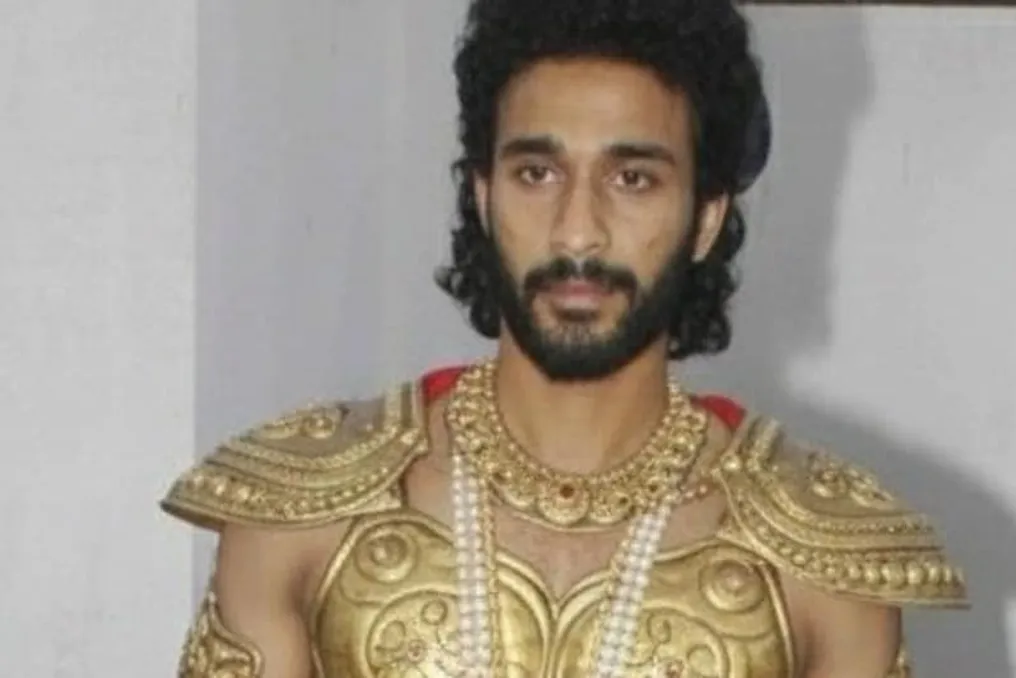
Raghav Juyal played Meghanada in the film 'Ramayana'; his role was a surprise
Read more
www.aajtak.in

Raghav Juyal played Meghanada in the film 'Ramayana'; his role was a surprise

With the release of the blockbuster film 'Ramayana', viewers received many surprises, including the announcement of the second part's release date and footage featuring Sunny Deol. Among these revelations, the developers made a move that surprised everyone: the casting for the role of Meghanada, Ravana's son, was revealed. This role was played by the dancer and talented actor Raghav Juyal.

The reason for the surprise is that no one knew about Raghav's casting beforehand. His participation only became known after watching the film. Raghav looks impressive in the role of Meghanada, Ravana's son (also known as Indrajit). Only a small part of him is shown in the film, but fans will be able to see his full role in the second part. For now, the teasers from the creators have been a big gift for fans. In the leak, Raghav is depicted in a full Asura form, dressed in black attire, and made an impression with his five-second appearance.

In the epic 'Ramayana', Meghanada is not just the son of the King of Lanka, Ravana, but also a powerful warrior. He defeated many great warriors on the battlefield. He invaded the celestial world and captured the divine king Indra. The character of Meghanada embodies courage, aggression, and loyalty to his father. It was Meghanada who used his illusionary powers to disable Lakshmana. During the battle between Rama and Ravana, Lakshmana killed Meghanada.

Fans are very happy with Raghav Juyal's career path. His transition from dancer to actor is admired. Raghav, who previously impressed the stage with his style of slow dances, is now demonstrating mastery in acting. He has worked in the films ABCDE 2, Street Dancer 3D, Kisi Ka Bhai Kisi Ki Jaan, and Kill.

Ramayana Film: A Detailed History of Ravana and How He Became the Ruler of Lanka
Read more
www.aajtak.in

Ramayana Film: A Detailed History of Ravana and How He Became the Ruler of Lanka

The first part of the Ramayana film, created by Namit Malhotra with a budget of 40 billion rupees, has premiered in theaters, generating significant public excitement. This is one of the first large-scale Indian productions presented on the world stage. The project was directed by Nitesh Tiwari. The first part covers events leading up to the Aranya Kanda according to Valmiki's Ramayana, including the abduction of Sita and the heroic death of Jatayu.

Nitesh Tiwari based his film on Valmiki's original Ramayana, presenting not only the story of Lord Rama but also detailing the narrative of Ravana. Unlike previous Ramayana films where Ravana is often mentioned merely as a source of Rama's power, director Tiwari showed the entire trajectory of Ravana's life without any simplification.

In the first part, viewers learn how Ravana was born in the Asura Kula. His mother, Kaikasi, and uncle, Sumali, were defeated by the gods, after which they were forced to live underground in Lanka. Since Ravana was a master of knowledge, he decided to seek blessings from the gods for the benefit of his lineage. In search of this, he traveled far to worship Brahma, and his asceticism was so intense that the earth heated up from his might. Eventually, Brahma granted him a blessing that he could not die by the hands of humans.

Furthermore, the film shows Ravana ruling the entire planet, including Lanka, and his power extends across all three worlds. Viewers are also given an opportunity to learn more about Ravana's family. When he expands his kingdom on Earth, he marries Mandodari. Later, he arranges the wedding of his sister Shurpanakha to Vidyadhara, viewing it as a political maneuver. Nitesh Tiwari dedicated as much attention to Ravana as he did to Lord Rama.

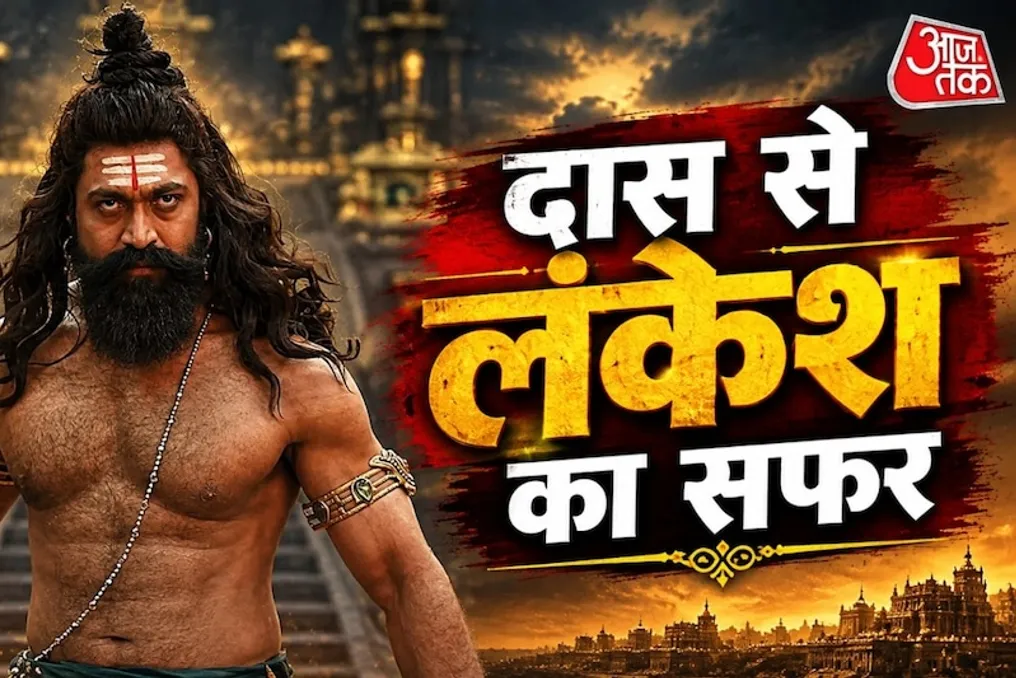
In the first part, viewers see how powerful, corrupted, and sinful Ravana is. The question of how Lord Rama will confront such a mighty Ravana in the second part and how he will defeat him will be revealed during Diwali 2028. Yash played the role of Ravana in the film, and Ranbir Kapoor played the role of Lord Rama.

Generation Z Revives Traditional Indian Art Forms by Integrating Them into Modern Design
Read more
www.aajtak.in

Generation Z Revives Traditional Indian Art Forms by Integrating Them into Modern Design

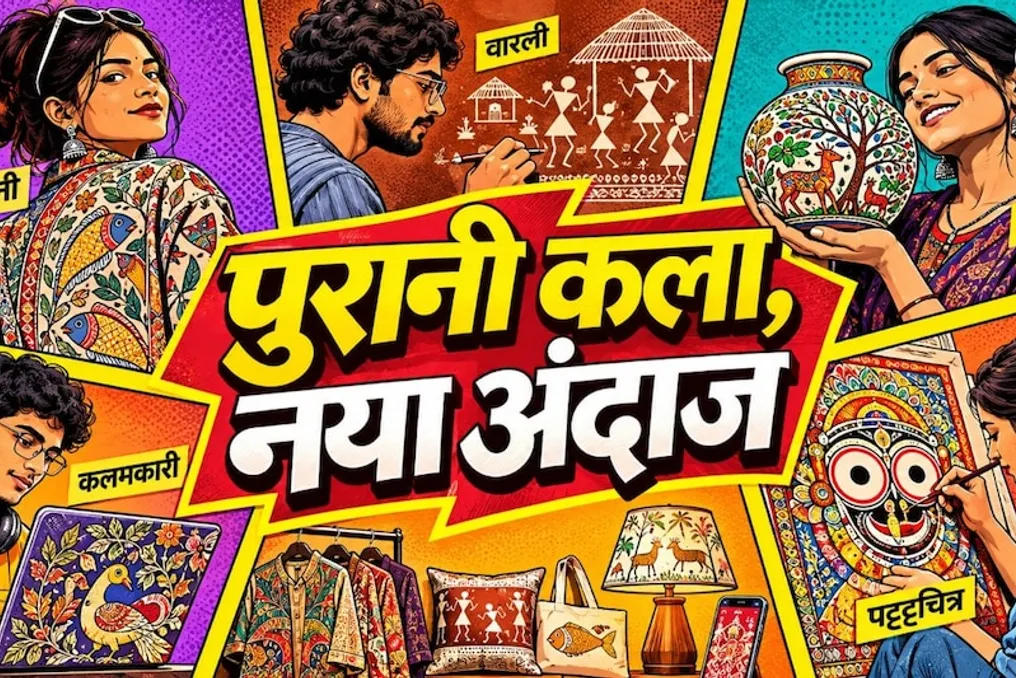
In an era where digital art, graphic design, and modern creativity are gaining popularity among Generation Z, many members of this generation are actively learning and popularizing traditional Indian art. Thanks to social media and online platforms, these ancient art forms are reaching new audiences after being adapted to modern needs.

Let's look at five such traditional art forms that Generation Z is reviving in a new format.

Madhubani painting, originating from the Mithila region in Bihar, is known for its fine detail, bright colors, and natural forms. Originally, this technique was used to decorate walls and paper; however, today young artists transfer it onto canvases, bookmarks, phone cases, clothing, and home decor items. Creators from Generation Z enrich traditional patterns with new shades and contemporary themes, linking them to current lifestyles and fashion.

Warli art, a tribal art form from the state of Maharashtra, is famous for its white geometric figures on a reddish-brown background. It depicts scenes from daily life, such as agriculture, dances, weddings, and festivals. Today, young masters use Warli designs on T-shirts, bags, walls, jewelry, and other creative products, attracting new layers of viewers to this traditional form.

Gond art, associated with the state of Madhya Pradesh, is characterized by colorful figures, small patterns, and nature-related imagery. It uniquely portrays trees, animals, birds, and folk tales. Young artists apply this technique not only on canvases and walls but also in digital illustration, posters, and home decor items, thereby giving Gond art a place in the world of modern design.

Kalamkari art, originating from Andhra Pradesh and Telangana, involves hand-painting designs onto fabric using a pen. These works depict flowers, leaves, religious stories, and mythological characters. Many contemporary designers incorporate Kalamkari prints into items such as kurtas, saris, dupattas, bags, and other fashionable accessories, thus connecting traditional Indian art with the latest fashion trends.

Pattachitra art from Odisha is renowned for its delicate painting and depictions of mythological subjects. It portrays deities like Lord Jagannath and the deeds of Krishna through vibrant colors and exquisite compositions. Contemporary artists transfer this technique onto small canvases, bookmarks, wall hangings, postcards, and decorative items, and they also spread their work globally through social media.

A New Perspective on Old Art

The growing interest of Generation Z in traditional art forms demonstrates that one does not have to abandon one's culture to be modern. Young artists combine old art forms with new design solutions, fashion, and digital platforms. This not only helps these arts gain a new identity but also provides an opportunity to promote traditional artisans and their creativity.

Popular