
Causes of water odor after tank cleaning and ways to solve the problem
Read more
Aaj Tak
www.aajtak.in

Causes of water odor after tank cleaning and ways to solve the problem

In addition to cleaning the floors and walls in the house, it is extremely important to regularly clean the water reservoir installed on the roof. People usually clean the tank every few months to remove accumulated dirt, moss, and sediment, ensuring clean water in the house. However, often even after thorough tank cleaning, the water starts to emit an unpleasant smell when the tap is opened, and people do not understand what the exact problem is.

In fact, the cause of the water odor is not always a dirty tank. Sometimes the contamination in the household piping system, water filter, water heater, or sink drain can be to blame. Therefore, instead of constantly cleaning the tank, it is necessary to find the true cause of the odor. Below are discussed the causes of water odor after tank cleaning and methods to eliminate it.

Even after cleaning the tank, old water may remain in the pipes. If the water remains stagnant for a long time, it can acquire a musty or damp smell. In this case, you should leave all taps in the house open for some time so that the old water drains from the pipes. If the smell persists, it is recommended to check the entire piping system.

If the smell is present only in hot water but not in cold water, the probable cause is the water heater. Due to prolonged water stagnation and lack of maintenance in the boiler, sulfide bacteria can develop, which gives the water a strong unpleasant odor. In such a situation, it is correct to clean and maintain the water heater.

Sometimes when an odor appears near the sink or washbasin, it seems that the water is spoiled, whereas the real reason lies in drainage contamination. The accumulation of soap, oil, and food residues in the drain pipe promotes the development of bacteria and mold. To check this, fill a glass with water from the tap and take it away from the sink to smell it. If the water in the glass does not smell, the problem is most likely in the drain. If the water in the glass smells, the water supply system needs to be checked.

Taking care of the water filter is as important as cleaning the tank. With prolonged use without replacement, filtering elements can accumulate dirt and various organic substances, which worsens the taste and smell of the water. Therefore, it is necessary to replace the filters of water purification systems, such as reverse osmosis or other types of filters, on time according to the manufacturer's instructions.

Even after cleaning the tank and pipes, the water may have an earthy or swampy smell. This may be related to the water source. The growth of algae and organic substances in sources such as rivers or lakes can change the taste and smell of the water. If the water smell suddenly changes, you should notify the local water utility and request a water quality check.

The choice of a suitable filter or purification method should only be made after determining the root cause of the odor. There is no universal filter that suits all types of odors.

Activated carbon: Can help reduce the content of many organic substances and chlorine in water, improving its taste and reducing unpleasant odors.

Reverse osmosis (RO) filter: Used to reduce the concentration of various dissolved contaminants in water, but it is not the only solution for all types of odors.

Grinsand filter: Can be effective if the rotten egg smell is caused by hydrogen sulfide. It helps oxidize this gas, turning it into particles that can then be filtered out.

Degasifier: Used to remove gases, such as hydrogen sulfide, from water.
Similar stories

Can an air purifier filter be cleaned with water: tips for saving money
Read more
www.aajtak.in

Can an air purifier filter be cleaned with water: tips for saving money

In the Delhi-NCR regions, air pollution levels have exceeded the 400 mark, which is a dangerous indicator. In many cities, including Delhi, people use air purifiers to improve air quality in their homes, and there are many different models available on the market.

Most residents of India purchase air purifiers, but they often fail to clean or replace filters regularly, leading people to face poor air quality.

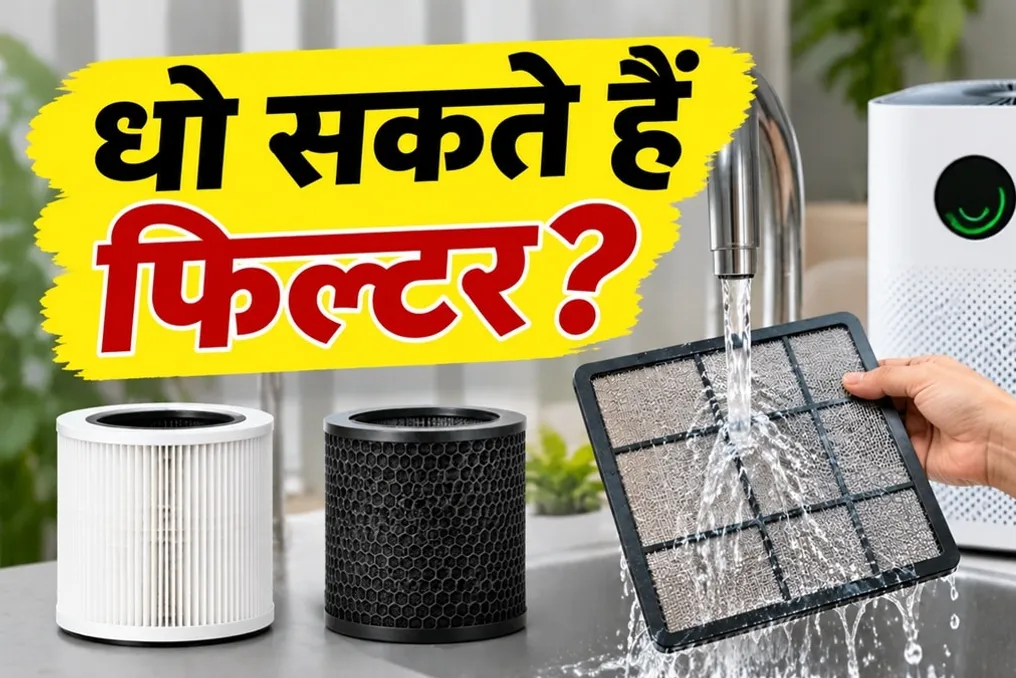
Many wonder whether it is possible to clean an air purifier filter using water. It is important to know the details of this issue.

It is necessary to clean air purifier filters regularly to ensure clean air. Furthermore, pre-filters used in air purifiers can be washed with water.

However, HEPA and activated carbon filters located inside air purifiers cannot be washed with water. Some purifiers with electrostatic filters allow water to be used for their cleaning.

The purpose of brushes on the sides of escalators: they are designed for safety, not for cleaning shoes
Read more
www.aajtak.in

The purpose of brushes on the sides of escalators: they are designed for safety, not for cleaning shoes

You have probably used escalators in shopping malls, train stations, or airports. If you look closely, there are small brushes installed on both sides of these structures. Many people mistakenly believe that these brushes are used to clean dust and dirt from shoes, but this is not the case.

In fact, these brushes are installed as part of the escalator's safety measures. Their main function is to warn people and prevent their shoes, clothing, or other items from getting stuck in the side parts of the escalator.

Escalator stairs are constantly moving, and there is a side panel on both sides. There is a small gap between the steps themselves and this panel. If a person places their foot too close to this edge, part of their shoe or slipper can fall into this open space, creating a risk of injury. Children's shoes, loose clothing, and slippers pose a particular danger as they can get caught in the side parts. The brushes are installed precisely to reduce this risk.

When a person's foot or shoe touches the brush, it gives them a slight sensation, prompting them to move their foot to the center of the step.

Yes, one of the functions of these brushes is to keep people away from the edges of the escalator. However, it should be understood that they are not a solid wall or a guard capable of completely preventing shoes from getting inside. Their main goal is to warn people in advance so that they keep their feet away from the edges.

Always try to stand in the center of the step. Keep your shoes or slippers away from the edges. When boarding an escalator, hold your child's hand. Ensure that loose clothing does not touch the edges of the steps. Running or playing on the escalator should also be avoided. Therefore, the next time you see brushes on the edge of an escalator, do not perceive them as shoe cleaning tools; they are installed for your safety.

303 fines issued in Delhi in one day for environmental pollution violations
Read more
www.aajtak.in

303 fines issued in Delhi in one day for environmental pollution violations

Due to the rising level of air pollution, the municipal corporation (MCD) has intensified measures to prevent violations. On Wednesday, MCD issued 303 fines in the Rohini zone alone. These fines were imposed not on vehicles, but on individuals violating regulations concerning pollution dispersal.

The reasons for these measures include incidents such as open burning of garbage, lack of dust prevention measures at construction sites, and dust accumulation on streets. According to an MCD report, such violations continue to be recorded in various parts of the city.

According to the MCD report from November 4, the highest number of fines was issued in the northwest zone (Rohini). On November 2, 160 fines were issued there, and on November 3, this figure increased to 199. However, on November 4, a record 303 fines were issued in a single day. Ninety-one out of 94 staff assigned to daytime patrols were present in this zone.

Actions were also carried out in other areas. 221 fines were issued in the central-north zone, 210 in the west zone, and 147 in the southeast zone. 155 fines were registered in the south zone, and 105 in the southwest zone.

Various activities contributing to pollution continue in Delhi. Necessary measures are not being taken during construction and demolition work to control dust. Construction waste is stored openly in several places, and cases of garbage burning are also recorded. Dust accumulated on roads also worsens air quality. MCD issues fines to those who violate these established norms.

MCD Commissioner Sanjeev Hirwar reported that the Corporation has identified 48 pollution hotspots in Delhi. Each such area covers about 3–3.5 kilometers. Work is underway in these territories on issues such as road dust, illegal constructions, and traffic jams. He also noted that 66 machines for mechanical road cleaning are currently operating in the city. The shift duration for these machines has been increased from 8 to 12 hours. It is expected that about 12 new machines will arrive by mid-November, and the remaining 55 machines will be delivered from the beginning to the end of December.

125 teams have been created to prevent garbage burning, working in two shifts. Residents are also being informed about the inadmissibility of burning garbage. Furthermore, water spraying, anti-smog cannons, and jet cleaning machines are being used. Garbage collectors have also been placed to pick up waste lying on the roads. MCD is installing Automatic Number Plate Recognition (ANPR) cameras at checkpoints. This will help ensure compliance with emission limits for vehicles below the BS-VI standard. Testing of these cameras is expected to begin next week, after which vehicle data will be transferred to the Delhi Police.

On Wednesday, the average AQI in Delhi was 377, corresponding to the 'very poor' category. On 22 monitoring stations across the city, air quality reached a 'hazardous' level. Despite MCD's actions, polluting activities continue in some areas.

Popular