78-Liter Diesel Engine Used in Mining Trucks is Now Used in AI Data Center Generators
Read more
AutoPapo
autopapo.com.br

78-Liter Diesel Engine Used in Mining Trucks is Now Used in AI Data Center Generators

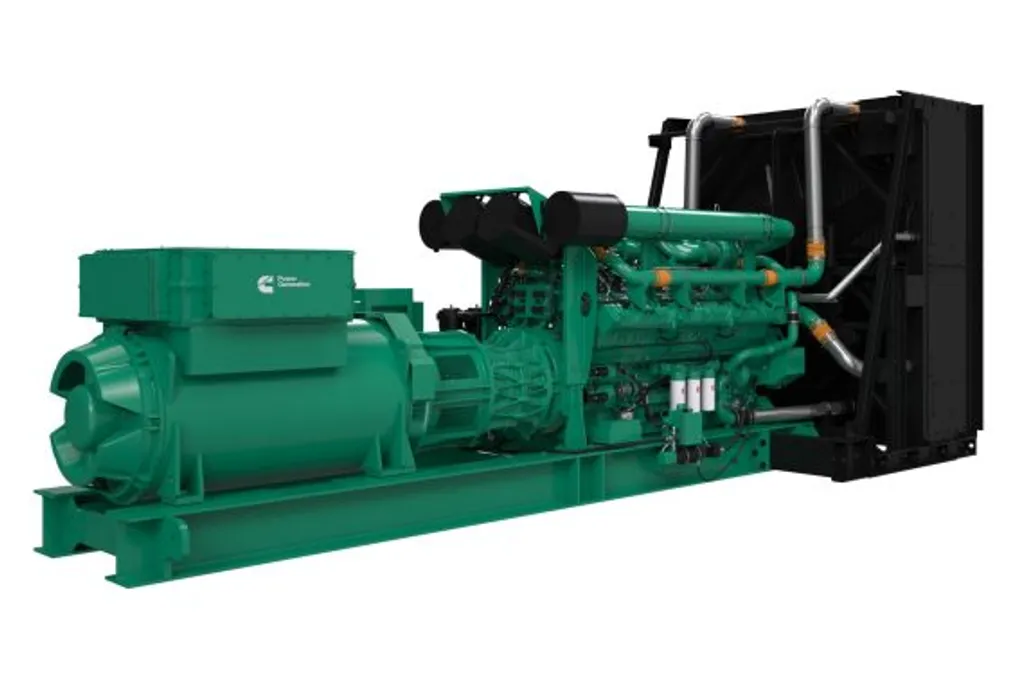
A 78-liter diesel engine, originally designed for the world's largest mining trucks, has found a new application: powering artificial intelligence data centers during grid failures.

Cummins has increased the power of generators equipped with the 78-liter QSK78 diesel engine to 3 MW. This new offering was unveiled at the DCD Connect Brasil event, dedicated to the data center sector, which took place in São Paulo on Thursday and Friday.

When the QSK78 was launched in 2000, Cummins called it the world's largest engine for the mining industry. It was developed in collaboration with the Japanese company Komatsu for off-road trucks, such as the Komatsu 960E, capable of carrying up to 327 tons of cargo in a single trip.

The engine's specifications are impressive: it features 18 cylinders, each with a displacement of about 4.3 liters, which is larger than the entire 2.8-liter Toyota Hilux engine. The total weight of the unit exceeds 11 tons, and in its mining version, it produces 3,549 hp and a torque of 1,404.3 kgm.

Data centers cannot tolerate power outages, so they maintain backup diesel generators that activate when the main grid fails. With the expansion of artificial intelligence, which demands significantly more computing power and electricity, these generators needed to become more powerful.

In 2024, one of Cummins' executives noted that hospitals, which previously used 1 MW installations, have begun purchasing 2 or 3 MW models. According to the company, data centers can achieve up to a 20% revenue growth over the next five years.

Thanks to the increased power, the QSK78 now covers the range previously served by the 95-liter QSK95 model, which remains in the catalog for generators up to 3.5 MW. Centum series generators, such as the C2750D6E and C3000D6EB, have capacities of 2,750 kW and 3,000 kW, equivalent to approximately 3,739 hp and 4,079 hp. The largest of these reaches over 7 meters in length and 3.5 meters in height.

According to the manufacturer, the unit takes less than ten seconds to take on a load and can run on HVO—renewable diesel made from vegetable oils and fats—without losing power. Leandro Vilhena, Data Center Manager at Cummins Brazil, emphasized that the generator's size must correspond to the load growth and expansion plans of each facility.
Similar stories

Production of gasoline and diesel fuel in Uzbekistan increased over 9 months
Read more
sputniknews.uz

Production of gasoline and diesel fuel in Uzbekistan increased over 9 months

During the period from January to September, an increase in the production of automotive gasoline and diesel fuel was noted in Uzbekistan. According to data, the volume of gasoline production increased by 2.6%, and diesel fuel production increased by 11.7%.

The National Statistics Committee reported that in the first nine months of 2026, 913.2 thousand tons of automotive gasoline were produced. This figure exceeds the volume recorded for the same period last year by 2.6%.

Regarding diesel fuel, its production reached 979 thousand tons during the reporting period, demonstrating an increase of 11.7%.

Furthermore, based on statistical data, it was calculated that only in September, 101.9 thousand tons of gasoline and 144.7 thousand tons of diesel fuel were produced.

520-ton transformer train passes through the Center-West of Minas Gerais en route to wind farm
Read more
g1.globo.com

520-ton transformer train passes through the Center-West of Minas Gerais en route to wind farm

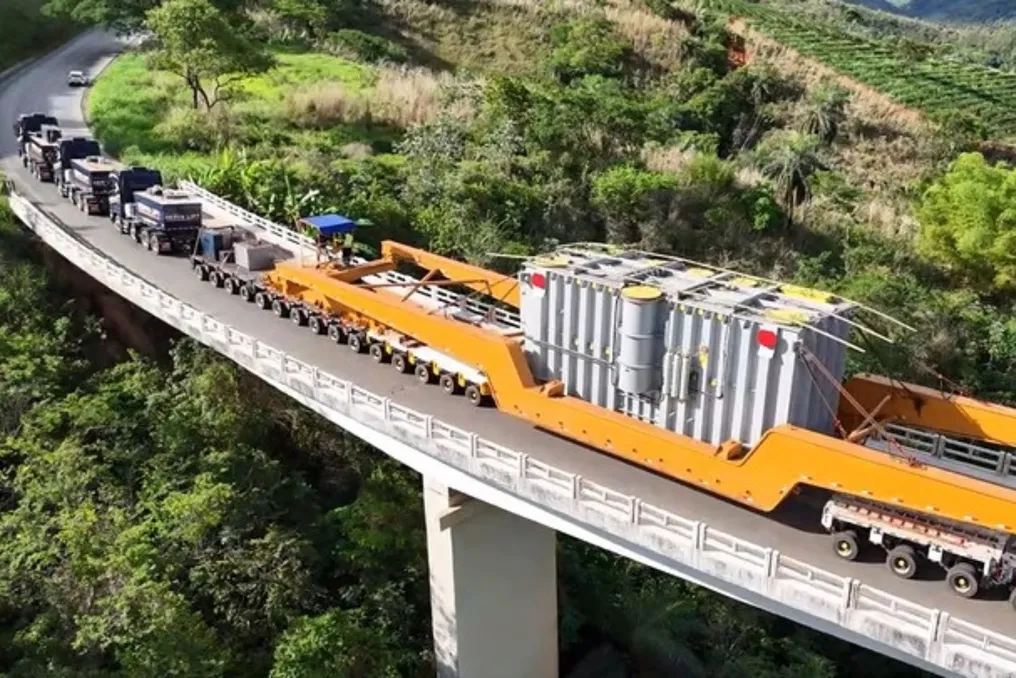
A transformer destined for a wind farm, weighing 520 tons and measuring 98 meters in length, passed through Córrego Danta, located in the Center-West of Minas Gerais, last Tuesday (27). This convoy is transporting an extraordinarily large load, departing from Jundiaí (SP) with a destination in Barra (BA).

The route taken included BR-262, subsequently accessing BR-354, heading towards Patos de Minas. It is estimated that the entire journey to the final point will take about 20 days.

Traffic on BR-262 was temporarily interrupted

According to information from the Federal Highway Police (PRF), the convoy resumed its movement in the morning after having been stopped overnight at a gas station located on BR-262. Specifically at kilometer 571, at the Estalagem Interchange, the composition left the federal highway and returned to BR-354.

During the passage on BR-262, the vehicle was escorted by the Federal Highway Police (PRF). Upon entering BR-354, the escort responsibility was transferred to the Military Police (PM).

On Monday (26), the PRF had to completely suspend traffic flow on BR-262 for a period of 40 minutes, between 5:20 PM and 6:00 PM, to ensure the safe entry of the convoy onto the federal highway at the intersection with BR-354. After this maneuver, the load proceeded along BR-262 until kilometer 568, where it spent the night at Posto Minas Gerais. The PRF confirmed that traffic on BR-262 is now normalized in both directions, without any restrictions.

The dimensions of the load are notable: it has a total weight of 520 tons, a length of 98 meters, a width of 6.5 meters, and a height of 5.5 meters. The PRF warned drivers using BR-354, in Córrego Danta, and in the Alto Paranaíba area to pay extra attention due to the size of the convoy.

NGO suggests limiting plug-in hybrid tanks to 15 liters to encourage electric use
Read more
autopapo.com.br

NGO suggests limiting plug-in hybrid tanks to 15 liters to encourage electric use

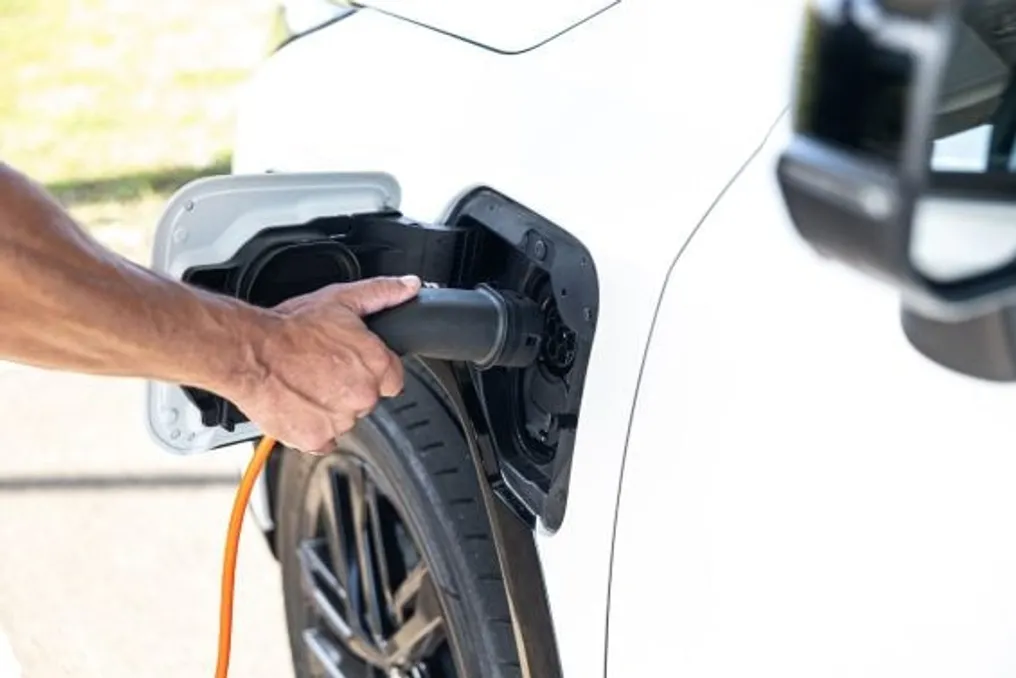
The non-governmental organization (NGO) advocates that plug-in hybrid vehicles should have a fuel tank limited to 15 liters. Although these models promise to operate exclusively on electricity in urban environments, reality shows that many owners rarely connect the cars to the electrical grid, resorting to gasoline use.

To promote this change, the European NGO Transport & Environment (T&E) recommends that governments across the continent offer incentives only to models with a maximum tank capacity of 15 liters, given that the current average is 51 liters.

With a smaller tank volume, a driver who chooses not to recharge the battery would have to refuel 57 times a year, compared to the 17 times currently recorded. The total fuel cost would remain unchanged; the strategy aims for the inconvenience of going to the gas station to motivate the driver to use electric charging.

This proposal is based on consumption data collected directly by the vehicles themselves and compiled by the European Environment Agency. According to T&E, plug-in hybrids registered in 2024 emitted an average of 145 grams of CO2 per kilometer during actual use, a value almost six times higher than the 24 g/km established in official homologation.

This discrepancy occurs because official standards assume that these cars will travel more than 80% of the distance in electric mode, when in reality, this proportion was only 27%. As a result, they emitted only 14% less than combustion and conventional hybrid cars, contradicting the official promise of an 83% reduction.

Large capacity tanks intensify this problem. In Europe, Chinese manufacturers such as BYD and Chery, which owns the Omoda and Jaecoo brands, dominate sales in this segment with models offering over 1,000 km of total range, thanks to tanks close to 70 liters.

The 15-liter limit is associated with other requirements proposed by T&E. By 2030, the NGO wants there to be a minimum real electric range of 200 km, support for fast charging exceeding 100 kW, and an electric motor with a power at least three times greater than that of the combustion engine.

With 15 liters and a consumption of 14.9 km/l when the battery is discharged, the vehicle could travel approximately 220 km using only fuel, which is comparable to the distance traveled in electric mode.

It is important to note that this measure is a recommendation from the NGO and not a regulation from the European Union. However, the debate is relevant to Brazil, given that Chinese plug-in hybrids are among the best-selling electrified vehicles in the country.

Popular