LHC detects possible decay of extremely rare particle
Read more
Super Abril
super.abril.com.br

LHC detects possible decay of extremely rare particle

Everything we can perceive and touch, from animals to stars, is fundamentally constituted by two subatomic constituents: quarks, responsible for the atomic nucleus, and electrons, which form the clouds of negative electrical charge around the nucleus. In addition to these, there are other particles, such as photons, which are the basic unit of light, essential for technologies like lamps and Wi-Fi. Neutrinos, on the other hand, have a practically undetectable presence, constantly passing through the human body without causing any effect.

Currently, these particles are considered the smallest existing entities, the primary elements of reality, being impossible to subdivide according to current knowledge. However, the organization of these building blocks of the Universe presents singular characteristics.

The quarks that compose atoms are classified into two categories, called up and down. Although the terms 'up' and 'down' are informal nicknames, they have no meaning in the quantum context. There are six types of quarks in total: up and down, plus charm and top (heavier than up) and strange and bottom (heavier than down).

The top quark stands out for having a mass 85 thousand times greater than the up quark, making it the most massive particle within the Standard Model. Despite this extensive family of quarks, the vast majority existing is composed of the up and down types, which form the matter around us.

These quarks are observed under extreme conditions, such as in tests conducted at the Large Hadron Collider (LHC), the world's largest particle accelerator. This equipment consists of a 27 km underground ring located on the border between France and Switzerland. When a collision between particles results in an unusual entity, such as a bottom quark, it persists for a billionth of a second before undergoing a process called 'decay', generating other particles.

Quarks never occur in isolation; they appear in groups, either in triads (like in protons and neutrons that structure atoms) or in pairs. One of these pairs is the B0 meson, formed by a bottom quark and a down quark (where one of the components may be antimatter). Normally, when this meson decays, it decomposes into common particles with no notable relevance. However, occasionally, it transforms into a pair of muons, particles that are essentially heavier electrons, with approximately 200 times more mass, an event that occurs rarely, once every 10 billion occurrences.

Physicists have been trying to record this unusual phenomenon since 1984. The first confirmation was presented last Tuesday (3) at CERN, the European laboratory operating the LHC. If confirmed, this detection will represent the rarest particle decay ever recorded.

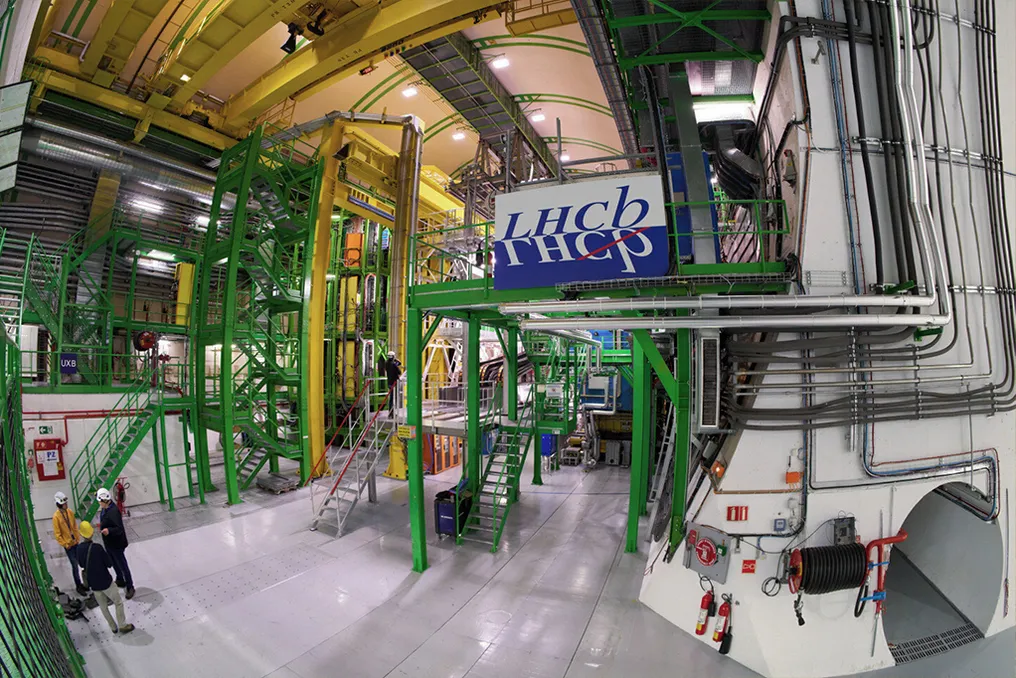
The result comes from LHCb, one of the four major detectors of the collider, whose name includes 'b' for *beauty*, another nickname given to the bottom quark. To locate this specific signal, a team of about 20 researchers, led by Harry Cliff from the University of Cambridge, analyzed data collected between 2011 and 2018, supplementing it with a new set of data from 2024 and 2025. This new batch of data was obtained after an upgrade that allowed the detector to capture information up to five times faster, aided by machine learning algorithms to filter noise from billions of collisions.

It is important to note that the finding has a statistical significance of 3.2 sigma. This means that the probability of the signal being merely a chance, a variation in the data that simulates the phenomenon, is approximately 1 in 1,500. Although this seems low, in particle physics, a discovery is only consolidated starting from 5 sigma, which corresponds to about 1 in 3.5 million. For this reason, researchers use the term 'evidence' instead of 'discovery', and the work still awaits review by other scientists.

Despite the rarity of the event, the Standard Model, the theory that describes all known particles, predicts the frequency of this decay with accuracy. Any deviation from what is predicted by the detectors would indicate a flaw in the Model, pointing to new scientific mysteries. This is compared to a little-used road: if an unexpectedly high volume of traffic is recorded, it suggests the existence of unmapped access points.

These unknown particles could reside in a scale called the 'zeptoverse', a domain of distances on the order of a zeptometer, which is one billionth of a trillionth of a meter. While the LHC can investigate distances of about 100 zeptometers, rare decays like this enable even deeper investigation, like listening into an inaccessible room. At these levels, answers to fundamental physics enigmas, such as the nature of dark matter and the imbalance between matter and antimatter in the Universe, might be hidden.

Currently, the Standard Model has no problems, as the decay follows the established equations. However, this confirmation is also valuable because it helps eliminate possibilities where new physics could be present. LHCb will continue collecting data until the early 2030s, and a future upgrade may increase the collection rate tenfold. Subsequently, expectations will fall on the successor to the LHC, which is not expected to become operational for several decades. Perhaps it is in this zeptoverse that the answer to why the Universe produced such limited-use quarks lies, something physicists still do not know, but which may be about to be revealed.
Similar stories

LUX-ZEPLIN experiment detects anomalous collision that may indicate the existence of dark matter
Read more
super.abril.com.br

LUX-ZEPLIN experiment detects anomalous collision that may indicate the existence of dark matter

All visible and tangible objects in the Universe, from magazines to stars, are composed of so-called baryonic matter, but it accounts for only 15% of all cosmic matter. The remaining 85% is dark matter—an invisible and undetectable substance whose existence is known only through its gravitational influence.

One popular hypothesis suggests that dark matter consists of WIMPs, which stands for 'Weakly Interacting Massive Particles.' These particles are a theoretical construct and have not yet been detected. However, if they exist, they must possess certain properties that allow physicists to predict how a WIMP will collide with ordinary particles, such as protons and neutrons that make up our atoms.

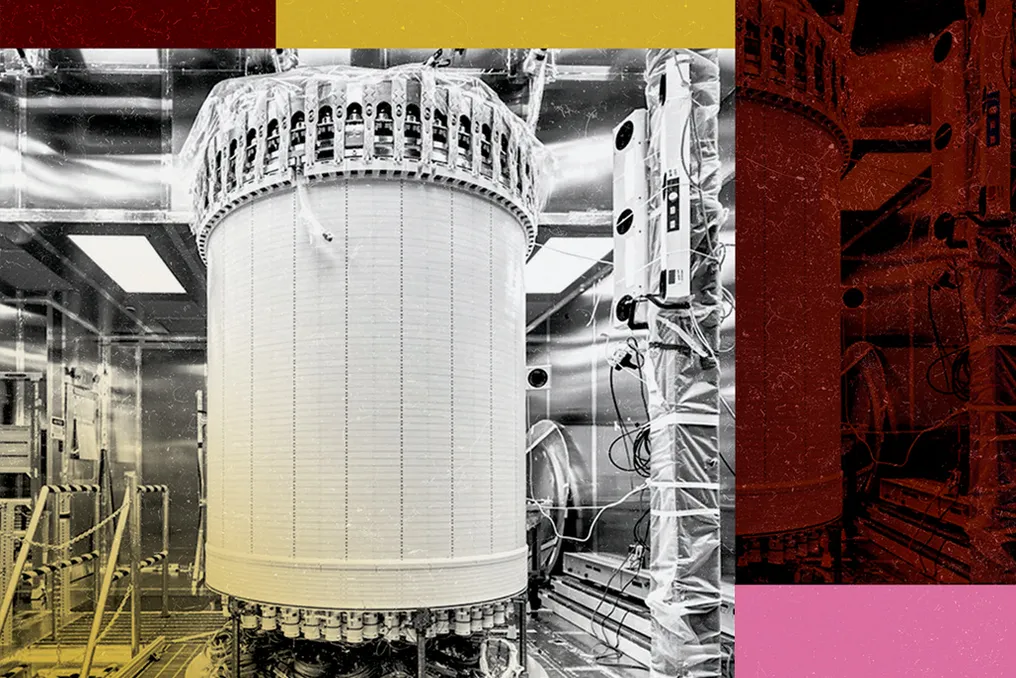
Among candidates from the periodic table of elements, the noble gas xenon possesses several characteristics that make it suitable for detecting WIMPs. Consequently, the LUX-ZEPLIN experiment, conducted in the USA, uses 7 tons of liquid xenon at a temperature of -100 ºC in a chamber located at a depth of 1.5 km. At this low temperature, xenon becomes three times denser than water, creating a very dense environment at the atomic level and increasing the probability that a wandering WIMP will collide with something.

In June 2023, LZ recorded a collision that was difficult to explain using known sources. Could this be a WIMP? After analyzing data over 220 days, the team estimated the probability that this event has a conventional explanation to be only 0.5%. Although this is insufficient for definitive confirmation of dark matter, it became the most compelling clue reported by the experiment and generated significant interest in the scientific community. Verification of such discoveries is extremely rigorous, and this finding was only published in September of this year.

Cosmic explosion 2.4 billion light-years from Earth may have affected the planet's atmosphere
Read more
olhardigital.com.br

Cosmic explosion 2.4 billion light-years from Earth may have affected the planet's atmosphere

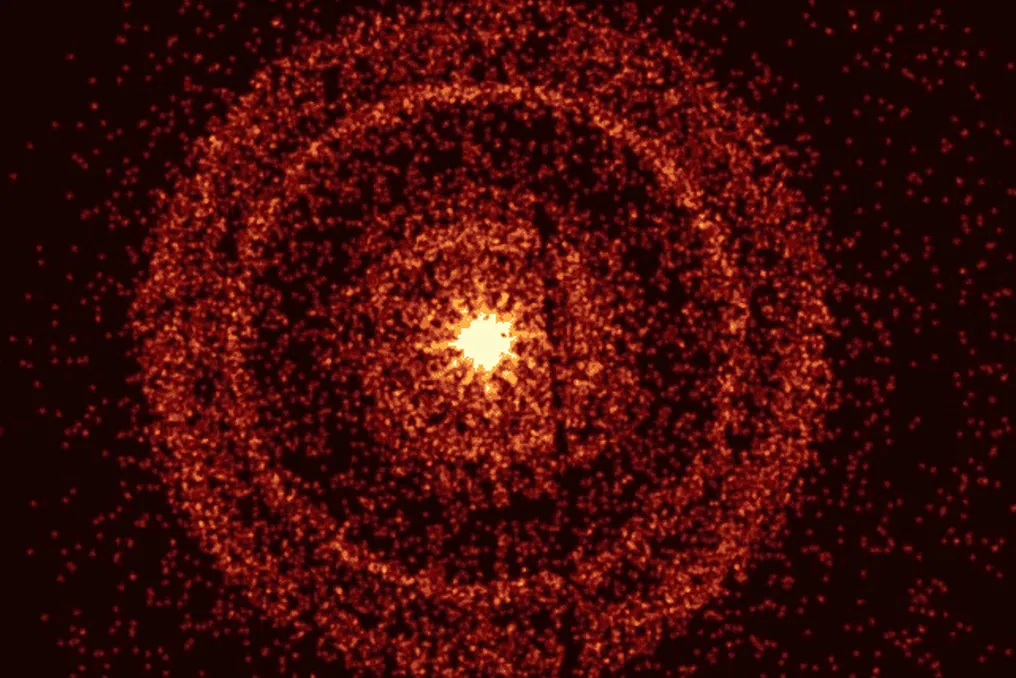
An intense cosmic explosion, known as BOAT (The Brightest of All Time), occurred on October 9, 2022, and reached Earth with a radiation wave capable of altering the ionosphere, one of the atmospheric layers. This phenomenon has attracted the attention of astronomers and continues to spark debate regarding its actual impact on the planet.

This event was identified as GRB 221009A and belongs to the category of Gamma-Ray Bursts (GRBs)—some of the most powerful energy releases in the Universe. They occur when very massive stars collapse, forming a black hole and ejecting jets of particles at speeds close to the speed of light.

Estimates suggest that this event could have been the brightest observed on Earth in approximately the last ten thousand years. According to NASA data, the explosion was so powerful that it temporarily overloaded gamma-ray detectors on various spacecraft.

One example is NASA's Fermi Gamma-ray Space Telescope. Two instruments on the observatory—the Gamma-ray Burst Monitor (GBM) and the Large Area Telescope (LAT)—encountered limitations in registering radiation during the most intense moments of the event.

The INTEGRAL mission, representing the European Space Agency's (ESA) International Laboratory for Gamma-ray Astrophysics, was also affected by BOAT. A study conducted by the Institute of Astrophysics of Andalusia in Spain and published in the journal Astronomy & Astrophysics in 2024 showed that the received radiation was sufficient to saturate the Anti-Coincidence Shield (ACS) and parts of the Imaging Spectrometer (ISGRI) detectors, which degraded data collection during the burst.

To overcome this issue, researchers used data from another INTEGRAL detector—the Microcalorimeter (MCAL)—which was not affected by saturation, to estimate the radiation intensity. Furthermore, they referred to data from the European probe BepiColombo, heading to Mercury, which registered the burst using the Mercury Gamma-ray and Neutron Spectrometer (MGNS). This instrument detected radiation in the energy range of 280 to 460 kilo-electron volts, recording a sequence of pulses lasting about 6.6 minutes.

Scientists combined measurements from two spacecraft to estimate the burst intensity during times when other INTEGRAL detectors were overloaded. This comparison allowed for the reconstruction of part of the signal that could not be measured directly.

Despite the exceptional intensity of the radiation, no signs of permanent physical damage to the spacecraft were found; the problem lay in the temporary overloading of the detectors, which affected some measurements.

The first signal was recorded at 13:16:59 UTC by the Fermi GBM instrument. Other space installations, including the Neil Gehrels Swift Observatory, also detected this radiation. The combination of observations allowed for the study of the phenomenon across different wavelengths and tracking the radiation after the initial flare.

Data indicated that the explosion occurred in a distant galaxy, approximately 2.4 billion light-years from Earth, although this distance may vary depending on the cosmological measurement method used. Even traversing such a vast distance, the radiation reached Earth with enough intensity to cause detectable effects in the atmosphere.

A spectroscopic measurement published in 2025 estimated the light distance at approximately 745 megaparsecs, equivalent to about 2.43 billion light-years. The ionosphere is a region of the atmosphere located between altitudes of 50 and 1000 kilometers. In it, solar radiation and other energy sources knock electrons out of atoms and molecules, forming charged particles. These changes affect the propagation of radio waves and can be detected by scientific instruments.

In November 2025, a study published in Geophysical Research Letters presented evidence that the explosion increased the electron density in the lower ionosphere, at an altitude of 50 to 90 kilometers. Researchers noticed changes in the propagation speed of extremely low frequency radio waves caused by lightning. This disturbance lasted for about 40 minutes.

The team also identified discrepancies between monitoring methods: some measurements showed signals related to radiation passage, while others, such as Schumann resonance observations, did not show obvious changes. The results suggested that the explosion caused a specific reaction in the ionosphere, different from what is usually observed during solar storms.

However, a study placed in the arXiv preprint repository in May of this year revised other changes previously attributed to BOAT. The authors analyzed data from different altitudes and concluded that some anomalies in satellite measurements, electron content, and equatorial electric circulation could be explained by natural conditions and instrumental limitations. The work did not find a consistent increase in total electron content that could be directly linked to the explosion. The authors also identified variations that occurred regularly under certain lighting conditions or began before the event itself. Since the text is still awaiting peer review, its conclusions should be considered in the context of independent scientific evaluation.

According to Marcelo Zurita, president of the Paraiban Astronomy Association (APA), member of the Brazilian Astronomical Society (SAB), technical director of the Brazilian Meteor Observation Network (BRAMON), and columnist for Olhar Digital, it is important to emphasize that this study does not call into question the fact of BOAT or the data recorded by the Institute of Astrophysics of Andalusia's gamma-ray detectors.

The expert explained: 'It disputes the effects of this GRB, and consequently, other gamma-ray bursts on the Earth's ionosphere in the 2025 paper.' He added: 'The ability of these explosions to affect the atmosphere has been discussed in the scientific community for many years. Thus, this study may finally resolve this controversy. If it is proven that the most powerful gamma-ray burst did not cause significant effects in our ionosphere, we can conclude that none of the others will be able to do so.'

This event remains important for astronomy as it helps investigate the interaction of extragalactic explosions with the Earth's environment. The research also highlights the need to use various instruments and independent analyses to separate the effects of cosmic phenomena from natural atmospheric fluctuations.

Scientists discover signs of a 50 km underground tunnel on the Moon in the Marius Hills region
Read more
www.aajtak.in

Scientists discover signs of a 50 km underground tunnel on the Moon in the Marius Hills region

Scientists from the Japanese space agency JAXA have discovered signs of an underground tunnel approximately 50 kilometers long in the Marius Hills region of the Moon. This information was obtained after analyzing radar data collected by the Kaguya orbital spacecraft. Researchers believe that if this tunnel exists, it could potentially be used in the future for human habitation on the Moon.

The Moon lacks an atmosphere and the weather conditions characteristic of Earth. There is a risk from harmful cosmic rays, small meteorites, and sharp temperature fluctuations. An underground tunnel could provide protection against these threats. However, complete information about this tunnel is currently unknown, and it remains to be determined how safe it would be for humans to reside inside.

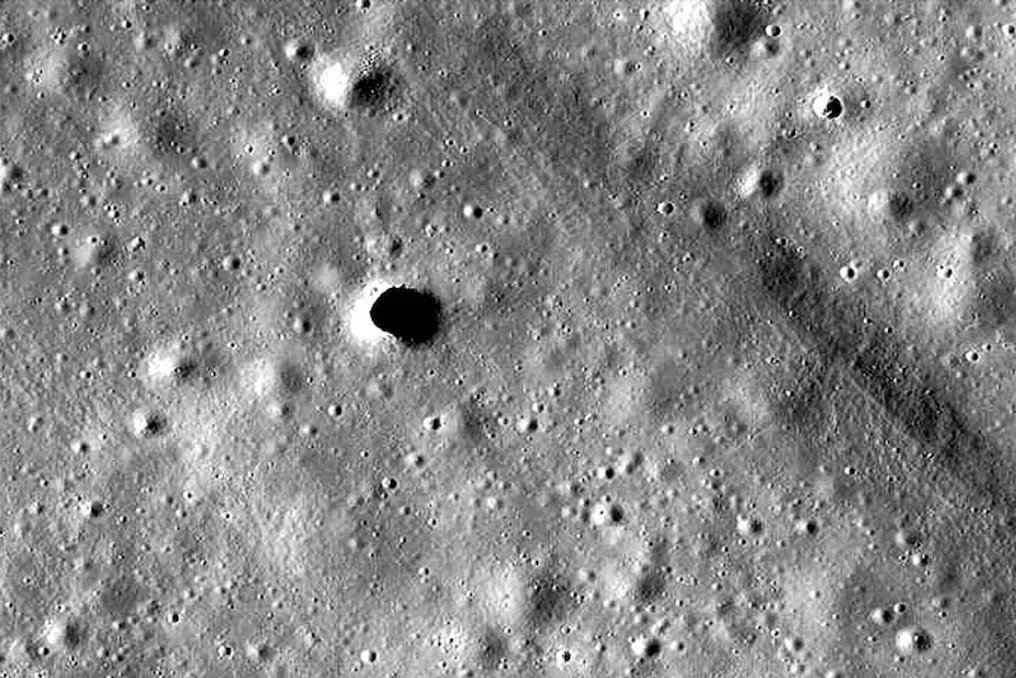
In 2009, the Kaguya orbital spacecraft captured images of the Moon, which showed a large crater in the Marius Hills area named Marius Hills Hall. This crater was estimated to be about 50 meters wide and 50 meters deep. This section of the Moon is visible from Earth. Scientists suspected that this crater might be an opening to a large underground tunnel, leading them to check radar data for large voids beneath the lunar surface.

The Kaguya orbital spacecraft was equipped with the Lunar Radar Sounder (LRS), which directed radar signals toward the Moon's surface. These signals reflected back, helping scientists understand the subsurface structure. In 2017, an article published in the journal Geophysical Research Letters described signals indicating the probability of large underground cavities. Based on this data, the hypothesis of a lava tube approximately 50 kilometers long was proposed. Nevertheless, due to radar limitations, every part of the tunnel could not be inspected, necessitating further research to confirm its full length and structure.

According to scientists, volcanic eruptions occurred on the Moon a very long time ago, spewing out hot lava. When the lava stopped flowing, its outer layer cooled and solidified, while the hotter inner lava continued to move forward, forming a long, tunnel-like space underground. Such structures are called lava tubes. The Marius Hills region contains numerous structures formed by volcanic activity. Scientists hypothesize that this tunnel may be around 3.5 billion years old, and studying it could help better understand the ancient history of the Moon.

A safe zone is critically important for long-term human presence on the Moon. It is difficult to protect against harmful cosmic rays and small meteorites. An underground tunnel could offer protection from these factors and also mitigate the impact of sharp temperature changes. Scientists hope that signs of water or ice might be found in such locations, but there is currently no confirmation of water or ice within this tunnel. Now, scientists must determine the size of the tunnel and the strength of its ceiling and walls. Only then can it be decided whether this location is suitable for human settlement. If future research confirms these assumptions, this tunnel could become a refuge for people on the Moon in the future. For now, this discovery represents an important step in understanding the Moon's subterranean spaces.

Popular