Satellite detects possible signs of volcanic activity on Mars
Read more
Olhar Digital
olhardigital.com.br

Satellite detects possible signs of volcanic activity on Mars

A new analysis of data obtained from the European Space Agency's (ESA) ExoMars Trace Gas Orbiter (TGO) has revealed an unusual pattern of hydrogen chloride in the Martian atmosphere. This discovery allows for the hypothesis that there is a source of volcanic heat beneath the planet's surface.

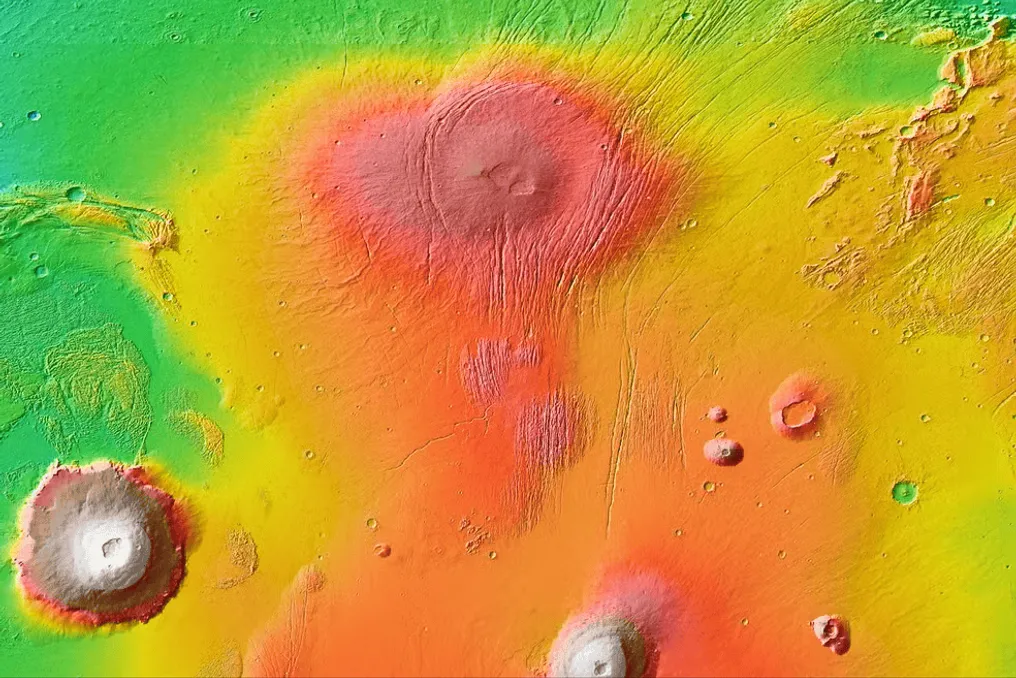
The signal was recorded above fissures on the slopes of Olympus Mons, one of Mars' large volcanoes. Researchers believe that these faults may allow gases to escape from the planet's interior into the atmosphere, possibly from a dormant magma chamber.

It is important to note that this detection does not imply an imminent eruption. Currently, no signs of recent volcanic activity have been observed on the planet, and the subterranean origin of the gas remains only a hypothesis requiring confirmation.

The study was published in the scientific journal Science Advances on Thursday (the 4th) and may help in identifying areas that should be studied when searching for extraterrestrial life.

Researchers paid particular attention to the correlation between emissions and Martian seasons. During winter, temperatures in this region can drop to approximately -120 °C. Under such conditions, ice could block the fissures and prevent gas release.

With the onset of summer, the rise in temperature causes ice sublimation—the process of water transitioning directly from a solid to a gaseous state. This reopens passages, allowing compounds to enter the atmosphere. This mechanism helps explain why hydrogen chloride peaks appear during specific periods of the year and over a particular zone.

Scientists suggest that a dormant magma chamber beneath Olympus Mons could be the source of heat and gases, but this interpretation depends on further observations and analyses.

The possibility of recent geological activity is also significant for the search for life on Mars. If magma heats underground areas, the heat could interact with water deposits, creating warm and moist environments beneath the surface.

On Earth, hydrothermal systems are known to be habitats for microbial communities. Some of these environments are located near geothermal heat sources, where the interaction of water and rock provides energy and chemical compounds capable of sustaining life forms. Consequently, similar areas on Mars represent interesting targets for future research.

Nevertheless, the study did not find microorganisms or direct evidence of biological activity; it only points to the potential existence of conditions that could theoretically be necessary for life.

Other observations have already shown that Mars is not entirely geologically inert. Images obtained by probes demonstrate volcanic areas that may have remained active up to several million years ago—a relatively recent period in geological time. Furthermore, missions studying the planet's interior have registered so-called marsquakes caused by geological processes. The latest analysis adds another clue to this scenario. If the volcanic origin of hydrogen chloride is confirmed, Mars may possess unidentified sources of subsurface heat.

For scientists, this also underscores the importance of studying the Martian subsurface layer, as if any environment on the planet is still capable of supporting microbial life, it may be hidden beneath the surface, away from the intense cold and radiation reaching the open surface.

Similar stories

Oldest Mars Meteorite Points to Earth-like Environment
Read more
olhardigital.com.br

Oldest Mars Meteorite Points to Earth-like Environment

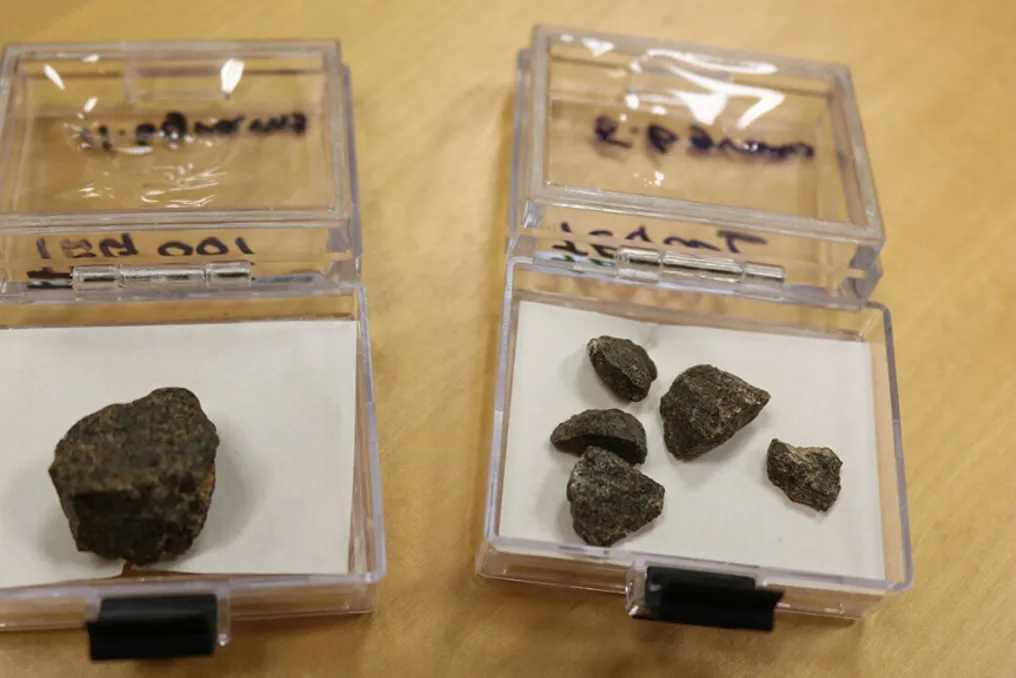
A meteorite at least 4.1 billion years old may help scientists recreate a very early stage of Mars' history. This sample, named Teghaza 001, possesses characteristics indicating that the planet once had a wetter atmosphere and different conditions from those today, possibly with water circulation on the surface.

The discovery was presented in a study published in the scientific journal Science. Researchers from the University of New Mexico (USA) played a vital role in identifying this material, which was found in the Sahara Desert.

Analysis showed that the meteorite is a sample of Martian volcanic rock, dating back at least 4.1 billion years. According to researchers, this is the oldest identified igneous rock from Mars.

The team paid special attention to the unusual mineralogical composition. The sample demonstrates high concentrations of manganese oxide—a compound that may be linked to microbial activity and is studied by robotic probes on Mars as a potential sign of life-friendly conditions.

Scientists also found features in oxygen isotopes and altered minerals that point to interaction with liquids. This suggests that the rock might have been in an environment where water circulated.

The composition of Teghaza 001 indicates climatic conditions vastly different from those existing on the Red Planet today. Currently, Mars is cold and dry, but the meteorite preserves traces of an era when water could circulate on the surface and interact with volcanic systems and rocks.

Researchers attribute this sample to the Pre-Noachian period—the earliest geological epoch of Mars, which occurred approximately between 4.5 and 4.1 billion years ago. This time frame is particularly important for searching for possible signs of extraterrestrial life.

According to Karl Egee, director of the University of New Mexico Institute of Meteorite Science and one of the analysis participants, if any form of primitive life ever existed abundantly on the surface of Mars, this period would be one of the most promising for it. At that time, Mars might have possessed a magnetic field, a denser atmosphere, and surface water. These conditions could have provided better protection from radiation and created a potentially habitable environment.

However, the discovery does not mean that the meteorite contains evidence of life. Instead, it provides information about the conditions that existed on the planet when the probability of habitable environments was higher.

Furthermore, researchers used remote sensing data obtained from Martian orbiters to search for areas with chemical and geological characteristics similar to those of the meteorite. Analyses revealed possible origins in ancient highlands of the southern hemisphere of Mars. Identifying these regions can help guide future exploration missions, including sending robots and potential sample collection operations.

For scientists, Teghaza 001 represents a rare opportunity to directly study materials preserved from the earliest stages of Mars' evolution. The team emphasizes that finding another such sample could be extremely difficult.

Lunar Craters as Evidence of the Solar System's History
Read more
olhardigital.com.br

Lunar Craters as Evidence of the Solar System's History

The Moon has always fascinated and inspired humanity. Since ancient times, it has illuminated our nights, inspiring poets and lovers. Since we were able to view it more closely, its cratered surface has awakened our curiosity. Some of these are small depressions, while others form gigantic structures with central mountains and rings stretching for hundreds of kilometers. However, these markings are not just details of a distant landscape; they record collisions that have occurred over billions of years, helping us reconstruct the history of the Moon and the Solar System itself.

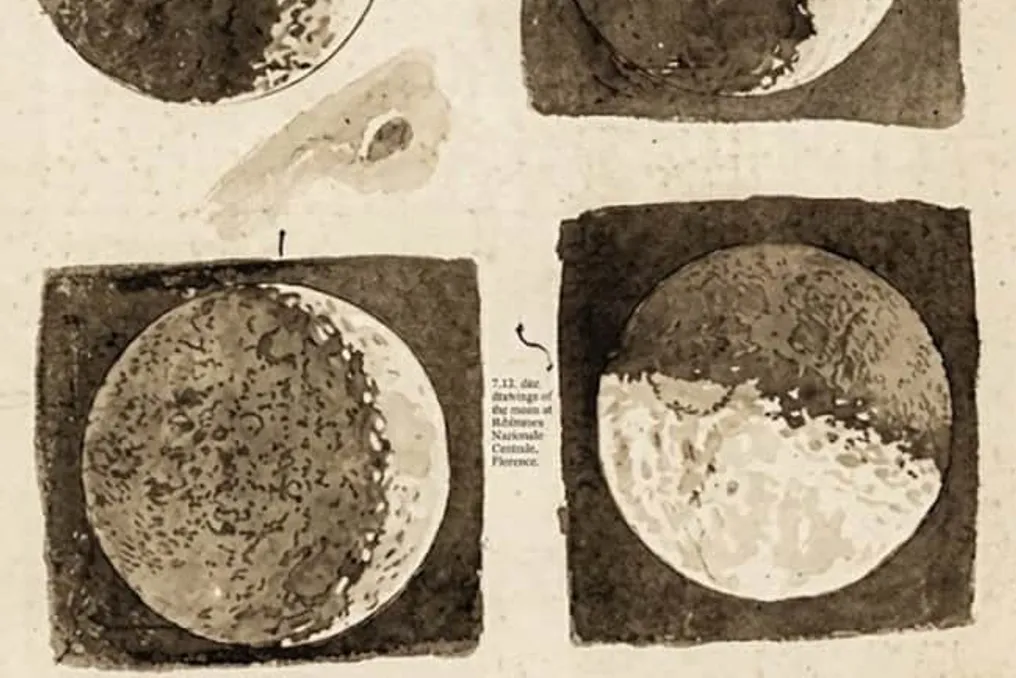
The study of these structures has changed our understanding of the Universe. For centuries, Aristotelian philosophy maintained that celestial bodies were perfect and unchanging. This concept began to weaken in the early 17th century when Galileo Galilei pointed his telescope at the Moon and discovered mountains, valleys, and shadows that demonstrated its uneven surface. Although humanity had observed the light and dark spots on the Moon since Antiquity, telescopic observations showed that the Moon is a world with a much more complex and interesting geology.

With the advent of space probes, and later the manned missions of the Apollo program, we began to study these structures in detail. Orbital images, surface measurements, and samples brought back by astronauts have confirmed that most craters were formed not by volcanoes, as some researchers once believed. They were carved by cosmic impacts, some of which were very powerful.

The process begins when an asteroid, a fragment of cosmic rock, collides with the Moon's surface at high speed. The impact releases a tremendous amount of energy in a very short time, compressing and excavating the ground, while fragments of rock are thrown outwards. A cavity forms, surrounded by ejected material. Depending on the size of the object, the impact speed, and the characteristics of the terrain, the crater can have various shapes.

The smallest are usually simple, bowl-like. They are formed by smaller impacts and come in a wide range of sizes. Barringer in Arizona is a typical example of this type of crater here on Earth. On the Moon, they cover its entire surface.

Larger ones are called complex craters. They reach tens of kilometers and were formed under the influence of larger objects that penetrated deeper into the ground. Their walls may collapse into terraces, the floor may become relatively flat, and the central area may rise due to rebound, forming one or more peaks. These include the craters Theophilus, Mareus, Aristarchus, and many others easily seen through a telescope.

With even larger impacts, enormous basins occur, some of which have several concentric rings. The South Pole-Aitken Basin, on the far side of the Moon, has a diameter of about 2,500 kilometers and is one of the largest and oldest known impact structures in the Solar System.

Some craters also stand out with bright rays appearing to emanate from their center. This is the case with Tycho, a relatively young crater with a diameter of approximately 85 kilometers. These rays consist of material ejected during the impact, which scattered across the surface. Over time, exposure to the space environment, including solar wind and micrometeorite bombardment, alters the properties of the material and reduces this contrast. Therefore, bright rays help identify geologically younger craters.

However, lunar craters also appear in curious sequences, such as rows of aligned depressions that can stretch over long distances. These structures, known as crater chains, can have different origins. In some cases, they may be the result of the fragmentation of a celestial body shortly before impact. In such a case, its pieces land on the surface sequentially, as happened in 1994 when fragments of Comet Shoemaker-Levy 9 struck Jupiter.

Another possible source is secondary impacts. When an asteroid hits the Moon, the material ejected during the collision can travel great distances before falling again, forming new craters. If these fragments land on the ground along an elongated line, they can form chains. But not every crater chain has the same explanation. Some linear structures may be related to cracks and geological, including volcanic processes.

And why is all this important? Because the lunar surface functions as an archive of impact history in the Solar System. The Moon lacks a dense atmosphere, rain, or rivers capable of rapidly destroying its traces of cosmic impacts, and it does not possess plate tectonics like Earth. Many of these markings have been preserved for billions of years, although subsequent impacts, volcanic activity, and other processes also alter the landscape.

By comparing the number and degree of preservation of craters in different regions, scientists can estimate the relative age of surfaces and reconstruct the history of the Moon. The most accepted hypothesis is that the Moon itself formed about 4.5 billion years ago as a result of a giant collision between the early Earth and another body roughly the size of Mars.

However, some evidence suggests that between 4.1 and 3.8 billion years ago, our satellite may have experienced a particularly intense period of impacts, known as the 'Late Heavy Bombardment,' possibly caused by changes in the orbits of giant planets. According to some models, the gravitational reorganization of Jupiter, Saturn, Uranus, and Neptune could have destabilized populations of small bodies, directing some of them toward the inner regions of the Solar System. But this story is not yet fully resolved.

The age of many ancient craters is difficult to determine, and scientists continue to debate whether the peak number of impacts was truly concentrated or if the bombardment gradually decreased from the initial stages of planetary formation. Understanding this difference is crucial for reconstructing the history of the Moon, Earth, and the conditions for the emergence of life here.

Our planet has undergone erosion, volcanism, and crustal movements that have erased many of its oldest traces. The Moon, however, preserves records of epochs that are much harder to study on Earth. This does not mean that all lunar craters are old or that the record is complete, but it provides fundamental clues about the evolution of not only the Moon and Earth.

Craters are present on the vast majority of rocky bodies in the Solar System, from the smallest to the largest. But the Moon has a special advantage: it is relatively close to us and allows us to study its structures using telescopes, probes, and even samples brought back to Earth. Every crater, every chain, and every basin represents a clue about the events that shaped these worlds. It is a true book of our cosmic history, located just one telescope away from us.
Popular