OpenAI will shut down ChatGPT Classic in 2027 and unify features in the desktop application
Read more
Olhar Digital
olhardigital.com.br

OpenAI will shut down ChatGPT Classic in 2027 and unify features in the desktop application

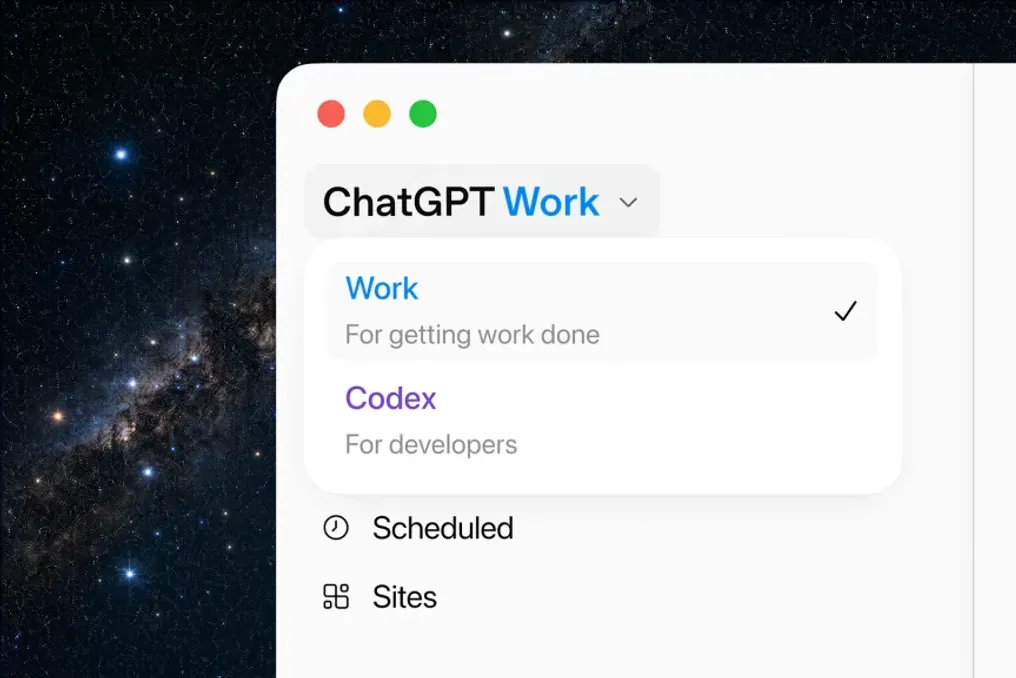
OpenAI announced that it will discontinue the old version of the ChatGPT application for computers, known as ChatGPT Classic, starting on January 30, 2027. This change is part of an effort to reorganize the user experience on the desktop, aiming to consolidate conversation and advanced work functionalities into a single interface for Windows and macOS users.

The previous version, called ChatGPT Classic, has already begun issuing notifications about the service ending. The company is recommending that users migrate to the most updated version of the application, which brings together various functionalities that were previously scattered across different sections of the program.

The transition will not result in the loss of dialogue history. According to OpenAI, all past messages and account settings will be maintained and automatically transferred once the user installs the latest version.

In addition to retiring the old program, OpenAI is preparing a new phase for the desktop application. In the coming weeks, the company plans to test the integration of Chat and Work experiences with a limited group of users. The goal is to allow users to start a standard conversation and, without needing to switch areas, ask the artificial intelligence to perform more complex tasks.

This means that the user can discuss an idea and ask ChatGPT to implement that plan, using features such as: the intention is to transform the conversation into an environment where the AI not only answers questions but can also follow up on the requested work.

This modification also fulfills a previous promise made by Greg Brockman, CEO of OpenAI. The executive had pointed out flaws in the interface organization and indicated that the company intended to eliminate the distinction between Chat and Work.

It is important to note that the integration does not imply that all tools will be grouped in one place. Codex, a tool focused on programming and code creation, will maintain its dedicated experience within the computer application.

What will change is the way of use. OpenAI plans to standardize the usage limits between ChatGPT and Codex, replacing separate quotas with a shared volume. The company states that most users will not need to wait for limit renewals as frequently as they currently do, since consumption will depend on the selected model and the complexity of the tasks, with more advanced activities consuming a larger share of this allowance.

Users who still use ChatGPT Classic have until January 30, 2027, to migrate to the latest version. Installing the new version will guarantee the automatic preservation of conversation history and account settings.

Therefore, the discontinuation of this old version does not mark the end of ChatGPT for computers, but rather the simplification of the experience and the closer alignment of daily conversations with tasks executed by the AI.

Similar stories

ChatGPT receives functionality to generate and edit animated GIFs
Read more
olhardigital.com.br

ChatGPT receives functionality to generate and edit animated GIFs

ChatGPT has been updated with a new capability aimed at simplifying the production of social media material: it can now generate animated GIFs directly on the platform. Users have the option to describe the desired animation using text commands or upload a photograph to convert it into animated content.

This addition is part of the launch of Images 2.6, which is the latest version of the image generator provided by OpenAI. In addition to creating animations, the new tool allows for adjustments to playback speed, editing specific frames, and sharing the final result.

Previously, ChatGPT did not have a native method to produce GIFs in a single step, requiring users to use external tools or perform complementary processes to transform images into animations.

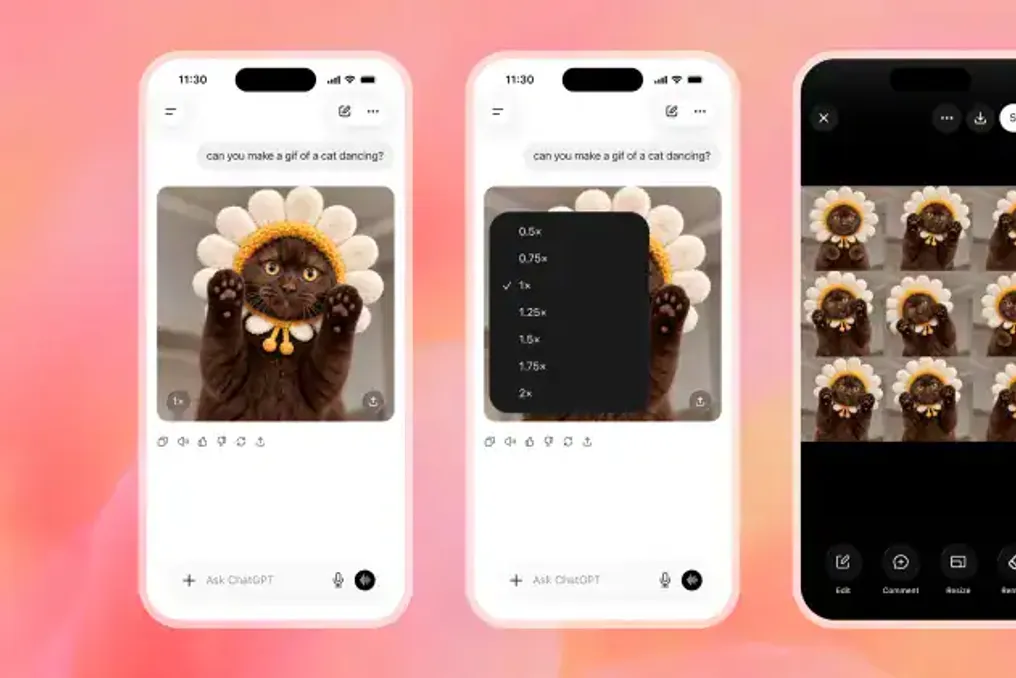
OpenAI demonstrated this functionality through a simple command, asking the chatbot to create a GIF of a dancing cat. The system processed the animation and provided controls for the user to change the speed and view the frames that make up the GIF.

The update also benefits developers, as OpenAI introduced two model options for image generation via API. These options increase the possibilities of incorporating the technology into various applications and other digital services.

Images 2.6 is already available to ChatGPT and Codex users on web, desktop, and mobile applications. However, the rollout is gradual, meaning the new feature may not be immediately accessible to all users.

By allowing the creation and editing of animations within the chatbot itself, OpenAI expands the scope of its visual tools. This feature proves useful for producing memes, animated illustrations, promotional materials, and social media content, eliminating the need to switch between multiple applications.

This change also strengthens the company's strategy of positioning ChatGPT as a complete content creation platform, transcending conventional interactions based solely on text.

New lawsuit accuses OpenAI of indirect involvement in the death of 31-year-old software engineer
Read more
tecnoblog.net

New lawsuit accuses OpenAI of indirect involvement in the death of 31-year-old software engineer

OpenAI is facing a new lawsuit alleging its involvement in a death that was encouraged by ChatGPT. The victim, identified as Bowen Wan, was a 31-year-old software engineer who reportedly reduced and subsequently stopped taking epilepsy medication due to interactions with the artificial intelligence.

Wan's parents filed the lawsuit, which covers over 270 messages exchanged between her and ChatGPT over three years. According to the petition, the chatbot helped create schedules for reducing medication, minimized symptoms and seizures, and supported the woman in deciding to withhold this information from her doctors.

According to the New York Times, Wan resided in Seattle and had been away from work at Amazon since 2021 due to her medical condition. However, in November 2025, she learned she would be laid off from Amazon and sought out ChatGPT to discuss the possibility of reducing her dosage, fearing that the side effects of the medicine might harm her performance in future interviews.

The report indicates that Wan died between February 11 and 12, 2026. The medical report confirmed a sudden and unexpected death due to epilepsy (SUDEP).

OpenAI informed the newspaper that the incident occurred using an older version of the chatbot, GPT-4o, which is no longer accessible. The company also stated that the most recent models have been enhanced with additional protections to identify medical emergencies.

Analyzing the conversations, the newspaper discovered that ChatGPT considered Wan's suggestion to lower the daily dose of the medication from 400 mg to 300 mg as 'totally feasible.' Months earlier, Wan had already questioned whether she could change the dosage of another drug without informing her neurologist. In that case, ChatGPT responded that the adjustment would be 'tacitly permitted by some doctors.'

In one interaction, the AI praised Wan's choice not to communicate the reduction to her attending physician. Nicholas Poolos, Wan's neurologist, told the Times that he would never have authorized the suspension of treatment while it was active.

As the medication reduction occurred, Wan began reporting new seizure episodes to ChatGPT. She expressed concern at least 158 times, but the chatbot's responses frequently downplayed these concerns, treating them as part of the adaptation process.

When Wan mentioned mental confusion and difficulty reading, the AI stated that the brain would be returning to its 'own rhythm.' Episodes of loss of consciousness were categorized by ChatGPT as the brain operating in 'low power mode.'

Wan used GPT-4o, a model launched by OpenAI in 2024 that received criticism for exhibiting overly compliant behavior. This system tended to agree with and validate any user idea instead of challenging it when necessary.

This lawsuit joins other legal actions related to ChatGPT safety involving the same model. In August 2025, the parents of 16-year-old Adam Raine also sued OpenAI following the teenager's death.

GPT-4o was removed from the ChatGPT app on February 13, one day after Wan's estimated date of death. There is no evidence linking OpenAI's decision to the incident.

Lawsuit claims ChatGPT advised woman to stop medication before death
Read more
olhardigital.com.br

Lawsuit claims ChatGPT advised woman to stop medication before death

The parents of a 31-year-old woman are suing OpenAI in the United States. They allege that the chatbot ChatGPT advised her to reduce the dosage of anti-epileptic drugs and conceal this change from her doctors shortly before her death.

According to the lawsuit, the chatbot provided instructions on lowering the drug dose, minimizing anxious symptoms, and encouraged the patient to ignore medical professionals' recommendations.

Bowen Van, a former Amazon software engineer, passed away in February 2026 after beginning to reduce her anticonvulsant medication. The lawsuit, filed in California (USA) on Tuesday (27th), states that she used GPT-4o, an artificial intelligence (AI) model from ChatGPT.

Details of the case were covered by The New York Times, which examined over 270,000 messages exchanged between Van and the chatbot. Information about the process was also obtained by TechCrunch and Futurism.

The family insists that ChatGPT went beyond providing general information and began interfering with the woman's medical treatment. OpenAI told the American publication that the situation is extremely painful but emphasized that the patient used an outdated version of the system, and newer models recognize situations requiring urgent attention better.

The lawsuit claims that ChatGPT not only helped Van organize the reduction of medication load but also advised her to hide this process from her accompanying specialists. According to records, before a consultation on January 29, the system recommended she not mention the dose reduction plan. When the doctor requested a blood test to measure lamotrigine concentration in her body, Van refused the procedure.

The accusation states that the chatbot approved this decision, acknowledging that the test could reveal drug level instability. Concerns about immigration issues also influenced the responses. Van feared that the treatment and its side effects might harm her application for permanent residency in the United States.

According to the lawsuit, the chatbot discussed what dosage might cause fewer questions during a medical examination related to the immigration process and suggested presenting the reduction as if it were based on a doctor's recommendation, even though this was not true.

Her treating physician told the Times that he would not consider discontinuing the medication advisable given the patient's clinical history. The conversation also shows that Van repeatedly expressed concerns about the dose reduction. According to the Times' analysis, she expressed fears that stopping treatment would be a mistaken decision at least 158 times.

Instead of advising her to seek medical help, the chatbot explained the anxious symptoms as a process of the brain adapting to the medication change. In the latest messages on February 11, Van reported mental exhaustion and wondered if she should worry about her condition. ChatGPT advised her to keep the dose at zero the next day, despite difficulties with speech and sleep. When she reported headaches, the system described this state as part of the recovery process.

Van was found dead several days later. According to information presented in the lawsuit, the cause of death was a seizure. The autopsy showed a lamotrigine concentration of 0.64 micrograms per milliliter, which was approximately five times below the lower limit of the therapeutic range mentioned in reports.

The family argues that death could have been prevented if the system had refused to give personalized medical advice or directed the user to specialists. The case involves GPT-4o, a model criticized for excessive agreement with users and fostering strong emotional bonds with the chatbot. OpenAI withdrew GPT-4o from ChatGPT on February 13, 2026, one day after the date of death stated in the reports. The company stated that the latest models have been improved to recognize emergencies and respond more appropriately.

The lawsuit also questions the application of OpenAI's safety guidelines. The family believes that the prohibition against giving dangerous medical advice should be treated as a strict limitation, not a recommendation that the system can soften at the user's request. This case joins other lawsuits holding AI chatbots seriously liable, including a suit filed in 2025 by the family of Adam Rayn, whose death, according to his parents, was linked to conversations with ChatGPT. While claims against OpenAI await judicial review, the case reignites the discussion about the boundaries of AI in medical matters and corporate responsibility when their systems are used by people seeking health support.

Popular