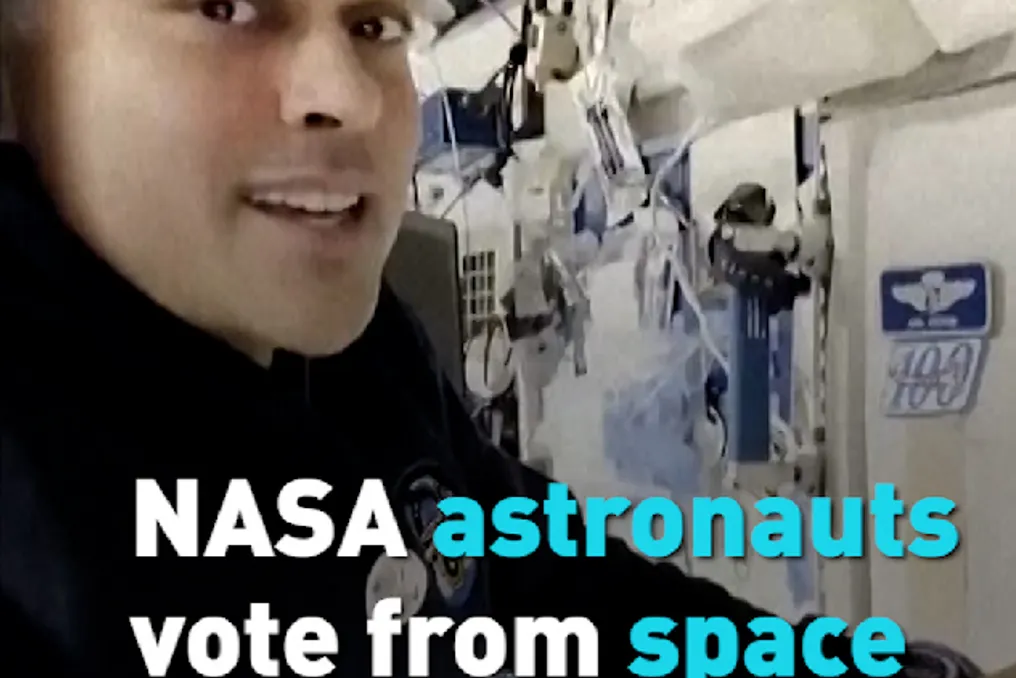
In the United States, the population held midterm elections on Tuesday, November 3rd, contesting governorships in certain states, seats in the Senate, and in the House of Representatives. American citizens over 18 who reside outside the US have the right to vote, able to receive the ballot by email, fax, or download it online. This right has been extended since 1997 to all citizens, including those who are off Earth.
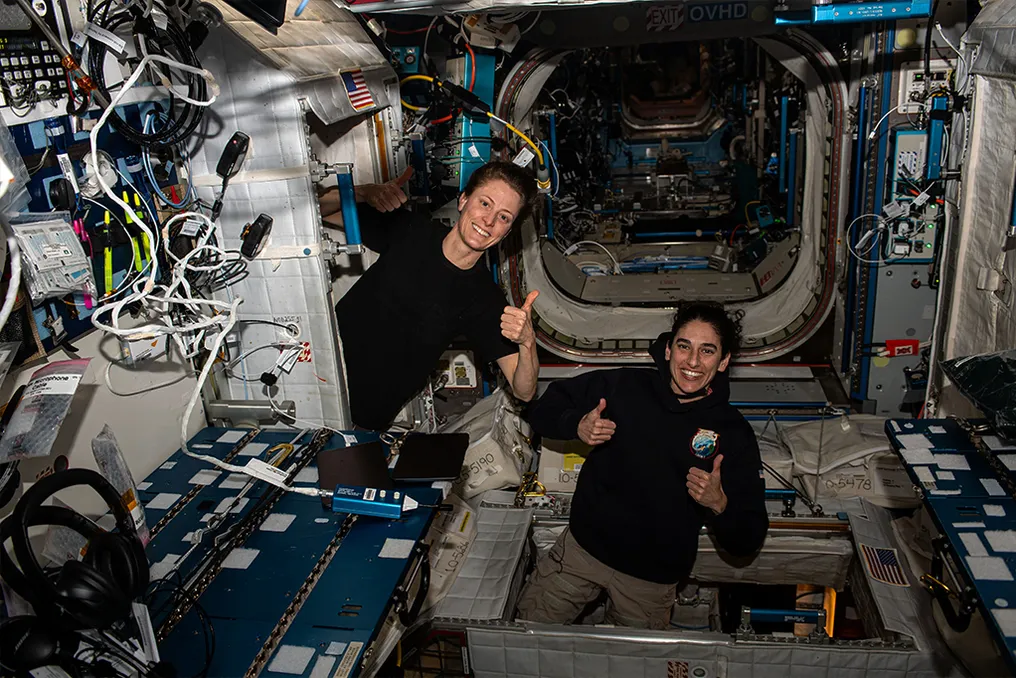
NASA astronauts, like other citizens, can exercise their vote. Recently, American astronauts aboard the International Space Station (ISS) voted remotely. Although voting is not mandatory in the US, the procedure for them differs from the usual one, given that, besides voting in microgravity, they cannot submit their ballots through local mail.
The process begins with a request for absentee ballots, intended for voters who are not at their polling place. After receiving the documents, the astronauts fill them out electronically on an ISS computer and transmit them to Earth. This transmission occurs via a NASA satellite system, which ensures communication between the astronauts and ground teams.
The votes arrive at a NASA antenna located in the state of New Mexico. Subsequently, they are directed to the Johnson Space Center, NASA's main training center, located in Texas. Most voters reside in Texas because that is where they establish legal residency to work near the space agency.
From there, the ballots are sent electronically to each astronaut's electoral county. The file containing the votes is encrypted, ensuring that only the corresponding astronaut and electoral county can access it. This week, astronauts Jessica Watkins, Luke Delaney, and Anil Menon participated in the vote. The article also features photos of Loral O’Hara and Jasmin Moghbeli voting in 2024 and a NASA diagram detailing the electoral process.