Photograph of thousands of satellites in the New Zealand sky mistakenly taken as AI-generated image
Read more
Olhar Digital
olhardigital.com.br

Photograph of thousands of satellites in the New Zealand sky mistakenly taken as AI-generated image

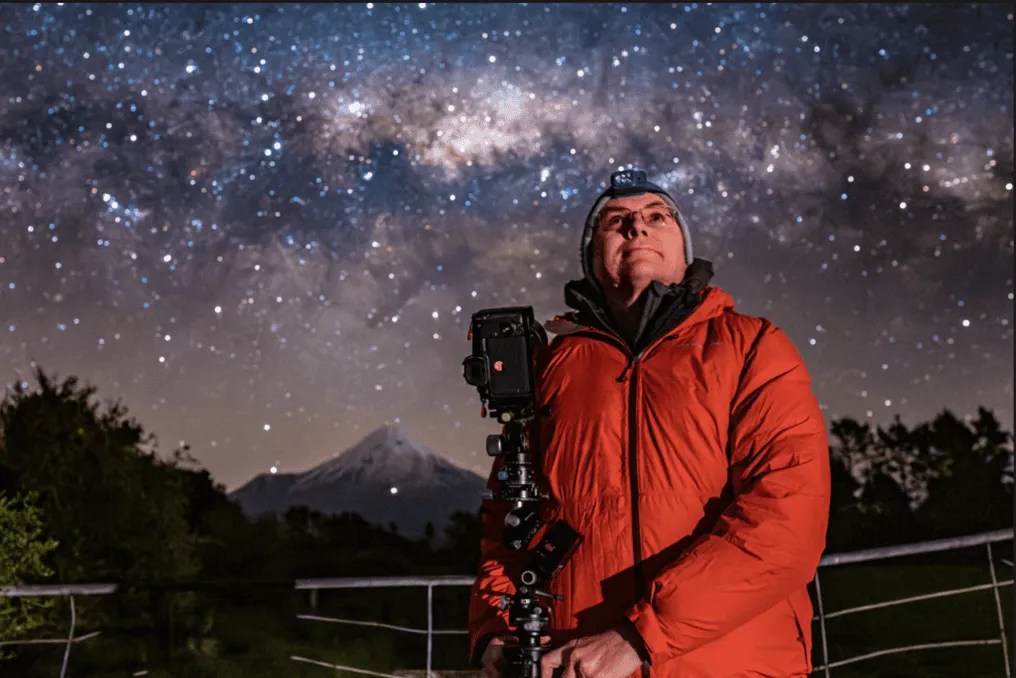
A stunning photograph of the New Zealand night sky caused a huge stir on social media. The image shows hundreds of light trails crossing the horizon, attracting so much attention that some users accused the author of using artificial intelligence (AI) to create the picture.

The author of this shot is Brendan Larsen, a 51-year-old astrophotographer who took the photos over Mount Taranaki in New Zealand. Despite the suspicions, the image is the result of real photography, which required careful planning, hundreds of shots, and significant time for post-processing.

Larsen took 578 photographs in about two hours. Each shot had an eight-second exposure. He then combined all the images into a composition, which took about 40 hours to finish in Photoshop.

The result is a photograph depicting approximately 1.4 thousand satellites and 14 thousand light trails, demonstrating the number of artificial objects passing through the night sky.

Similar stories

Rocket Lab launched Japanese satellite with radar capable of observing Earth through clouds
Read more
olhardigital.com.br

Rocket Lab launched Japanese satellite with radar capable of observing Earth through clouds

The aerospace company Rocket Lab conducted the launch of an Electron rocket on Monday (2), which carried a Japanese Earth observation satellite into space. This equipment, created by the company iQPS, uses radar technology that allows monitoring of the Earth's surface regardless of whether it is night or if there is cloud cover.

The mission, named The Sea God Surveys, began its takeoff at 1:41 PM, Brasília time, departing from the Rocket Lab base located in New Zealand. The satellite will be placed in low Earth orbit at an approximate altitude of 575 kilometers.

This launch constituted the ninety-ninth (99th) mission of Rocket Lab since the beginning of its activities. Additionally, it was the tenth flight executed by the company in collaboration with iQPS, which aims to establish a constellation composed of 36 satellites equipped with synthetic aperture radars (SAR).

The flight also represents a significant milestone for Rocket Lab, being the company's 99th mission and the 90th performed by the Electron rocket in its two-stage configuration. The vehicle is about 18 meters high and was specifically designed to carry small satellites into space on dedicated launches. With this launch, the Electron reached 17 flights conducted in the year 2026.

The other nine missions of Rocket Lab were conducted using HASTE, which is the suborbital version of the Electron and serves to test technologies in hypersonic flight scenarios. This model debuted in June 2023 and generally carries classified payloads.

Astronomical images of the week highlight the Orion Nebula and the Tarantula Nebula
Read more
olhardigital.com.br

Astronomical images of the week highlight the Orion Nebula and the Tarantula Nebula

The Olhar Espacial program showcases two notable astronomical images weekly. Last week, two photographs produced during the 13th Paraiban Astrophotography Meeting were presented.

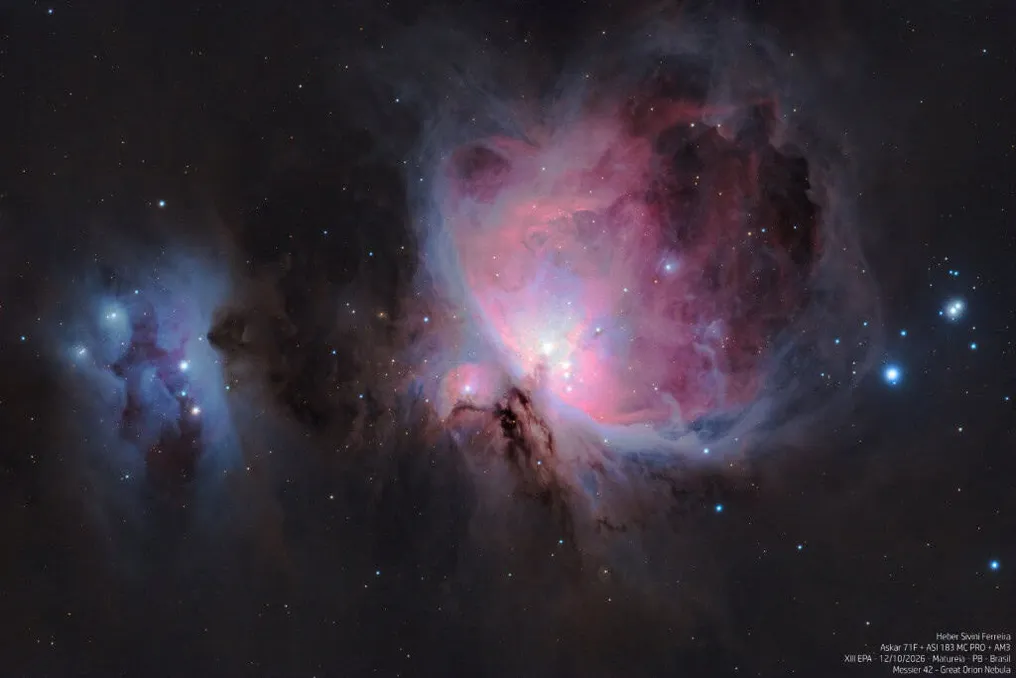
The first image is an impressive record of M42, also known as the Orion Nebula. This nebular formation is located approximately 1600 light-years away, in the direction of the Orion Constellation. Stellar winds played a part in these clouds, ionizing the hydrogen and giving it a reddish hue. The bluish areas around it reflect light, coming mainly from four young and hot stars located in the center, known as the Orion Trapezium. To the left, separated by a thick cloud of stellar dust, there is another nebula with a unique shape, called the Running Man Nebula.

The second image presents a magnificent record of the NGC 2070 nebula, nicknamed the Tarantula Nebula. This is considered the largest and most voluminous area of star formation in the vicinity of the Milky Way. Although it is about 160 thousand light-years away, it ranks among the brightest objects in the night sky. If it were close like the Orion Nebula, its extent would be equivalent to sixty full moons, and its brightness would be enough to cast shadows at night. Most of the energy that illuminates and energizes the gaseous clouds of the Tarantula comes from a central cluster composed of young and extremely hot stars.

Photographer captures 'sea of clouds' in Serra Gaúcha, image goes viral
Read more
g1.globo.com

Photographer captures 'sea of clouds' in Serra Gaúcha, image goes viral

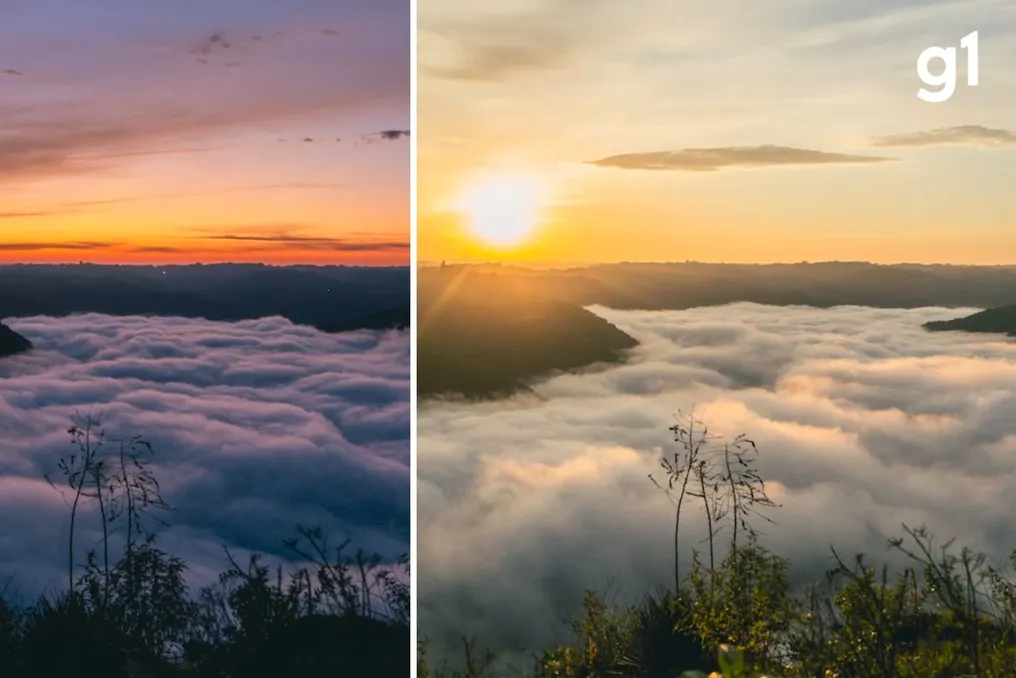
The photographer managed to capture the sunrise amidst a 'sea of clouds' at an altitude of 715 meters above sea level. This shot quickly spread across social media, exceeding 1.7 million views. The recording was made by Rafael Santos in Pico Monte Claro, Veranópolis, in the Serra Gaúcha region, early on Wednesday (the 21st).

According to data from the meteorological service Climatempo Meteorologia, this phenomenon is fog caused by nocturnal cooling and high humidity. The photographer noted that the transition from stars to dawn, along with the movement of the cloud sea, allows one to perceive nature in a way that human eyes usually cannot.

Santos, who lives in Novo Hamburgo, in the city of Porto Alegre, traveled about 130 kilometers to the shooting location, where he camped with his fiancée to take the pictures. He believes that the current season is favorable for observing this phenomenon.

Around 2 AM, he started photographing the stars, but the weather conditions turned out to be unsuitable. Therefore, he decided to set up the equipment to record the sunrise. He used time-lapse technique, where the camera takes hundreds of shots at set intervals and then combines them into a sequence, creating the effect of accelerated time flow.

Santos shared that he conducted several test runs, connecting the camera to the campsite outlet, and then moved to another location. After about 5 hours and 20 minutes, he checked the result and watched the sunrise live. The total time spent collecting material for the video was 3 hours and 30 minutes.

Although he works in corporate and advertising photography and audiovisual production, nature photography is his passion. He shared his travel experiences, mentioning that he photographed the aurora borealis in Iceland, the night sky in the Atacama Desert in Chile, and also took pictures in Argentine Patagonia. However, he emphasized that every place is unique because it heavily depends on natural conditions.

The photographer expressed great satisfaction with the result and even more so with the reaction to the video. He mentioned that he wanted to share the beauty of Rio Grande do Sul. He was very pleased to see people commenting, sharing, and admiring the video.
Popular