Mercedes will adopt purple overalls in São Paulo in collaboration with Nubank
Read more
AutoPapo
autopapo.com.br

Mercedes will adopt purple overalls in São Paulo in collaboration with Nubank

Mercedes will make an alteration to its traditional color palette, incorporating Nubank's purple, the team's sponsor, into the uniforms of George Russell and Kimi Antonelli during the Formula 1 São Paulo Grand Prix. This event will take place from Friday (6) to Sunday (8) at the Interlagos circuit.

The new suits were revealed this Tuesday (3) at an event held by the bank at Nubank Park, located at the Palmeiras stadium, formerly known as Allianz Parque, in the city of São Paulo.

The design of the overalls was created by Mercedes itself, and according to both companies, it pays homage to the 1980s and 1990s. This period is notable for being when Nelson Piquet and Ayrton Senna won their titles in F1; Piquet was champion in 1981, 1983, and 1987, while Senna won titles in 1988, 1990, and 1991.

The overalls feature a dark purple base complemented by details in a lighter shade. The presentation was accompanied by a short film featuring the two drivers, narrated by actor Gabriel Leone, who played Ayrton Senna in the Netflix series titled Senna. The soundtrack used was the 'Victory Theme,' music that was broadcast by TV Globo during Brazilian victories in F1.

Antonelli shows great admiration for Senna, paying tribute to the Brazilian driver by using the number 12 on his uniform. The Italian driver arrives at Interlagos as a champion, having secured the 2026 title on Sunday (1st), after finishing third in the Mexico City GP, with only four races left until the end of the championship. At just 20 years old, he becomes the youngest champion in the category's history.

This is the second time this season that Mercedes has replaced its usual colors with purple in the overalls. The first change occurred at the Miami GP in May, when three distinct models were presented, one for each day of the event, and Antonelli won that race.

The Interlagos circuit also holds important milestones in the careers of both competitors. It was there that Russell achieved his first F1 victory in 2022, and where Antonelli, by finishing second last year, set a new points record for a rookie driver in a season.

Similar stories

Used Audi A3 Sedan: 10 Facts About the Model Produced in Brazil
Read more
autopapo.com.br

Used Audi A3 Sedan: 10 Facts About the Model Produced in Brazil

Inovar-Auto, a governmental sectoral program launched in the early 2010s, introduced specific features to the Brazilian market, allowing luxury brands like Audi to begin local vehicle assembly, including the A3 Sedan.

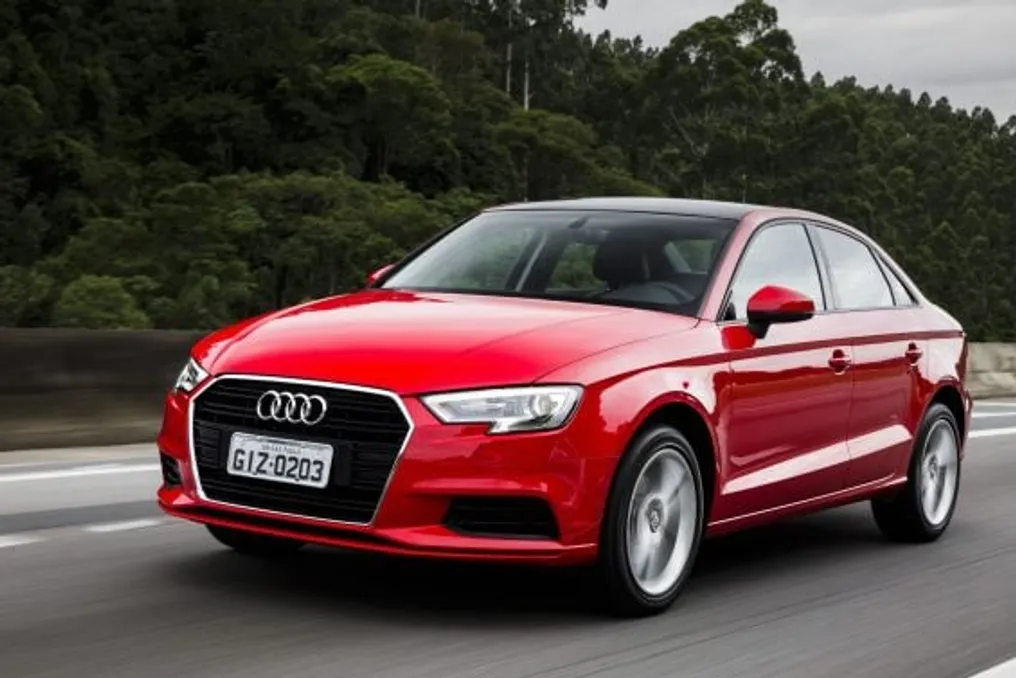
The German manufacturer resumed its activities at the plant shared with Volkswagen in Paraná after an operational period between 1999 and 2006. This time, Audi focused on producing the A3 Sedan. Although the model received adaptations for national manufacturing, it preserved the refined dynamics, robust performance, and luxury characteristic of the German brand.

Model History and Evolution

The third generation of the Audi A3 was responsible for introducing the Sedan version. This model was presented globally at the New York Auto Show in 2013 and arrived in Brazil in January 2014, initially imported from Hungary. Initially, the car used the 1.8 TFSi engine with 180 hp. Later, an entry-level version appeared with a 122 hp gasoline TFSI 1.4 engine, which became flex with the national assembly line in 2015.

The Audi A3 Sedan also offered a more powerful option, the 2.0 with 220 hp, and underwent an aesthetic redesign in 2017. In 2019, a special 25th Anniversary edition was launched, limited to 600 units, celebrating the brand's anniversary in Latin America. This first generation of the sedan ended its production in 2020.

The relaunch of the A3 Sedan marked the reopening of the Audi assembly line in São José dos Pinhais, Paraná, all under the umbrella of Inovar-Auto, which offered tax incentives for local production. Other manufacturers benefited from this program included BMW in Araquari (SC), Mercedes-Benz in Iracemápolis (SP), and Jaguar Land Rover in Itatiaia (RJ).

It is worth noting that the factory used by Audi had been inaugurated in 1998 to produce the Volkswagen Golf IV, and from 1999 to 2005, it manufactured the first generation of the A3 Sportback. At this Paraná unit, besides the A3 Sedan, the Q3 was also produced. The unit's operations were suspended in December 2020 because the manufacturer alleged a lack of definition regarding accumulated IPI credits that were not fully returned.

Currently, the unit operates under the SKD regime for the assembly of the Q3, a process where the vehicle arrives almost complete, and only the joining of the body with the chassis occurs at the plant.

Brazilian Adaptations and Mechanical Changes

Upon receiving the Brazilian passport in 2015, the Audi A3 Sedan underwent several adaptations, some mechanical aspects being simplified to reduce production costs. A notable change occurred in the rear suspension: Audi replaced the independent multi-link system with a torsion beam, a configuration common in mid-size sedans from generalist brands of that era.

Another significant change was in the transmission system. The S tronic automated gearbox, known for its seven-speed dual-clutch system, was replaced by a six-speed Tiptronic automatic gearbox with a torque converter. In compensation, the Audi A3 Sedan gained a considerable increase in power. The 1.4 TFSI engine, which originally delivered 122 hp, was adapted to be flex, received variable exhaust valve control, and began generating 150 hp.

An important difference in the A3 Sedan manufactured in Paraná is the vehicle height. To suit the local asphalt standard, the suspension was raised by 1.5 cm compared to the imported model.

Performance and Finish

Analyzing specifically the 1.4 flex model, despite the transmission changes, the 150 hp from the EA211 family turbocharged direct injection engine provide a satisfactory level of driving pleasure. Accelerations are agile, and the Tiptronic gearbox, although less sophisticated than the S tronic, delivers a 0 to 100 km/h time of 8.8 seconds, according to the manufacturer.

On highways, the Audi A3 Sedan demonstrates good evolution, quickly reaching the permitted 100 km/h. For overtaking, 25.5 kgfm are available between 1,500 and 4,000 rpm, and the turbo acts quickly to overtake other vehicles.

German engineering is evident in the solid construction of the sedan, which maintains firmness in sharp curves and high-speed sections. The steering is described as precise and firm, giving the sensation that the car is firmly planted on the ground. The torsion beam suspension in the Brazilian model has a softer calibration, without compromising the stability or dynamics of the vehicle.

Inside, the A3 Sedan manufactured in Brazil maintains the brand's identity. The dashboard features injected foam with a pleasant touch surface, and the door and column coverings with fabrics also stand out, as does the smooth finish of the glove box. The front seats offer good density and quality material, although they are not extremely enveloping. The analog instrument cluster is considered classic and easy to view, with the steering wheel being the only element that could have a smaller diameter.

The rear space comfortably accommodates two adults and one child. The softer suspension compared to the Hungarian example reflects internal imperfections more, but without being a serious problem. The acoustic insulation is efficient, and the trunk offers 425 liters, a suitable volume for mid-size sedans.

2016 Ambiente Version and Equipment

Considering the 2016 Audi A3 Ambiente 1.4 TFSi, already adapted to the Brazilian market, it includes six airbags, stability control systems, traction and hill start control, reverse sensor, xenon headlights, daytime running lights, and Isofix. Additionally, the sedan has air conditioning, electric window controls, electronic parking brake, rain and dusk sensors, start-stop system, steering wheel with height and depth adjustments, and multimedia center with CD and memory card reader.

However, this transition to the Ambiente model simplified some features. The air conditioning was no longer automatic, the seats changed from leather to fabric upholstery, and the multimedia center does not have Bluetooth. Higher packages, however, included ADAS technologies, such as adaptive cruise control, frontal collision warnings, and lane departure warnings, as well as emergency automatic braking. Other optional extras available were a rearview camera, front parking sensors, semi-automatic parking assistant, leather trim, keyless entry, panoramic roof, native GPS, and DVD player.

When checking average prices for the 2016 Audi A3 Sedan Ambiente on KBB Brazil, it is important to remember that it is a luxury vehicle requiring specialized maintenance, and the trim and body parts tend to be more expensive. It is positive that the 1.4 flex engine is well-known and that the Tiptronic gearbox generally presents fewer problems than the S tronic. It is recommended to check the prices of specific components and the problems reported in discussion forums and on Reclame Aqui.

Chevrolet launches streetwear collection in partnership with brand BAW Clothing, inspired by racing overalls
Read more
autopapo.com.br

Chevrolet launches streetwear collection in partnership with brand BAW Clothing, inspired by racing overalls

Chevrolet has established a new collaboration with the São Paulo brand BAW Clothing, aiming to adapt the look of race tracks to everyday wear. The collection, named BAW Racing by Chevrolet Motorsports, features nine items with a retro aesthetic inspired by competitions and is already available for purchase on the BAW website.

This is the second time the brands have joined forces; the first partnership occurred in 2025 and focused on reinterpreting elements of the Opala in accessories and clothing, celebrating GM's 100 years in Brazil.

Gustavo Aguiar, Marketing Director for General Motors South America, explained that the goal of this initiative is to create a closer connection between the brand and the consumer's lifestyle. The executive stated that the collection 'reflects all of Chevrolet's legacy in motorsports with a modern and bold touch.'

The designs were developed by BAW stylists in conjunction with Lucas Karra, the founder of the brand along with his brothers in 2014, in the Bom Retiro neighborhood, located in the central area of São Paulo. Highlights of the line include the jacket and twill pants, both adorned with embroidery and applications that evoke the pilots' attire when worn together.

Furthermore, the collection includes three unisex t-shirts—two of which are in an oversized model and two are babylooks—a cap, and a tote bag. According to Karra, the jacket has an unprecedented feature in the Brazilian market: the customer receives the piece in one way and can use it in another.

The collection's promotion includes an online game, developed in partnership with BrandsDecoded. In this game, the participant selects the desired driver and circuit, and upon finishing the race, obtains discount coupons to purchase the products. The drivers featured in the game are portrayed by presenters and guests of Podpah, a podcast hosted by Igão and Mítico.

The collection's presence will also be felt on the tracks through a temporary store (pop-up) that will accompany the final stages of the NASCAR Brasil and Stock Car seasons. This store will be present at the NASCAR Brasil stage in Brasília on November 28 and 29, and will conclude its journey at the Stock Car stage in São Paulo, between December 12 and 13.

Chevrolet begins releasing Google's Gemini in Portuguese for vehicles in Brazil
Read more
autopapo.com.br

Chevrolet begins releasing Google's Gemini in Portuguese for vehicles in Brazil

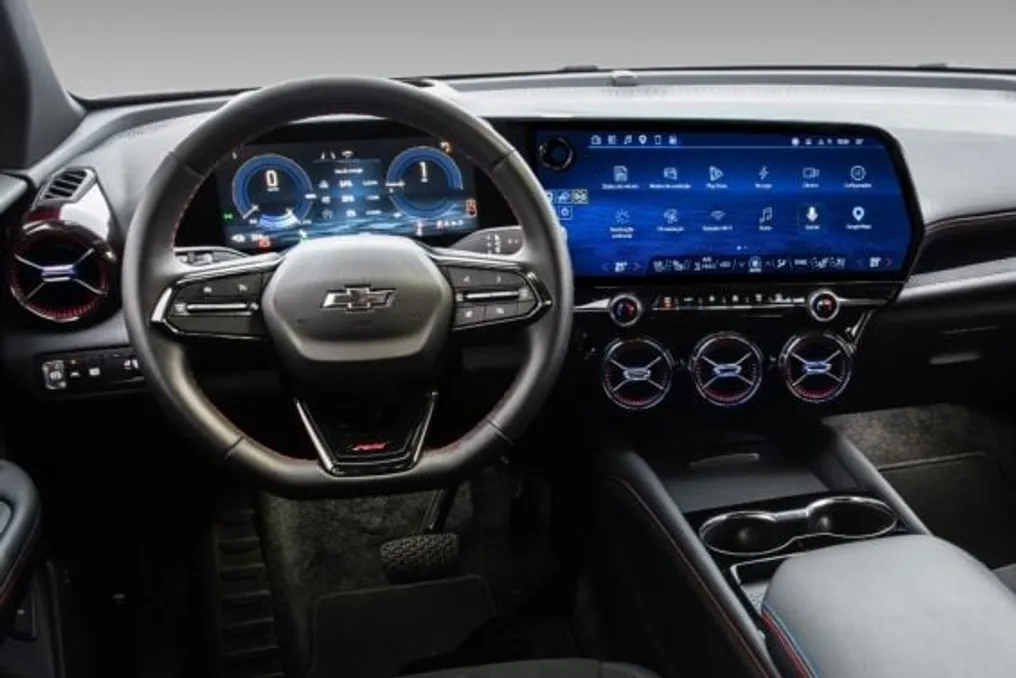
General Motors gradually began making Gemini, the artificial intelligence assistant developed by Google, available for Chevrolet vehicles in Brazil that have the integrated Google system, this Wednesday (28th).

Initially, the technology was launched in English in the United States in April, subsequently expanding to Spanish-speaking Latin American countries, and is now arriving to Brazilian drivers in Portuguese.

This system differs from conventional voice commands by understanding natural language and maintaining the conversation context across multiple interactions, eliminating the need for the driver to repeat the initial command.

In practice, Gemini allows actions such as adjusting the temperature by saying 'I'm cold' or activating the defroster by stating that the windshield is foggy. Additionally, it is possible to request suggestions for stops during the trip or search for music without knowing the exact title.

The assistant also has the ability to consult the owner's manual to clarify doubts about dashboard lights. In electric models, it provides information about battery range to the destination and plans routes with access to charging points.

Through Gemini Live, activated by the phrase 'Hey Google, let's chat,' drivers and passengers can maintain a continuous dialogue to organize itineraries. Users have the option to return to the traditional Google Assistant through the settings menu.

This update is available for Chevrolet Blazer EV, Equinox EV, Equinox Turbo, and Silverado models manufactured from 2024 onwards, distributed via the Google Play store.

For the functionality to be activated, the vehicle must run Android 11 or a higher version, possess native internet connectivity, have a Google account linked to the multimedia center, and an active OnStar plan, which is Chevrolet's safety and connectivity service.

In models planned for 2027, Gemini will be offered free of charge with the OnStar Basics package. However, for 2026 models and earlier years, the service subscription remains a paid requirement.

Access to the assistant can be made via voice command, using the button located on the steering wheel or by tapping the icon displayed on the central screen, which reduces the need for the driver to navigate through various menus while driving.

Popular