Firefox tests Mini Window feature that allows displaying tabs over other windows
Read more
Tecnoblog
tecnoblog.net

Firefox tests Mini Window feature that allows displaying tabs over other windows

Mozilla is testing a new feature in Firefox called Mini Window, which allows keeping a browser tab visible over other open windows, addressing a common user need.

Although it is not yet an official feature, Mini Window already demonstrates good functionality. Initially, it resembles picture-in-picture (PiP) mode, but differs because PiP restricts the floating feature to specific elements, such as video players, while Mini Window applies this behavior to any tab, regardless of its content.

When this function is active, the tab displays only the webpage. However, when the mouse cursor hovers over the top of the window, the address bar and navigation buttons are displayed.

This new feature offers several practical uses. For example, it is possible to keep a YouTube video running in the Mini Window while the user performs other tasks on the computer, or use it to compare information in a spreadsheet opened in full screen without constantly switching between windows.

Other interesting details include Mini Window's support for private tabs and the possibility of selecting only a part of a page—such as a piece of text or a graph—to be displayed in it. Furthermore, the user can reposition the tab anywhere on the screen and adjust its size simply by dragging the mouse.

Currently, Mini Window is only available in Firefox Nightly, which is the experimental version of the browser and can be downloaded. To test the novelty, it is necessary to install or update to version 160 or higher of Firefox Nightly. The feature is enabled by default.

To activate the function, simply open a webpage, right-click on the tab, and select the option 'Move Tab / Move to Mini Window'. To return the tab to its original size, you must click the icon that appears next to the window's close 'X'.

If the user prefers to wait for the official release, Mini Window is scheduled to be part of Firefox 160 (final version), whose launch is scheduled for November 10.

Similar stories

PS5 Unlock Transforms Console into Linux Machine Capable of Running PC Games
Read more
tecnoblog.net

PS5 Unlock Transforms Console into Linux Machine Capable of Running PC Games

An unofficial project has managed to convert an unlocked PlayStation 5 into a Linux-based device focused on gaming. This system, named PS5 Bazzite Deck, integrates the Bazzite distribution onto the Sony console, featuring the Steam Gaming Mode interface. This initiative marks significant progress compared to earlier attempts to run Linux on video games.

The main goal of the project is to make the console resemble a true 'Steam Machine,' allowing access to the vast library of PC games. The adaptation involves taking the version of Bazzite intended for portable consoles and applying it to the PlayStation 5. Furthermore, users have the option to switch to a full desktop environment using KDE Plasma.

It is important to note that this solution does not correspond to Valve's official SteamOS. Bazzite is an independent Linux distribution that provides a similar experience, utilizing technologies such as Proton to run titles developed for Windows. The operating system boots from external storage, such as an SSD or USB drive, and does not replace the native software provided by Sony; without loading Linux, the PS5 reverts to its original operation.

A demonstration published on YouTube showed the console running the game Forza Horizon 6. This feat is notable because the title, currently available for Xbox Series X/S and PC, is only scheduled for official release on PS5 in January 2027. In addition to this, users have already managed to run other games such as Horizon Zero Dawn, Palworld, Genshin Impact, RimWorld, and XCOM 2.

The project creator informed Reddit that essential functionalities such as Wi-Fi, Bluetooth, Ethernet, and the DualSense controller are operational in Bazzite. Additionally, audio via HDMI and hardware video acceleration have also been implemented.

On consoles equipped with the FLAVA3 HDMI chip, the project supports resolutions of 1440p and 4K with refresh rates up to 120 Hz, along with features like HDR and VRR. Older versions of the console may have restrictions, being limited to 4K at 60 Hz.

Both the original and Slim PS5 have physically 40 Compute Units (CUs) in their GPU, although Sony markets the device with only 36 active CUs. The project allows attempting to activate the remaining four CUs. However, this implies an increase in the number of active CUs but does not guarantee performance improvement and may cause instability.

The project itself warns that this activation may result in green dots, color shifts, graphical artifacts, and crashes. If problems occur, there is the possibility of reverting to the default configuration. To use this system, it is essential to have a console with compatible firmware and access to a jailbreak method. The landscape of PS5 unlocking has evolved rapidly in recent months, with the emergence of new exploits and tools suitable for various system versions.

Finally, it should be noted that the first boot process may take several minutes, and updates released by Sony can modify the system's operation. Support for the PS5 Pro was added to Bazzite starting from version 1.8.4, but the developer still considers this support preliminary.

Microsoft's PowerToys 0.102 adds features to facilitate mouse usage in Windows
Read more
tecnoblog.net

Microsoft's PowerToys 0.102 adds features to facilitate mouse usage in Windows

Microsoft continues to update its suite of tools known as the 'Swiss Army knife' for Windows. The latest version, PowerToys 0.102, introduces two new and relevant utilities focused on mouse functionality.

One of these features is called Mouse Button Lock. When activated, this utility allows the user to press one of the mouse buttons for a very brief period, but the Windows operating system interprets that the button remains continuously pressed.

This enables tasks that require a mouse button to be held down for a long time, such as selecting text, moving files, or resizing elements, all without causing fatigue. This feature can also be beneficial for people with motor difficulties.

Mouse Button Lock can be applied to all mouse buttons (left, middle, and right). Additionally, the user has the option to configure the time required for the automatic lock to trigger. A new tap serves to instantly interrupt the lock.

The second mouse-related novelty is CursorHide. This function allows the mouse pointer (arrow) to be automatically hidden while typing, during periods of inactivity, or in both situations. As soon as the mouse is moved, the cursor reappears on the screen.

CursorHide can help the user prevent the cursor from covering important information or unintentionally distracting their focus.

Other additions in PowerToys 0.102 include the availability of the software on GitHub, where users should select the x64 version for Intel or AMD processors, and the ARM64 version for Arm chips. Users of previous versions may receive an update notification when starting the application.

Although the main focus is Windows 11, PowerToys 0.102 also supports Windows 10.

Startup to test satellite technology to illuminate Earth at night, sparking environmental debates
Read more
olhardigital.com.br

Startup to test satellite technology to illuminate Earth at night, sparking environmental debates

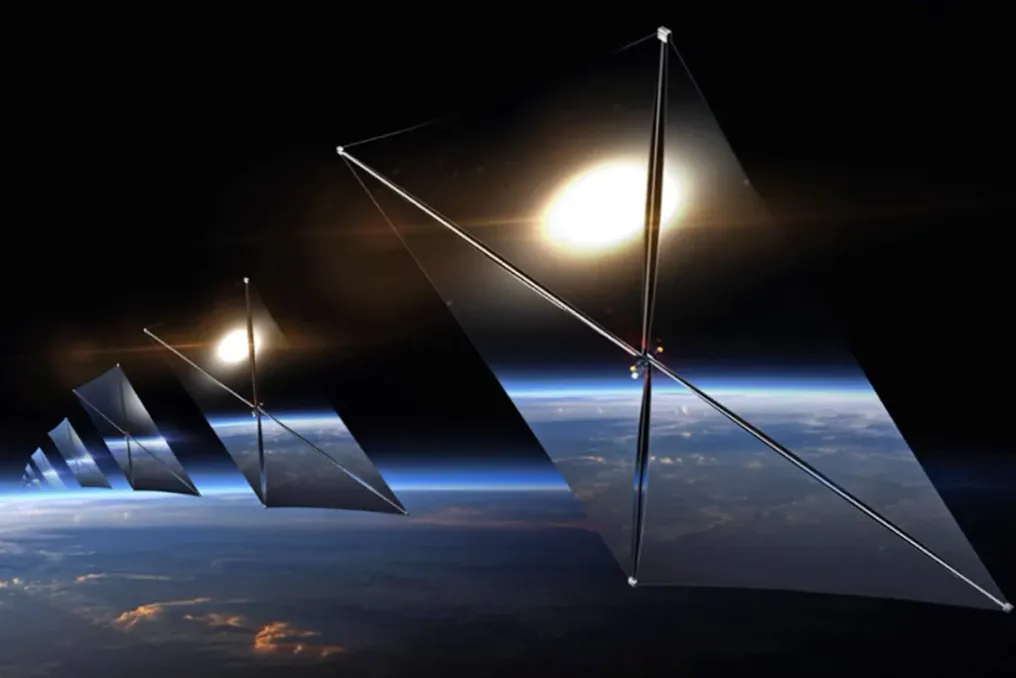
The American company Reflect Orbital plans to deploy thousands of satellites equipped with mirrors, designed to reflect sunlight onto the Earth when it is in the nighttime period. The goal of this innovation is to assist in rescue operations, provide illumination for agricultural crops, and enhance solar energy capture, although this proposal has raised concerns among scientists, environmental activists, and residents of California.

A trial conducted in the American state served as a demonstration of the project. This test impressed local inhabitants with an intense luminosity during the night, which reignited discussions about the impacts of artificial light on wildlife, human sleep patterns, and astronomical observation practices.

Reflect Orbital plans to place fifty thousand satellites into orbit over the next decade. In July, the U.S. Federal Communications Commission (FCC) approved the initial proposal for launching a demonstration satellite, the debut of which is scheduled for next year.

The equipment in question will feature a mirror approximately 18 meters in diameter, capable of reflecting sunlight onto areas that can reach up to 4.8 kilometers wide. The resulting light intensity can vary from a brightness comparable to the Moon to the clarity of the Sun at noon.

The experiment took place near Lone Pine, California, close to Mount Whitney. To simulate the technology's effect on the ground, the company set up large mobile reflectors. The unexpected brightness attracted the attention of residents, with one individual describing the light as 'blinding.'

According to the company itself, search and rescue teams will be the first users of the technology. A spokesperson confirmed that the demonstration was conducted in collaboration with a local team, stating: 'Search and rescue teams should be our first customers, so this was a real-condition test, conducted alongside the teams that would use our technology.'

In addition to the potential to improve nighttime lighting, the proposal raises concerns that go beyond the use of the technology in emergency scenarios. In August, four entities represented by the environmental collective Earthjustice requested that the FCC review its approval. These groups fear that the light reflected by the satellites could interfere with the natural rhythms of species that depend on the alternation between day and night.

Jan Hasselman, senior attorney for Earthjustice, expressed strong criticism of the undertaking, labeling it 'a stupid project.' He emphasized that all terrestrial life has evolved following the day-night cycle and pointed to various data demonstrating the dangers of disturbing this cycle.

Animals, including birds, insects, and mammals, use the alternation between darkness and light to feed, find shelter, and reproduce. Astronomers, meanwhile, fear that these reflections will intensify light pollution, hindering celestial observation. Other issues raised involve the increase of satellites in orbit and the consequent generation of space debris.

Human health was also included in the debate. Exposure to light at night can affect the circadian rhythm, which is responsible for regulating sleep and wakefulness. Additionally, looking directly at a very intense light source can cause eye damage.

Reflect Orbital argues that its technology can boost electricity production from solar panels at night, reducing dependence on fossil fuel sources. However, this idea raises questions about modifying the amount of solar energy reaching the Earth's surface.

David Ho, a climate scientist from the University of Hawaii, criticized the idea of directing more solar energy to Earth while the planet faces global warming, linking it to the energy imbalance caused by excessive greenhouse gases in the atmosphere.

The company assures that it has engaged in dialogue with scientists and astronomers to avoid sensitive areas, such as observatories, national parks, and regions vital for wildlife. It also states its willingness to accept oversight from authorities.

A spokesperson for Reflect Orbital stated: 'We believe it is our responsibility to work alongside governments, scientists, and regulatory bodies, rather than acting ahead of them.'


Popular