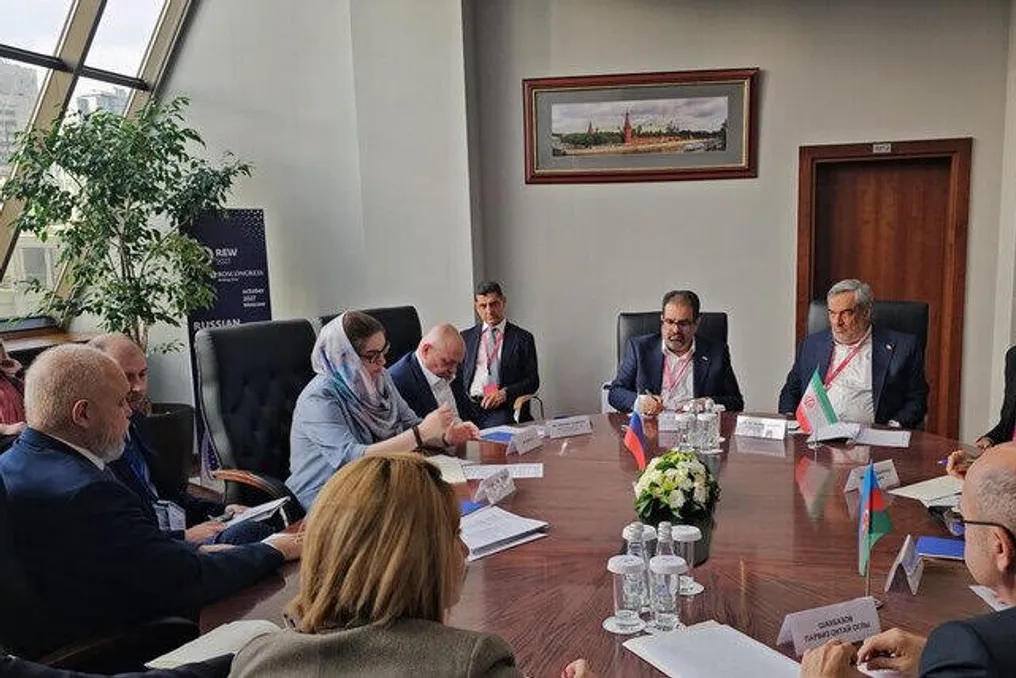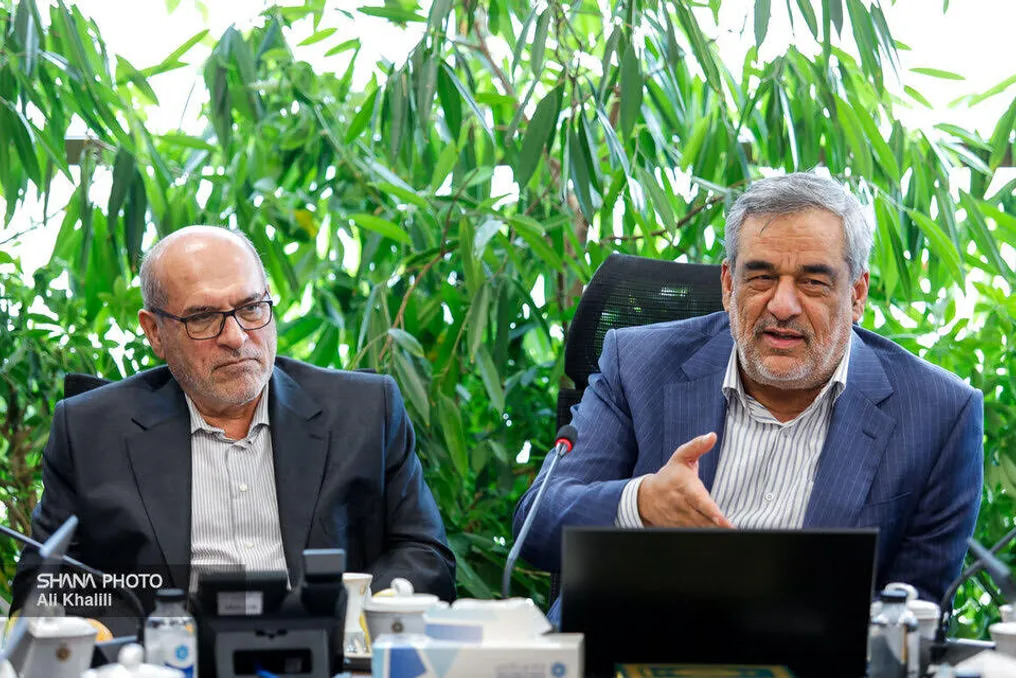
A consultative meeting was held on Tuesday dedicated to ensuring a stable supply of natural gas during the cold period, as well as discussing the challenges facing the energy sector and their impact on the country's economic and industrial activities. Participants included Hamid Bavard, Deputy Minister of Oil; Said Tavakoli, CEO of the National Iranian Gas Company; Mohammad Sadeghi Azimfar, CEO of the National Iranian Oil Refining and Distribution Company; as well as the President and members of the Tehran Chamber of Commerce and Industry, representing the mining and agricultural sectors.
According to SHANA, the main focus of the meeting was on how the private sector can contribute to solving the energy sector's problems, demand management, strengthening gas supplies, and participating in decision-making and regulatory processes.
The Acting Minister of Oil welcomed the involvement of specialized associations and private sector actors in policy development, future energy planning, and enhancing the country's energy diplomacy. He emphasized that private sector participation is necessary not only for project implementation but also for shaping vision, decision-making, and creating regulatory frameworks. Furthermore, he called for cooperation to strengthen interaction and advance national goals in energy diplomacy.
Bavard invited private sector representatives to present operational plans for energy consumption management, including innovative solutions and software, and stated that the Ministry of Oil welcomes any proposals for direct use of network gas in production and economic projects. He stressed that industries must participate in planning to reduce fuel consumption, as maintaining the country's energy sustainability requires joint efforts from all sectors. He noted that current circumstances are not normal, and energy issues cannot be viewed through the lens of the past.
He stated that all pillars of the country must cooperate to manage consumption, increase reserves, and ensure sustainable energy supply. The Minister of Oil reported that the ministry is making round-the-clock efforts to restore lost gas production capacity so that the country can return to its previous production levels as quickly as possible. Compensating for lost capacity requires effort and cooperation from all sectors, and besides measures within the Ministry of Oil, assistance from other bodies, industries, and the private sector is critically important to overcome the current situation.
Bavard also mentioned the need to correct some past decisions regarding energy management and stated that all available capacities should be used to reduce consumption, with numerous demand management programs and favorable fuel storage conditions on the agenda.
Highlighting readiness for the cold season, he noted that owners of major industries, especially in steel and energy-intensive industries, must participate in implementing saving projects and utilize their capacity to reduce consumption.
Said Tavakoli, CEO of the National Iranian Gas Company, highlighted the potential of the private sector in developing gas trading, noting that private companies can help diversify supply sources by entering the field of importing gas from neighboring countries. The National Iranian Gas Company is ready to support such companies and issue the necessary permits in accordance with current rules and mechanisms. He urged private sector participants to engage in optimization and gas trading projects, pointing out suitable legal and economic opportunities for ESCO companies and gas import development. These opportunities must be realized with the participation of qualified structures and investors to strengthen the country's energy security and gas supply sustainability.
Regarding the latest status of gas production and supply, Tavakoli reported that prior to recent incidents, the country faced a daily deficit of 250–300 million cubic meters of gas during the cold days of the year. However, due to enemy attacks, 230 million cubic meters of the country's gas production capacity were lost. Immediately after the incident, meetings on integrated management were held at the Ministry of Oil to restore damaged capacities. Thanks to the round-the-clock efforts of colleagues, about 40 percent of the lost capacity has already returned to operation, and part of the gas condensate production capacity has been restored. He noted that about 130 million cubic meters of lost capacity remain non-operational due to equipment damage and upstream processing units, and their restoration will require time and specialized equipment. Despite the scale of the damage, the stability of the country's gas network was maintained, and even in the first hours after the attack, the network did not face widespread disruptions. This demonstrated the efforts and coordination of all participants in the gas supply chain, from extraction to the end consumer.
He also mentioned damage to gas network facilities during the third declared war, particularly at pressure reduction stations and gas distribution facilities, and reported that the gas network remained stable in various regions, with emergency measures taken in cases like Marivan and Kamyaran to stabilize the network. Despite the 130 million cubic meter reduction in production capacity, no restrictions on gas supply to the country's industrial and production facilities have been imposed so far, which is a result of integrated energy management and cooperation between responsible bodies.
Tavakoli emphasized the importance of consumption management and prioritizing gas use for the upcoming winter. He noted that the current year presents exceptional conditions for energy supply, and all structures and stakeholders must plan for the winter based on realistic data and figures. Given that gas accounts for approximately 73 percent of the country's energy balance, he stated that the wide dependence of various sectors—from industry and power plants to residential areas and remote regions—has doubled the need for attention to network stability. He clarified that, contrary to public opinion, gas network stability is not a constant problem but is constantly affected by changes in production conditions, consumption, and air temperature. If the cold regime of 1403 repeats and prolonged cold periods continue, gas consumption in the residential and commercial sectors could exceed 600 million cubic meters per day. Therefore, planning for consumption management and maintaining fuel reserves must begin now.
He also discussed measures taken to develop energy service companies, noting that the implementation of legal provisions of Article 46 of the Seventh Development Plan Law and the Cabinet resolution in 1404 created a suitable opportunity for the private sector to enter consumption optimization and help stabilize industrial gas supply. He also considers reviewing gas tariffs after 14 years as one measure. Energy intensity analysis in Iran shows that, unlike many countries, the country's energy consumption has shown an upward trend over the last two decades. A significant reason for this is the aging of heating and cooling systems, as well as non-compliance with building optimization standards. He stressed that high energy consumption is not limited only to high-income populations. In many buildings lacking proper insulation and modern equipment, especially among middle and lower-income populations, energy intensity is high, and measures must be taken to reduce consumption by modernizing equipment and improving construction standards.
Referring to initial results from implementing gas consumption optimization projects, he reported that in one project implemented in Isfahan province, replacing brick furnaces with new technology led to a reduction in gas consumption per ton of brick from approximately 300 cubic meters to 27.4 cubic meters. There are also significant opportunities for reducing consumption in animal husbandry and poultry farming, and energy service companies can decrease gas consumption and strengthen production stability through equipment modernization and process optimization.
He also mentioned measures to ensure alternative fuel in some areas, noting that in the provinces of Gilan and Mazandaran, some bakeries were able to use secondary fuel so that their production and services would not stop in case of potential gas restrictions.
Mahmoud Najafi Arab, President of the Tehran Chamber of Commerce and Industry, emphasized the need to utilize the private sector's potential in managing energy imbalance and called for expanding fuel storage, gas supply, and private sector participation in oil field development. He stated that the private sector is ready to cooperate with the Ministry of Oil on consumption management, energy supply, and overcoming upcoming crises. Stressing the need for energy consumption control, he added that the potential of private sector associations should be used to propose solutions such as optimizing gas heater consumption and managing household consumption. Naturally, the implementation of these programs must take into account the economic interests of the private sector, as projects without economic justification cannot continue or be effectively implemented.
He also pointed to the need for energy consumption management in commercial and retail centers and suggested revising consumption models and operating hours of shopping malls, drawing on the experience of other countries. Najafi Arab noted that the residential sector accounts for the largest share of gas consumption and stressed the need for serious attention to reforming the consumption model in this sector. To overcome current conditions, it is necessary to achieve the use of alternative fuels in cooperation with relevant authorities. Furthermore, companies and industrial enterprises should start replenishing liquid fuel reserves right now and not postpone fuel supply until a crisis occurs.
He emphasized the need to study gas import solutions and proposed holding joint meetings between the Ministry of Oil and the private sector to examine the possibility of gas imports or using other energy sources so that the country faces minimal curtailments in the cold season. Pointing to the importance of stable energy supply in the north of the country, he added that the provinces of Mazandaran, Gilan, and Gilan play an important role in protein production, so the stable energy supply of these regions must be seriously considered in planning. Najafi Arab also mentioned the potential for private sector participation in oil and gas field development and stated that groundwork must be laid for the effective presence of the private sector in field development and operation projects. To this end, it is necessary to study and eliminate barriers to competition and participation of private and state companies in tenders so that the investment potential and technical capability of the private sector can be utilized in line with national interests.
At the meeting, some representatives of the Tehran Chamber of Commerce and Industry also presented their views on private sector cooperation with the oil industry, demand management in the energy sector, fuel supply to certain enterprises, including Snap and Tapsi, and the need to develop the compressed natural gas (CNG) industry.