ShareChat plans IPO in late 2027 driven by profitability growth from microdramas
Read more
Business Standard
business-standard.com

ShareChat plans IPO in late 2027 driven by profitability growth from microdramas

ShareChat, owned by Mohalla Tech, is considering an Initial Public Offering (IPO) in late 2027 after achieving two consecutive quarters of positive EBITDA. The company's revenue growth and improved cash flows are largely linked to the microdrama format.

ShareChat, an Indian social media company that previously spent significant funds trying to compete with Instagram, is now generating cash. A major contributor to this has been the emergence of short-episode serial formats, lasting one to two minutes, which have become very popular among users in India over the past year.

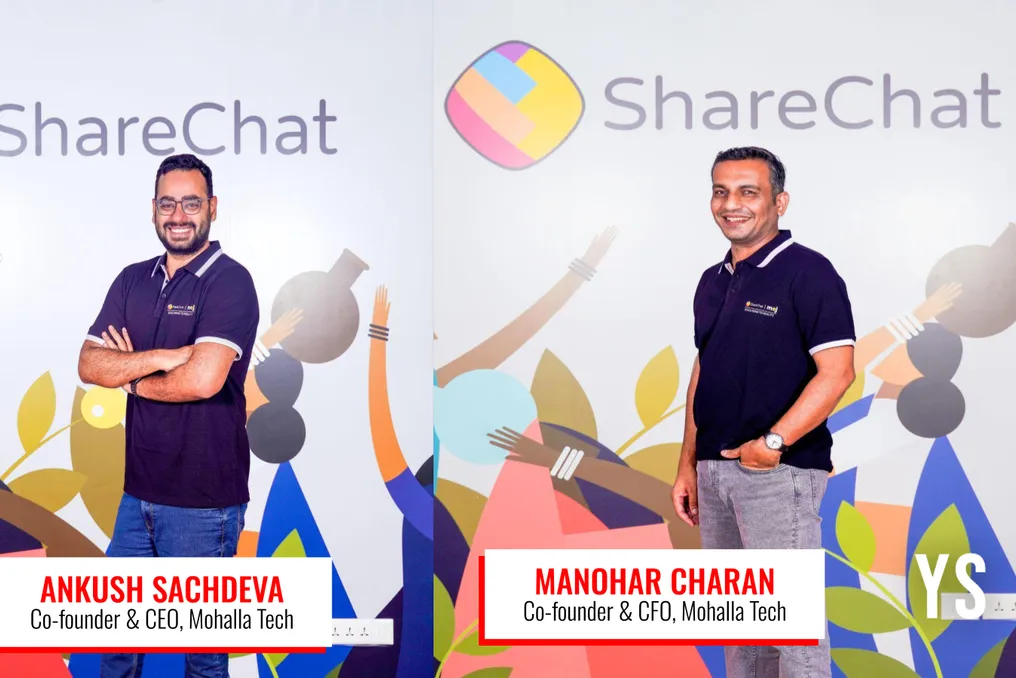
Mohalla Tech, the operator of ShareChat, the short-video app Moj, and the microdrama app QuickTV, announced on Wednesday that its operating revenue grew by 40 percent, reaching 1,016 crore rupees in fiscal year 2026, compared to 723 crore rupees in fiscal year 2025. According to co-founder and CFO Manohar Charan, the company is working on a listing and may consider going public between October and December 2027.

This timeline would be relevant if the company files based on the results of fiscal year 2027, after achieving full profitability within one fiscal year and demonstrating six consecutive quarters of positive cash flow by March 2027. The company also stated that growth accelerated in fiscal year 2027, reaching an Annual Recurring Revenue (ARR) of over 1,500 crore rupees by the end of the first half.

Mohalla Tech became EBITDA positive in the first quarter of fiscal year 2027 and showed two consecutive quarters of positive EBITDA in the first half of fiscal year 2027, while also recording four consecutive quarters of positive cash flow. The company expects to finish fiscal year 2027 as its 'first fully profitable year,' with EBITDA close to 25 crore rupees. Co-founder and CEO Ankush Sachdeva noted that the growth is funded exclusively by internal cash flows.

Charan emphasized that 'microdrama has proven to be a powerful growth driver.' Since about 70 percent of India's internet users are outside urban areas, companies need to reach smaller towns. He added that social media is a scale-based business where only three or four companies can survive, and competition with giants like Google or Meta in technology, reach, and capital is extremely difficult. Users can switch apps within an hour, so platforms need unique niches.

Over the years, ShareChat and Moj have managed to create this differentiation through a deep understanding of regional languages and culture, as well as by building a creator community from the Bharat region in second and third-tier cities. Microdramas have added a second and stronger differentiating factor.

According to Charan, when users watch serialized content, they do not necessarily shift attention away from short videos. Many users replace television viewing time with watching similar but vertical stories with cliffhangers on microdrama platforms. Thus, Moj, being a microdrama platform, competes with linear television and OTT platforms.

Charan noted that global social networks earn approximately 50 times more advertising revenue per user from the US than from an Indian user, with roughly similar cloud service costs. He also reported that Mohalla Tech's annual server cost per user is currently the lowest among all global social networks, surpassed only by Reddit, which previously held that spot. Moj provides users with 'three additional reasons' to stay in the app besides Instagram. Moj's user base has grown, and time spent in the app has doubled compared to last year, while ad revenue per user has doubled since May 2026.

In fiscal year 2026, adjusted EBITDA losses decreased by 58 percent, amounting to 91 crore rupees compared to 219 crore rupees. Microdramas, monetized through advertising and subscriptions, became a growth driver, adding a third major revenue stream alongside advertising and live streams. Subscriptions via QuickTV and Moj+ generated 293 crore rupees in the first full year.

Ad revenue grew by 40 percent year-over-year in the second quarter of fiscal year 2027 and is expected to continue accelerating during the festive season, supported by daily microdrama consumption, which grew 6.5 times over 12 months, exceeding 1 billion daily. Mohalla Tech competes with Instagram Reels and YouTube Shorts, as well as microdrama platforms such as Kuku TV, Story TV, JioHotstar, and DramaBox. Charan stated that unlike subscription-focused platforms that spend heavily on user acquisition, Moj can distribute microdramas among its more than 200 million monthly monetizable users, similar to how YouTube does with Shorts.

In August, Mohalla Tech allocated 100 crore rupees for AI-driven microdramas this year. Charan reported that producing content featuring actors costs around 20,000–25,000 rupees per minute, whereas AI has reduced this cost to 7,000–8,000 rupees, and these costs will continue to fall. He also noted that the consistency and coherence of AI-generated content improve monthly.

However, he also mentioned that users are willing to pay for exclusive content. Charan quoted the sentiment: 'We pay for a movie because it has Shah Rukh Khan, and this movie is unavailable on Netflix.' He warned that as supply increases and differentiation decreases due to AI, the incentive for subscriptions may weaken. Charan believes that advertising will form the basis of long-term profitability, citing China, where over 70 percent of microdrama revenue comes from advertising. He predicts that India will follow this example as the market matures.

Mohalla Tech also plans to create more AI-generated stories and non-Hindi content, as Hindi dominates. The company may consider small pilot projects in international markets if economically viable. Nevertheless, he cautioned that international markets will be approached very cautiously due to higher competition there.

Similar stories

Mohalla Tech reports 40% revenue growth for the 2026 fiscal year
Read more
yourstory.com

Mohalla Tech reports 40% revenue growth for the 2026 fiscal year

Mohalla Tech, the parent company of social media platforms ShareChat, Moj, and QuickTV, has reported significant revenue growth in the 2026 fiscal year. Revenue reached 1016 crore rupees, representing a 40% increase compared to 723 crore rupees recorded in the 2025 fiscal year.

The company's growth is driven by diversification into the micro-drama segment. These dramas are monetized through both advertising and subscriptions. This has created a third major source of income, supplementing existing streams of advertising and live streaming.

During the first full year, subscription revenue amounted to 293 crore rupees thanks to the QuickTV and Moj+ applications. Mohalla Tech also stated that its Annual Recurring Revenue (ARR) reached 1500 crore rupees in the first half of the 2027 fiscal year. The company forecasts that in the 2027 fiscal year, it will record net profit at EBITDA levels for the first time, amounting to nearly 25 crore rupees.

In the 2026 fiscal year, EBITDA losses decreased by 58%, totaling 91 crore rupees, compared to 219 crore rupees in the 2025 fiscal year. Furthermore, by the end of the first half of the 2027 fiscal year, the company noted four consecutive quarters of positive cash flow and two quarters of positive EBITDA.

Ankush Sachdeva, co-founder and CEO of Mohalla Tech, noted that after several years of strategic discipline, the company has entered a path to profitability. He added that the goal of establishing a sustainable core business was achieved a year ago, and the company is now generating cash and funding the next stage of growth solely from its own earnings.

Although the growth in the 2026 fiscal year was supported by subscription revenue, the advertising business is also regaining momentum. Ad revenue increased by 40% year-over-year in the second quarter of the 2027 fiscal year and is expected to grow even faster during the festive season.

According to company data, daily consumption of micro-dramas has grown 6.5 times over 12 months, exceeding one billion units daily. Manohar Charan, co-founder and CFO of Mohalla Tech, emphasized that the advertising business has received a significant boost in the last two quarters, with further growth anticipated in the upcoming festive months. He also noted continuous improvement in profit margins while maintaining a strong revenue growth trajectory.

The company also reported that free, ad-supported micro-dramas have expanded their advertiser base on both the ShareChat and Moj platforms.

Anthropic's Initial Public Offering could redefine the global artificial intelligence market
Read more
olhardigital.com.br

Anthropic's Initial Public Offering could redefine the global artificial intelligence market

Anthropic, the developer of the Claude assistant, has begun its capital raising process, which could result in one of the largest stock offerings in history. This operation will serve as a crucial test for the artificial intelligence (AI) market, especially at a time of uncertainty regarding the sector's billion-dollar valuations.

The outcome of this IPO also has the potential to impact OpenAI's future entry onto the stock exchange and alter investor willingness to finance technology-related companies. Currently, investors value Anthropic in trillions of dollars. The company, founded five years ago, shares the spotlight in the AI market with OpenAI, a competitor that, although it has submitted confidential documents for its own offering, does not plan to debut before 2027.

However, the current financial landscape presents challenges. Cloud computing companies focused on AI and data center operators have seen their stocks decline. Australian firm Firmus suspended its IPO plans, as did SK Hynix's American unit, Solidigm.

Despite reaching the stock market with notable results, Anthropic has also faced significant losses. In the first half, the company accumulated over US$ 80 billion (R$ 420 billion) in losses, as reported by CNBC. Concurrently, revenue showed accelerated growth, driven by the use of productivity and programming tools by various corporations.

In the second quarter, revenue reached US$ 11.56 billion (R$ 60.69 billion), a considerable increase compared to the US$ 787 million (R$ 4.13 billion) recorded in the same period last year. By the end of June, the company held about US$ 132 billion (R$ 693 billion) in cash, including equivalents and short-term investments. After five consecutive quarters of operating losses, Anthropic achieved an operating profit of US$ 974 million (R$ 5.11 billion) in the second quarter.

Jai Das, co-founder of Sapphire Ventures, warned that if performance falls short of expectations, the situation could be compared to a 'house of cards.' Anthropic's collaboration with major industry players transcends competition; nearly half of its revenue comes from selling Claude through cloud services offered by Microsoft, Amazon, and Alphabet, Google's parent company. These three giants are also investors in the developer.

The essential infrastructure for model development depends on chips supplied by Nvidia, AMD, Amazon, and Google. Therefore, any change in investor willingness to finance AI can have ramifications across various segments of the industry. Brad Bernstein, managing partner at FTV Capital, assesses that underperformance could lead to a broader reassessment of investments in AI startups, generating a ripple effect in venture capital.

The impact could span the entire technological chain. An additional challenge lies in open-weight models, which allow for greater customization and reduced costs, with competitors such as Moonshot AI, DeepSeek, and Zhipu. Although the IPO document mentions OpenAI and Google as rivals, Anthropic acknowledges the existence of a wider range of suppliers.

The company identifies expansion opportunities, given that in the most recent quarter, less than 0.1% of the total expenses of Fortune 500 listed companies were dedicated to its models and services. The trillion-dollar valuation also places the operation in an elite group; if it debuts with a value exceeding US$ 1 trillion (R$ 5.25 trillion), Anthropic would be the third company to reach this level in an IPO, after Saudi Aramco and SpaceX.

There are, however, risks for the market. Higher interest rates make fundraising more expensive, and a decrease in liquidity directed towards AI could pressure stocks. David Trainer, CEO of New Constructs, projects a 20% risk of decline in the S&P 500, concentrated mainly in sector-related securities.

In summary, Anthropic's debut will function as a thermometer for expectations surrounding artificial intelligence, and the response of investors may shape both the valuations of other companies and OpenAI's plans for entering the stock market.

Last day for Jio Platforms IPO applications: Expert opinions on listing sale versus long-term holding
Read more
www.aajtak.in

Last day for Jio Platforms IPO applications: Expert opinions on listing sale versus long-term holding

Investors considering investing in the Jio Platforms IPO have one last chance to apply on October 23rd. This offering is the largest in Indian history. By the second day of trading, it was subscribed 5.57 times. Investors can submit their application by 5:00 PM today, and UPI payment approval is available until 7:00 PM.

According to data from the morning of October 23rd, the IPO attracted applications for 112,20,21,276 shares worth approximately 1.25 lakh crore rupees. The Qualified Institutional Buyer (QIB) category was subscribed 13.29 times. The High Net-worth Individual (HNI) category attracted 6.32 times. Meanwhile, retail investors subscribed 1.60 times, existing shareholders subscribed 4.21 times, and Reliance employees subscribed 2.15 times.

Jio Platforms aims to raise 30,213 crore rupees through this IPO. The company set the price band for shares between 1,065 and 1,119 rupees per share. 270 million new equity shares are being issued as part of this offering. Investors can apply for a minimum of 12 shares and then bid in a 12-times multiple.

Many brokerage firms have expressed a positive view on the Jio Platforms IPO, citing the company's strong market position, business growth potential, and valuation. Nevertheless, amid a sluggish market, the grey market premium (GMP) is declining, and the expected listing gain is around 21%. It is important to remember that GMP is an unofficial indicator and does not guarantee profit upon listing on the stock market. At the upper listing price of 1,119 rupees, the market capitalization of Jio Platforms is estimated at approximately 10.30 lakh crore rupees.

However, a crucial question remains for investors: should they apply for short-term listing profits, or is it better to invest for the long term, considering Jio's business and future prospects? Harsh Soni, a SEBI-registered investment consultant and founder of Nyvo Money, believes that the decision to invest in the Jio Platforms IPO should not be based solely on potential listing-day gains. In his view, a one-day surge may depend on luck and market sentiment, whereas wealth is built through investments in a continuously growing business over the long term.

Jio Platforms holds a significant share in India's digital economy. According to the company's Red Herring Prospectus (RHP), its total customer base is 533.3 million, of which 284.9 million, or about 28.49 crore customers, use 5G services. The company accounts for approximately 60% of India's wireless data traffic.

The company's financial performance also demonstrates strength: revenue and profit have increased over two fiscal years. The average monthly revenue per user (ARPU) has also improved. Furthermore, the company is expanding its services in 5G networks, home broadband, and AI-based services, which could contribute to future revenue growth. However, investors should closely monitor how much the customer base and revenue per user will increase, how much additional revenue will be generated from data consumption, and how successfully the company can reduce debt in the coming years.

Alongside the growth potential, Jio faces certain challenges. The role of tariff hikes may be important for increasing company revenue, but expensive tariffs could also prompt customers to switch to competitors. Additionally, competition in the telecom sector, regulatory changes, and significant network expansion costs could negatively affect the company's performance. Another key metric is Return on Capital (ROC). This stood at 12.83% in FY24 but decreased to 10.76% in FY26. This means investors need to assess how efficiently the company utilizes the capital invested in its business.

Jio Platforms is among the major companies benefiting from the expansion of digital services in India. Investment consultant Harsh Soni suggests that investors confident in India's economic and digital growth may consider Jio Platforms as a long-term investment option. Thus, instead of selling shares for listing gains, holding a stake in the portfolio for a long period might prove profitable if the Jio Platforms IPO is listed.

Nevertheless, he also advised reading the IPO documents, understanding the valuation, and making a decision according to one's financial needs. Those planning long-term investment should only invest funds that will not be needed for the next five to ten years. Consulting a financial advisor as needed would also be beneficial.

Popular