Fractal Analytics plans to accelerate growth through major deals and artificial intelligence partnerships
Read more
Business Standard
business-standard.com

Fractal Analytics plans to accelerate growth through major deals and artificial intelligence partnerships

Fractal Analytics, a company specializing in enterprise artificial intelligence (AI), anticipates leveraging large agreements and mergers to advance to the next stage of growth. This occurs as more companies integrate AI to manage and transform their workflows.

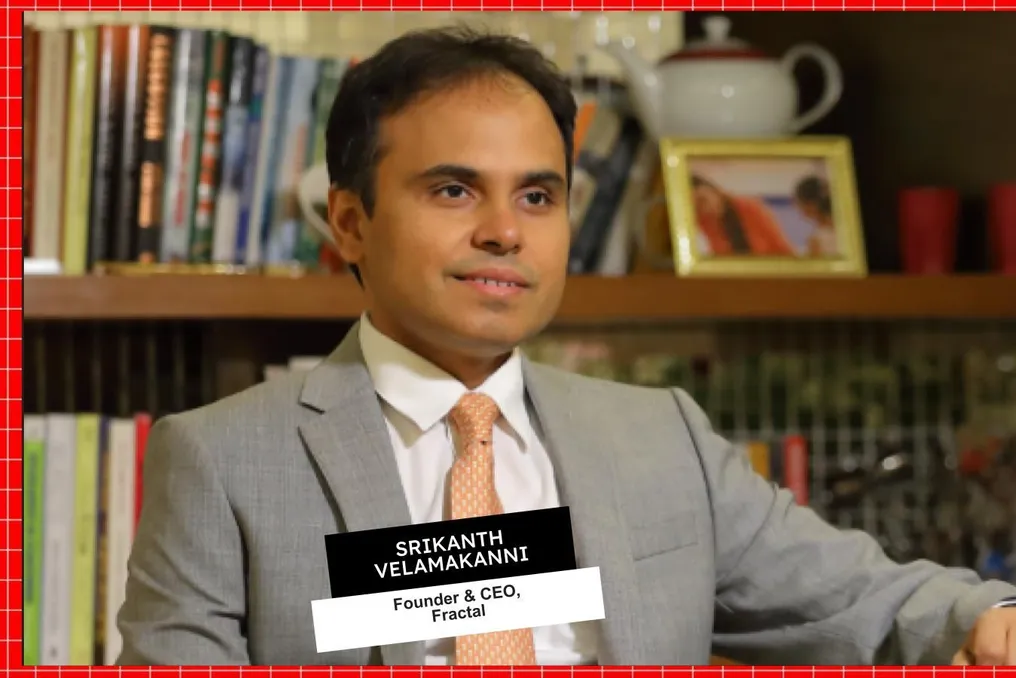
Co-founder and CEO of the group, Srikanth Velamakkani, stated in an interview with Business Standard following the release of Q2 results for fiscal year 27 that the company has two additional growth vectors. The first is major deals and partnerships, which he believes are gaining momentum, and the second is growth through Mergers and Acquisitions (M&A). He expressed hope that M&A will ensure strong growth.

Fractal reported first quarter revenue of $100 million in the second quarter of fiscal year 27. According to the investor presentation, major deals for Fractal are defined as contracts valued over $10 million. The number of clients whose annual revenue over the last 12 months exceeds $10 million increased to eight in the second quarter, up from seven a year prior. Furthermore, the number of clients with an annual contribution exceeding $20 million grew from four to six.

Although the company will start working on small AI projects, some costing only $250,000, improved client engagement opens up numerous opportunities for AI application in other operations. Velamakkani added that because AI solves more complex problems, clients enter into multi-month and multi-year agreements, creating favorable conditions for future development. He noted that while Fractal historically lacked a strong base in large deals, they are beginning to build one, and the market is moving towards solving more complex and long-term AI problems.

The first growth vector is linked to Fractal's traditional strengths, including growth in sectors such as healthcare and banking, financial services, and insurance (BFSI). The healthcare and life sciences sector demonstrated a 79 percent growth, while BFSI grew by 30 percent. Despite strict regulation, both industries are actively adopting AI due to the presence of repetitive cognitive tasks that AI can augment, automate, and redesign. Velamakkani explained that BFSI companies in the US likely invest one-third of their technology spending in AI.

When asked about the pricing of major deals, Velamakkani explained that for small projects, unit economics are not considered, whereas for large deals, it becomes the basis for problem-solving efficiency. He acknowledged that sometimes the company might appear too expensive. Fractal's AI product business, which includes the Cogentiq AI agent platform, grew by 39 percent compared to the previous year, reaching an annual revenue run rate of 150 crore rupees. Currently, the product business accounts for 4 percent of the company's revenue. Velamakkani noted that product revenue is starting to grow steadily, indicating the realization of product potential.

Similar stories

Fractal Analytics' net profit more than doubled to 79 crore rupees in the second quarter
Read more
yourstory.com

Fractal Analytics' net profit more than doubled to 79 crore rupees in the second quarter

The local artificial intelligence company, Fractal Analytics, announced on Wednesday that its consolidated profit after tax more than doubled to 79.2 crore rupees in the second quarter ending September 2026. This growth was driven by improved margins.

According to the report, for the same period last year, the company's net profit was 33.2 crore rupees. Consolidated operating revenue increased by 19.7%, reaching 956.5 crore rupees in the reported quarter compared to 798.5 crore rupees in the September 2025 quarter.

In dollar terms, this was the first quarter in which Fractal exceeded the $100 million mark. The revenue growth was primarily supported by the company's Healthcare and Life Sciences (HLS) vertical, which showed a year-on-year growth of 79%. The company also noted that the Banking, Financial Services, and Insurance (BFSI) sector performed very well, increasing by 30% year-on-year in the second quarter, and highlighted sustained strong growth in the HLS and BFSI segments over the past few quarters.

Fractal's largest industry vertical, Consumer Packaged Goods and Retail (CPGR), grew by 11% year-on-year. Co-founder and CEO of Fractal Analytics Group, Shrikant Velamakanni, stated that 'AI models are becoming increasingly capable and cheaper every quarter. Over the next few quarters, we will reach a threshold where it becomes irresponsible and frankly risky for companies to leave their most important decisions unchanged. We are building Fractal for this moment, and this quarter demonstrates it: revenue exceeded $100 million, and net income more than doubled.'

Fractile raises £577 million to challenge NVIDIA's monopoly on AI chips
Read more
ventureburn.com

Fractile raises £577 million to challenge NVIDIA's monopoly on AI chips

Despite market reactions to the massive expenditures in artificial intelligence, investments in AI hardware continue to grow. In a Series C round, the British chip manufacturer Fractile raised £577 million, causing significant resonance in the European tech scene.

Fractile's latest funding round is aimed at challenging NVIDIA's absolute dominance in the semiconductor sector. Attracting such a large amount of capital in such a short period demonstrates the huge investor demand for AI infrastructure. These funds will be used to actively expand the company's engineering centers in London and Bristol, where leading robotics and silicon design specialists are being hired.

For end-users, this means that the bottleneck in AI computing power may begin to ease. Increased competition, in turn, contributes to lower costs for running advanced AI systems, which will positively affect software accessibility and the improvement of consumer tools.

Fractile is not just opposing NVIDIA; the company is using a completely different technical approach. While NVIDIA built its empire based on Graphics Processing Units (GPUs), Fractile is developing AI inference chips based on Static Random-Access Memory (SRAM). This is highly significant because the inference phase requires fast and massive computations. SRAM provides extremely fast data access, significantly reducing the time taken to generate AI responses.

Instead of competing where NVIDIA already dominates, Fractile aims to change the principles of AI memory operation. Success in this area could lead to AI energy efficiency and speed surpassing current market standards.

Raising over half a billion pounds is only possible with serious buyers, and Fractile has secured a major initial supply agreement with Anthropic, the research lab behind Claude. This serves as strong endorsement, as Anthropic is essentially betting that Fractile's architecture will surpass the industry standard by 2027, when the chips enter data centers.

This partnership confirms the viability of the European chip market, showing that major AI labs are actively seeking alternatives to the NVIDIA monopoly, needing efficiently scalable hardware. Although NVIDIA maintains significant influence in the market, Fractile's large Series C round proves that the industry is tired of depending on a single supplier. This is a major sign of confidence in British deep technology, demonstrating that European startups can compete at the highest global level with sufficient capital, radical engineering solutions, and strategic partners.

Popular