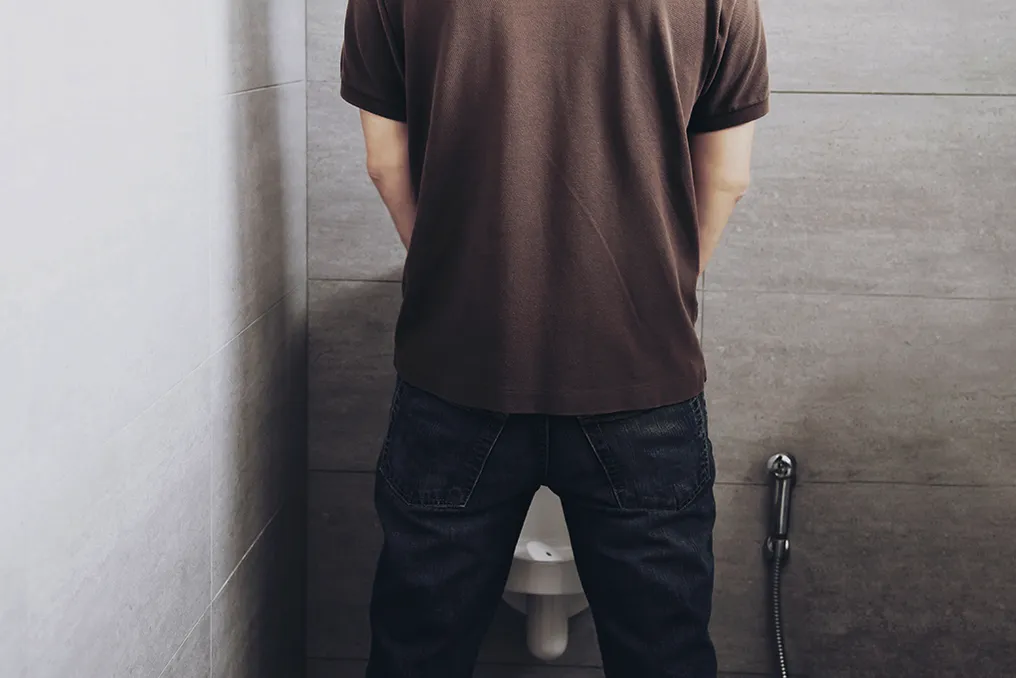
There is no definitive scientific consensus on which posture is ideal for men and other people when urinating. While some research suggests that urinating while sitting may promote relaxation of the pelvic region, other theories suggest that in men up to 50 years old, this position may increase the probability of dripping after urination.
In light of this, a recent investigation, published in October in the scientific journal Neurourology and Urodynamics, conducted a randomized experiment to compare these two positions.
Researchers from a Colombian group evaluated a group composed of 52 healthy volunteers, aged between 18 and 39. Each participant was monitored both while urinating standing and sitting, being randomly divided into two groups: twenty-four started sitting and, after at least 24 hours, urinated standing; the other 28 did the reverse.
In each session, crucial data were collected, including the total volume of urine expelled and the maximum urinary flow rate (Qmax), defined as the highest flow rate during urination (measured in milliliters per second), as well as the time required to reach this maximum flow (tQmax).
These metrics were obtained through an examination called uroflowmetry, where the individual urinates into equipment that records the flow to identify its peak.
Upon examining the findings, scientists did not identify significant disparities in the maximum flow between the different postures, nor did they observe changes in the total volume of urine eliminated. The only distinction noted was that healthy men took a slightly longer period—an average of 3.3 seconds—to reach Qmax when urinating standing. However, this specific data point was influenced by the measurement of a single atypical volunteer.
The study's authors themselves commented that the sitting position was linked to a shorter time to reach maximum flow, but emphasized that this small difference probably lacks clinical relevance and was partially determined by an outlier value. They concluded that larger, pre-registered studies with previously specified equivalence analyses and including symptomatic populations are necessary.
The researchers warn that the sample used was insufficient to confirm the equivalence of the two positions; the study merely failed to detect any difference. Additionally, the research did not assess the amount of residual urine in the bladder after urination.
Therefore, according to the presented results, the posture adopted during urination does not present drastic advantages or disadvantages in young and healthy individuals, leaving the choice to the individual. For those who present urinary symptoms, such as those resulting from prostate enlargement, previous research suggests that sitting may aid in more efficient bladder emptying, although aiming correctly is recommended.