Funke Akindele's film contributes to the globalization of the Nollywood industry in Nigeria
Read more
Egypt Independent
www.egyptindependent.com

Funke Akindele's film contributes to the globalization of the Nollywood industry in Nigeria

Funke Akindele, a Nigerian director, producer, screenwriter, and actress considered Africa's most commercially successful filmmaker, is preparing to release a new potentially major film titled 'The Four: No One Fights Alone' on December 11th. This film is her eighth major theatrical project and tells the story of four strong women who fiercely fight for the future of a young man they love.

Akindele emphasizes that her creative approach is to tell African and Nigerian stories that can resonate with audiences while adhering to global standards to ensure understanding and attract a wider audience. She shared this view with Larry Madowo from CNN in Lagos earlier this year.

Following the success of the film 'Behind the Scenes,' which was released in 2025 and earned over 2 billion Naira, equivalent to approximately $1.6 million, Akindele has been recognized as Africa's most commercially successful filmmaker. This film, dedicated to a real estate magnate experiencing a crisis and reevaluating his generosity, became the first Nollywood picture to surpass this financial threshold. It gained a global audience through its screening on Netflix.

Nigeria's film industry ranks second globally in production volume after India, according to UNESCO data. More than 2,500 films are produced annually in the country, exceeding Hollywood's annual output. Film production is the second-largest employment sector in the country, providing jobs for over a million people.

Akindele became the first African filmmaker whose films topped the box office in Nigeria for three consecutive years. Her 2023 film 'A Tribe Called Judah' was the first Nollywood picture to gross 1 billion Naira at the box office, surpassing $745,000. This comedy-drama tells the story of five brothers with different fathers who rob a shop to save a sick parent, in which Akindele herself stars. She explained that she wrote the script wanting to 'tell the truth, without embellishment,' inspired by real life, specifically the story of a woman who had seven children by seven men, whom society condemned and labeled a 'prostitute.'

Akindele notes that her writing style is based on authenticity, as one must be purposeful in their actions in life. She believes ambition is important, but she sells the film on quality and authenticity. Before the successes of 'Behind the Scenes' and 'A Tribe Called Judah,' her first major financially successful film was 'Jenifa,' released in 2008. It told the story of a village girl who moves to the city to study and desperately tries to fit into the environment.

This film helped Akindele gain recognition. She wrote the script because she wanted to reach out to the youth, seeing storytelling as a tool to demonstrate social problems, correct vices, and help young people build self-confidence, as she is very devoted to the youth. The sequel, 'The Return of Jenifa,' was released in 2011 and became Akindele's first film shown in Nigerian cinemas. In 2024, she released the second sequel, 'Everybody Loves Jenifa,' calling it her most expensive film to date.

Akindele revealed that the filming took place in Ghana, including the entire cast and crew, at the Safari Valley Resorts. She noted that she created the sets herself rather than renting premises, which made 'Everybody Loves Jenifa' very costly; however, she managed to recoup the expenses since the film proved successful both in theaters and on streaming platforms.

Despite the commercial success, Akindele, who first appeared on screen in 1998 in the sitcom 'I Need to Know,' sponsored by the UN Population Fund (UNFPA), and has acted in over 100 films, believes that African filmmakers still face obstacles. 'Our main barrier is distribution,' she stated. She is confident that this barrier will be overcome through greater partnership and global collaboration, as working with world filmmakers allows for the exchange of experience, ideas, perspectives, and the study of production standards, technologies, and distribution methods.

Akindele calls on filmmakers to collaborate with other creatives and create stories that resonate worldwide. She advises writing authentic yet cross-border stories, focusing on emotions, because 'Rome wasn't built in a day.' Regarding legacy, she hopes her work will help other women by breaking barriers for them and continuing to create platforms for their voices.

Similar stories

Review of the series 'Akka': Illusion of matriarchy or new form of patriarchy?
Read more
www.aajtak.in

Review of the series 'Akka': Illusion of matriarchy or new form of patriarchy?

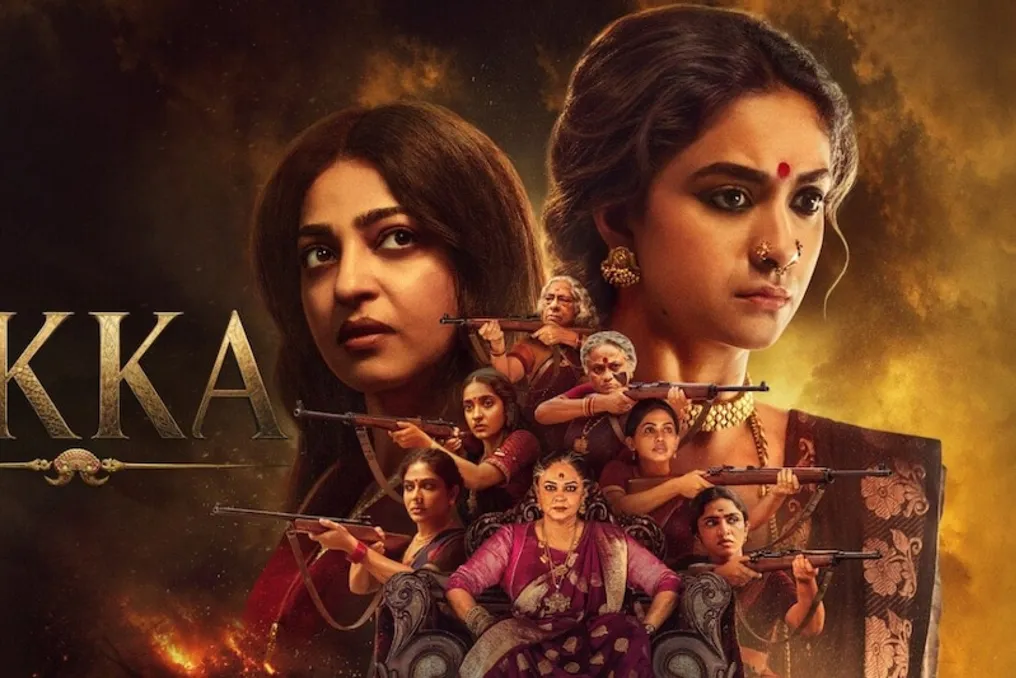
The series 'Akka', released on Netflix under the aegis of Yash Raj Films, generated high expectations due to its concept: a world where command and weaponry are in the hands of women, set against a beautifully recreated ancient backdrop and dominated by formidable female gangsters. However, as is often the case, the brilliance and luxurious production could not compensate for the weak script, causing the show's entire potential to be lost.

The plot spans the period between 800 BCE and the 1980s. The action takes place in the fictional city of Pernaru in South India, where power belongs exclusively to women. The supreme leader of this city is called 'Akka.'

Pernaru has specific and strict rules: women are allowed to have lovers, but they are forbidden from having husbands. Girls are revered as goddesses protecting forests and lakes, and inheritance is passed down only to daughters. There is an 'eye for an eye' principle, and any insult to a woman can provoke a great calamity. Furthermore, literacy is highly valued in this system.

The main conflict begins when Rudra (Radhika Apte) arrives from Mumbai and openly challenges the existing system, striving to seize power through men. This direct challenge poses a serious threat to strong women such as the tribe leader Bhavani (Kriti Suresh), Tanvi Azmi, and the young warrior Anjali Patil, which forms the core narrative line.

The first two episodes look very convincing: women make decisions fearlessly, and sword fights occur. But as soon as Radhika Apte appears, the story starts resembling a worn-out 'woman versus woman' race.

Radhika's appearance in a tight dress and large glasses seems strange and reminiscent of a loud villain from old Bollywood films. In contrast, the other women of Pernaru always look elegantly dressed, as if preparing for a grand wedding or religious ritual, even when in prison. Actors like Anshuman Pushkar (as Amar) and Nanda (Vishak Nair) play only minor roles.

Although the author does not object to the violence shown in the series—since blood is constantly shed in the male world—one moment deeply shocked the viewer: why show the burnt body of a child on the seashore? Even though a bloody struggle between various factions begins after this horrific sight, the plot could have moved forward without this scene.

Upon deeper analysis, the series presents a disappointing idea: when all power falls into the hands of women, they ultimately begin to behave as cruelly and greedily for power as men do. This may shock those who believe that simply granting women power will automatically lead to a fairer and better world.

The series attributes the same old and traditional patriarchal lexicon to its female rulers. This clearly shows that changing the gender of the leader does not change the principles of social structure functioning. As always, the bitter truth might be hidden somewhere between these two poles, but it is crucial to contemplate this serious argument.

Radhika Apte receives significant screen time, yet her character seems quite predictable and one-dimensional, as nothing new is felt in her dialogues. On the contrary, Kriti Suresh, dressed in traditional sarees and heavy jewelry, looks incredibly powerful, striking, and dominates the screen. As 'Akka', she single-handedly carries the entire show, being so captivating that it is hard to look away.

It would have been ideal if all other elements were equally strong. Instead of an old gangster plot about a father and son, 'matriarchy' should have replaced 'patriarchy'. I criticize the script the most—how a man wrote such a profound story about women. My only advice to him: their own ideas and vision would be much more effective than just giving them a gun.

It is necessary to acknowledge the talent of the actors and costume designers, who gave uniqueness to the characters and presented this fictional global culture of Pernaru. Nevertheless, despite the magnificent costumes, grand setting, and excellent concept, 'Akka' ultimately remains a typical revenge drama.

Nevertheless, my hopes for a second season remain alive; perhaps next time the creators will make some improvements and be able to beautifully fill these gaps.

Radhika Apte discusses the difficulties of building a career for actresses in Bollywood
Read more
www.aajtak.in

Radhika Apte discusses the difficulties of building a career for actresses in Bollywood

Radhika Apte openly spoke about the complex reality of the Bollywood film industry, noting that it remains difficult for female actors to achieve recognition. This raises the question of whether only films aimed at women, featuring major stars like Deepika Padukone or Alia Bhatt, can guarantee a successful box office start?

According to Radhika, establishing a strong identity for an actress in cinemas remains a challenging task. She often has to participate in projects where the lead role is played by a male actor. The main reason for this is the uncertainty regarding the commercial success of films targeting a female audience.

Currently, Radhika Apte is gaining attention for her new series on Netflix titled 'Akka'. During a recent interview, she explained why films geared towards women struggle to succeed at the box office. Radhika believes that it is hard for them to secure a good theatrical release if they lack megastars like Alia Bhatt or Deepika Padukone, which lowers expectations for their box office revenue.

Speaking about her experience in films such as 'Love Stories 3', 'Sali Mohabbat', and 'Miss Undercover', Radhika emphasized that her project selection is not dependent on whether they are released in theaters or on streaming platforms. For her, the most important thing is that the film reaches the audience in some way. She told a news agency that 'I do not choose a film based on whether it will be released in a cinema or on OTT. It does not matter to me. Many commercial decisions are made regarding the film's release. Therefore, I believe the film should reach the audience by any means. In the current era, it is becoming difficult to predict the success of films released in theaters.'

She continued, adding: 'If I act in a film that is released in a theater, even if it is very good, it does not guarantee its success. That is not up to me. I am not Alia Bhatt or Deepika Padukone, from whom one can expect at least a good start. I am completely honest with you. This means I will have to work in films where the lead role is played by a male actor.'

It is worth noting that Radhika Apte's next series, 'Akka', is preparing for release and will be available on Netflix on October 30th. In this series, besides Radhika, Kriti Suresh will also play a leading role.

Review of 'Tu Hai Meri Kiran': Weak script spoils an interesting concept
Read more
www.aajtak.in

Review of 'Tu Hai Meri Kiran': Weak script spoils an interesting concept

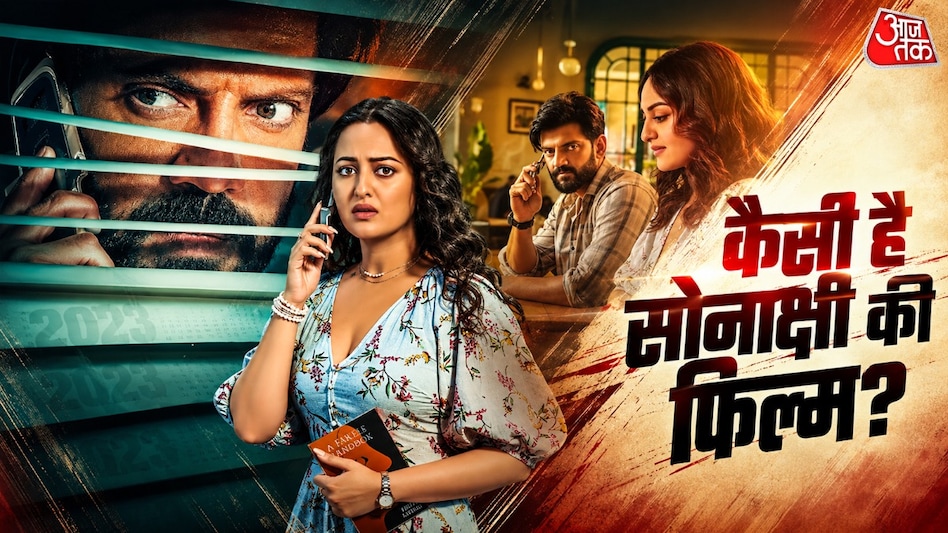
The film 'Tu Hai Meri Kiran' receives mixed reviews: although the idea seems promising, the weak script development leads to viewer disappointment. Similar to Shah Rukh Khan's 'The Gift', the movie explores the theme of obsessive stalking, asserting that such behavior is not a sign of love but an alarming signal.

At the center of the plot is a story that uses time travel technology via an old feature phone, connecting two people separated by a decade. The beginning of the film looks intriguing, but as the events unfold, the plot becomes entangled in themes of love and obsession, making the narrative's meaning unclear.

In this film, starring Sonakshi Sinha and Zakir Iqbal, two strangers living in 2016 and 2026 establish a connection through an old feature phone. Unusual relationships form between Sameer (Zakir Iqbal) and Kiran (Sonakshi Sinha). Initially, the audience expects them to unravel some mystery, change their fate, or prevent a major disaster. However, the narrative takes a sharp turn when it is no longer enough for Sameer just to communicate with Kiran; he begins to desire her at any cost.

The action begins on September 28, 2026. Kiran receives a strange phone call from someone living ten years earlier. Upon hearing about a surgical operation conducted in Pakistan on the radio, Kiran starts to suspect something is wrong. When she asks Sameer to meet at the theater, she sees his double, while in Sameer's timeline, the movie 'MS Dhoni' is playing. It is at this moment they realize there is a ten-year gap between them.

The film's concept is quite fascinating, raising many questions: why did a connection arise between these two? How did they manage to get this phone? And if we had the chance to talk to someone from the past, wouldn't we try to change something in our lives? This story had the potential to explore many themes, but unfortunately, the film does not provide clear answers to these questions.

Regarding the character Sameer, it turns out that despite his self-perception as a loving person, he is not. He lies about his life, spies on his neighbor, and even records compromising videos of him. Furthermore, he quickly realizes that Kiran knows about the future and plans to use this information for speculative profit. Thus, the core revolves around a game of money, not love or destiny.

However, Sameer then experiences genuine love for Kiran. When this feeling turns into obsession, serious problems begin. Not accepting Kiran's refusal, Sameer starts manipulating Kiran's life using the phone, trying to possess her and involve her younger counterpart in his feelings. If 'The Gift' had Rahul, here there is Sameer. Both characters demonstrate that one must understand: stalking and attempts to forcibly hold onto someone are not love.

The film tries to show the difference between love and obsession, and also raises the question of whether fate can be changed through changes in the past. The film hints that some things are predetermined, and no attempt to change them will lead to the desired result. This idea could have been the basis for a good emotional thriller, but the film does not explore these aspects deeply enough.

Furthermore, the film contains flaws that make the viewer doubt the logic of what is happening. Although the entire story is built on the principle of time travel, the rules of this phenomenon remain unclear. Why did a connection arise between Sameer and Kiran? What are the consequences of trying to change the past? And why should Kiran bear the burden of such manipulations over time? The film poses these questions but provides no answers. At some point, the viewer stops trying to solve the mystery and starts doubting the authors' understanding of the material.

Moreover, the film has errors concerning dates and chronology. The film 'Durdhangar' was released in March, whereas 'MS Dhoni' was released on September 30th. Consequently, the joint screening of these films in theaters on September 28th seems impossible. When the plot relies on precise dates, historical events, and film information, their correctness is critically important. However, such errors spoil the viewing experience and distract the audience from the film itself.

The first half of the film makes a strong impression thanks to a fresh idea that sustains interest in the further development of events. Nevertheless, in the second half, the narrative completely falls apart. The number of twists and unexpected moments becomes so great that it becomes difficult to follow the course of events. Many questions remain unanswered, and no answers are provided. Although the film demands close attention to detail from the viewer, ultimately the feeling is that despite all efforts, no significant result was achieved.

}))

Popular