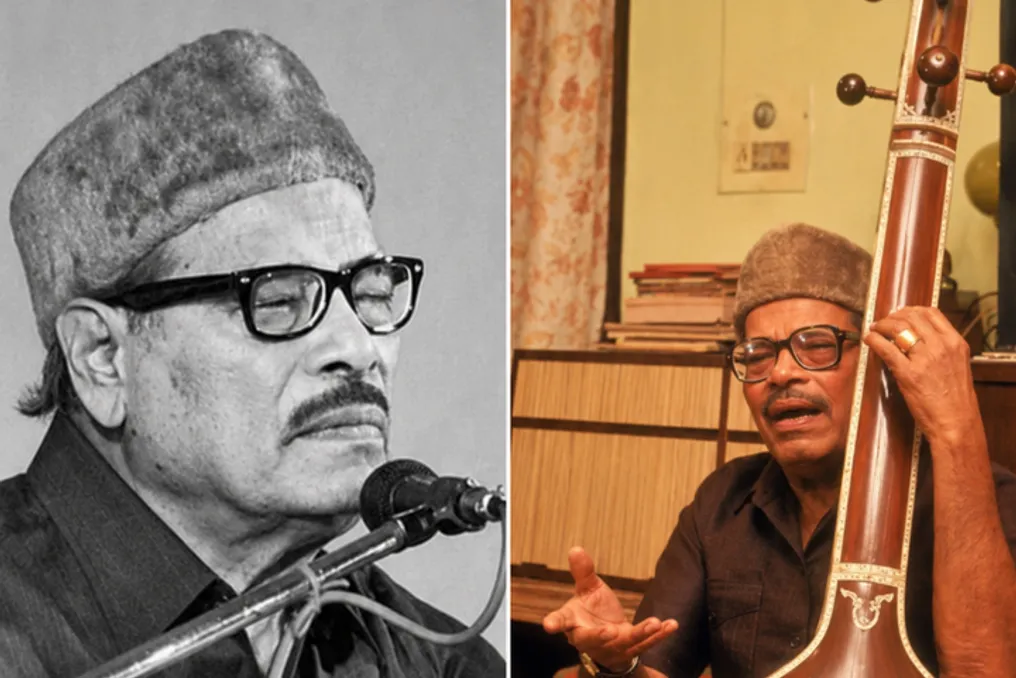
How Manna Dey found his unique voice in Bollywood despite rare film appearances
Read more
The Better India
thebetterindia.com

How Manna Dey found his unique voice in Bollywood despite rare film appearances

Manna Dey's songs continue to resonate with listeners of different generations, even though he rarely voiced the main characters in films. His rise to success required many years of hard work and dedication. Before music became his path, he had another dream—to be a wrestler.

Born Prabodh Chandra Dey in Kolkata in 1919, Manna balanced his studies with wrestling practice. He even reached the finals of wrestling in Bengal, but an injury and vision problems forced him to abandon the sport.

When wrestling was no longer an option, music offered him a new direction. After training under his uncle Krishan Chandra Dey, Manna moved to Mumbai in the 1940s and debuted as a singer for the film 'Tamanna.'

Talent alone was not enough for recognition. Despite performing several songs in his early years, Manna struggled to find his place alongside established singers like Mohammed Rafi, Mukesh, and Kishore Kumar. Nevertheless, he continued to hone his craft.

A turning point came in 1950. Manna's rendition of the song 'Upar Gagan Vishal' for the film 'Mashal' brought him widespread fame and helped him establish himself in an industry where he had fought for recognition for years.

His voice occupied a special place in the hearts of listeners. Songs like 'Pyaar Hua Ikraar Hua' and 'Aaja Sanam' from Raj Kapoor's films helped Manna Dey form a musical identity that generations of viewers remember.

Through his versatility, which spanned both classical compositions and beloved Bengali melodies, he demonstrated his range. He infused his classical skills into the song 'Laga Chunari Mein Daag' and gifted generations the cherished composition 'Coffee House-er Sei Adda-ta.'

Over the years, his contribution earned him some of India's highest honors, including the Padma Shri, Padma Bhushan, and National Film Academy awards. In 2007, he received the prestigious Dadasaheb Phalke Award for his contribution to Indian cinema.

His athletic dreams ended early, and recognition in music took time. However, Manna Dey continued to follow his calling and ultimately became one of the most beloved voices in Indian cinema.

Similar stories

Rashmika Mandanna speaks out about discomfort with overly revealing outfits, commenting on the controversy surrounding Zanavi Kapoor in the film 'Pedi'
Read more
www.aajtak.in

Rashmika Mandanna speaks out about discomfort with overly revealing outfits, commenting on the controversy surrounding Zanavi Kapoor in the film 'Pedi'

Rashmika Mandanna, a renowned actress from the South Indian cinema industry and Bollywood, has once again been in the spotlight, but this time not because of a film, but due to her open views on the topic of exposure and actresses' personal preferences.

Following the controversy surrounding the portrayal of Zanavi Kapoor in the film 'Pedi,' Rashmika and her husband Vijay Deverakonda also shared their opinions. Rashmika clearly stated that she is uncomfortable wearing any type of clothing or displaying excessive nudity.

Indeed, after the release of 'Pedi,' Zanavi Kapoor's image drew criticism. Many viewers argued that her character was excessively objectified and hypersexualized in the movie. It was during this discussion on the show 'Coffee with Karan' season 9 that Karan Johar asked Rashmika whether she sets boundaries in advance regarding characters and clothing in films.

In response to Karan Johar's question, Rashmika Mandanna admitted that she very clearly defines her comfort zone. The actress emphasized that there are things she does not feel comfortable with. Even if a role requires wearing a bikini, she informs her directors in advance that she is not ready for excessive body display or overtness.

According to Rashmika, in commercial projects, she sometimes has to wear costumes in which she does not feel entirely free. In such cases, she sets certain limits herself. She also noted that directors she likes working with usually understand her position and respect her boundaries.

From Rashmika's words, it is evident that for her, showcasing glamour and compromising personal comfort are two different concepts. She understands the demands of the role but gives equal weight to her personal preferences and boundaries.

Vijay Deverakonda also spoke during this discussion. He agreed that discussing one's preferences and boundaries on set is difficult, especially when an artist fears that raising questions might cause dissatisfaction among the crew.

When Karan Johar mentioned that Zanavi Kapoor is not from the Telugu industry and might have felt vulnerable, Vijay supported this idea. Rashmika added that filmmakers must create an atmosphere where artists can discuss their problems or discomfort without hesitation. She acknowledged that it is sometimes difficult for her to voice her opinion, and in such cases, she consults with Vijay about whether she should speak up.

Vijay Deverakonda put forward an important point on this matter. In his opinion, artists are often led to believe that since they signed a contract for a film, they must be prepared for anything. Under such pressure, artists begin to think that if they ask a question about a scene or costume, they might be considered unprofessional.

Vijay stated that artists need a support system that assures them that expressing their opinion and having the right to say 'no' is not a mistake. When the crew starts making an artist feel unprofessional, many prefer to remain silent to avoid escalating the conflict, hoping that everything will resolve itself.

His words imply that signing a film contract should not mean ignoring all of an artist's personal boundaries.

The discussion sparked by Zanavi Kapoor's image in the film 'Pedi' once again raised the question of how to strike a balance between glamour and the demands of a role in cinema. Although certain roles may require specific costumes or scenes, the comfort and consent of the actress herself cannot be ignored.

The conversation between Rashmika and Vijay raises precisely this issue. Both emphasized that artists must have the freedom to set and express their boundaries, especially as new actors need an environment where they can speak their minds without fear.

This conversation between Rashmika and Vijay, who were guests on the second episode of the ninth season of 'Coffee with Karan,' became a new topic of discussion in the film industry concerning artists' preferences, exposure, and professional pressure.

Popular