Mercedes-Benz views India as a future export hub, focusing on components and technologies
Read more
Business Standard
business-standard.com

Mercedes-Benz views India as a future export hub, focusing on components and technologies

The German luxury car manufacturer Mercedes-Benz sees potential in India to become a production and export center for global markets. The company's global head, Ola Kellenius, stated that the question is not whether this will happen, but when.

However, the company has not yet made a final decision to manufacture cars in India for subsequent export. In the short term, the main opportunity is expanding global supply of components and technologies from this country.

Market Development Forecasts

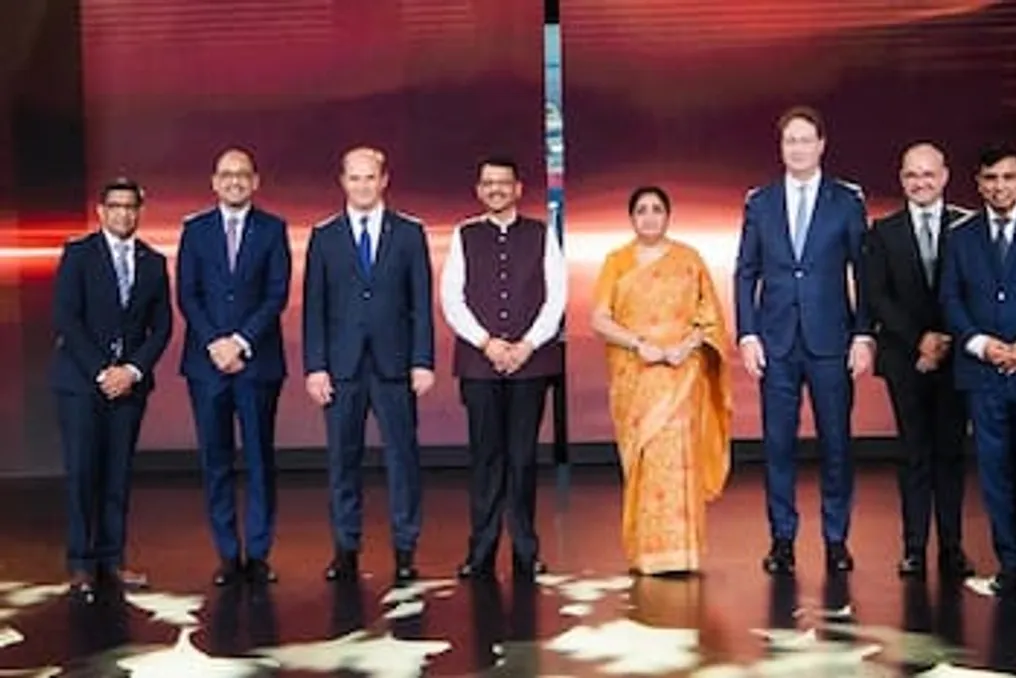
Kellenius, Chairman of the Board of Directors of Mercedes-Benz Group AG, noted that the growing luxury car market in India, the development of the supplier ecosystem, and engineering capabilities could eventually provide the country with a more significant manufacturing role. He emphasized: 'I think it is more a matter of time than possibility. But I want to clarify that we have not made such a decision at the moment,' Kellenius said at a media roundtable at the company's plant in Chakan, near Pune, on Wednesday.

These statements came after Maharashtra Minister Devendra Fadnavis invited Mercedes-Benz to use the state not only as a production site for the domestic Indian market but also as a base for developing technologies and producing vehicles for global markets.

Previously, the Chakan plant was used for limited vehicle exports. In 2018, a small batch of locally produced GLC SUVs was sent there to meet US demand as a backup option. Nevertheless, the plant is primarily focused on the Indian market. In the presentation of the company's global strategy in February 2026, priorities for foreign markets, including India, were named as expanding regional supply and service centers, as well as more active use of trade agreements.

Kellenius also noted that India is already an important growth market, as Mercedes-Benz showed its best quarterly result in the country. This optimism is based on Mercedes-Benz's strongest quarterly performance in India. From July to September 2026, the company sold 5,422 vehicles, which is 6 percent more than the previous year and 17 percent compared to the previous quarter. From January to September, sales grew by 8 percent, reaching a record 15,190 units, driven by demand across core, premium, and entry-level luxury segments.

Nevertheless, the luxury car segment remains relatively small compared to the overall passenger car market. About 5 million passenger cars are sold in India annually, but the premium and luxury segments account for just over 1 percent, or approximately 60,000 vehicles. Mercedes-Benz's annual sales, amounting to about 20,000 vehicles, give it a market share of approximately one-third.

Based on India's projected economic growth over the next five to seven years, Kellenius expects a significant increase in demand for luxury vehicles. A larger domestic market, combined with appropriate product positioning and pricing, could ultimately justify the next step in local manufacturing.

Until now, India may play a more significant role in Mercedes-Benz's global supply chain. 'We can, if you like, export from India based on components before asking about the full car,' he stated.

The company is already strengthening technology and supplier partnerships in India, which, according to Kellenius, do not necessarily have to be limited to serving the domestic market. A proposed free trade agreement between India and the European Union could further improve the economy of cross-border production and supply. He described this agreement as good news for India, Europe, and business, noting: 'If friction is less, the probability of an export deal is higher.'

Calls for Development

Fadnavis, who recalled the opening of the same plant expansion in 2015, urged the German automaker to think beyond just assembling cars. He appealed to Mercedes-Benz to consider Maharashtra not only as a place for production in India but also as a platform for developing next-generation battery technologies, automotive artificial intelligence, electronics, and software. The minister stated that the state's ambition is to transition from a center of automotive production to a global center for future mobility.

Santosh Iyer, Managing Director and CEO of Mercedes-Benz India, reported that the company's cumulative investment in the country has reached 320 billion rupees, including 200 billion rupees invested in 2026 in production operations, new product implementation, and digitalization. In his statement, Iyer emphasized: 'The presence of senior officials and the Board of Trustees and the Board of Directors of Mercedes-Benz in India underscores the importance of India as a strategic market for Mercedes-Benz.'

Since commencing operations, Mercedes-Benz has sold over 240,000 vehicles in India, most of which are manufactured locally in Chakan.

India's Rise in the Global Hierarchy

The growing importance of India comes against the backdrop of intense competitive pressure that Mercedes-Benz faces in China, which has historically been one of the largest and most profitable markets for the company. Global sales of the German manufacturer's passenger cars decreased by approximately 8 percent in the third quarter of 2026.

When asked whether the slowdown in China would lead to a revision of the company's global strategy and an increased importance of India, Kellenius replied that China would remain a key pillar despite the difficulties. He stated: 'Despite the cyclical development of the Chinese market and competitive intensity, it remains the largest automotive market. Therefore, it will continue to be a pillar in our strategy.'

However, the growth of India's role is not an 'either/or' choice. 'It is not a choice between two options. It is both,' he added, clarifying that India's position in Mercedes-Benz's global hierarchy will grow over the next five years.

Kellenius characterized India as a growth market, a talent market, a technology market, and a supply base; all these aspects will become more important in the company's global operations.

A significant part of this expansion will be carried out through Mercedes-Benz Research and Development India (MBRDI)—the company's largest R&D center outside Germany. Kellenius recalled that engineering activities in India began three decades ago, and since then, these relationships have evolved into what Mercedes-Benz calls globally integrated R&D, where Indian teams develop competencies in mechanical engineering, electronics, powertrains, software, and artificial intelligence. He cited a meeting with an Indian quantum computing startup collaborating with Mercedes-Benz as evidence of the complex technological capabilities available in the country. He also noted that Indian research operations are increasingly working on par with engineering centers in Germany and elsewhere.

Dr. Jörg Burzer, Technical Director for Development and Procurement at Mercedes-Benz Group AG, stated that Indian engineers contribute to the technologies shaping the company's global future.

EV Share Could Reach 20% by 2027

Kellenius also expects electric vehicles to constitute a significantly larger share of Mercedes-Benz sales in India in 2027, potentially reaching a range of 20 percent, compared to the high single digit expected this year. He said: 'In India this year we might finish with a high single digit of electric vehicles. I think next year it will be a double digit number, probably starting with a two.'

This optimism is linked to the expansion of the second-generation EV portfolio, including the locally produced electric GLC, which rolled off the assembly line in Chakan on Wednesday. Kellenius reported that Mercedes-Benz received about 1,000 pre-orders for the electric model even before customers learned its price, which he viewed as a sign of changing consumer preferences. The company separately announced that the electric GLC received over 550 expressions of interest in the first 36 hours after registration opened. On Wednesday, Mercedes-Benz launched a locally produced electric GLC 400 4MATIC at a price of 78.50 lakh rupees (excluding taxes) at the Chakan plant. This SUV has a claimed range of up to 711 km, and deliveries will begin in mid-November.

Mercedes-Benz intends to offer an electric alternative in every major passenger car segment by the end of the decade. However, Kellenius noted that full electrification in global markets is still far off. 'The internal combustion engine will exist for at least another 10, maybe 15 years,' he added, noting that diesel engines will remain part of the company's portfolio in the foreseeable future.
Similar stories

Indian Export Bank Forecasts 28.7% Growth in India's Merchandise Exports in the Third Quarter
Read more
business-standard.com

Indian Export Bank Forecasts 28.7% Growth in India's Merchandise Exports in the Third Quarter

The Export-Import Bank of India (India Exim Bank) forecasts that India's merchandise exports in the third quarter of the current fiscal year 2026-27 (FY27) will reach $141.8 billion. This growth, estimated at 28.7% year-on-year (YoY), is attributed to the diversification of markets and export basket, the conclusion of new trade agreements, and improved global demand, despite existing risks.

The state bank expects non-commodity exports in the third quarter to amount to $120.3 billion, reflecting a 21.9% year-on-year increase. It is projected that the export of non-commodity goods, excluding precious metals and jewelry, will reach $106.4 billion, showing a 16.2% rise over the same period.

Despite overall uncertainty in global markets and supply chain restructuring, the bank sees key drivers for the country's export growth as maintaining product and market diversification, opportunities provided by recent trade pacts, and sustained demand in major export sectors. India Exim Bank added that the positive forecast for Indian exports will also be supported by improving global and domestic growth indicators, investment activity, and exchange rate fluctuations.

Nevertheless, the bank notes that tightening global monetary policies and changing trade regulations remain potential risks that could negatively impact export growth.

According to data from the Department of Commerce, exports increased by 23% in September this year, reaching $44.4 billion, while the trade deficit narrowed to $30.21 billion from $33 billion the previous year. Meanwhile, imports rose by 8% during the month to $74.61 billion.

For the period from April to September of the current fiscal year, exports jumped by 18.51% to $259.89 billion, and imports increased by 16.31% to $437.53 billion. China was the largest trading partner during this period, with bilateral trade growing by 29% to $91.8 billion. Exports to China increased by 36% year-on-year to $11.4 billion, while imports from China grew by 27.8% to $80.4 billion.

Minister Goyal states India will become a major exporter to China and ASEAN in the coming years
Read more
business-standard.com

Minister Goyal states India will become a major exporter to China and ASEAN in the coming years

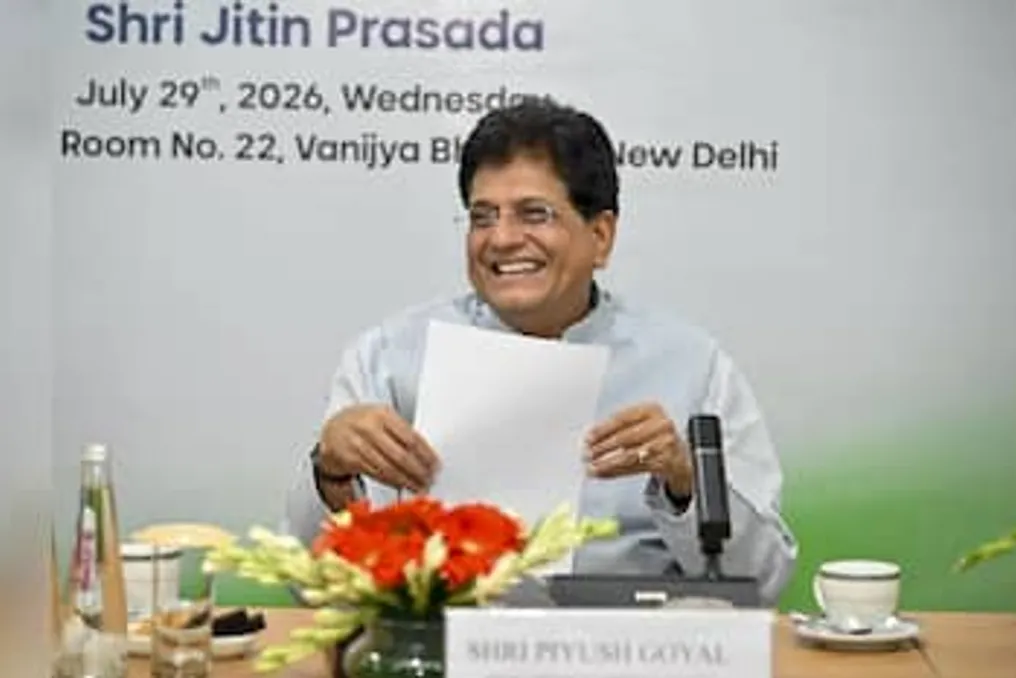
Commerce and Industry Minister Piyush Goyal stated on Tuesday that India is ready to welcome Chinese suppliers to meet growing import demands, while emphasizing that established legal procedures will be applied against any unfair pricing policies. He expressed hope that in the near future, India could become a significant exporter to both China and the ASEAN region.

Goyal reported that he had held meetings with his Chinese counterpart in Yaoundé, Cameroon, as well as in New Delhi during the BRICS Summit. He added that India is interested in promoting free and fair trade with all nations.

According to the minister, China provides India with vital raw materials and intermediate products. However, if any violation of fair play or pricing principles is discovered in any product, there is an established judicial process for its resolution. Otherwise, India believes in the rules of open trade and welcomes offers from suppliers wishing to meet India's growing needs.

These statements were made in response to a question about the prospects of trade relations between India and China. The minister was in the country on a two-day official visit. He also noted the desire to open markets in various countries on a mutual basis for Indian goods and services, expressing hope that India would become a major exporter to China and ASEAN.

Members of the Association of Southeast Asian Nations (ASEAN) include countries such as Brunei, Cambodia, Indonesia, Laos, Malaysia, Myanmar, the Philippines, Singapore, Thailand, and Vietnam.

According to the latest data from the Ministry of Commerce, the bilateral trade turnover between India and China increased by approximately 29 percent from April to September of the current fiscal year, reaching $91.76 billion, making Beijing India's largest trading partner in the first half of 2026-27. In April-September 2025-26, the bilateral exchange amounted to $71.24 billion.

Goyal's recent remarks came nearly two weeks after the minister stated on October 14 that India is working to restore relations with China, although a final decision on this matter has not yet been made.

In recent months, both sides have taken several steps to improve ties after facing intense pressure following the deadly clashes in the Galwan Valley in 2020. On September 12, Prime Minister Narendra Modi conveyed to Chinese President Xi Jinping that peace and tranquility along the border remain a 'substantial' foundation for the development of relations between India and China, even though both leaders welcomed 'stable progress' in bilateral relations. Both leaders met on the sidelines of the BRICS summit in New Delhi last month.

After more than four years of strained relations due to military confrontation in Eastern Ladakh, the two neighbors began to restore their ties following the meeting between Modi and Xi in the Russian city of Kazan in October 2024, which took place after the clashes subsided.

India has repeatedly raised concerns about the growing trade deficit with China. Bilateral trade between the two countries grew by 7.9 percent in 2025-26, reaching $127.7 billion compared to $118.39 billion in 2024-25. India's exports to China increased by 36.62 percent, amounting to $19.47 billion in 2025-26 compared to $14.25 billion the previous year. Imports, conversely, rose by 16 percent, reaching $131.62 billion during this period. The trade deficit widened to $99.19 billion in the last fiscal year compared to $85 billion in 2024-25, causing concern in the country.

There are also issues related to Chinese investment, as India has tightened its Foreign Direct Investment (FDI) policy for countries sharing a land border with it. When asked about new Chinese export restrictions on key equipment, including tunnel boring machines, the minister replied: 'We will work on it.'

Restrictions on the export of tunnel boring machines (TBMs) and related items could affect several Indian projects, including underground metros, high-speed rail lines, and tunnels in various locations, including border areas.

Indian Global Competence Centers Transition to Developing Products for the Global Market
Read more
yourstory.com

Indian Global Competence Centers Transition to Developing Products for the Global Market

India has long served as a global hub for technology services; however, the country's growing engineering capabilities are opening new avenues for product creation, intellectual property (IP) formation, and taking responsibility for innovation. As multinational corporations expand their research and development (R&D) centers in India, Indian teams are moving beyond merely executing assigned tasks to solving complex problems and creating solutions for the global market.

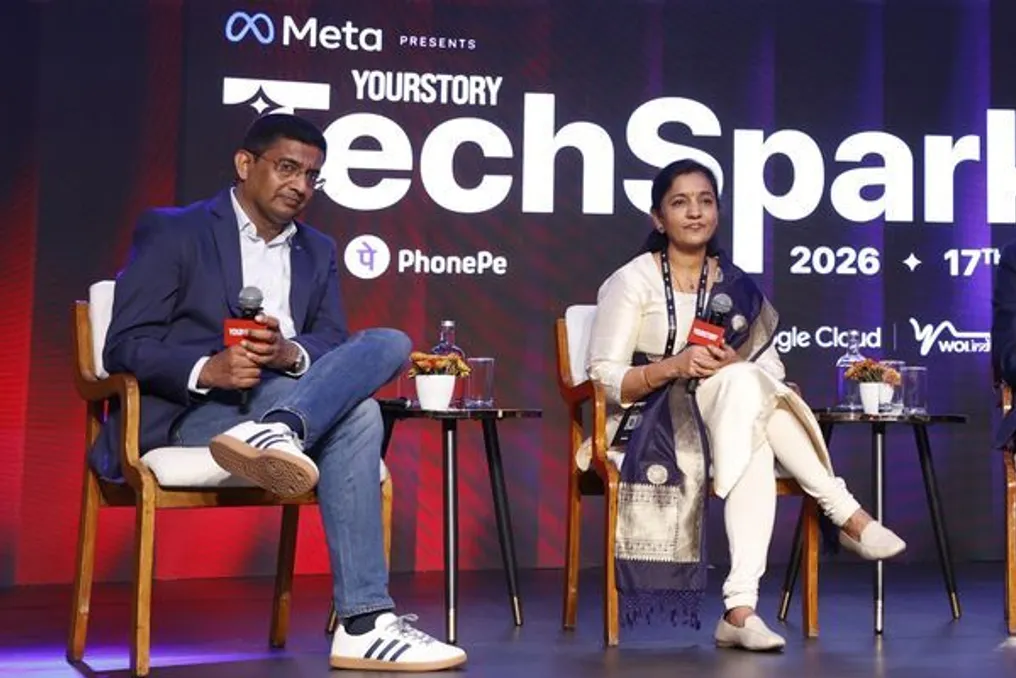
At the TechSparks 2026 event by YourStory, company leaders shared their vision of how India's Global Competence Centers (GCCs) can move up the value chain. The discussion covered the importance of product localization, building industry expertise, and developing problem-solving skills.

Kalavati G.V. noted that medical solutions cannot simply be transferred from one market to another, emphasizing: 'What works in the US does not work in India.' She explained that while medical technologies are global, healthcare must be local because solutions must account for differences in lifestyle, disease prevalence, accessibility, and level of medical care.

Previously, companies often adapted products designed for developed markets by removing features to align them with Indian needs. However, this approach failed to meet the diverse medical needs of the country, which span private hospitals, government institutions, and district clinics. Consequently, the company began collaborating with Indian clinics, hospitals, and clients to develop solutions that meet local requirements. 'We started co-creating some ideas with Indian clients,' she said.

An example of this approach is the C-arm visualization system, which was developed, designed, and manufactured in India to meet local needs. This product is now used in 40 other markets and has an installed base of 1400 units. Furthermore, Kalavati reported that the share of Siemens Healthineers software specialists based in India has reached about 50%.

For Lufthansa Systems, India's advanced engineering ecosystem and automation achievements offer opportunities to leverage existing capabilities within the Lufthansa Group. Although Lufthansa Systems recently commenced operations in India, the broader group already employs over a thousand people in the country. The CEO of the company in India, Luigi Chelmi, stated that they do not consider themselves lagging but see an opportunity to benefit from advancements in automation and established industry partnerships.

The expanding aviation and aerospace ecosystem in Bengaluru is also attracting attention. In a sector where reliability is critical, engineers must possess deep industry expertise and focus on change validation. Chelmi noted that engineers spend more time validating changes than creating them.

At Mercedes-Benz Research and Development India, the evolution lies in shifting from task execution to taking ownership of broader engineering challenges. While the vehicle remains a global product, Manu Sale indicated that the head unit—the digital interface inside the vehicle—offers opportunities for customization. Previously, India solved problems based on given instructions, but the focus has now shifted to asking questions: 'What is the problem? What is the big problem? Give me a clear statement, and I will try to solve it.'

Sale emphasized that this shift allows Indian teams to take responsibility for entire systems and subsystems instead of depending on daily directives from global headquarters. As engineers accumulate product knowledge and systemic expertise, they can engage with headquarters at a higher level and take charge of more complex tasks. He also stressed the need for India to move beyond traditional IT services and start creating products for both domestic and export markets, aiming not just to connect layers of technology but to develop expertise to own the entire stack.

These ambitions are reflected in the broader GCC ecosystem. Kalavati cited Nasscom data showing that 39% of GCCs in India are involved in product development, including product management, while about 9% act as transformation hubs. She concluded that 'we have reached a stage where, given the growth of the ecosystem, we can own complete products.'

Creating original IP also requires companies to start with a problem they want to solve, rather than a technology they want to implement. Kalavati advised organizations to rely on product experience, physicians, client relationships, and partnerships with hospitals and startups to develop solutions that address unmet needs. Sale agreed with this view, stressing that innovation begins when teams transition from service-oriented thinking to identifying problems and developing solutions.

Popular