Mortgage lending in Uzbekistan increased by 39% over nine months
Read more
UzDaily
uzdaily.uz

Mortgage lending in Uzbekistan increased by 39% over nine months

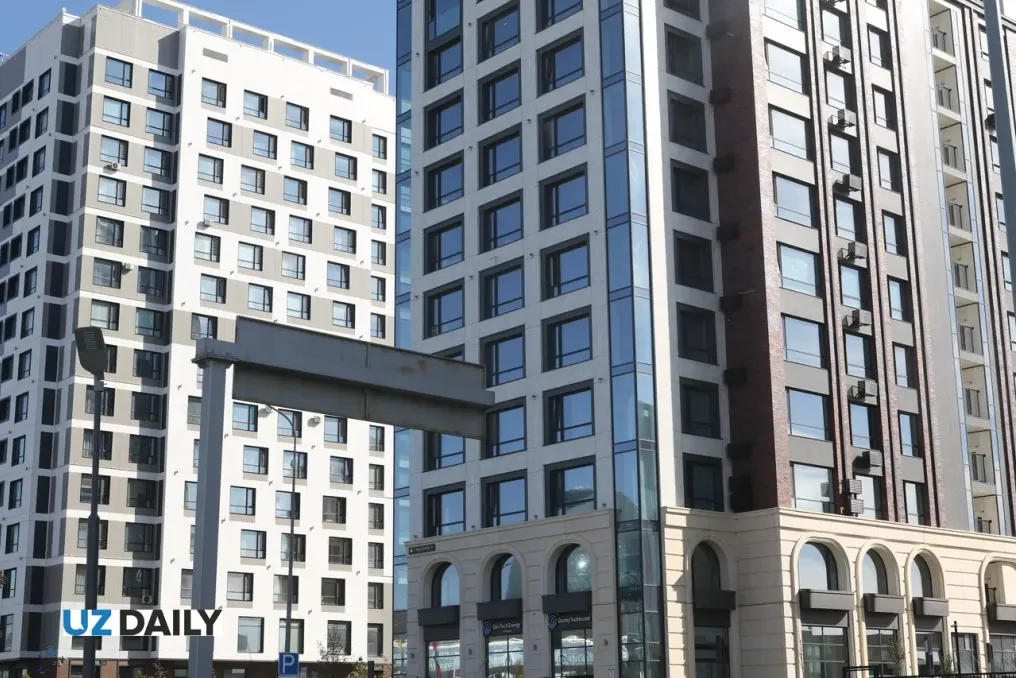
According to data from the Ministry of Economy and Finance, between January and September 2026, Uzbekistan provided mortgage loans to citizens totaling 20.9 trillion soms. This figure demonstrates a 39% increase compared to the same period last year. The total loan amount exceeded the volume issued in the first nine months of 2025 by 5.9 trillion soms, while 67,598 people received mortgage loans during the reporting period.

The disbursed amount accounted for 91% of the target for 2026, which stipulates the provision of 23 trillion soms in mortgage financing. The program is financed from three sources: 12.2 trillion soms from the state budget, 7.8 trillion soms from commercial banks' own funds, and 3 trillion soms from the Uzbekistan Mortgage Refinancing Company.

Of all the loans issued since the beginning of the year, 12.8 trillion soms, or 61%, were financed from the state budget. Commercial banks contributed an additional 6.1 trillion soms (29%), and the Uzbekistan Mortgage Refinancing Company provided 2 trillion soms, which accounts for 10% of the total amount.

During the nine-month period, mortgage financing for the primary housing market reached 15.5 trillion soms. The number of mortgage loans issued for purchasing housing in the primary market increased from 37,000 in January–September 2025 to 49,800 in the same period of 2026.

In the secondary market, mortgage lending amounted to 5.2 trillion soms, which is 28% more compared to the previous year. As of October 1, 2026, the total amount of mortgage subsidies paid under the program reached 1.2081 billion soms. Of this amount, 800.3 billion soms, or 66%, was allocated to compensate borrowers for interest payments on mortgage loans.

The remaining 407.8 billion soms, which constitutes 34% of the total volume, was provided to 13,722 citizens to cover down payments when purchasing housing.
Similar stories

Non-performing loans accounted for 3.8% of Uzbekistan's banking lending
Read more
uzdaily.uz

Non-performing loans accounted for 3.8% of Uzbekistan's banking lending

According to the Central Bank of Uzbekistan, as of October 1, 2026, the volume of non-performing loans (NPL) in commercial banks in Uzbekistan reached 25.04 trillion soms. This amount constitutes 3.8% of the total loan portfolio of the banking sector, which is estimated at 659.1 trillion soms.

In state-owned banks, the share of NPL was 16.9 trillion soms, equivalent to 3.98% of their loan portfolios. In other banks, non-performing loans reached 8.1 trillion soms, or 3.47% of issued loans.

The largest volume of non-performing loans is concentrated in the country's largest state banks. For example, Agrobank reported 3.18 trillion soms in NPL, corresponding to 3.3% of its portfolio. UzNationalBank recorded 3.11 trillion soms, or 3%.

Microcreditbank ranked third in terms of NPL volume with a figure of 2.74 trillion soms, which accounts for 11.4% of its total lending volume. Among other banks with large volumes of NPL were Uzpromstroybank (1.79 trillion soms, 3%), Asaka Bank (1.61 trillion soms, 4.1%), Xalq Bank (1.59 trillion soms, 4.1%), and Business Development Bank (1.53 trillion soms, 5.8%).

Mortgage Bank reported 1.24 trillion soms in NPL, or 3.3% of its portfolio. The figures for Anor Bank and Kapitalbank were 1.18 trillion soms (9%) and 1.11 trillion soms (2.8%), respectively.

Madad Invest Bank demonstrated the highest NPL ratio: 254.8 billion soms out of a total portfolio of 586.8 billion soms, which equals 43.4%. Other banks with double-digit NPL ratios included Poitakht Bank (13.8%), TBC Bank (13.4%), and Microcreditbank (11.4%). The ratio was about 9% at Anor Bank, 6.9% at AVO Bank, and 6.1% at Garant Bank.

UzKDB Bank and Octobank did not report any non-performing loans. NPL ratios were below 1% at Uzum Bank, Apex Bank, Open Bank, and Tayanch Microfinance Bank.

Among medium and large banks, Hamkorbank had the lowest NPL ratio—1.5%, followed by Ipak Yuli Bank (1.7%) and Invest Finance Bank (2.3%).

According to the banking sector's income and expenditure report, the estimated potential losses on loans and leases as of October 1, 2026, reached 24.9 trillion soms. This figure increased by 34% compared to 18.6 trillion soms a year earlier.

Uzbekistan's bank loan portfolio increased by 13.2% over the year
Read more
uzdaily.uz

Uzbekistan's bank loan portfolio increased by 13.2% over the year

According to data from the Central Bank of Uzbekistan, the total portfolio of commercial banks in Uzbekistan reached 659.1 trillion soms as of October 1, 2026. This figure demonstrates a growth of 13.2% compared to the previous year.

At the beginning of the current year, the portfolio amounted to 604 trillion soms, which represents an increase of 9.1% in the first nine months alone.

The main driver of growth remained retail lending. Loans to individuals grew by 19% year-on-year, reaching 248.4 trillion soms. Meanwhile, corporate lending increased by 9.9%, totaling 410.7 trillion soms. The share of individuals in the total banking portfolio rose from 35.8% to 37.7%.

Over the period since the beginning of the year, the retail loan portfolio expanded by 12.7%. Mortgage loans remained the largest segment, showing a growth of 14.9% to reach 91.2 trillion soms. Microloans accounted for 51.9 trillion soms, increasing by 6.3%, while microcredits to individuals grew by 22.4% to 49.5 trillion soms.

Auto loans increased by 4.3% to 41.4 trillion soms, and educational loans grew by 4.6% to 7.3 trillion soms. The fastest growth was recorded in loans related to bank cards and overdrafts, which increased by 47.9% since the beginning of the year to 6.5 trillion soms. Consumer loans remained almost unchanged, staying at 0.5 trillion soms.

The corporate loan portfolio showed a growth of 7% since the beginning of the year. Loans to non-credit institutions increased by 6.3% to reach 382.5 trillion soms. Microcredits to legal entities grew by 23.7% to 18.2 trillion soms, while leasing and factoring increased by 48.2% to 5.7 trillion soms. Interbank loans grew by an impressive 62.4% to 1.1 trillion soms, however, syndicated loans decreased by 30.9%, amounting to 3.3 trillion soms.

Lending in the national currency grew faster than lending in foreign currency. Som currency loans increased by 15.1% year-on-year, reaching 406.8 trillion soms, while loans in foreign currency grew by 10.3% to 252.3 trillion soms. The share of foreign currency loans decreased from 39.3% to 38.3%.

Long-term loans constitute the main part of the portfolio, totaling 583.5 trillion soms, which accounts for 88.5% of the total volume. Short-term loans amounted to 75.6 trillion soms.

Loans issued by state-owned banks increased by 7.8% to 425.8 trillion soms, accounting for 64.6% of the market. Portfolios of other banks grew by 24.5% to reach 233.3 trillion soms.

Uzbekistan issued loans totaling 35.9 billion sums under the poverty reduction program
Read more
uzdaily.uz

Uzbekistan issued loans totaling 35.9 billion sums under the poverty reduction program

As of October 1, 2026, commercial banks in Uzbekistan have provided 2,362 loans totaling 35.9 billion sums under the 'From Poverty to Prosperity' program. These funds are intended to support the population in purchasing equipment and other fixed assets, which will allow for expanding income sources, developing self-employment, and creating small production enterprises.

The largest share of financing was directed towards the purchase of sewing equipment, with 13.2 billion sums allocated for 925 sewing machines. Additionally, 7.1 billion sums went to finance 419 units of food production equipment.

The loans also covered expenses for purchasing 496 laptops worth 5.6 billion sums and 272 passenger cars amounting to 5.4 billion sums. Another 4.5 billion sums was allocated for the acquisition of 250 various fixed assets.

The leaders in lending volume were Xalq bank, which issued 1,587 loans totaling 23.6 billion sums. Mikrokreditbank provided 569 loans for a total of 8.6 billion sums, and Agrobank allocated 206 loans for 3.6 billion sums.

By region, the highest number of loans was issued in Jizzakh Region—321 loans. This was followed by Tashkent Region with 307 loans, and Syrdarya Region registered 262 loans.

The goal of this program is to stimulate entrepreneurial activity, increase household incomes, and create additional sources of earnings by helping citizens obtain the necessary equipment and assets for economic activity.

Popular