Stockal Investors Claim Unauthorized Sale of US Stocks Worth Millions of Dollars
Read more
YourStory [india, en]
yourstory.com

Stockal Investors Claim Unauthorized Sale of US Stocks Worth Millions of Dollars

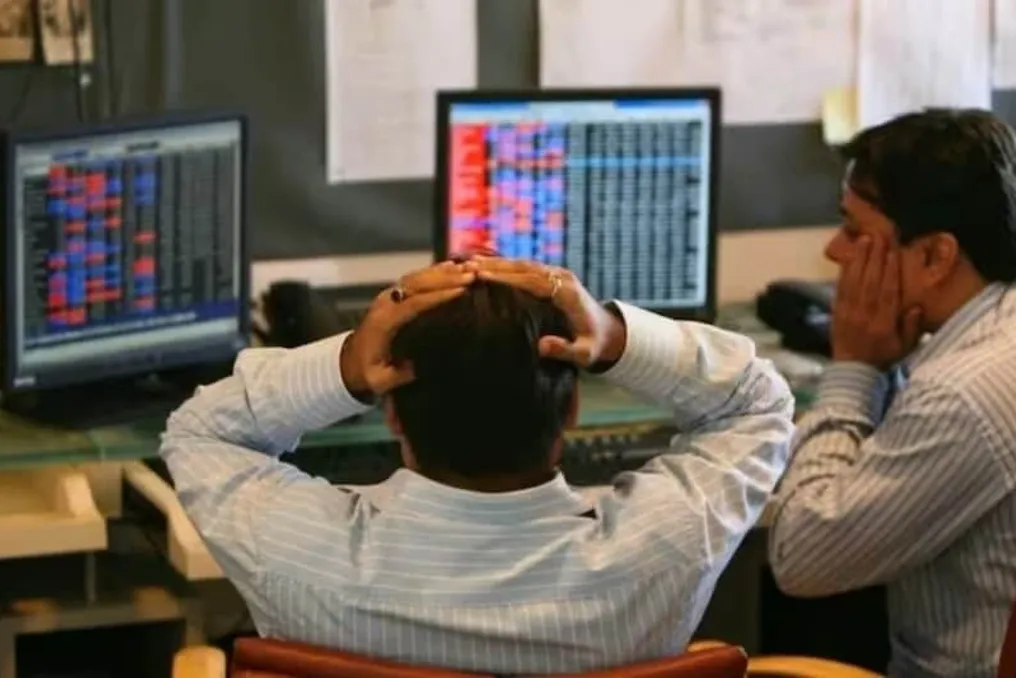
Nearly thirty Indian investors trading US stocks through Stockal Securities reported unauthorized access to their accounts. They claim that their blue-chip stocks, collectively valued in millions of dollars, were sold without their consent and replaced with shares of an obscure company that subsequently lost nearly 60% of its value.

According to the complaints received, the funds obtained from the forced sales were used to purchase shares of Zhibao Technology Inc., traded under the ticker ZBAO. One affected investor, a high-ranking official, reported the sale of stocks worth $335,768, which were converted into 300,000 shares of ZBAO at a price of $1.05 per share. Following this, the stock price dropped to $0.42, resulting in losses for the investor of approximately 4.26 crore rupees.

This scenario has raised concerns among investors, who note that coordinated purchases across multiple accounts can artificially inflate the price of a thinly traded stock, resembling tactics known as 'pump-and-dump' schemes.

However, the complaints do not establish who, if anyone, benefited from these transactions. Stockal stated that malicious actors used valid credentials to access 26 accounts, attributing the breaches to phishing attacks that allegedly compromised client login data through deception.

Stockal's US brokerage partner, DriveWealth, refuted this explanation, instead pointing to vulnerabilities in Stockal's own security system. The affected investors have filed complaints with the Securities and Exchange Board of India (SEBI), the U.S. Securities and Exchange Commission (SEC), and the Bengaluru police. The disagreement between the two companies regarding the cause of the breaches has left investors uncertain about who is responsible for their losses.

This case also highlights the risks for Indian citizens investing in foreign markets through intermediary platforms. When a transaction is executed via an Indian application but settled by an American broker, questions arise regarding the level of investor protection, the distribution of responsibilities among involved companies, and which regulator has jurisdiction to review claims.

Similar stories

Investors profit by 20.8 lakh rupees in five days due to stock market growth
Read more
www.aajtak.in

Investors profit by 20.8 lakh rupees in five days due to stock market growth

A sudden shift is observed in the dynamics of the stock market, as the last five days have been characterized by steady growth, while global markets are under pressure, especially American ones. However, the Indian market continues to grow confidently, which has brought significant relief to investors.

According to statistical data, over five trading sessions, the main index of the Bombay Stock Exchange (BSE), SENSEX, increased by more than 4055 points, leading to a substantial increase in the total capital of investors. On Wednesday, after trading, SENSEX closed at 77,301.40 points, showing a rise of 383.55 points, or 0.50 percent.

Similarly, the NIFTY index of the National Stock Exchange demonstrated an increase of 149.75 points or 0.63 percent on Wednesday, closing at 23,960.60. Over the past five days, NIFTY rose by a total of 1261.75 points.

The continuous growth over the last five days significantly increased investors' wealth. Only on Wednesday's trading day, the total capitalization of companies listed on the BSE reached 493.44 lakh rupees, providing an asset increase for investors of approximately 6.65 lakh rupees in one day. If we consider the total income over five sessions, the total increase in investors' assets amounted to a substantial 20.81 lakh rupees.

During this growth period, mid-cap and small-cap stocks showed greater strength compared to large-cap stocks. The Nifty Midcap 100 index demonstrated strong growth of 1.55 percent, and the Nifty Smallcap 100 index—a 2 percent increase. Regarding sectors, all major indices except IT closed in the green zone, with media, real estate, and metallurgy stocks being the leaders.

According to market experts, various domestic and global factors are behind this growth. News about tax benefits in the upcoming central budget boosted the market. Specifically, the statement by Finance Minister Nirmala Sitharaman regarding the consideration of reducing the Long Term Capital Gains (LTCG) tax strengthened investor confidence.

Furthermore, the decrease in crude oil prices provided some relief. Strong demand during the festive season and positive quarterly reports supported market morale. The Indian rupee strengthened against the US dollar for the fourth consecutive time, and the weakening dollar and slowing crude oil prices provided additional support to the domestic market.

Following the results of the US midterm elections, there was a positive sentiment in global markets. This generated hope for a balanced approach to trade and tariff policies, which could stimulate investment from foreign institutional investors (FII) in emerging markets.

Experts believe that thanks to strong domestic demand and visible earnings, the market trend may remain positive in the near future, although periodic profit-taking may occur due to geopolitical risks and fluctuations in crude oil prices.

Indian stock market falls by ₹21.79 trillion due to geopolitical tensions and oil prices
Read more
www.aajtak.in

Indian stock market falls by ₹21.79 trillion due to geopolitical tensions and oil prices

Tensions in West Asia are having a serious negative impact on the Indian stock market. Amid rising crude oil prices and inflation concerns, selling pressure is observed. On Friday, the Sensex index closed down for the fourth consecutive working day. Over the last four trading sessions, the total market capitalization of companies listed on the Bombay Stock Exchange (BSE) has decreased by approximately ₹20.79 trillion.

The Sensex on the BSE fell by 125.56 points, or 0.17%, on Friday, closing at 73,123.83. Despite the shortened working week due to holidays, the Sensex overall dropped by 1605.44 points, or 2.15%. This decline was reflected in the market capitalization of companies. If the total market capitalization on the BSE was ₹472,62,167.42 trillion on October 16, it reduced to ₹451,83,393.14 trillion over four working days, corresponding to a loss of about ₹20.79 trillion.

There are five key factors that have led to the sustained fall of the Indian stock market over four days. Firstly, growing tensions in the Middle East, causing investor concern over potential US-Iran tensions and threats of American strikes on Israel. Secondly, the sharp rise in crude oil prices; Brent Crude reached $116.73 per barrel, increasing the risk of inflation in India. Thirdly, inflation fears related to expensive fuel intensified selling in the market. The fourth factor is the downturn in American stock markets, which prompted Indian investors to exercise caution. Finally, the weakening rupee and rising yields on US bonds added anxiety for investors and put pressure on the domestic market.

The primary reason for the stock market decline is the significant jump in crude oil prices. Increasing geopolitical instability in the Middle East raises the probability of oil supply disruptions. On Friday, the price of Brent Crude rose by approximately 3%, reaching $116.73 per barrel, exceeding the $116 mark. The rise in oil prices to a five-month high caused concern among investors. Siddharth Kemka, Head of Wealth Management at Motilal Oswal Financial Services, noted that geopolitical tensions and high crude oil costs could continue to pressure the Indian market.

The risk of increased inflation due to rising oil prices can affect the economy and company costs. Tensions between the US and Iran, setbacks in diplomatic negotiations, and reports of possible new American strikes on Iranian nuclear and military targets have heightened uncertainty. Furthermore, supply concerns intensified after Houthi attacks on Saudi Arabian oil facilities from Yemen.

On Friday, shares of Tata Steel and Adani Ports were among the most affected companies listed in the Sensex, falling by more than 3%. In addition to them, shares of Trent, Tech Mahindra, Bharat Electronics Limited (BEL), Indigo, Bajaj Finserv, Kotak Mahindra Bank, Titan, Bajaj Finance, NTPC, State Bank of India (SBI), and Hindustan Unilever also closed lower. Nevertheless, some stocks showed growth: Eternal, Larsen & Toubro (L&T), Reliance Industries, Tata Consultancy Services (TCS), Ultratech Cement, Asian Paints, Maruti Suzuki India, Infosys, and ICICI Bank closed with positive momentum.

Ankur Punj, Managing Director of Equirus Wealth, stated that the downturn in American stock markets made Indian investors more cautious. This decline, combined with the rise in global crude oil prices and the weakening rupee, intensified selling pressure. He added that although most Asian markets showed improvement, India remained concerned about inflation due to expensive crude oil and rising US bond yields, which impacted the domestic market.

Next week, investors will also be watching the listing of Jio Platforms shares. The company's IPO, valued at ₹30,213 trillion, was subscribed 22.19 times. The shares are planned to be listed on BSE and NSE on October 28. The listing may provide insight into market trends. Additionally, investors will closely monitor the Federal Reserve System meeting scheduled for October 27 and 28. Market sentiment may also be influenced by initial unemployment data in the US, GDP growth figures, and the Bank of Japan's decision on interest rates. Second-quarter results from companies will also be crucial in determining the market direction. Results for companies such as Paytm, Tata Consumer, L&T, Maruti Suzuki, Hindustan Unilever, Adani Ports, Trent, Sun Pharma, Bharat Electronics Limited, and others will be announced next week.

Currently, the market direction is being determined by crude oil prices and events in the Middle East.


Goldman Sachs recommended selling two popular defense stocks after an 8% drop
Read more
www.aajtak.in

Goldman Sachs recommended selling two popular defense stocks after an 8% drop

Despite the previous boom in defense stocks on the stock market, there has been a sustained decline in the prices of these securities recently. Both discussed defense stocks are trading at their 52-week lows. The stocks in question are Mazagon Dock Shipbuilders and Garden Reach Shipbuilders.

Goldman Sachs also issued a sell recommendation for these shares, believing they could fall even further. Following this update on Thursday, both stocks fell by up to 8 percent.

Goldman Sachs set a target price of 1,515 rupees for Garden Reach Shipbuilders & Engineering (GRSE) shares, representing a 25 percent drop from the current level. For Mazagon Dock Shipbuilders shares, Goldman Sachs provided a target of 1,855 rupees, corresponding to a decrease of 7.13 percent from the current price.

As a result, GRSE fell by 7.63 percent, reaching 1,868.15 rupees, while Mazagon Dock shares declined by 6.69 percent, amounting to 1,863.75 rupees. However, both stocks later showed some recovery, and the overall drop was corrected by approximately 4 percent.

Previously, on October 7, DAM Capital noted in its report that due to a significant portion of high-profit orders in the defense sector, shipbuilding companies could expect peak revenue and margin growth in the 2027 fiscal year. Furthermore, it was projected that margins might stabilize in the 2028 fiscal year due to a reduction in low-margin contracts.

Goldman Sachs indicated that delays in approving and concluding major programs and contracts for building warships remain an obstacle in the near future, negatively affecting the probability of receiving orders for MDL, GRSE, Cochin Shipyard, and other companies.

Nevertheless, analysts noted that the recent decline in the shares of shipbuilding companies has made their valuation more reasonable, improving the risk-to-reward ratio. They believe that investors should start investing in quality stocks.

Popular