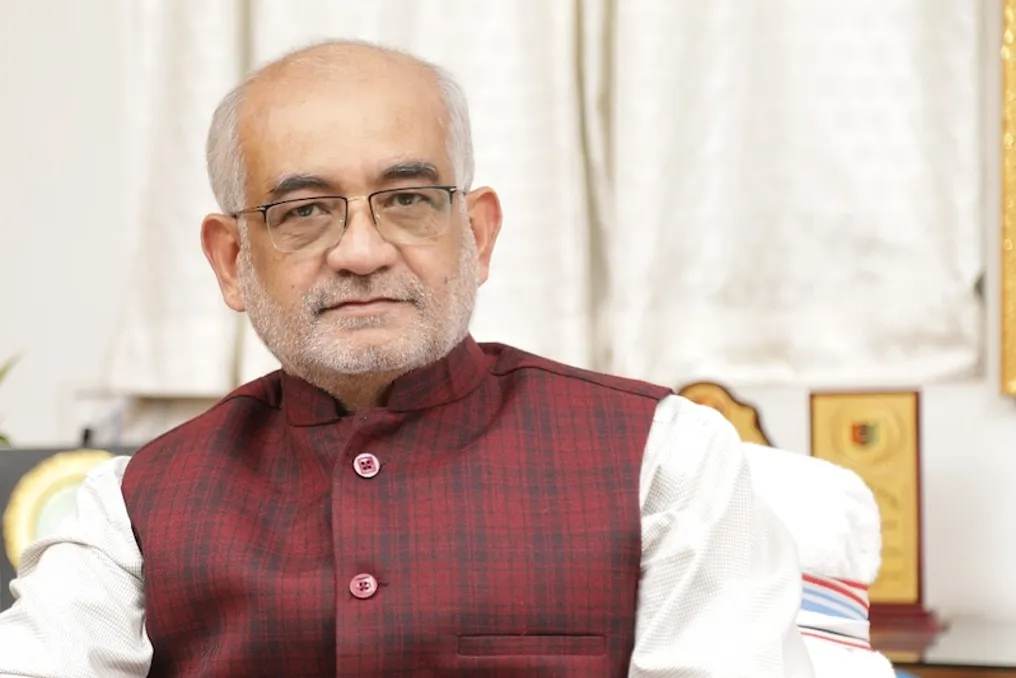
Professor Indranil Manna, former Vice-Chancellor of BIT Mesra and Director of IIT Kanpur from 2012 to 2017, has called for a revision of workforce training methods to align with the changing needs of the country's labor market.
Professor Manna, a former chairman of the Indian National Academy of Engineering, noted in an exclusive interview with 'India Today' that while short courses and periodic upskilling help employees acquire skills for specific roles, it is crucial that the foundation of education always remains based on fundamental principles.
Since artificial intelligence (AI) is impacting professions across all sectors, Professor Manna believes the main question is not whether the era of diploma programs has ended, but whether the country's youth and professionals can adapt when their current skills prove insufficient.
He posits that if people are given a strong grasp of fundamentals, they can be quickly trained in skills relevant to technological changes. Thus, the key question is whether one should simply take countless upskilling courses, or if educational institutions can create clear learning pathways that allow people to absorb knowledge, apply it in practice, and move into specific career fields.
Professor Manna clearly distinguished between training for a specific task and education that enables a person to start a new job. He explained that a diploma or certificate course may suffice to master the operation or maintenance of a particular machine.
He cites an example from the large manufacturing industry, particularly the equipment sector, where the workforce structure typically includes about 5-6 diploma holders and 10-12 certificate holders per engineer.
However, those who wish to deeply understand the system, design it, or adapt to changes in its design require a solid conceptual base. For those seeking specific skills, he says a short-term training program is suitable. Nevertheless, he warns that such training should never be considered a substitute for a degree.
In Professor Manna's view, one cannot expect any skill to remain relevant throughout a person's working life. As industries change, employees must have the opportunity to return to learning and update their knowledge.
He emphasized: 'There is no guarantee that what you learn today will remain relevant forever.' He added that continuous updating is necessary. Furthermore, he noted that such training should not be limited only to technical skills. Since one discipline rapidly learns another, basic knowledge must be reviewed periodically.
As an alumnus of IIT himself, Professor Manna explained why specialists need to go beyond their traditional disciplines, citing the growing link between physics and biology. He stated, 'Physics now understands biology better,' and added that 'both physicists and biologists need to integrate these two sciences or at least maintain contact.'
He provided medical practice as another example of this interaction. He noted that modern doctors use numerous technologies, and healthcare workers may need training in areas unknown to them during formal education. He argued that this exchange must happen in reverse as well: people trained in technology must also understand how 'physiological or any biological systems' work.
Explaining the necessity of updating engineers' knowledge amid technological changes, Professor Manna gave an example: 'When we transition from internal combustion engines to hybrid or electric drives, the vehicle design remains the same. Only the power generation and transmission design changes.'
He continued that training an engineer in only one type of vehicle limits their effectiveness. 'If you train someone only for a hybrid car, that person can only service a hybrid car, not others.'
Professor Manna believes that the impact of AI will not be limited to engineering but will extend to medicine, sports, music, literature, and creative fields.