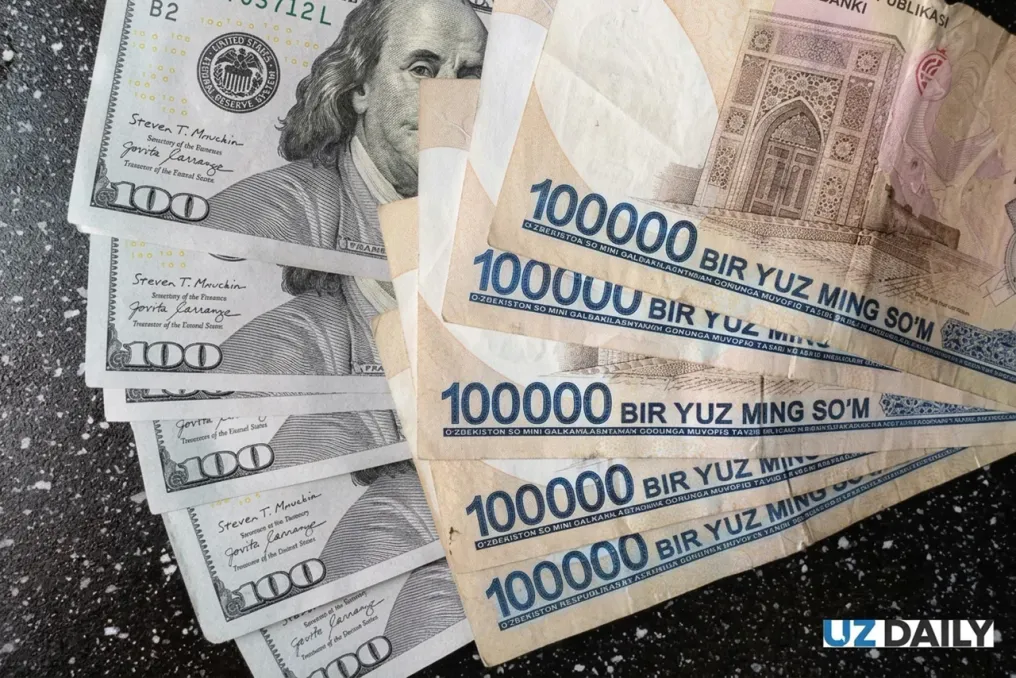
Золото опустилось ниже 4000 долларов США, серебро снизилось на 18,5% в октябре
Read more
UzDaily
uzdaily.uz

Золото опустилось ниже 4000 долларов США, серебро снизилось на 18,5% в октябре

The global metals market faced considerable strain throughout October. Gold prices dropped beneath the $4,000 per ounce mark, while silver experienced a sharp decline of 18.5% over the course of the month. Industrial metals also pulled back from their recent peaks due to various pressures, including inflation risks, anticipation of stricter policies from the Federal Reserve, and selling activity in stock markets, especially within the technology sector.

Specifically, gold settled near $3,930 an ounce, falling below the key psychological barrier of $4,000, representing an approximate 5% loss for the month. Silver performed even more poorly, with its price falling to roughly $49.8 an ounce, marking an 18.5% decrease. This downward trend was exacerbated by a strengthening US dollar, higher yields on US government bonds, and expectations of further monetary tightening by the Federal Reserve. Furthermore, geopolitical tensions no longer provided the same level of support for precious metals as before.

While the conflict in the Middle East has maintained elevated oil prices, contributing to inflation worries, investors are currently concentrating on the outcomes of the US midterm elections and the latest employment figures. Both these events are viewed as potential influences on expectations leading up to the Federal Reserve's December meeting.

Performance of Other Metals

Platinum and palladium also had a challenging October. Platinum decreased to approximately $1,420 an ounce, losing around 18% monthly, whereas palladium saw a drop to about $930 an ounce, with monthly losses surpassing 20%. Uncertainty regarding demand from the automotive industry added further pressure to both metals. Increased energy costs and higher interest rates could dampen vehicle sales, while the increasing use of electric vehicles is gradually lessening the need for conventional catalytic converters.

The outlook for the platinum market has shifted; a surplus of about 265,000 ounces is now projected for 2026, despite accumulated stocks remaining low after several years of supply shortages.

Copper prices fell to around $6.38 per pound, registering a 3% monthly decline, though it remains 30% higher compared to the previous year. Despite this dip, long-term factors continue to bolster copper demand. Mining output in Chile remains restricted, and the ongoing requirements of the energy sector, electricity grids, and technology infrastructure necessitate substantial quantities of the metal.

Investor sentiment has grown more reserved concerning the future of artificial intelligence and large investments in data centers, following the downturn in technology stocks. Concurrently, copper inventories stored in London Metal Exchange warehouses reached a four-month high, alleviating some prior anxieties about supply scarcity.

Aluminium dropped to about $3,045 per tonne and is nearing multi-month lows. The market is slowly moving past earlier fears of a severe supply deficit. Producers in the Middle East are resuming capacity, China is boosting its production and exports, and new supplies are entering the market from Indonesia, all of which have lessened the shortage risk that supported prices during the summer.

Zinc has shown greater resilience, trading near $3,790 per tonne. Its relative strength is attributed to limited supply, high operational costs for producers, and relatively low inventory levels.

In summary, October demonstrated that even when supply shortages exist, they do not automatically guarantee sustained growth across the metals market. Currently, precious metals are mainly influenced by Federal Reserve policy and the US dollar, while industrial metals are more reliant on actual demand, inventory levels, and the broader global economic forecast. Although long-term supports, such as the expansion of energy infrastructure and AI development, persist, a stable recovery in metal prices requires greater assurance that high interest rates and elevated energy expenses will not trigger a major contraction in worldwide demand.
Similar stories

Gold and silver prices fall: Silver dropped by 4000 rupees, gold also decreased
Read more
www.aajtak.in

Gold and silver prices fall: Silver dropped by 4000 rupees, gold also decreased

Following a sharp rise in the prices of gold and silver on Monday, a collapse in the value of both precious metals was observed on Tuesday. On the Multi Commodity Exchange (MCX), the price of silver fell by 4400 rupees per kilogram, and the cost of 10 grams of 24-carat gold decreased by more than 1300 rupees.

On the MCX market, silver initially showed rapid growth, reaching over 1.83 lakh rupees per kilogram after the close of trading on December 4th. However, this growth proved to be short-lived, as on Tuesday, upon opening, the price of silver dropped again below the 1.80 lakh rupee mark. During the initial trading, the silver futures contract traded at the level of 1,79,350 rupees.

A significant decline occurred when the silver futures price, which closed at 1,83,779 rupees per kilogram the previous day, began trading on the MCX at 1,79,350 rupees. This represented a drop in the price of silver by 4429 rupees per kilogram.

The current drop in silver prices has caused it to become significantly cheaper than its historical highs. Previously, on January 29, 2026, the price of silver first exceeded the 4 lakh rupee mark per kilogram, reaching 4,20,048 rupees, but now it is selling for more than 2.40 lakh rupees below that peak value.

The decrease was not limited to silver but also affected gold. On the MCX Gold Rate on Tuesday, at the start of futures trading, the price of 10 grams of 24-carat gold fell to 1,38,800 rupees, compared to 1,40,186 rupees on the previous business day. Thus, gold lost 1386 rupees for 10 grams.

Despite the rise in futures prices on Monday, both metals continue to decline in the domestic market. According to data from the Indian Bullion Jewelers Association (IBJA.Com), on November 2nd, the price of 24-carat gold in the domestic market decreased by 2530 rupees compared to the close on October 30th, amounting to 1,37,524 rupees for 10 grams. The price of one kilogram of silver also decreased by 1372 rupees compared to 1,81,344 rupees from October 30th, settling at 1,79,972 rupees per kilogram.

Silver price fell by 2.40 lakh rupees in 10 months, reaching the mark of 7000 rupees
Read more
www.aajtak.in

Silver price fell by 2.40 lakh rupees in 10 months, reaching the mark of 7000 rupees

In recent days, a significant decline in the prices of gold and silver has been observed. Daily drops in silver prices ranging from five to ten thousand rupees are being recorded against the backdrop of the ongoing geopolitical situation worldwide. Usually, during such moments, the prices of precious metals like gold and silver demonstrate growth; however, an opposite trend is observed in this case.

Silver is losing value daily, and gold is following suit. Silver, which reached a record 4.20 lakh rupees per kilogram this year, has decreased by 2.40 lakh rupees over just ten months, reaching the mark of 1.80 lakh rupees per kilogram. This raises a natural question about the reasons for such a fall in silver prices.

On Friday, on MCX, the price of silver with December futures traded at 1,82,500 rupees per kilogram, showing a drop of 3.67 percent or 7,000 rupees by 17:08. Simultaneously, the price of gold decreased by 1.16 percent or 1,657 rupees, amounting to 1,40,900 rupees per 10 grams.

The decrease in the value of gold and silver occurred not only in India's domestic commodity market but also internationally. In the global market, gold fell by 1.26 percent and dropped below $4000 per ounce. Silver, meanwhile, decreased by approximately 4 percent, trading at a price of $50.345 per ounce.

Silver price fell by 2.25 lakh rupees; analysts advise considering a purchase
Read more
www.aajtak.in

Silver price fell by 2.25 lakh rupees; analysts advise considering a purchase

Precious metal markets, like the stock market, are experiencing a period of decline. Prices for gold and silver are showing a steady decrease. This downturn occurs against the backdrop of approaching holidays such as Karva Chauth and Dhanteras, making the purchase of gold and silver an attractive opportunity for buyers.

The most significant drop was recorded in silver. The silver futures contract on the commodity market decreased by up to 2.25 lakh rupees from its peak. In January of this year, the price of silver reached a record high of 4.20 lakh rupees per kilogram, but today it has fallen to 1.95 lakh rupees.

On Friday at 16:00, the price of silver dropped by 2.14 percent, reaching 1,95,300 rupees per kilogram. Additionally, on Thursday, futures prices for silver fell by more than 8000 rupees on MCX.

The main reason cited for the sharp decline in silver prices is the rise in crude oil prices. The price of crude oil has risen to over $114 per barrel, which has triggered a decrease in precious metal prices. There is also a decline in global demand for silver, especially in the industrial sector, leading to a rapid drop in the metal's course.

Furthermore, an expected increase in interest rates by the Federal Reserve is causing concerns about rising inflation and contributing to the decrease in silver's value.

Experts advise those considering investing in silver not to wait for further declines, but instead to acquire the metal in small portions. Although there is a possibility of further decreases in the near future, a price increase is forecasted in the long term.

Since prices have significantly decreased relative to record highs, this presents a favorable moment to purchase silver tableware or jewelry during the holidays. On the IBJA website, the price of silver was 194415 rupees per kilogram, while in Delhi, the cost of one kilogram of silver has dropped to 2.20 lakh rupees.

Popular