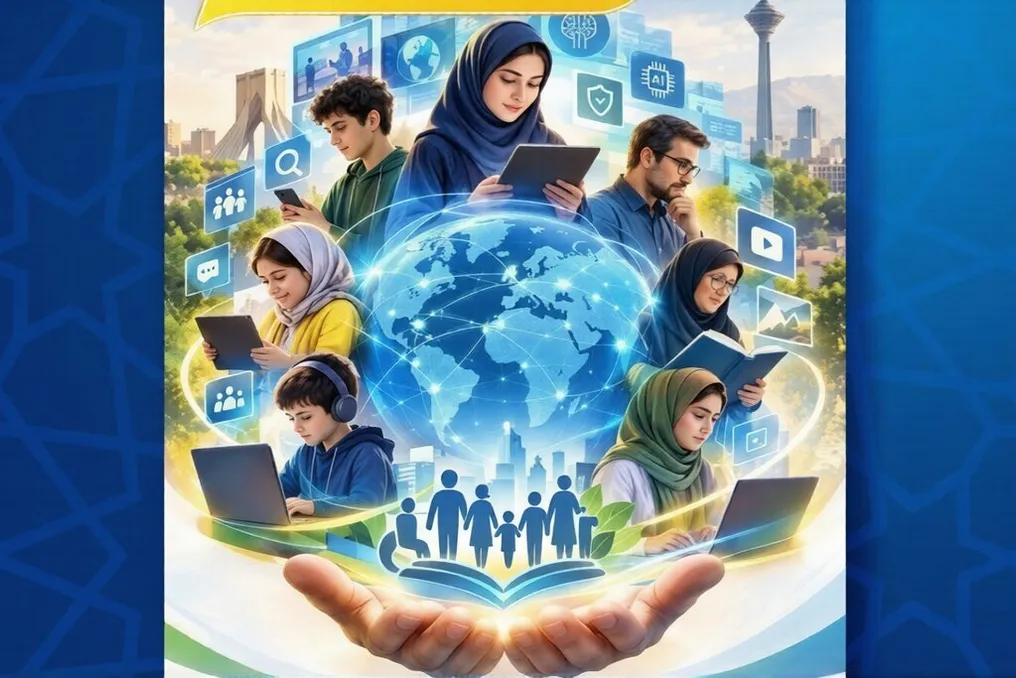
The Mustafa Foundation for Science and Technology has organized a series of educational and media projects to celebrate the International Week of Science and Peace (November 9-15) and World Science Day for Peace and Development (November 10).
These initiatives aim to raise public awareness about scientific achievements and breakthroughs, explain various scientific phenomena, and promote scientific thinking through diverse media formats.
One of the foundation's outputs is the release of the tenth episode of the podcast 'Observatory,' titled 'Building the Missing Element of the Body.' This episode examines the significance and necessity of organ transplantation and presents tissue engineering as a major field of bioengineering.
Furthermore, the foundation will release the fourth issue of its journal 'Observatory,' which will feature articles on the latest advancements in fields such as aerospace, cosmology, mathematics, cancer treatment, and bioprinting.
Another planned program is the publication of an exclusive interview with Pik Si Chah, a Malaysian scientist and former laureate of the foundation's KANS Scientific Competition. Cheah studied biomedical sciences at Universiti Putra Malaysia, received a PhD in Anatomy from Kebangsaan University Malaysia, and conducted postdoctoral research in molecular neurogenetics at the University of Adelaide in Australia.
As part of the week's events, the foundation also organized a two-day educational program in Tehran for 40 top students from across the country participating in the foundation's sixth student competition.
International Week of Science and Peace
The International Week of Science and Peace and World Science Day for Peace and Development are two global events that highlight the role of science in improving people's lives, strengthening international cooperation, and contributing to a more peaceful and sustainable world.
The International Week of Science and Peace was first held in 1986 as a non-governmental organization initiative during the International Year of Peace. Following the continuation of this initiative, the United Nations General Assembly adopted Resolution 43/61 in 1988, establishing the week containing November 11th as the International Week of Science and Peace. The goal of this event is to raise public awareness about the link between scientific and technological progress, peace, and security, while encouraging collaboration among scientists. It is observed annually from November 9 to 15.
Meanwhile, World Science Day for Peace and Development arose after the World Conference on Science, which took place in Budapest in 1999 in collaboration with UNESCO and the International Science Council. The conference emphasized the importance of strengthening the links between science and society, paving the way for the establishment of this day. In 2001, the UNESCO General Conference proclaimed November 10th as World Science Day for Peace and Development, and the first global celebration took place in 2002.
Key objectives of this day include strengthening the connection between science and society, encouraging public participation in discussions on scientific issues, raising awareness about the role of science in daily life, and demonstrating the social responsibility of scientists. It also provides an opportunity for governments, scientific institutions, media, teachers, and students to work together to use science for the benefit of peace and development.