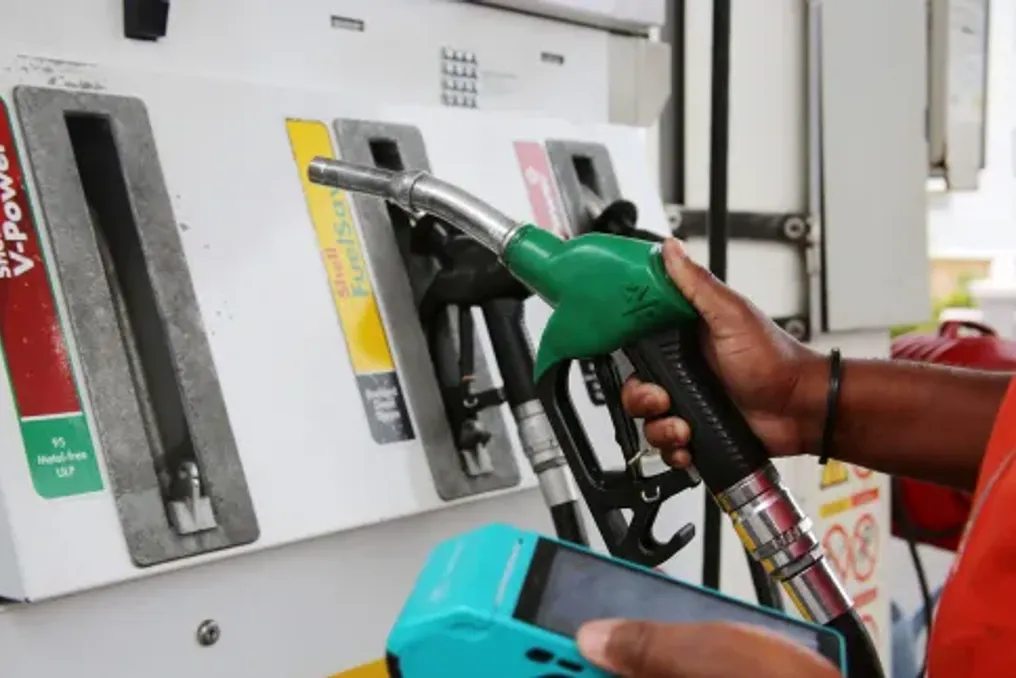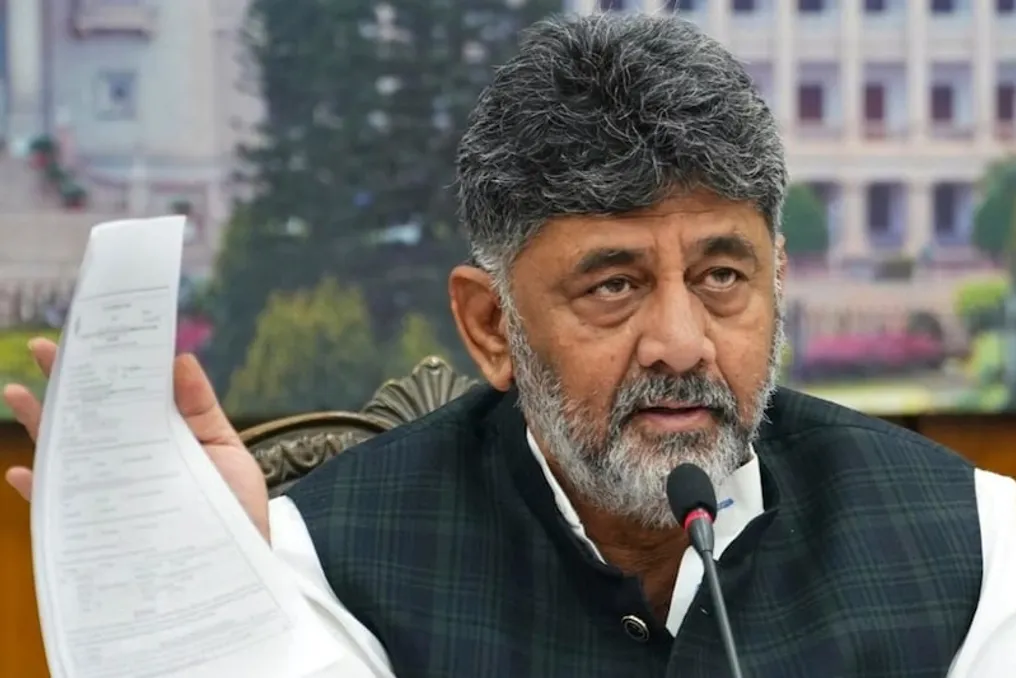
Karnataka Chief Minister DK Shivakumar explains bus fare hike due to rising fuel prices
Read more
Aaj Tak
www.aajtak.in

Karnataka Chief Minister DK Shivakumar explains bus fare hike due to rising fuel prices

Karnataka Chief Minister DK Shivakumar opposed the increase in fares for state buses, blaming the rise in gasoline and diesel fuel prices. He stated that the financial burden on transport corporations is increasing due to the higher cost of fuel. However, he emphasized that the state government is ready to reduce travel costs if the federal government lowers energy prices.

During a conversation with journalists in Bangalore, DK Shivakumar revealed that last week there was a situation where there wasn't even enough money to refuel the buses with diesel, which forced the government to provide financial assistance. He noted that despite providing free travel, transport corporations are constantly operating at a loss.

Shivakumar clarified: 'A few days ago, there was no money even to refuel the buses with diesel. The government had to allocate funds. We provided the service of free travel, but we are running at a loss. Fares were increased by two and three rupees incrementally due to the rise in diesel fuel prices.'

Questions to the federal government regarding inflation

The minister also questioned the protesters against the fare increase. He asked why people did not protest when the prices of gasoline, diesel fuel, and gas for cooking were rising. Shivakumar reminded that medicines, pesticides, and other essential goods, as well as fertilizers and cement, have become more expensive, but no one raised issues about these matters. He also raised the issue of price differences when buying and selling medicines.

Need for support for farmers and transport corporations

DK Shivakumar stressed that 2.5 million farmers live in the state who are struggling to survive, and the difficulties of the farmers have been exacerbated by drought. In such a period, he believes that transport companies also need financial support to ensure the continuity of services. The minister stated: 'Lower the prices of gasoline and diesel, and we will lower the bus fares. There is no problem with this.'

He called on this message to be conveyed to Prime Minister Narendra Modi, insisting on the need to take measures to reduce excise duties on gasoline and diesel fuel. The state is ready to reduce travel costs proportionally to the reduction in fuel prices.

Increase will come into effect on November 5th

The Karnataka government announced the fare increase for four state road transport corporations on November 4th. According to Transport Minister Baiyari Suresh, the average KSRTC fare was increased by 23 percent, and the fares of the Bangalore Metropolitan Transport Corporation (BMTC) by approximately 32–35 percent. The new rates will take effect from November 5th. The government justified this decision by the rise in fuel prices, personnel expenses, and the losses of the transport corporations.
Similar stories

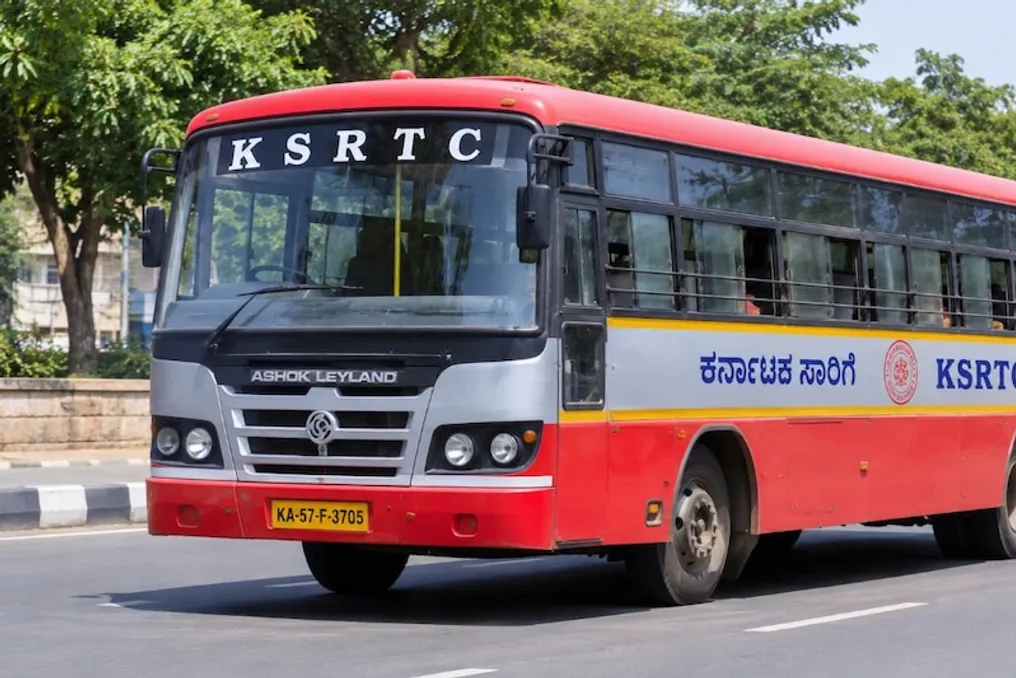
Karnataka government considers increasing public transport fares after rise in milk prices
Read more
www.aajtak.in

Karnataka government considers increasing public transport fares after rise in milk prices

Following the increase in prices for milk and yogurt in Karnataka, the government is considering the possibility of raising public transport fares. The state's Minister of Transport, Baiyari Suresh, reported that a meeting was held with representatives of four state transport corporations on Duble Road in Bangalore.

This meeting is scheduled for Tuesday evening, and the decision on increasing fares for state buses will be made there. An official notification will be issued after the decision is reached.

Transport Minister Baiyari Suresh cited the rise in diesel fuel prices, noting that the four transport corporations incurred a cumulative loss of 9 thousand crore rupees. He also informed that the transport corporations face annual losses of about 2 thousand crore rupees.

He stated that the necessity of increasing fares and the required magnitude of changes would be discussed at the meeting. A decision on this matter will be made this evening, and information about it will be available the next day.

Furthermore, the minister mentioned the price hike for diesel fuel by the central government. He noted that over the last nine months, the central government has increased diesel fuel prices five times, leading to a loss of 9 thousand crore rupees for the four transport corporations in Karnataka. The annual deficit of the corporations is 2 thousand crore rupees.

Baiyari Suresh emphasized that they are facing serious difficulties as they need to pay employee salaries, purchase diesel fuel, and cover other expenses. Due to this, there may be an increase in bus fares in Karnataka soon.

Fuel Price Forecast for November: Expected Decrease in Gasoline and Diesel Fuel Costs Starting Thursday
Read more
iol.co.za

Fuel Price Forecast for November: Expected Decrease in Gasoline and Diesel Fuel Costs Starting Thursday

Drivers in South Africa can expect some reduction in refueling costs starting on Thursday, November 4th, due to a temporary tax cut that will lead to cheaper gasoline and diesel fuel.

Data obtained at the end of the month from the Central Energy Fund (CEF) indicates a potential price drop of 50 cents for unleaded petrol 95 and 93 cents for unleaded petrol 93, averaging a decrease of 42 cents for both types. Regarding diesel fuel, price reductions are expected of R1.58 for 500ppm and R1.68 for 50ppm.

These forecasts take into account the temporary measures to ease the fuel burden announced by Finance Minister Enoch Godongwana earlier this month. The general fuel levy will be reduced by R1.50 per liter for petrol and R3.00 for diesel from November 4th to December 1st. Subsequently, these reductions will decrease to R1.00 and R1.50 respectively from December 2nd to January 5th, 2027.

However, the final adjustment to fuel prices, which will be announced by the Department of Mineral Resources and Energy early this week, may also be influenced by factors such as the Shale Tax.

Projected Prices and Impact of Support Measures

If the above forecasts materialize, South Africans will pay approximately R28.96 per liter for unleaded petrol 95 on the coast and R29.83 inland; unleaded petrol 93 will cost around R29.46. The wholesale price of 500ppm diesel fuel is expected to fall to R29.50 on the coast and R30.37 inland, while 50ppm will cost R30.25 and R31.12 respectively.

Without the temporary fuel burden relief measures announced before the local elections, South Africans would face an increase in petrol prices to R1.16 per liter and diesel fuel to R1.42.

International oil prices rose sharply in October amid escalating conflict in the Middle East, fears of renewed military action, threats to energy infrastructure, and potential disruption to shipping through the Strait of Hormuz, raising concerns about global oil supplies.

This November pause follows a sharp rise in fuel prices—to R3.33 per liter for petrol and R3.24 for diesel fuel.

Petrol prices have increased by almost R10 per liter this year: 95 ULP petrol has risen from R19.92 in March to R29.38 in October, and 500ppm diesel fuel has increased by approximately R13, rising from R17.70 in March to R31.08.

The Finance Minister stated earlier this month that the government intends to eventually abolish the General Fuel Levy, but replacing the annual revenue generated by it, amounting to approximately R80 billion, will pose a serious obstacle. He also called for a reconsideration of the funding for the Road Accident Fund, while a separate review of the fuel price structure is expected to conclude by March 2027.

Nevertheless, drivers should not expect fuel tax breaks to be permanently removed anytime soon. Economists also warn that fuel tax reductions could undermine public finances, weaken the rand, or force spending cuts in other areas.

Fuel prices expected to change in South Africa in November
Read more
iol.co.za

Fuel prices expected to change in South Africa in November

Drivers in South Africa may experience some relief at gas stations next week as fuel prices are expected to decrease, despite rising global oil prices and a weakening rand.

According to the latest data from the Central Energy Fund (CEF), there is a shortfall in revenue from petrol and diesel, indicating a potential price increase before accounting for the temporary reduction in fuel levy.

However, planned government levy reductions should offset this increase, leading to lower fuel prices after the adjustments take effect in November.

The latest CEF figures, covering the period up to October 28, show a revenue shortfall of approximately 1.23 rand per liter for petrol 93 and 1.07 rand per liter for petrol 95. Diesel also shows a shortfall, with grade 0.05% at about 1.44 rand per liter, and grade 0.005% at 1.35 rand per liter.

The expected price drop is linked to the government's decision to temporarily reduce the overall fuel levy as part of measures announced by Finance Minister Enoch Godongwana. From November 4 to December 1, the levy will be reduced by 1.50 rand per liter for petrol and by 3 rand per liter for diesel.

These reductions are intended to mitigate the impact of rising fuel costs and limit the effect on drivers. According to the latest forecasts, petrol 93 could fall by approximately 23 cents per liter, and petrol 95 by about 38 cents. Diesel prices are projected to decrease by approximately 1.57 rand per liter for grade 0.05% and by 1.65 rand for grade 0.005%.

Despite the expected decrease, economists warn that lower fuel prices may not lead to a significant improvement in household financial situations. Higher international oil prices and a weaker rand continue to put pressure on fuel costs. These factors may also affect transport costs and the prices of goods and services.

Furthermore, economists point to borrowing costs, inflation, and slow economic growth as challenges facing South African households. Thus, the temporary levy reduction is expected to provide only short-term relief and not solve the broader cost of living issues faced by consumers.

Popular