More than fifty tents appeared in Rossio Square as part of the protest for the right to housing
Read more
RTP Noticias
rtp.pt

More than fifty tents appeared in Rossio Square as part of the protest for the right to housing

The protest for the constitutional right to housing continued for another night; however, against the backdrop of this event, statements were made by the Prime Minister, who invited leaders of the PS and CHEGA parties to discuss the housing crisis.

Renata Câmara reacted to Luís Montenegro's announcement, expressing regret that the government primarily supports 'real estate funds, large construction companies, speculators, and not people who are trying to cope with housing prices through their labor.' While acknowledging the 'joint responsibility of PSD and PS regarding the housing crisis,' she added to Lusa that 'we have a government that says a moderate rent is 2300 euros, equivalent to two average salaries, meaning the cost of living is unaffordable, and if the overall cost of living is unaffordable, then housing takes up the largest share from us.'

In his address to the country the day before, the Prime Minister also commented on the protests for the right to housing. He stated: 'We are a peaceful country (...) There is no reason in Portugal to worry about violent forms of protest.'

However, it was the police detentions that prompted demonstrators to remain in the protest, as shared with RTP by one person who spent the night in Rossio Square. Among the various placards accompanying the tents throughout the night, a card depicting police special forces had the phrase written on it: 'Luís works.' Another placard proclaimed: 'Solidarity exists, the camp resists.'

In another tent, the inscription 'A united people does not need a party' dominated, and another placard warned: 'You will hear our voice.'

Similar stories

In Bhopal, the 'Kachra Cafe' allows exchanging plastic bottles and old newspapers for food
Read more
thebetterindia.com

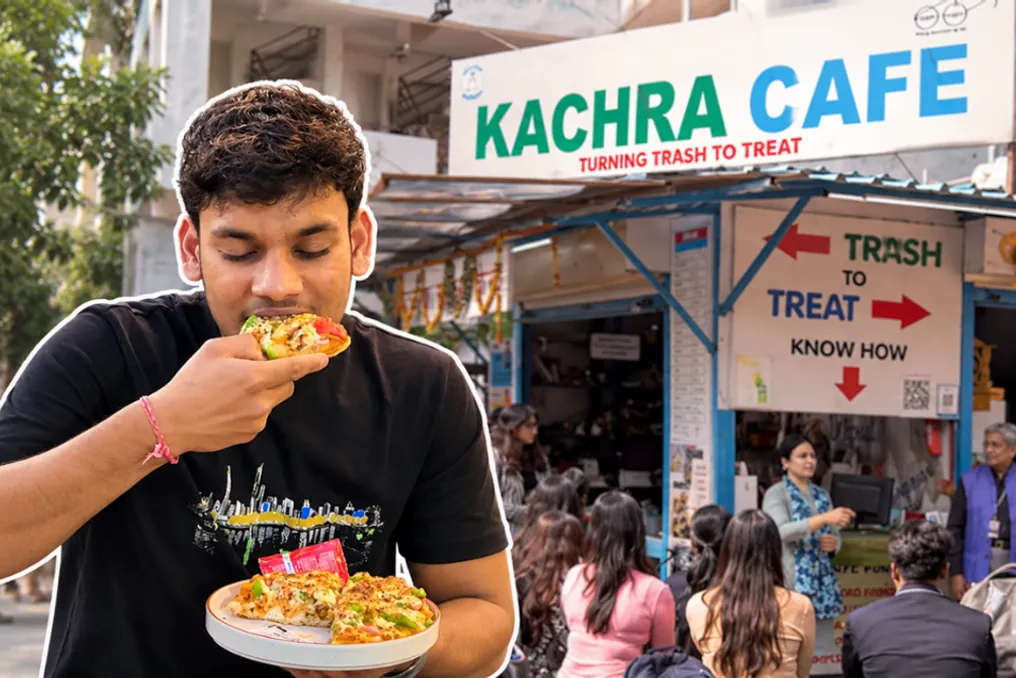
In Bhopal, the 'Kachra Cafe' allows exchanging plastic bottles and old newspapers for food

Plastic bottles, old newspapers, and cardboard boxes accumulate in many homes, eventually being thrown out with the trash. However, in Bhopal, there is an opportunity to turn this pile of waste into a full meal.

Housewife Anjita Sabhlok is realizing this idea through 'Kachra Cafe,' where visitors can exchange household waste for food, drinks, and essential items. In just eight months, the cafe has directed over 45 tons of waste for recycling.

This initiative was launched by Anjita Sabhlok through her NGO 'Mannat' in collaboration with the Bhopal Municipal Corporation. The concept is based on a simple principle: waste has value, and people are more willing to manage it responsibly when they see that value directly.

For years, Anjita worked through 'Mannat,' educating people about waste management and ecology. Nevertheless, mere awareness raising proved insufficient to achieve the desired changes.

She asked herself: 'We educate people, but are we truly seeing changes?' This question prompted her to consider a different approach. Instead of simply demanding responsible waste disposal from people, she decided to give them an incentive to collect and sort.

Thus, the idea of 'Kachra Cafe' was born, where people bring plastic, paper, and other household waste in exchange for food and necessary goods. A fixed price is set for every kilogram of waste, making the exchange simple for anyone who brings collected materials.

Initially, attracting people to bring waste to the cafe was not easy. Changing daily habits takes time, especially when waste is usually perceived as something to be thrown away, not collected.

Over time, awareness increased. People began bringing their trash to the cafe, learning to sort different materials and helping ensure that collected waste enters recycling channels. In eight months, the cafe facilitated the sending of over 45 tons of waste for recycling. This figure demonstrates the potential that can be achieved when an environmental message is combined with practical action accessible in daily life.

Instead of relying solely on information campaigns, the cafe provides residents with a direct way to participate. They can start with the waste generated in their own homes and see how that waste is used differently.

For Anjita, this concept is not limited to one cafe in Bhopal. She aims for other cities to recognize that waste is not useless and to explore ways to encourage people toward better management of it.

'Kachra Cafe' combines two basic needs: finding a responsible place for household garbage and ensuring access to food or essential items through exchange. Next time a mountain of plastic or paper accumulates at home, it is worth thinking twice before throwing it away. In Bhopal, this waste can become the very element that provides you with food.

Little girl from Panchakula returns home after life-threatening struggle; family greets her with flowers
Read more
www.aajtak.in

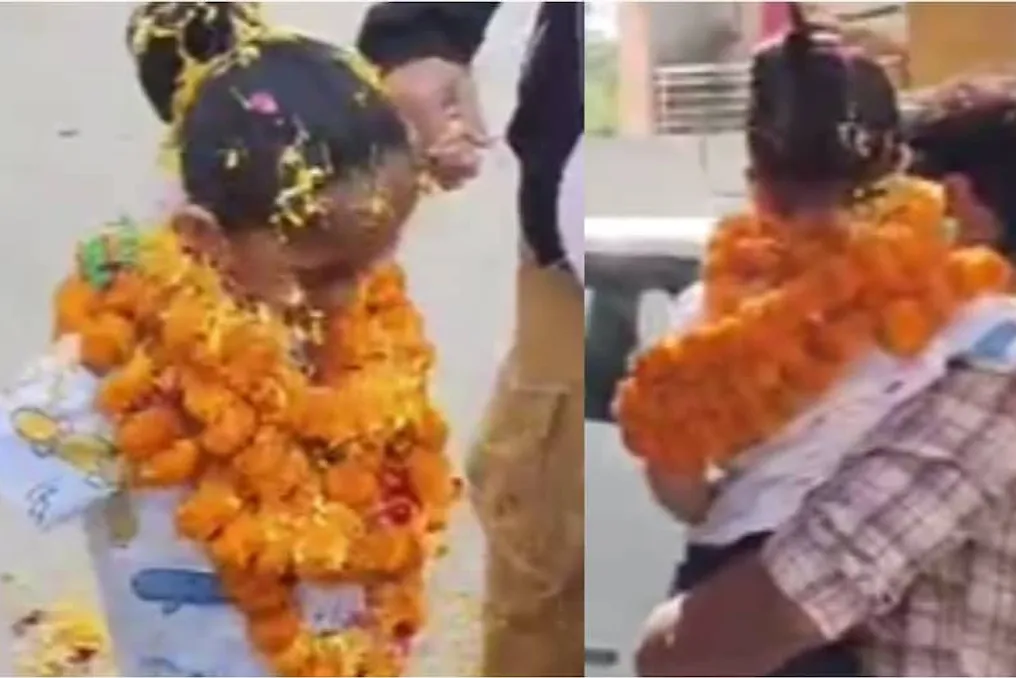
Little girl from Panchakula returns home after life-threatening struggle; family greets her with flowers

Following a brutal beating at the Panchakula school, there is finally hopeful news: the girl who fought for her life has been discharged from PGI in Chandigarh and returned home with her parents. Upon arrival, she was greeted by a shower of flowers, and family members wept with joy to see her safe.

After several days when an atmosphere of anxiety, fear, and despair reigned in the house, joy has returned. The family felt a sense of relief with the girl's return. Thousands of people across the country prayed for her speedy recovery, and now, seeing the little one among them, smiles have returned to the faces of relatives.

The girl's uncle emotionally stated that it feels like a second birth for his niece. He recounted that when they saw her in such a condition in the hospital, the family feared they might lose her forever. Today, seeing her safe at home, they feel they have regained their daughter.

The uncle noted that people across the country prayed for the girl, wishing her health from every corner of India. The family expresses sincere gratitude to everyone who supported them with kind wishes and prayers during this difficult time.

The girl's father said that it is hard to put into words the joy of his daughter's return home. The girl herself constantly wanted to go home as soon as possible and be with her family. He reported that her condition has significantly improved, but she is not yet fully healthy.

According to the father, the girl cannot sit normally yet, and sometimes she experiences dizziness or stomach aches. Doctors hope for a gradual improvement in her health and have kept her at home. The family is confident that the girl will fully recover soon in a home environment.

The father added that traces of injuries are still visible on the girl's face, and she has stitches in three or four places on her body. She sustained several serious injuries, the most severe being to her head. However, after treatment, her condition has significantly improved, and she has been allowed to be discharged from the hospital.

The father also mentioned that the director of PGI learned about her well-being. He expressed special gratitude to the doctors and medical staff of the hospital. In the father's opinion, the doctors treated the girl very well during this difficult time and provided full support to the family.

The father also commented on the actions of the commission established by the government. He stated that the family supports any decision of the commission. Regarding the daughter's future, he said they will educate her well and make her a high-ranking official. Meanwhile, the girl's own dream is to become a doctor, and she loves to study.

Father's appeal: continue praying for the girl

The father appealed to people to continue praying for the girl's complete recovery. The mother, meanwhile, emotionally said that her daughter is fine now, and there is no greater joy for the family. She noted that the pain and emotional suffering the family endured during this entire incident are impossible to describe in words.

The mother emphasized that only a mother can understand what a family goes through when their child is fighting for their life. She appealed to all parents to pay special attention to their children. She stated that there should be no negligence regarding child safety.

She also called on teachers and school administration to diligently perform their duties. In the mother's view, the primary responsibility for ensuring children's safety lies with the school administration and teachers. If parents, teachers, and school management understand their responsibility, then other innocent people and their families will not have to go through such a painful period in the future.

Joy returns to the family with the little one's return

Today, not only the girl but also hope and joy have returned to the Panchakula home. This news has been a relief for those who prayed for her well-being over the past few days. The smile of the little girl returning home after being discharged from the hospital has given the family new strength. Although she will need time to fully recover, her return home after this difficult fight for life has been the greatest joy for her relatives.

Over 428 thousand births registered in Iran in the first six months of the current year
Read more
www.tehrantimes.com

Over 428 thousand births registered in Iran in the first six months of the current year

The civil registration organization announced that a total of 428,664 births were registered in the country during the first six months of the current Iranian calendar year, which began on March 21.

Over 428 thousand births registered in six months

According to ISNA data, despite the ratio of 108 boys for every 100 girls born, the total number of births has decreased compared to the 460,000 cases registered last year.

During this period, the highest number of births was recorded in Sistan and Baluchestan province, where the birth rate was 22.1 per 1,000 inhabitants. This was followed by South Khorasan (15.1), Khuzestan (14.3), Hormozgan (13.7), and Yazd (12.6).

In the same period, approximately 225,804 deaths were registered in the country, with roughly 131 men for every 100 women.

Furthermore, during the first five months of the current Iranian year, 159,320 marriages and 69,447 divorces were registered nationwide. The largest number of registered marriages is in Khuzestan and Kurdistan provinces, where the rate is 6 marriages per 1,000 population, as well as West Azerbaijan (5.9), South Khorasan (5.9), and North Khorasan (5.8).

The highest mortality rates were noted in Gilan province (with a rate of 7.9 per 1,000 inhabitants), East Azerbaijan (6.6), Ardabil (6.6), and Kermanshah (6.5).

According to the Iranian Statistical Center, the country's current population exceeds 87 million people, and it is expected to reach 87.134 million by the end of the current Iranian year, in March 2027. IRNA reported that the urban and rural populations amount to about 67 million and 20 million, respectively.

Moreover, the average household size is less than 3.2 (3.19) people, which is the lowest figure since the 1950s.

In the previous Iranian calendar year (from March 2025 to March 2026), 892,227 births and 459,984 deaths were registered. Most births and deaths were recorded in the summer and spring, respectively.

Life expectancy in Iran has increased, but the birth rate has declined. Aging trends in Iran are accelerating faster than the global average, causing the country to enter the ranks of the world's oldest countries within 25 years.

Popular