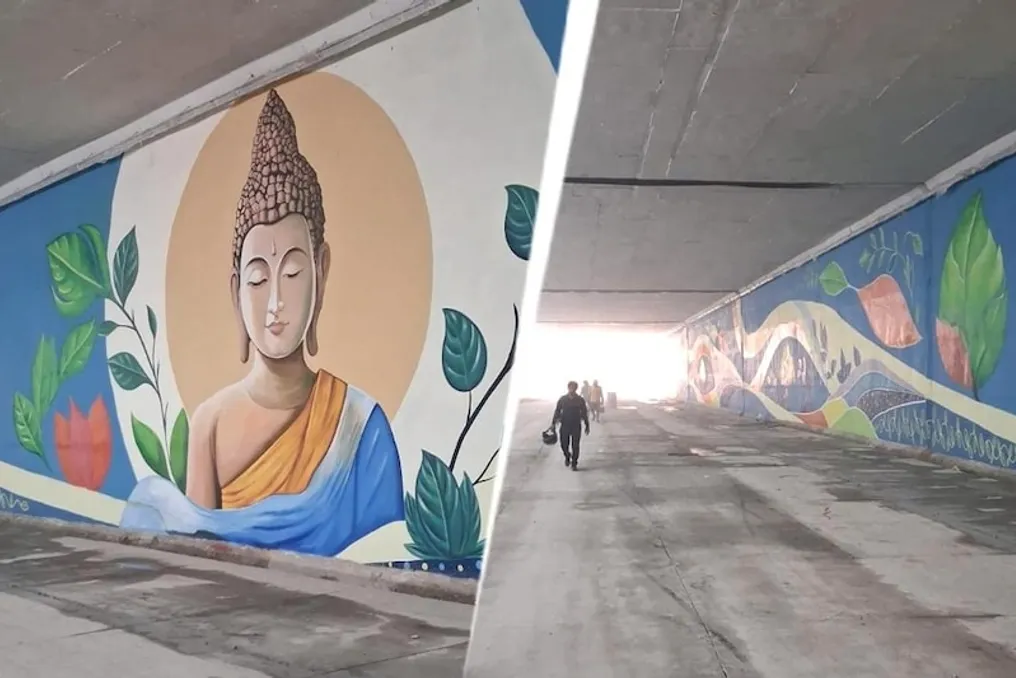
Underground passage at Gaud Chowk to be tested for three days starting November 5
Read more
Aaj Tak
www.aajtak.in

Underground passage at Gaud Chowk to be tested for three days starting November 5

Residents of Greater Noida West have received good news ahead of the Diwali celebration: the underground passage being constructed at Gaud Chowk will open for a three-day trial period starting November 5. This was announced by the Greater Noida administration.

During this trial period, traffic movement through the underground passage will commence to test the transport system and all aspects related to the construction. Previously, the construction of the underground passage at Gaud Chowk caused daily traffic jams for local residents, especially during morning and evening rush hours. The construction increased pressure on the roads, forcing people to spend more time commuting.

According to the administration's statement, the trial period, beginning on November 5, will last for three days. During these days, traffic will move through the underground passage to inspect the transport system. Any deficiencies related to the construction or operation will be rectified during the tests. Following this, the process of opening the underground passage to the general public will continue, although the exact date of its permanent launch has not yet been announced.

This underground passage, located at Gaud Chowk, is approximately 700 meters long and consists of six lanes. Approximately 92 crore rupees were spent on its construction. The project began in July 2024, and its launch is expected to reduce the load on the busy Gaud Chowk intersection.

The opening of the underground passage is expected to benefit drivers traveling between Noida, Greater Noida, Surajpur, Gor City, and the Delhi-Meerut Expressway. Residents of Greater Noida West, who have to pass through this intersection daily, may benefit particularly. All attention is now focused on the three-day trial; if it is successful and the transport system operates smoothly, the path to regular operation of the underground passage may be opened.

Similar stories

New expressway between Delhi and Haridwar will reduce travel time to an hour and a half
Read more
www.aajtak.in

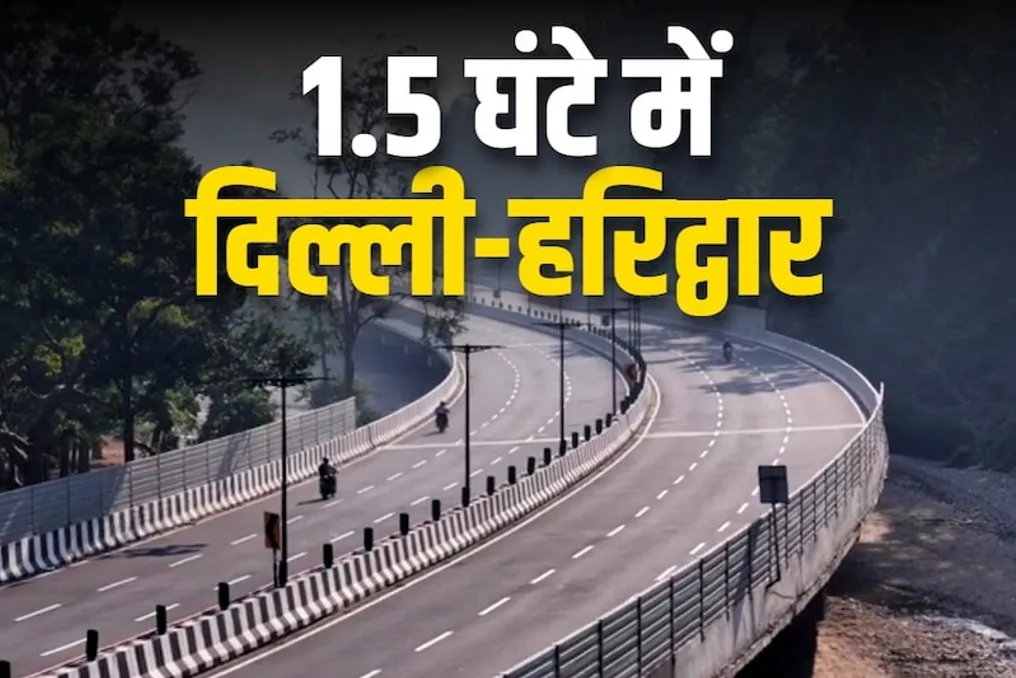
New expressway between Delhi and Haridwar will reduce travel time to an hour and a half

Those planning a trip from Delhi to Haridwar can soon significantly simplify their journey. The route, which currently takes three to four hours, will soon take only an hour and a half. Union Minister of Road Transport and Highways Nitin Gadkari announced the reduction in travel time between Delhi and Haridwar.

He stated that the new expressway connecting Delhi and Haridwar will be ready within the next two months, which will substantially decrease the arrival time from Delhi to Haridwar.

Previously, after the opening of the Delhi-Dehradun expressway, the travel time between these cities was reduced. If the trip from Delhi to Dehradun used to take about five to six hours, it now takes approximately two hours. This has created expectations among Delhi residents traveling to Haridwar regarding improved transport accessibility on this route, which is now confirmed by Nitin Gadkari's statements.

The reduction in travel time to an hour and a half will bring significant benefits to tourists, pilgrims, and those planning weekend trips. Residents of Delhi-NCR will be able to leave for Haridwar early in the morning to take a ritual dip in the Ganges and easily plan the return trip on the same day. This, in turn, may lead to an increase in visitors to Haridwar and neighboring tourist spots.

Addressing the National CII conference on 'The Future of India,' Union Minister Nitin Gadkari emphasized the critical importance of strong infrastructure for the economic development of any country. He noted that improving road conditions and building expressways promotes agriculture, industry, trade, and business. This facilitates the transportation of goods and reduces delivery times.

The minister also stated that the new expressway linking Delhi and Haridwar within two months will reduce the travel time to an hour and a half. He mentioned that logistics costs in India have decreased from the previous 16% to below 9%. According to Gadkari, developing basic infrastructure is the key and most important factor for the country's future development, as it allows for the development of agriculture, productivity, industry, trade, and business.

Gadkari compared the situation with logistics costs: about two years ago, the issue of logistics was discussed. In China, logistics costs were around 8% of GDP, whereas in India they reached 16%, creating serious obstacles for the Indian economy in international trade. However, he expressed happiness by reporting that India's logistics costs have dropped from 16% to a single-digit figure of 9%, which is lower than the figures for China (8%) and the USA (12%).

Examples of improved transport accessibility include reducing the travel time from Delhi to Meerut from three and a half hours to 45-50 minutes, and from Delhi to Jaipur from five hours to two hours. Furthermore, it is expected that the road journey between Bangalore and Chennai, which previously took four to five hours, will now take about two hours. This leads to a reduction in logistics costs and stimulates tourism and development.

In conclusion, Nitin Gadkari announced plans to develop 36 green expressways, which will bring radical changes to the landscape of development and the country's transport system. Work is underway for road infrastructure projects in Delhi worth about 1,60,000 crore rupees. He also noted that 49% of capital expenditure in tourism will contribute to job creation. An example of such a project is the Char Dham initiative, which costs approximately 12,000 crore rupees, and 85% of the work on it is complete. Thanks to this, the number of tourists traveling from Delhi to Badrinath and Kedarnath has tripled compared to previous years.

Underground passage worth 92 crore rupees to open before Diwali to solve traffic jams at Gur Chowk
Read more
www.aajtak.in

Underground passage worth 92 crore rupees to open before Diwali to solve traffic jams at Gur Chowk

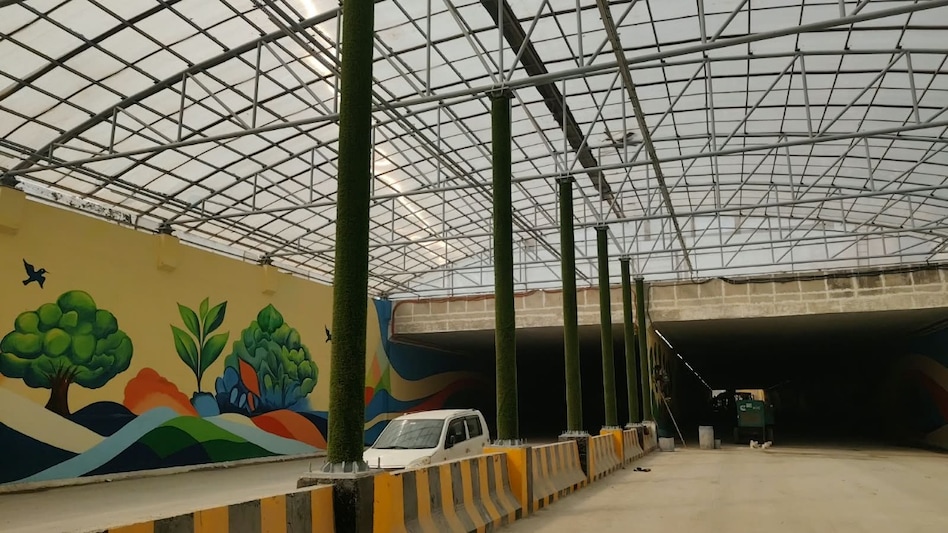
Residents of West Greater Noida have good news: the daily traffic jams at Gur Chowk are expected to be soon eliminated. The six-lane underground passage, the construction of which cost approximately 92 crore rupees, is in its final stages. The main construction work has been completed; final works such as road marking, installation of street lighting, and wall painting are currently underway.

The Greater Noida Development Authority plans to launch this facility for traffic movement before the Diwali festival, although the official opening date has not yet been confirmed. For a long time, residents have awaited the opening of this passage because long queues of vehicles form here during morning and evening rush hours. This negatively affects the daily commutes of residents of Gur City, West Greater Noida, and neighboring residential complexes, so the opening of the passage should bring them relief.

A.K. Singh, General Manager of the Greater Noida Development Authority, stated that the priority is to launch the underground passage by Diwali to ease the traffic situation for residents of Greater Noida Extension. He emphasized that 'our priority is to launch this underground passage by Diwali. It will reduce the load on road traffic and be a big gift for the residents of Greater Noida Extension.'

Initially, the Gur Chowk underground passage project was estimated at approximately 60 crore rupees. However, due to construction work and other necessary measures, the total cost increased to nearly 92 crore rupees. As part of the project, besides constructing the passage itself, utility relocation work was carried out. The total length of the entire project is about 730 meters, and it provides for six lanes of traffic. According to A.K. Singh, the main part of the underground passage is about 160 meters long, while the entire project covers an area of about 730 square meters. The main goal of this initiative is to reduce pressure on traffic flows at Gur Chowk and ensure smooth movement.

The six-lane system is expected to improve transport accessibility. After commissioning, the underground passage may reduce traffic at the intersection, helping people avoid constant congestion. Although the main construction is complete, additional work is being done before opening to the public, including road marking, installation of street lighting, and wall painting. According to A.K. Singh, various painting has been done on the sides of the underground passage walls, giving the facility an attractive appearance. The remaining tasks for preparation for operation are now being finalized, but the final opening date has not yet been announced, although the priority remains launching before Diwali.

Construction of the Gur Chowk underground passage started in July 2024. The initial plan assumed completion of work in about 18 months. However, several difficulties arose during construction that slowed down the work and led to exceeding the original deadlines. The process was affected by mushroom collection restrictions imposed due to air pollution, as well as rains, the need to relocate utilities, and work related to ramps. These factors required more time to complete the project. Now that the main construction work is finished, attention is focused on finalizing the project, including marking, lighting, and painting, after which it will be ready for public use.

Gur Chowk is a key transport hub in West Greater Noida. A large number of people travel from here daily to work, school, and other errands. During peak hours, the number of vehicles increases, leading to traffic jams at the intersection. This affects the commutes of residents of Gur City and surrounding residential complexes. Passengers traveling to Surajpur and Ghaziabad also face traffic pressure on this route, and sometimes the jams force them to spend more time reaching their destination. Therefore, the six-lane underground passage is considered a vital project for improving the transport situation in this area, as it will help reduce the load on the intersection and make movement more convenient.

The greatest benefit from the opening of the underground passage will be enjoyed by people who regularly use this route. Commute times for workers may be reduced, and school buses and passengers from nearby residential complexes will also be able to avoid traffic jams. Reduced traffic at Gur Chowk will also improve journeys for those heading to Surajpur and Ghaziabad. Although real relief will only come after the underground passage begins operation.
Popular