
Differences in Firework Operation: Why Some Make Noise While Others Fly into the Sky
Read more
Aaj Tak
www.aajtak.in

Differences in Firework Operation: Why Some Make Noise While Others Fly into the Sky

Although all fireworks contain gunpowder, there is a difference in their behavior: some produce loud sounds, while others fly into the sky. During Diwali or other holidays, many enjoy setting off fireworks. Some of them produce a loud noise when burning, while others scatter colorful lights in the sky. There are also fireworks that are placed on the ground and begin to spin in circles, and some simply fly upwards.

However, have you ever wondered why they work differently when using gunpowder and other chemical substances in these fireworks? How does one firework reach the sky while another starts spinning on the ground? The answer lies in the construction of the firework and the chemical process occurring inside it.

People usually assume that fireworks are filled with gunpowder, and an explosion occurs upon ignition. But the construction of each firework is not the same. Different fireworks are created to achieve different effects: some are designed to create sound, others to spread light, and third ones for flying in the air or spinning on the ground. For this, the chemical substances, their quantity, and placement inside the firework are arranged differently. Thus, what the firework will do is determined not only by the gunpowder it contains but also by its overall construction.

Fireworks that fly into the sky are called rockets or aerial fireworks. Inside them is a special system that produces gas upon combustion. This gas quickly exits downwards, creating thrust that pushes the firework upwards. To understand this, consider a simple example: when a balloon is filled with air and released without being tied down, the air exits from one side, and the balloon begins to move in the opposite direction.

A rocket firework works on a similar principle. Scientifically, this corresponds to Newton's third law: for every action, there is an equal and opposite reaction. When the firework reaches a height, another part of it may burn, creating colorful light and sparkle. This is why various colors and shapes are visible in the sky.

Now let's look at fireworks that spin on the ground. You have probably seen such 'chakris' during Diwali. When ignited, they start spinning rapidly on the ground. A special scientific principle is behind this as well. Inside the chakri, there is a system such that when it burns, gas and hot smoke exit through holes around the edges. When the gas exits from one side, the pressure created by it forces the chakri to rotate in the opposite direction. The continuous release of gas allows the chakri to keep spinning.

To understand this process, you can use the example of a rotating sprayer. When water flows out of it in different directions, it starts to rotate. The chakri operates on a similar principle.

Anar is also a popular Diwali firework. When ignited, it remains on the ground, and sparks and colored light shoot out from it like a fountain. Its construction is such that the hot gas and sparks formed during combustion are directed upwards. However, it lacks the mechanism that would allow it to rise on its own, like a rocket. Therefore, the anar stays in place and creates a fountain of light upwards.

The main function of some fireworks is to create a loud sound. The chemical mixture inside them reacts very quickly. As a result, a hot gas is formed in a very short time, and the pressure in the surrounding air suddenly increases. This sudden activity in the air leads to a sound resembling an explosion. That is, the effect of sound, light, flight, and rotation of the firework depends on its construction and chemical process.

The direct answer is that each firework is created for a specific purpose. In one, there is a provision for gas to exit in one direction, in another, for sparks to be ejected upwards, and in a third, for a reaction that creates a quick sound. Consequently, gunpowder itself does not make the firework fly into the sky or spin on the ground; its operation is determined by its internal construction and the direction of gas release.
Similar stories

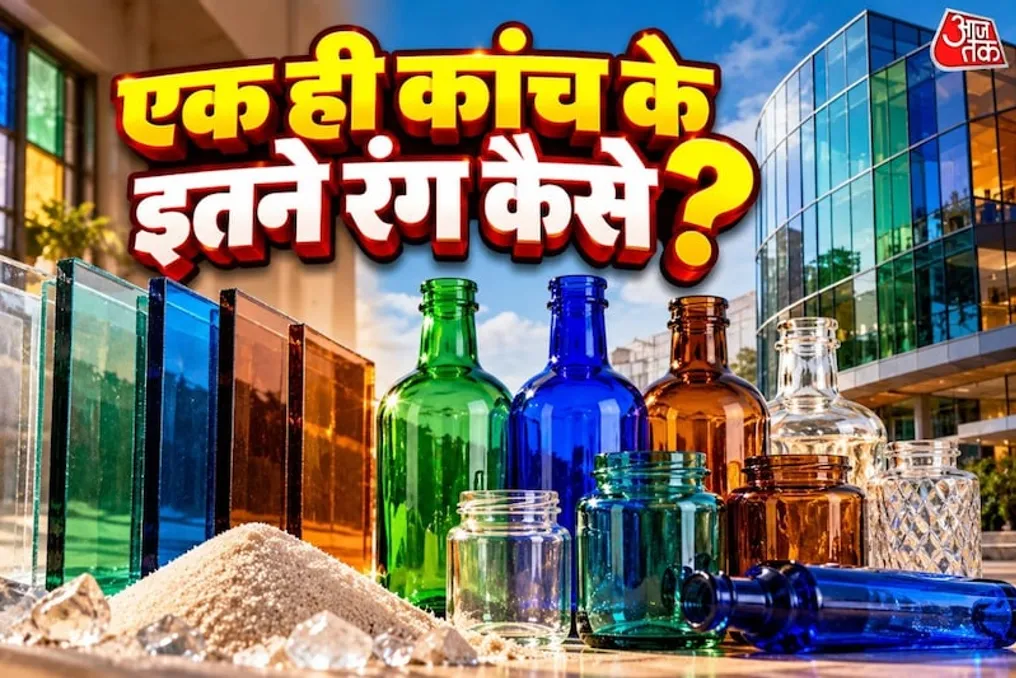
Manufacturing Glass of Various Colors from the Same Sand: The Scientific Process
Read more
www.aajtak.in

Manufacturing Glass of Various Colors from the Same Sand: The Scientific Process

Glass is used in many areas of our daily lives, such as house windows, cars, bottles, spectacles, and shop doors. Some of these glasses are completely transparent, while others appear in various colors like green, blue, or brown. It is interesting to know why the color of glass varies; it primarily depends on the specific elements present within the glass and its interaction with light.

The main material used in the process of making glass is silica, or sand. However, ordinary sand cannot be turned into glass by simply heating it. For this, materials like soda ash and limestone are mixed with the sand. All these components are heated at extremely high temperatures, causing the mixture to melt into a thick liquid. Subsequently, it is given the desired shape and slowly cooled, resulting in the formation of glass. A characteristic of glass is that its internal structure lacks a regular crystalline arrangement, which is why it is called an amorphous solid.

When we look out of clear glass, we can see objects on the other side clearly. This happens because normal clear glass allows most parts of visible light to pass through it. When light strikes the glass, some portion is reflected back, some is absorbed, and the remainder passes through to the other side. Very little of the light visible in clear glass is absorbed, which is why looking through it is possible. However, it is not accurate to say that glass allows light to pass through completely; due to thick glass or impurities present in it, a slight green or another color may still be visible.

A slight green tint often appears on the edges of thick glass, which is caused by a small amount of iron present in the glass. Trace particles of iron may be present in the sand and other raw materials used in glass making, which remain in the glass during its formation. These iron particles absorb certain colors of light more than others, allowing green light to pass through more readily compared to some parts of red and blue light. Consequently, the glass appears slightly green. The thicker the glass, the longer the path of light transmission, making the green effect more apparent. This is why the edges of many common windows and thick glass sheets appear green.

To make blue glass, oxides of special metals are added, with cobalt oxide being a prime example. Even a small amount of it can impart a blue color to the glass. In fact, different metal oxides absorb different colors of light. When cobalt oxide is added to the glass, it absorbs light of certain colors and allows blue light to pass through, making the glass appear blue. Similarly, using other elements in the glass allows for the creation of light blue, dark blue, and many other shades.

Glass can be molded into many colors besides just green and blue. For this, various metals and their oxides are used during the glassmaking process. Examples include: iron oxide and chromium oxide for green glass, cobalt oxide for blue glass, compounds related to iron and sulfur for brown glass, manganese compounds for purple glass, and selenium or copper for red glass. However, the final color of the glass also depends on the quantity of these substances added and the method by which the glass is prepared.

Colored glass is not limited only to decoration; its purpose is not always to enhance beauty. Often, it is used keeping specific requirements in mind. For instance, green and brown bottles are used in the packaging of many medicines and beverages. These colors help block certain parts of light, protecting the products inside from damage caused by light. Additionally, colored glass in buildings is used to control sunlight and heat, as this specialized glass helps maintain room temperature by blocking some parts of sunlight and heat.

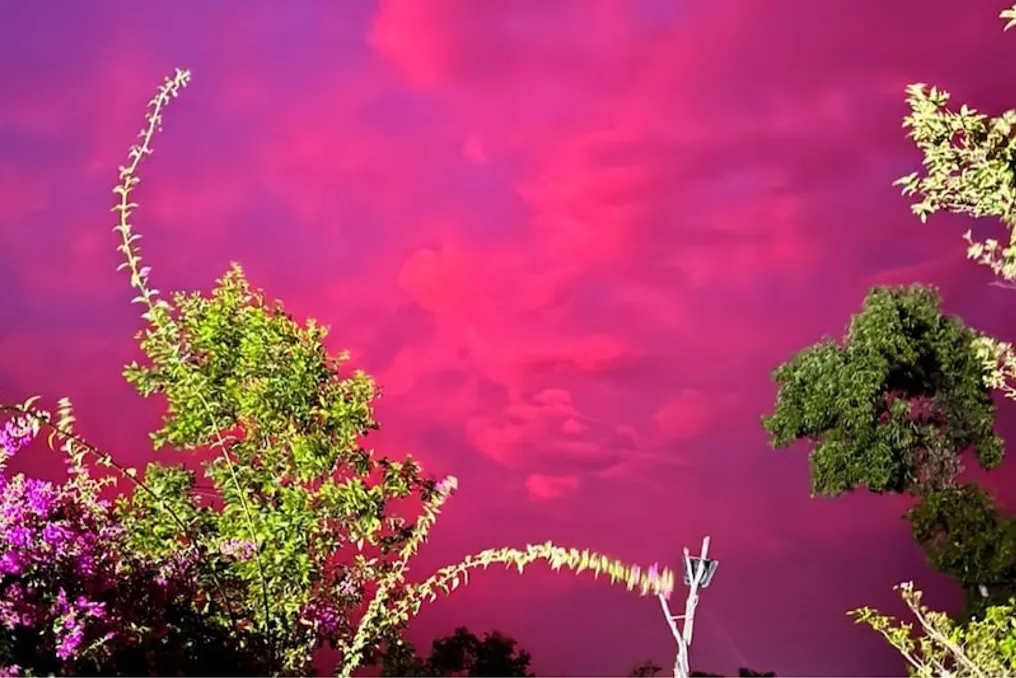
Sky turning red in Dantewada: People surprised by the color of the clouds
Read more
www.aajtak.in

Sky turning red in Dantewada: People surprised by the color of the clouds

Local residents in Dantewada, Chhattisgarh, looked towards the sky and witnessed an unusual sight where the clouds appeared to be dyed red. This spectacle was so distinct that photos and videos of it began circulating rapidly on social media. It is necessary to await official information from the meteorological department or other relevant government agencies to confirm why the sky's color changed.

This incident occurred in the Kirandul area of Dantewada district, where the sudden appearance of red in the sky and clouds has astonished the people. Various speculations are being made on social media regarding this topic; some people are linking it to the impact of Cyclone Arnob, while others consider it a result of normal weather changes.

Currently, discussions are ongoing in the region about the effects of Cyclone Arnob and the changes in the weather, which are leading to conditions such as strong winds, cloud dynamics, and rainfall. Against this backdrop, the red color of the sky in Kirandul became a source of wonder for the people. However, no official body has confirmed yet what the actual reason for the clouds appearing red was.

To understand the scientific aspect of this event, one can recall sunrise and sunset times. It is known that the sky often appears red, orange, or pink during the morning and evening. This is because sunlight is a mixture of many colors, and when this light passes through the atmosphere, the blue rays scatter more.

The red and orange rays travel relatively farther, which can cause the sky to appear reddish under specific circumstances. Dust, smoke, moisture, and cloud conditions present in the air can also affect this color, but the exact cause in Kirandul remains unknown.

While pictures of the red sky in Kirandul are going viral on social media, the changes in the weather have increased the concern among farmers. Paddy harvesting is underway in this region, and the possibility of strong winds and rain could create difficulties for the farmers. If the harvested paddy crop gets wet in the fields, drying and securing it can be challenging. Thus, the same sky that people are capturing with mobile cameras is also causing farmers anxiety about protecting their hard-earned crops. Currently, pictures of the red clouds in Kirandul are being circulated.

Reasons for the Change in Color of Chinar Leaves in Kashmir: From Green in Summer to Red in Autumn
Read more
www.aajtak.in

Reasons for the Change in Color of Chinar Leaves in Kashmir: From Green in Summer to Red in Autumn

The beauty of Kashmir is often associated with chinar trees, especially in October and November when they look particularly impressive. These trees, which are lush green in summer, take on shades of yellow, orange, and deep red in autumn, creating the impression that the trees are covered in a red carpet. The question arises about the scientific explanation for this sharp change in leaf color—is it related to cooling down or is there another scientific reason. In fact, a specific natural reaction within the trees is behind this process.

The main reason for the change in leaf color lies in the pigments contained within them. In summer, the leaves are rich in a green pigment called chlorophyll. This component is necessary for plants to perform photosynthesis, the process by which they produce food using sunlight. Thanks to the sunlight and favorable weather in summer, chlorophyll remains active, causing the chinar leaves to appear dark green.

However, as autumn arrives, the days get shorter and the temperature begins to drop, and the tree gradually prepares for winter. During this period, the amount of chlorophyll in the leaves begins to decrease. As the influence of the green color weakens, yellow and orange pigments that were already present in the leaves become visible. This is why the color of chinar leaves changes from green to yellow and orange.

Pigments can also contribute to the red color of the leaves. Usually, the yellow and orange colors in the leaves are caused by elements such as carotenoids and xanthophylls, which are present in the leaves initially but are masked by the green color in summer. Meanwhile, red and purple colors in the leaves of many trees are formed by a pigment called anthocyanin. The amount of this pigment can depend on factors such as temperature, sunlight intensity, and sugar levels in the leaves. Nevertheless, the exact understanding of which elements are responsible for all the shades of red observed on the chinar leaves in Kashmir has not yet been fully established.

The chinar tree grows well in regions with a temperate climate and sufficient water. The climate of Kashmir, with its temperature fluctuations between summer and winter and changing weather in autumn, creates ideal conditions for the change in its foliage color. In other parts of India, trees may not change color in this way during the change of seasons; some remain green year-round, while others shed their leaves during dry periods. Therefore, the transition of chinar leaves from green to gold and red gives Kashmir's nature a unique appearance.

Chinar is not just a tree; it is an important part of the culture and history of Kashmir. It is recognized as the state tree of Jammu and Kashmir. Its impressive branches and dense shade make it special. Muslim rulers also encouraged the planting of chinar in Kashmir. Old chinar trees can still be seen in historical gardens, such as Nishat Bagh in Srinagar. The shape of the chinar leaves is used in the design of Kashmiri embroidery, carpets, shawls, and traditional handicrafts. Thus, the significance of this tree extends beyond ecology and is connected to the cultural heritage of Kashmir.

Over time, many old chinar trees in Kashmir have suffered. Urbanization, road construction, deforestation, and diseases pose a threat to them. In this regard, the administration of Jammu and Kashmir has launched the 'Tree Aadhaar' initiative. Under this program, chinar trees are accounted for, and information about their location, age, size, and health status is collected.

Popular