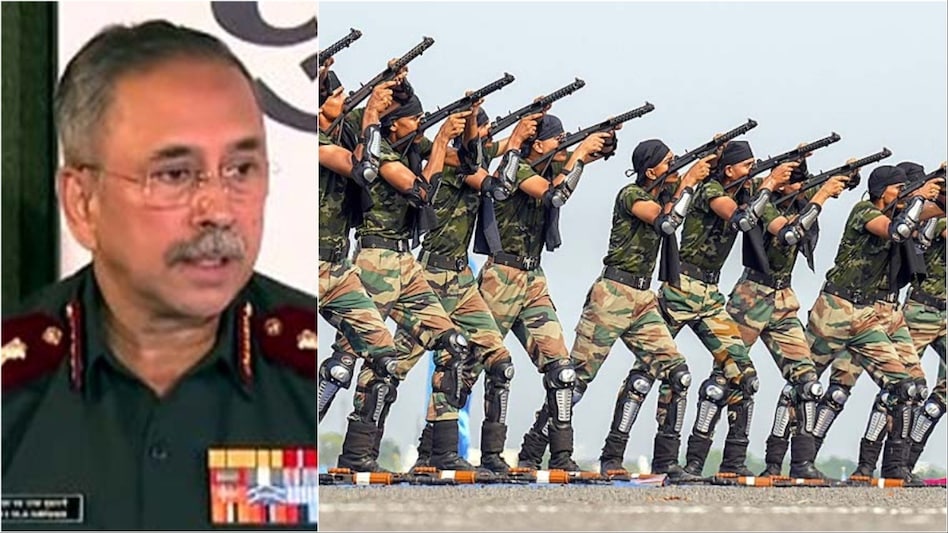
CDS announced two-year extension of Agniveer service under the Agnipath program
Read more
Aaj Tak
www.aajtak.in

CDS announced two-year extension of Agniveer service under the Agnipath program

The Indian government and armed forces are conducting a comprehensive analysis of the Agnipath program. Significant changes are being discussed as the first cohort of Agniveers approaches the end of their four-year service term, which expires in 2026-27. General NS Raja Subrahmanyam, Chief of Defence Staff (CDS), stated that Agniveers will be granted a two-year service extension.

The two-year service period will be extended for selected Agniveers who will not be immediately offered a transition to the permanent force. Under the current system, Agniveers serve for four years, after which only 25% remain in the permanent cadre, and the remaining 75% are given the option to extend their service for two years.

The proposed extension is significant because retaining trained personnel in the army for some time instead of their complete discharge after four years allows for the maintenance of their experience and qualifications. Discussions are growing in military and political circles regarding the retention of personnel, their experience, and their future.

General Raja Subrahmanyam, CDS, emphasized that the program is continuously being improved based on ground feedback, as well as from commanders and the Agniveers themselves. The government's stance is clear: Agnipath is not a static system but a plan that will evolve over time.

Since the launch of the Agnipath program, a new path has opened up in the army for the youth; however, questions have arisen concerning lack of experience and uncertainty about the future due to the fact that most servicemen leave after four years. The two-year extension will be available to selected Agniveers who demonstrate superior performance.

This will give the army an advantage in terms of trained personnel, and the soldiers will gain additional experience and stability. In addition to pension accumulations, salary and other benefits will continue to be paid during the extension period. This step may help increase the program's acceptability among the youth.

Defense experts believe that such adjustments will make the program more practical. Learning from the mistakes of the first batch, the government is trying to strike a balance between increasing the retention percentage and providing an extension option. The CDS's statement clearly shows that feedback is being taken seriously. Official announcements are expected in the coming months. This review is a positive step towards enhancing the effectiveness of Agnipath, considering both the army's needs and the aspirations of the youth. Overall, this change could strengthen the young force of the Indian armed forces.
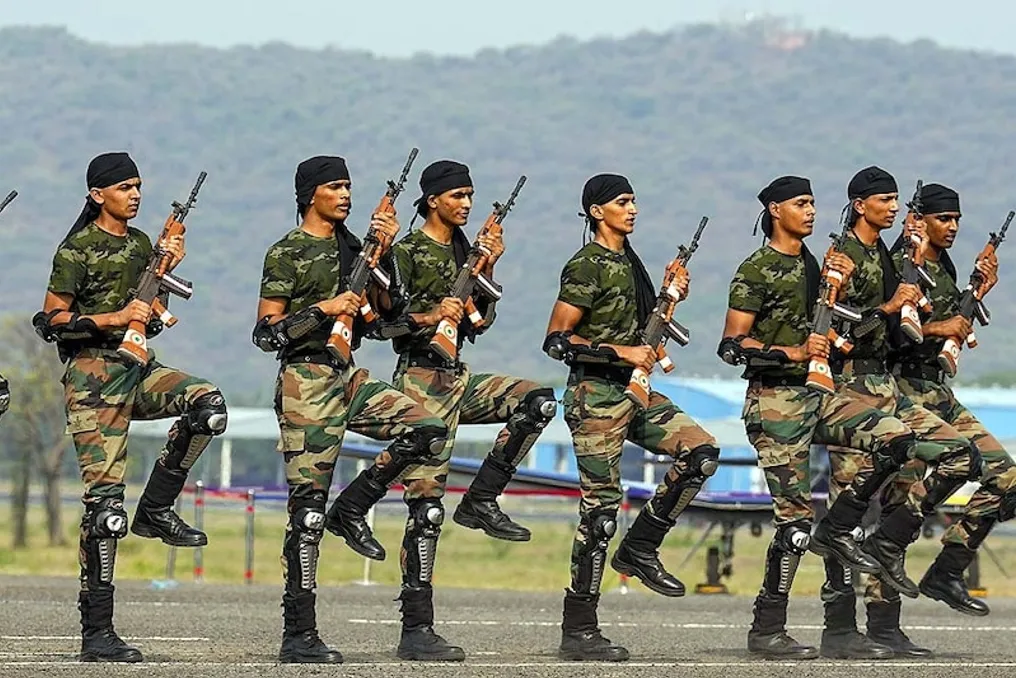

Similar stories

Indian government considers extending service of Agniveers and continues selection for permanent service
Read more
www.aajtak.in

Indian government considers extending service of Agniveers and continues selection for permanent service

The Indian government is seriously studying the possibility of granting additional time to some Agniveers recruited under the Agnipath scheme, in addition to including them in permanent service. Several high-level meetings have taken place regarding this proposal in recent days.

The first group of Agniveers is nearing the end of their four-year service term, which expires on November 21, 2026. The selection process for permanent service is currently ongoing. Now, the government is also considering the possibility of keeping some Agniveers who do not make the permanent list in service for a period of time.

Under the Agnipath scheme, young people serve in the armed forces for four years, with a provision for the permanent retention of 25 percent of them. The rest are sent home.

Currently, the government is contemplating the option of extending the service of some additional Agniveers from the latest batch. This decision is significant because a large number of Agniveers will be leaving service for the first time. Officials state that there are no official announcements yet, but a decision is expected before November 21.

If the extension proposal is approved, many young people will get a chance for additional experience and income. This will also benefit the army in the form of trained personnel. At the same time, the need to increase the transparency of the permanent recruitment process is emphasized. This step may help make the Agnipath scheme more practical. The government will make its decision considering both the future of the youth and military readiness.

State Treasury extends SRD benefit payments for one year while replacement is developed
Read more
iol.co.za

State Treasury extends SRD benefit payments for one year while replacement is developed

The National Treasury announced on Wednesday that the Social Relief of Distress (SRD) grant of R370 will be extended in its current format for another year while a replacement for this grant is being considered.

The National Treasury stated that the grant will be extended for one year while work continues on integration with labor market activation measures, skills development, and business support. Recipients will be linked to employment, training, and business opportunities through the MzansiXchange data exchange platform, which will allow verification of recipients across various government departments.

The continuation of the SRD does not align with the promise made by Finance Minister Enoch Godongwana, who stated that his Medium Term Budget Policy Statement (MTBPS) should outline the modalities and format of the so-called Living Subsistence Grant mentioned by President Cyril Ramaphosa.

Ramaphosa previously stated in his Address to the Nation that the SRD grant played a crucial role in alleviating widespread poverty. At that time, he noted: 'This year we will rework the grant so that it more effectively supports livelihoods, skills development, job opportunities, and productive activity.'

In February, Godongwana announced that discussions are underway regarding a new Living Subsistence Grant that will replace the SRD. The SRD grant was introduced during the Covid-19 pandemic in March 2020 and became a lifeline for millions of South Africans facing food shortages.

Godongwana additionally allocated R36.4 billion in February to extend SRD payments until March 31, 2027, at the current rate of R370 per month per recipient. This amount exceeds the R34.2 billion allocated in the 2025/26 financial year.

Meanwhile, the National Treasury has included SRD in the list of three expenditure risks facing the government, alongside the Student Financial Aid Scheme and employee compensation. The MTBPS states: 'Litigation regarding regulations governing the social relief of distress grant represents a significant expenditure risk.'

The government has lodged an appeal with the Supreme Court of Appeal against a High Court ruling from January of this year, which invalidated the means test threshold, grant amount, income definition, and income verification mechanisms.

The National Treasury warned that the fiscal impact will depend on the outcome of the legal proceedings and political response. It was noted that the number of recipients and the total cost of SRD could increase significantly if the High Court's decision is upheld. Preliminary estimates suggest this could add three million potential recipients and increase the annual funding requirement from approximately R36 billion to R74 billion.

Popular