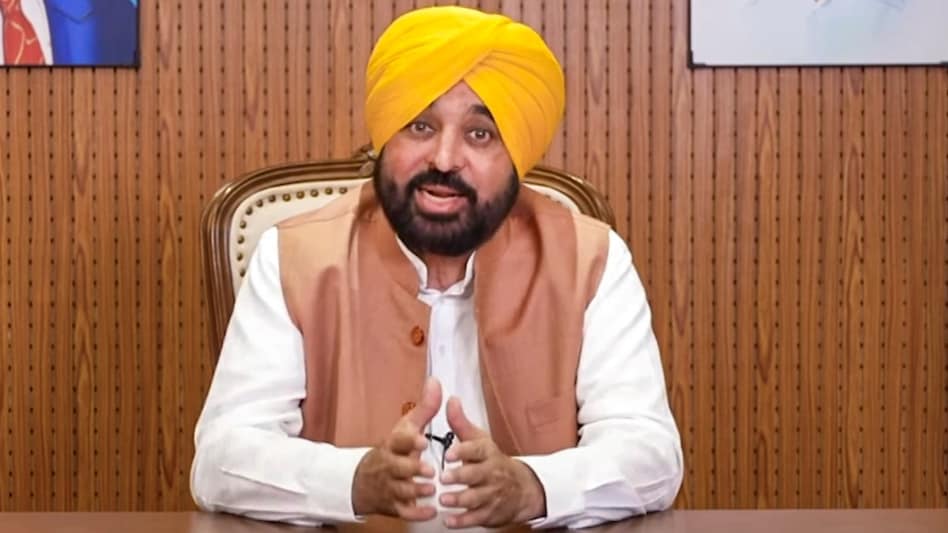
Chief Minister Mann refuted accusations against Punjab farmers regarding Delhi air pollution
Read more
Aaj Tak
www.aajtak.in

Chief Minister Mann refuted accusations against Punjab farmers regarding Delhi air pollution

When air quality in Delhi deteriorates, Punjab farmers are often accused of stubble burning. However, the Chief Minister of Punjab, Bhagwant Mann, rejected these allegations, stating that there is no role for Punjab farmers in Delhi's air pollution. He believes these accusations are being made to discredit Punjab.

Bhagwant Mann noted that rice harvesting has not yet begun in the Malwa region of Punjab, but leaders from Haryana and people from Sirsa have started talking about smoke reaching Delhi. During a press conference in Chandigarh, the Chief Minister commented on the stubble burning issue. He emphasized that it is impossible to claim that smoke is coming from Punjab into Delhi if the rice harvest has not been completed there. Punjab farmers are being unfairly blamed for Delhi's air pollution without accurate information.

Bhagwant Mann stated that rice harvesting has not yet started in several Malwa districts. Nevertheless, leaders from Sirsa, Haryana, reported the appearance of smog in Delhi. Mann questioned how one can talk about stubble burning and pollution spread in Delhi if the crop has not yet been harvested. The minister accused those making the claims of deliberately targeting Punjab farmers, asserting that blaming Punjab farmers for Delhi's air pollution is incorrect and damages their reputation. He clearly stated that Punjab farmers are not responsible for Delhi's air pollution.

At the press conference, Bhagwant Mann also announced a major decision for government employees. He reported that the Punjab government plans to increase the Dearness Allowance (DA) for employees by 3 percent. Previously, the government had increased the DA by 8 percent, and now there is an additional hike of 3 percent in a short period. Thus, employees will receive a total DA increase of 11 percent, which will incur expenses for the government of approximately 3,988 crore rupees. The DA for state government employees will increase to 53 percent. The government is ready to negotiate with the demands of government employees, and the doors of the government are open to them.

Furthermore, the Chief Minister stated that his government has already provided 71 thousand government jobs that were given without bribes or recommendations, and the hiring process was conducted transparently. Bhagwant Mann also responded to a question about three MLAs who left the party, noting that simply being an MLA is not enough; it is important to remain in the party. He sarcastically remarked that those who left the party will have to figure out the fate of the Captain in the future. Regarding the ED raid on MLA Mogi, Mann said that the CBI had also previously investigated the Rajvir case but found nothing. He added that elections will be held at the appropriate time, and the party has already announced 40 candidates, with other names to be announced shortly.

Bhagwant Mann announced that he will hold another press conference on the 6th, during which a big announcement regarding hockey may be made. The hosting of the Hockey World Cup in Punjab is being discussed, although there is no final information on this matter yet.

Similar stories

Bihar Government Signs Agreement with Nitin Gadkari to Use River Silt for Road Construction and Flood Protection
Read more
www.aajtak.in

Bihar Government Signs Agreement with Nitin Gadkari to Use River Silt for Road Construction and Flood Protection

The government, led by Chief Minister Samrat Chaudhary, has developed a new initiative to combat the annual devastating floods in Bihar. River silt, extracted from rivers, reservoirs, and dams, will now be used for building roads and constructing embankments.

An important agreement was signed in New Delhi between the Bihar government and the central government. The signing of the Memorandum of Understanding (MoU) took place in the presence of Chief Minister Samrat Chaudhary and Minister of Road Transport and Highways Nitin Gadkari.

This initiative will be implemented under the Bihar Water Resource and Silt Management Policy for 2026. According to the plan, silt accumulated in the state's rivers and reservoirs will be extracted using scientific methods. The government believes this will increase the water retention capacity of the rivers and help reduce the risk of flooding.

A key feature of the new policy is that the silt extracted from the rivers will not simply be discarded. Suitable soil and silt will be used for road construction, creating coastal protection structures, and repairing old dams. This will allow for the simultaneous cleaning of water sources and acceleration of infrastructure development.

According to the government, this system will ensure the availability of necessary material for construction projects, which may contribute to reduced construction costs and faster completion of work. Thus, silt removed from rivers will be utilized for developmental purposes.

A scientific procedure for extracting silt from Bihar's rivers, dams, and reservoirs will be organized to implement this scheme. This will be done through dredging, which will improve the potential of the water sources and pave the way for better water resource management.

The agreement between the Bihar government and the central government's Ministry of Road Transport and Highways was concluded in New Delhi for the practical implementation of the silt management policy. The event was attended by Chief Minister Samrat Chaudhary and Minister Nitin Gadkari. Under this agreement, suitable silt extracted from Bihar's rivers through dredging can be used in national highway projects.

Minister Nitin Gadkari highly praised Bihar's silt management policy. This agreement is viewed as an important step towards simultaneously advancing flood control and infrastructure development in the state.

The government hopes that this measure will benefit farmers. Improved water resource management through river cleaning can help with this. Furthermore, using silt in construction will ensure a more effective use of natural resources.

It is important to note that flood control has long been a serious problem in Bihar. The annual rise in river levels negatively affects the lives of people in several districts of North Bihar, causing damage to housing, agriculture, and other property.

Thus, the new silt management policy, initiated by the Samrat Chaudhary government, is considered an important step toward reducing the threat of flooding. The government's goal is to improve the water retention capacity of rivers by removing silt and using the resulting material for development projects such as road construction, national highways, and dams.

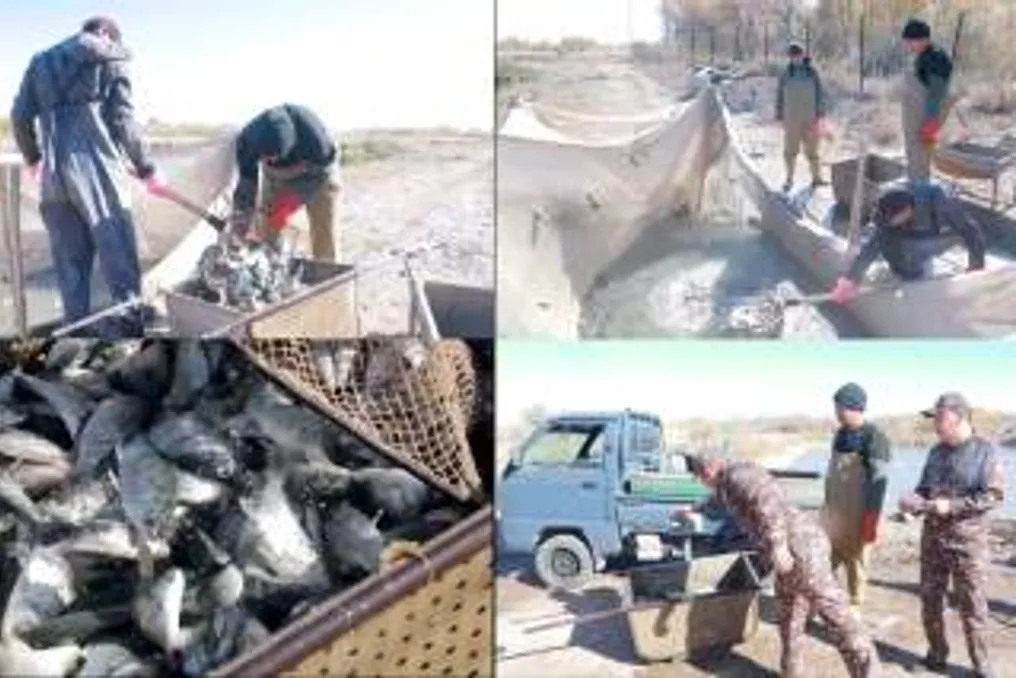
2.6 tons of chavog fish sent from Uzbekistan
Read more
uza.uz

2.6 tons of chavog fish sent from Uzbekistan

Large-scale work is being carried out in the country to preserve ecological balance with the aim of implementing the 'Uzbekistan – 2030 Strategy' and the decision adopted by the Cabinet of Ministers of the Republic of Uzbekistan on June 30, 2026, 'On measures to compensate for losses of wildlife and protect endangered and rare wild animals.'

As part of these measures, 2.6 tons of chavog fish were sent across the Amu Darya.

Uzbekistan and Global Environment Facility Discuss New Sustainable Agriculture Projects
Read more
uzdaily.uz

Uzbekistan and Global Environment Facility Discuss New Sustainable Agriculture Projects

Uzbekistan and the Global Environment Facility (GEF) reviewed the results of joint environmental protection projects and identified potential areas for further cooperation in sustainable agricultural development.

Discussion on Initiative Effectiveness

The meeting took place between Nuriddin Koshnazarov, advisor to the Minister of Agriculture of Uzbekistan, and representatives of the GEF's Independent Evaluation Office, Ksenia Temnenko and Martin Pruse. The main goal of the meeting was to assess the effectiveness of initiatives implemented with the support of this fund.

Participants reviewed the progress of programs such as CACILM-2, FOLUR, LDN, and CAWLN. These programs aim to ensure the sustainable use of land resources, prevent soil degradation, restore landscapes, and adapt agriculture to climate change.

Furthermore, the parties discussed methods for improving water and land resource management, implementing advanced methods, and realizing innovative solutions. Special attention was paid to the possibilities of developing new joint projects and expanding partnerships.

The discussions also covered the conclusions and recommendations that will be prepared following the independent evaluation of the fund's activities in Uzbekistan. It is expected that the results of this evaluation will help integrate the obtained data into the development of future initiatives, increase the efficiency of project implementation, and strengthen programs aimed at promoting sustainable development in the country's agricultural sector.

Popular