Uzbekistan completes construction of 'Khalqa' substation at 500 kV
Read more
UzDaily
uzdaily.uz

Uzbekistan completes construction of 'Khalqa' substation at 500 kV

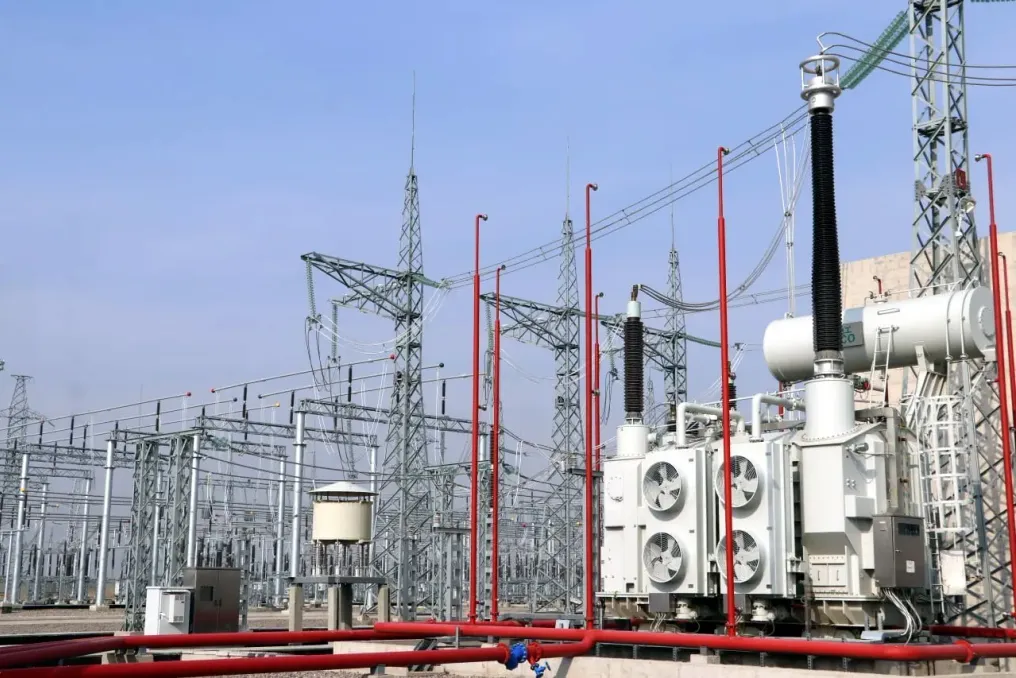
Within the framework of a major investment project to develop Uzbekistan's power transmission system, construction work has been completed in the Syrdarya and Tashkent regions. The new facilities are currently being connected to the Unified Energy System of Uzbekistan, and commissioning work is underway.

The project included the construction of the 'Khalqa' substation with a capacity of 1602 MVA, as well as the construction of 220 kV and 500 kV overhead power lines. The 213 km of 220 kV lines and the 72 km of 500 kV lines provide a total length of 285 km for the new network infrastructure.

The total cost of this investment project is 171.4 million US dollars, and it was implemented with the participation of the World Bank. The new infrastructure is expected to increase the capacity of the national power grid, improve electricity flow efficiency, and strengthen grid stability.

Furthermore, the project aims to ensure reliable electricity supply to the regions, optimize the load on existing networks, and create the possibility for connecting new generation capacities in the future. The final integration of the constructed facilities into the Unified Energy System of Uzbekistan is currently ongoing.

Similar stories

Stock markets rise in the US after elections despite Trump's defeat
Read more
www.aajtak.in

Stock markets rise in the US after elections despite Trump's defeat

Following the results of the midterm elections in the US, increased enthusiasm is observed on stock exchanges, and American markets are showing signs of significant growth. Similar growth is also noted in Asian markets. However, in India, this growth is driven not only by the results of the US elections but also by falling crude oil prices and expectations of a reduction in Long-Term Capital Gains (LTCG) tax.

During the 2026 US elections, Donald Trump's Republican Party suffered a serious defeat. The Democratic Party gained a majority in both chambers of the American parliament—the Senate and the House of Representatives. This is interpreted as an expression of voter dissatisfaction with the Trump administration. Previously, Democrats led in the House of Representatives with 224 out of 435 seats and in the Senate with 54 seats.

These results triggered a rise in the American market. The Dow Futures index shows a remarkable increase, rising by 770 points or 1.49 percent to 52,557. It should be noted that before the results were announced, this index fell by one percent but then recovered by approximately two percent from its low point.

Significant growth was also recorded in the Chinese market, where the index rose by 2.16 percent to 3,686.17, and the Hang Seng index saw a growth of 1.67 percent. Furthermore, the Kospi showed a growth of 0.62 percent, and the UK market grew by 0.30 percent.

The Indian market also demonstrated steady growth in the main indices Sensex and Nifty. The reason for this was the decrease in crude oil prices by about one percent and growing expectations of LTCG reduction. Nifty increased by 100 points, while Sensex grew by more than 350 points.

The results of the US midterm elections indicated an important shift in the future. Analysis of data from the past 11 periods since 1982 shows that in eight cases, the American benchmark index S&P 500 showed an average positive return of 10 percent over the following three months. ICICI Direct reported that in India, the stock index showed an average positive return of 12 percent in six cases since 1982.

Tanay Dalal, Senior Vice President of Economic Research at Axis Bank, noted that the Democrats' victory in the US midterm elections appears more convincing than many experts expected, and some traditionally strong Republican bastions are under pressure. He suggested that one possible consequence could be the adoption of a more divided approach to artificial intelligence (AI) regulation. For India, this could be a positive development, as a less unified regulatory environment can support demand for export business services and outsourced technology.

BYD suspends production of the King sedan in Bahia to prioritize the Atto 2 model due to low factory capacity
Read more
autopapo.com.br

BYD suspends production of the King sedan in Bahia to prioritize the Atto 2 model due to low factory capacity

Due to the factory's lower-than-expected performance in Bahia, BYD has decided to halt the manufacturing of the King sedan, which had surpassed the Toyota Corolla in sales, to concentrate its efforts on the Atto 2 model.

The assembly of this hybrid sedan was temporarily suspended at the Camaçari unit, located in Bahia. Currently, this factory is dedicating almost all its production capacity to the flex hybrid Atto 2 SUV, which has already registered approximately 7 thousand orders since the start of pre-sales.

Although BYD assures that it has sufficient stock of the King to supply dealerships, the company did not provide information on the expected date for resuming vehicle production.

This shift in focus reveals a larger structural problem: the need for BYD to choose which car to produce indicates that the Camaçari plant is operating significantly below the targets initially set by the brand.

When announcing the factory in 2023, BYD projected starting production in the second half of 2024, aiming for a capacity of 150 thousand units annually in the first phase and 300 thousand in the second. During the inauguration ceremony in October 2025, the company's founder, Wang Chuanfu, mentioned an ambitious goal of 600 thousand cars per year.

However, the realization of this plan has been slower. Delays were partially caused by the rescue of 163 Chinese workers in conditions comparable to slavery at the site, which occurred in December 2024, and assembly only began in July 2025.

Since the start of operations, the factory has produced about 150 thousand vehicles, representing an average of just under 10 thousand units monthly. To reach the planned initial capacity, it would be necessary to produce 12.5 thousand cars per month. BYD's current goal is to raise this production to 25 thousand units monthly by the end of 2026.

Additionally, the Camaçari unit still depends on ready-made components arriving from China. The stamping, welding, and painting stages, essential for the complete manufacture of the automobiles, are only expected to become operational between November and December.

This pause affects a model that was highly prominent. In August and September, the King led the mid-size sedan segment, even surpassing the Toyota Corolla, a result also aided by the competitor's suspension of operations as it moved factories during this period.

The King is available in GL and GS versions, both plug-in hybrids, equipped with a 1.5-liter gasoline engine and an electric motor. The GL version has 209 combined hp and an 8.3 kWh Blade battery, while the GS offers 235 hp and an 18.3 kWh battery. The sedan has dimensions of 4.78 meters in length, 2.72 meters in wheelbase, and a trunk capacity of 450 liters.

The production halt may pave the way for an aesthetic update or the introduction of a flex hybrid version, following the example of the Song Pro and the Atto 2. BYD is testing prototypes with renewed designs in Brazil but has not yet confirmed changes to the King sedan.

Telecom fraud in Mozambique drops 64% in 2025, but scam methods become more complex
Read more
noticiasaominuto.com

Telecom fraud in Mozambique drops 64% in 2025, but scam methods become more complex

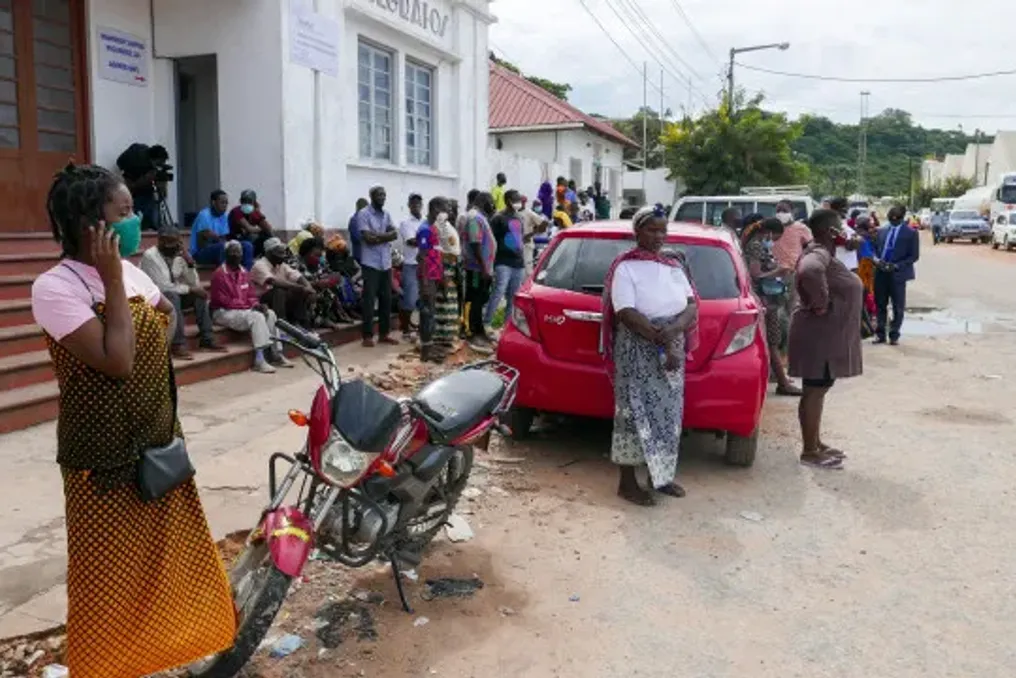
Fraud in the telecommunications sector in Mozambique decreased by 64% during 2025, totaling 195,045 cases. However, the regulator warned that fraud schemes are becoming more elaborate, which poses an obstacle both to network security and user protection.

According to the Telecommunications Security and Resilience Report 2025, published by the National Institute of Communications of Mozambique (INCM), the recorded incidents generated an accumulated financial loss of 128.31 million meticals. This data indicates that the drop in the volume of occurrences did not result in the elimination of damages caused by fraudulent practices.

The report was presented to the sector's service providers last Tuesday, and it assesses the security and reaction capacity against fraud, threats, technical failures, and other problems in mobile telephony, internet, and television transmission services.

Among the most common forms of fraud pointed out, the 'Wangiri' modality stands out, which involves short calls made to convince recipients to return the call, often to international or value-added numbers. Other modalities include SIMBOX, linked to the undue diversion of international calls, and SMS Phishing, which uses fake messages to steal personal, banking, or access codes.

Helena Fernandes, chairwoman of the INCM board of directors, observed that the reduction in the number of frauds is a positive aspect. However, she emphasized that the constant evolution of fraud methods requires a continuous and well-coordinated response.

Quoted in the INCM statement recently released about the report, Fernandes stated: 'Although the registered reduction constitutes a positive sign, it is important to recognize that these and other types of fraud continue to represent a significant challenge to the security of the sector and to consumer protection. This requires us to remain vigilant and modernize our prevention, detection, and control systems.'

Additionally, the document points to risks arising from extreme weather events. It was mentioned that cyclones Dikeledi and Jude caused the shutdown of 174 telecommunication stations, highlighting vulnerabilities in infrastructure and the urgent need to strengthen system redundancy and ensure service continuity.

Faced with these challenges, the regulatory body advocates for strengthening collaboration between operators and industry entities. This should be done through rapid information sharing, systematic recording of incidents, promotion of digital education, and implementation of efficient mechanisms for reporting and preventing fraud.

Popular