Foreign markets account for half of ByteDance's Seedance video generation model revenue
Read more
TechNode
technode.com

Foreign markets account for half of ByteDance's Seedance video generation model revenue

According to a report published by Zhinen Yongxian, part of the AI publication 36Kr, foreign markets now generate 50% of the revenue from ByteDance's Seedance video generation model.

A source close to ByteDance's cloud business, Volcano Engine, told the publication that Seedance's overseas revenue has increased nearly fivefold over the past six months.

Furthermore, the report named major Chinese internet companies that are significant clients of this technology. According to individuals familiar with the business, Tencent is among the top three largest clients of Seedance in China in terms of token consumption and contribution to revenue, while Bilibili ranks tenth among them.

This data provides insight into the corporate demand for ByteDance's video generation technology, although the report itself did not disclose absolute revenue figures.

Similar stories

Reliance Industries' profit grew by 41% to 25,548 crore rupees; Jio demonstrated revenue growth
Read more
www.aajtak.in

Reliance Industries' profit grew by 41% to 25,548 crore rupees; Jio demonstrated revenue growth

Reliance Industries, led by Mukesh Ambani, presented impressive financial results for the second quarter of the 2026-27 fiscal year (Q2 FY27). For the period from July to September 2026, the company's profit increased by 40.64% compared to the same period last year, reaching 25,548 crore rupees. Last year, the profit for the same period was 18,165 crore rupees.

Furthermore, the digital and telecommunications company Reliance, Jio Platforms, also released its quarterly reports. Jio's revenue grew by 11.3%, amounting to 47,485 crore rupees. As part of its operations, Reliance also began preparations to raise funds of up to 15,000 crore rupees.

Reliance Industries' operating income in the second quarter increased by 28.57%, reaching 332,861 crore rupees. In the same quarter last year, this figure was 258,898 crore rupees. Thus, the income increased by 73,963 crore rupees over the year. Operating income represents the total revenue received by the company from its core, day-to-day business operations. The company reported its quarterly results to the shareholders' market on Friday, and the growth in both profit and revenue indicates business stability.

Alongside the quarterly results, Reliance announced a capital raising plan. The company's board of directors approved the proposal to raise funds of up to 15,000 crore rupees. Unsecured debt obligations (NCDs) will be issued for this purpose. Simply put, NCDs are a type of loan that a company issues to investors to raise money, paying interest according to the agreement. These debt obligations cannot be converted into shares. Reliance plans to issue these bonds through private placements in one or more tranches. These bonds can be secured or unsecured.

Reliance's digital and telecommunications arm, Jio Platforms, also showed strong growth in the second quarter. The company's consolidated revenue increased by 11.3% compared to last year, reaching 47,485 crore rupees. This is significant growth compared to the same period last year. Jio's EBITDA also grew by 16.6%, reaching 21,879 crore rupees. EBITDA is a metric used to assess a company's earnings, reflecting profit before interest, taxes, and certain other expenses, helping to understand the income and operational status of the core business.

Jio's telecom services revenue, including mobile and internet, increased by 11%. Revenue from digital services grew by 16%. According to the company, the growth in operating profit and more efficient cost management contributed to an approximate 17% increase in EBITDA. Meanwhile, the company's margin improved by 250 basis points, or 2.5 percentage points, compared to last year.

For the first half of the 2026-27 fiscal year, i.e., from April to September 2026, Jio registered a Free Cash Flow of 32,130 crore rupees. This figure is 98% higher than the same period last year. Free Cash Flow shows how much money the company has left after covering operating expenses and necessary investments. It is calculated by subtracting Capital Expenditure from EBITDA.

In the second quarter, Jio also achieved two major milestones regarding its customer base. The company's 5G mobile customer base exceeded 300 million people. Additionally, the number of customers using fixed broadband internet for home and office exceeded 3 million. The company's total subscriber base reached 54.24 crore. Over the last 12 months, 3.6 crore new customers joined Jio. Jio's Average Revenue Per User (ARPU) grew to 218.8 rupees. The growth in this indicator signifies an improvement in the company's revenue per customer.

Mukesh Ambani, Chairman and Managing Director of Reliance Industries, called the listing of Jio Platforms on the stock market a historic achievement for the company. He noted that Jio's IPO attracted over 22 times subscription, and the shares showed significant growth during the listing. This demonstrates investor confidence in Jio's business and its future prospects. Ambani stated that Jio has become the second-largest company in India. He also emphasized that this is an important stage in the journey of increasing Reliance's value. Furthermore, he noted that Jio's listing gave new momentum to the beginning that the company's founder, Dhirubhai Ambani, started in 1977 through Reliance's IPO, connecting retail investors to the stock market. Jio Platforms' IPO worth 30,188 crore rupees was completed on October 28, 2026, becoming the largest IPO in India to date.

Uzbekistan's foreign trade revenue reached $65.4 billion in 9 months
Read more
sputniknews.uz

Uzbekistan's foreign trade revenue reached $65.4 billion in 9 months

According to the National Statistical Committee, Uzbekistan's foreign trade revenue for the period from January to September 2026 amounted to $65.4 billion. This figure exceeds the same period in 2025 by $3.9 billion, which represents a growth of 6.3 percent.

However, the main growth was driven by imports. Imports increased by $5.36 billion compared to last year, reaching $39.6 billion. At the same time, exports decreased by $1.49 billion, totaling $25.8 billion.

As a result of this imbalance, the negative balance in foreign trade reached $13.7 billion. Nevertheless, if gold is excluded, the export of goods grew by 31.6% compared to the previous year, reaching $13.3 billion.

Tocantins registers over R$ 13 billion in exports in 2026, led by soy and beef
Read more
g1.globo.com

Tocantins registers over R$ 13 billion in exports in 2026, led by soy and beef

The state of Tocantins accumulated exports exceeding R$ 13 billion in the period from January to September 2026. This amount represents a 3% increase compared to the same period last year. Regarding imports, there was a growth of 17.9%, totaling more than R$ 1.5 billion.

The data was compiled by the Federation of Industries of Tocantins (Fieto), with the values presented after converting the US dollar to the real, using the exchange rate valid on Friday, the 23rd.

Leadership of Soy and Beef

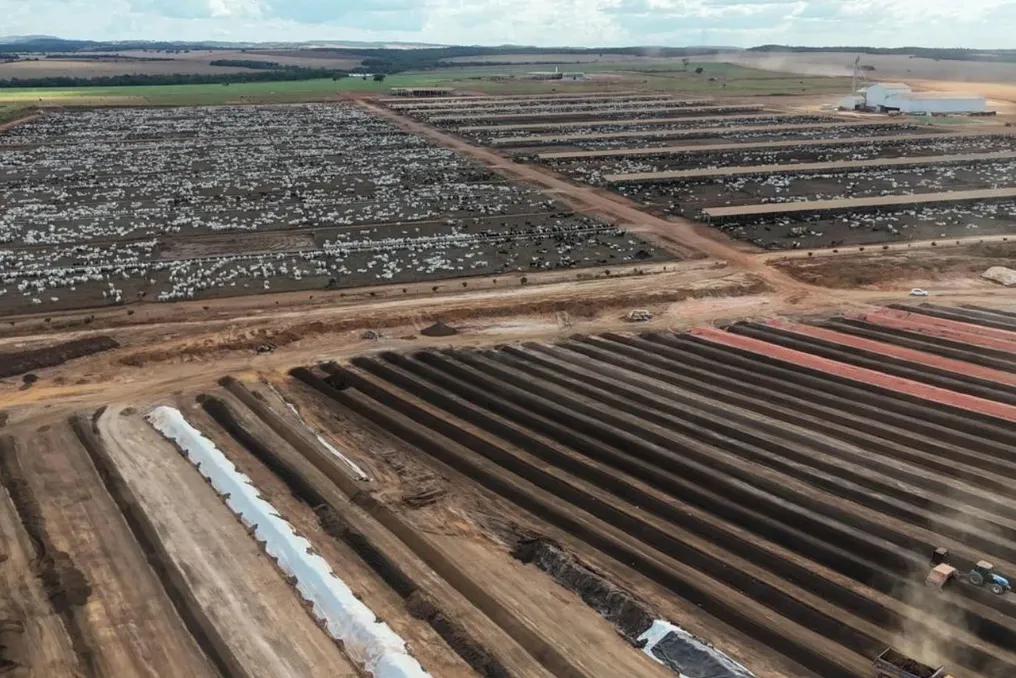
Soy has established itself as the main item in Tocantins' export agenda, accounting for 56.6% of the total value sent out of the country. Beef occupies the second position, contributing 16.6% of this value.

Thiago Amorim, director of livestock at Motta Agropecuária, highlighted that the state is consolidating itself as a reference in animal protein exports, competing equally with the main producing regions in Brazil. He emphasized that the Chinese market is the main buyer due to high demand, and mentioned that there are facilities capable of serving the United States, Chile, Russia, Egypt, and Indonesia.

According to the Brazilian Institute of Geography and Statistics (IBGE), Tocantins ranks ninth in the ranking of the largest beef production in the country. According to Thiago, Tocantins' potential for prominence may increase as economic development advances. He suggested that it would be more advantageous to send processed or packaged meat instead of live animals, aiming to add value to the exported product and promote the professionalization and verticalization of local livestock farming.

Nationally, Tocantins is in 15th place among exporting states and 22nd place in terms of imports. Within the North Region, the state is the third largest exporter, trailing only Pará and Rondônia.

Main Trade Partner: China

Thiago Facco, Vice President of Aprosoja Tocantins, emphasized that ensuring sustainable production is essential for achieving success and credibility in foreign trade. He stated that Brazilian soy, including Tocantins' soy, is considered one of the most sustainable globally, an achievement made possible by the local climate.

Although the state showed growth above the national average in planted area, Thiago Facco warned that growth in 2026 might be modest or even nonexistent due to concerns about climatic instability and the El Niño phenomenon.

China remains the most important trade partner for Tocantins, responsible for more than half of the total export value between January and September this year, according to Fieto data. This country also led Tocantins' import ranking, representing 21.4% of the total. Other important countries include the United States, Canada, Turkmenistan, and Venezuela, which together accounted for 66.2% of the state's imports during the period.

Amorim added that production and exports are aligned, and there is an expectation of a good harvest despite climatic risks. He observed that demand has warmed up again, especially from Asian markets like China, and that Brazilian soy is well-received internationally.

Logistical Challenges

Being located in the Matopiba region, Tocantins lacks its own port system, which implies that logistics for producers can become more expensive compared to competing states. Thiago pointed out that this situation reduces Tocantins' competitiveness, since the price of its soy is slightly lower than that of soy produced in Maranhão or Piauí, due to the distance from ports and logistical costs.

Among the municipalities with the highest performance, Porto Nacional led exports with 20.93%, followed by Santa Rosa do Tocantins (10.84%), Almas (8.77%), Campos Lindos (8.21%), and Araguaína (7.11%). In the import sector, Palmas was the most relevant municipality with 29.77%, followed by Palmeirante (26.95%), Miranorte (10.17%), Lagoa da Confusão (9.56%), and Gurupi (5.65%). Although Palmas is not among the top five exporters, it registered 6.62% of the state's external sales, exceeding R$ 821 million.


Popular