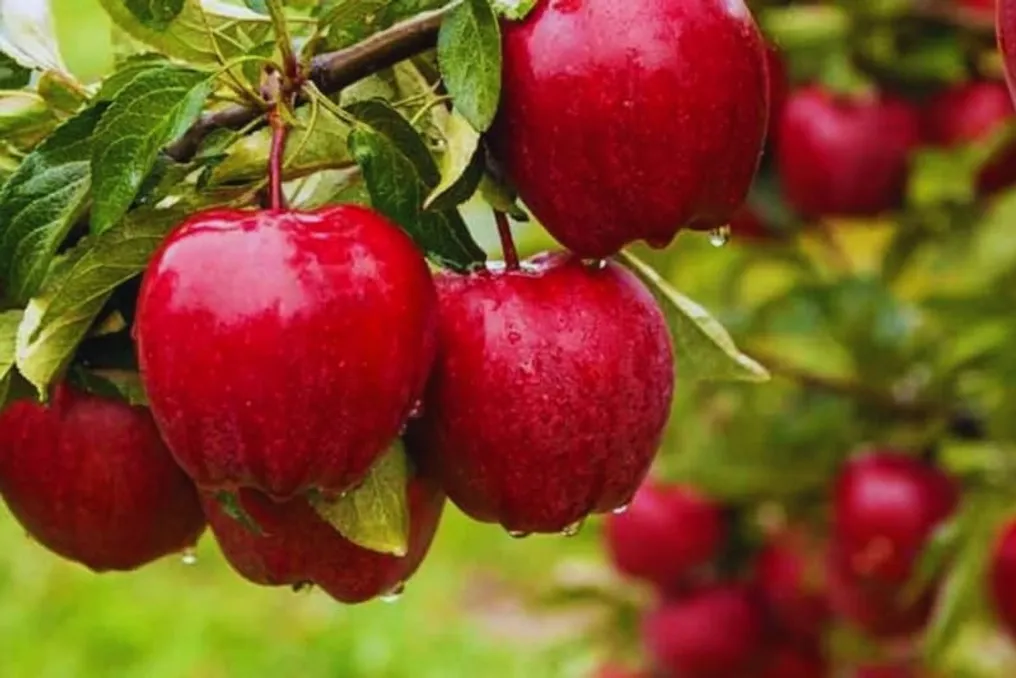
Apple producers in Himachal have faced a severe financial blow, estimated at approximately 2000 crore rupees, as the volume of apple production in the region has significantly dropped compared to last year.
In 2025, the cost of apple production reached about 5200 crore rupees, but this season is expected to decrease to around 2200 crore rupees. This has had a direct and substantial impact on both farmers' income and the regional apple farming economy.
The most alarming aspect is that this year's harvest was less than half of previous figures. According to the Department of Horticulture data, the apple season is over, and only 1.37 crore boxes have entered the regional markets so far. Even accounting for apples acquired under the Market Intervention Scheme (MIS) and stored in CA shops, the total production volume is projected to be within 1.60–1.70 crore boxes.
Satish Sharma, Director of the Department of Horticulture, stated that the current apple harvest is the second lowest in the last fifteen years. Similar declines were observed in 2011–12, when only 1.37 crore boxes were collected, and in 2018–19, when production fell to 1.84 crore boxes. The forecast for this season is at the lowest level after these periods, making this season extremely weak for the Himachal apple economy.
A significant reason for the drop in yield is the presence of old traditional orchards in the region. Many trees in these orchards are severely aged, and their ability to bear fruit is gradually declining. Himachal farmers are beginning to transition from traditional horticultural methods to High Density Planting (HDP), but the full impact of the new orchards will take time to reflect in production statistics.
According to Satish Sharma, Director of the Department of Horticulture, the real benefit of implementing high density planting is expected within the next four to five years. The department is focused on providing quality saplings to farmers. Around 8–10 lakh high-quality saplings are planned for distribution during the current season. There is hope that this will not only lead to an increase in production volume in the coming years but also to an improvement in apple quality.
Another problem in Himachal is low yield. On average, about 5–6 metric tons of apples are harvested per hectare in the region. This sharply contrasts with figures in developed apple-producing countries such as New Zealand, where yields exceed 55 metric tons per hectare, and in some modern technology orchards, reach 80 metric tons. This is precisely why the government and the Department of Horticulture are actively promoting High Density Planting. The goal is to achieve higher yields and better quality from limited area.
However, the success of HDP depends not only on replacing trees; irrigation systems, modern technologies, proper management, quality saplings, and a scientific approach to horticulture are also necessary. This season's data presents a serious challenge to traditional apple farming in Himachal. The significant drop in production and the estimated economic damage of 2000 crore rupees once again raise the question of how long traditional orchards can be relied upon. Attention is now focused on how the apple farming landscape in Himachal will change over the next four to five years thanks to high density planting.